Germany picks six teams for €640m quantum computer competition
Six start-up-led teams have advanced in Germany's €640m quantum computing competition, covering neutral atoms, trapped ions and superconducting processors.
Listen to this articleListen
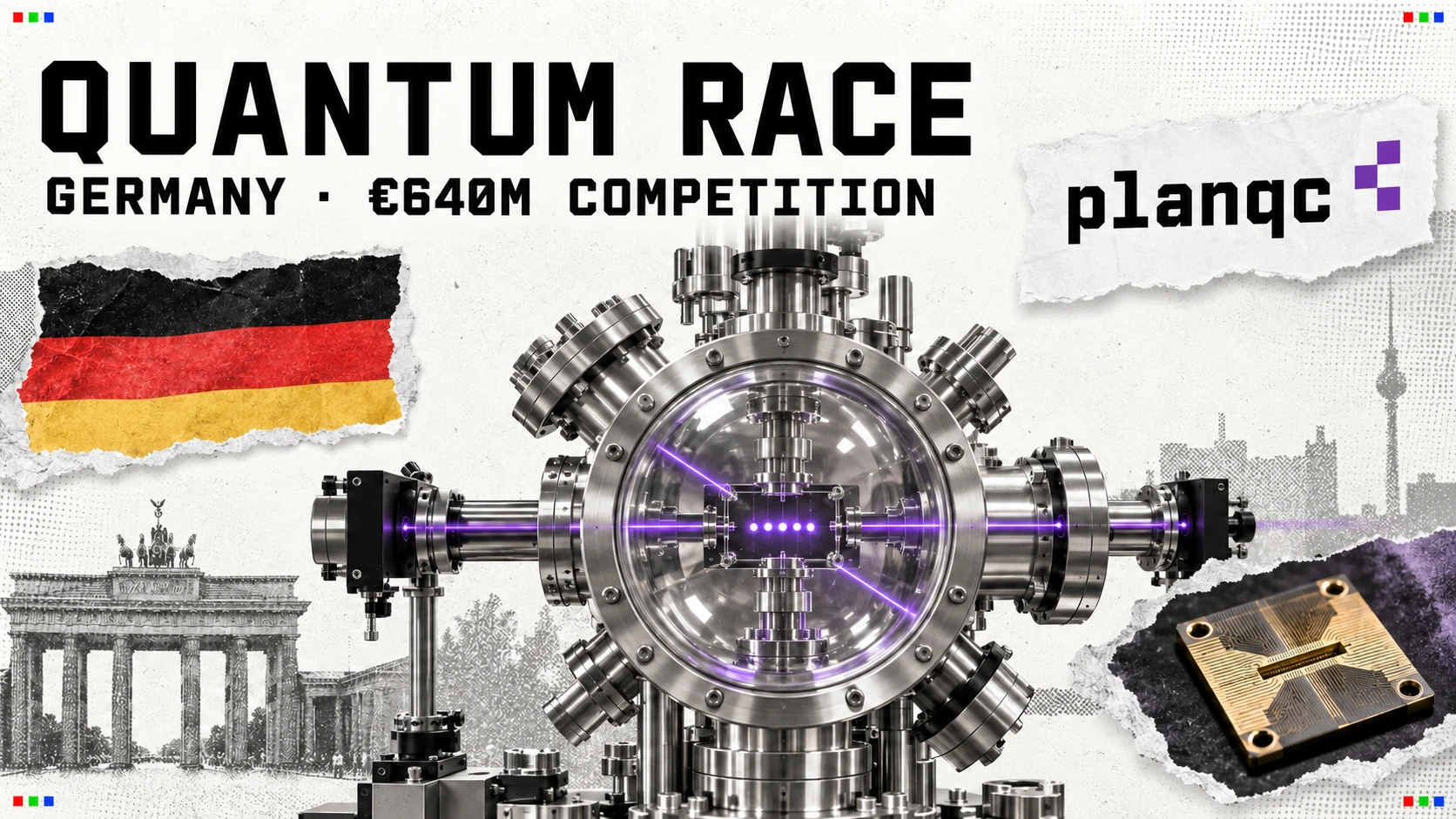
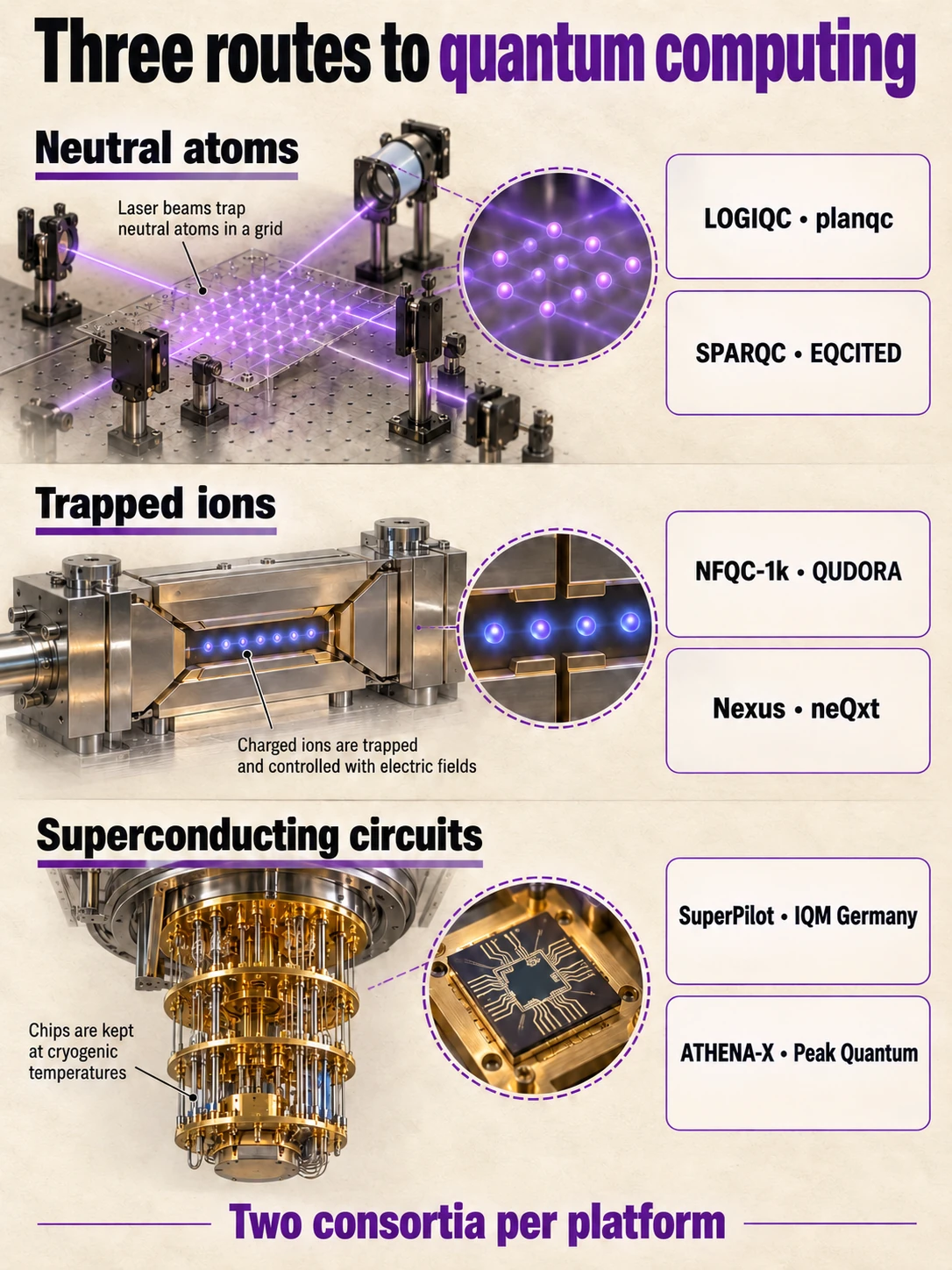
Germany’s research ministry has advanced six start-up-led consortia in its roughly €640 million quantum computing competition. The programme office’s shortlist, published on 25 September 2026, covers two teams each using neutral atoms, trapped ions and superconducting circuits.
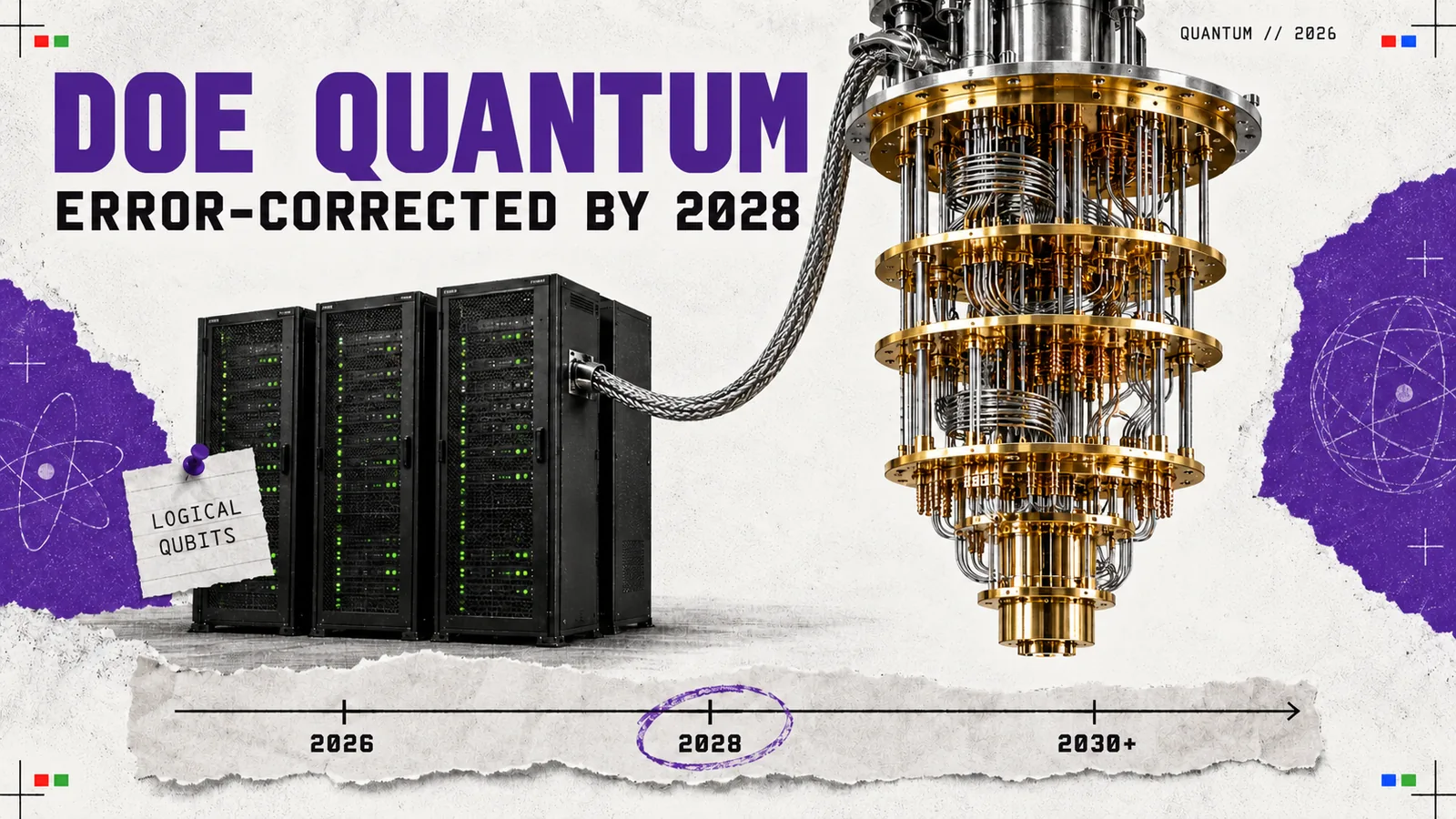
The competition supports a national goal of at least two error-corrected quantum computers by 2030. Error correction combines physical qubits into more reliable logical qubits, allowing a processor to detect and correct faults while computing. The €640 million describes the overall competition’s planned funding.
Six teams are pursuing three types of processor
The six shortlisted consortia have reached the next funding phase, according to the programme office. Their approaches use different physical systems to store and manipulate quantum information.
| Processor approach | Consortium | Lead company |
|---|---|---|
| Neutral atoms | LOGIQC | planqc |
| Neutral atoms | SPARQC | EQCITED |
| Trapped ions | NFQC-1k | QUDORA |
| Trapped ions | Nexus | neQxt |
| Superconducting circuits | SuperPilot | IQM Germany |
| Superconducting circuits | ATHENA-X | Peak Quantum |
Neutral-atom machines control individual atoms with light. Trapped-ion machines hold electrically charged atoms in electromagnetic traps. Superconducting processors use electrical circuits cooled to very low temperatures.
Planqc’s LOGIQC uses neutral ytterbium atoms
Planqc announced LOGIQC’s selection on 22 September 2026. The consortium aims to build an error-corrected processor using neutral ytterbium atoms and to develop a pilot manufacturing line for its technology.
Partners include the Max Planck Institute of Quantum Optics, LMU Munich, the University of Tübingen, Forschungszentrum Jülich and TOPTICA Photonics. Planqc describes work on encoded logical qubits and universal logical operations, with research and manufacturing development proceeding together.
The company says further evaluation will determine which teams continue through the competition. The selection advances the development programme and its milestones.
AQT Germany joins QUDORA’s trapped-ion team
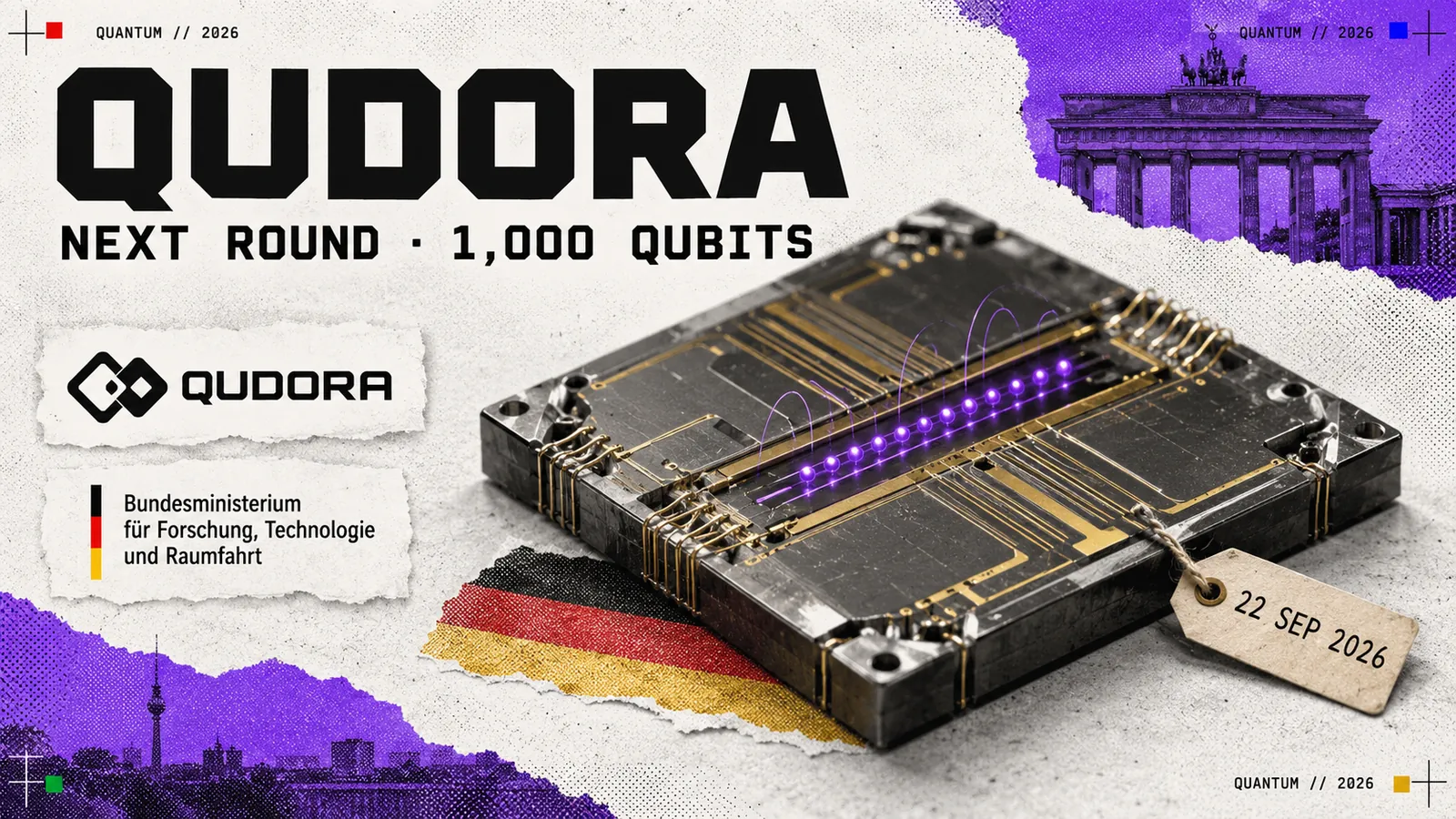
AQT Germany is a partner in NFQC-1k, the QUDORA-led trapped-ion consortium. Quantum Valley Lower Saxony’s announcement says the team has been invited to submit a full proposal after its project outline was approved.
The seven-partner project includes NXP, Forschungszentrum Jülich, Leibniz University Hannover, TU Braunschweig and Germany’s metrology institute, PTB. QUDORA gives its planned project volume as about €122 million over up to five years, covering a quantum computer and a processor pilot line.
The project connects research, component development and production. YFarmX’s NFQC-1k report examines the team’s physical- and logical-qubit targets in more detail.
The first hardware checkpoint falls in March 2027
The programme office specifies 31 March 2027 as an initial milestone: processors with at least 24 controllable qubits and at least 99.5% two-qubit gate fidelity. Fidelity measures how closely a quantum operation matches its intended result.
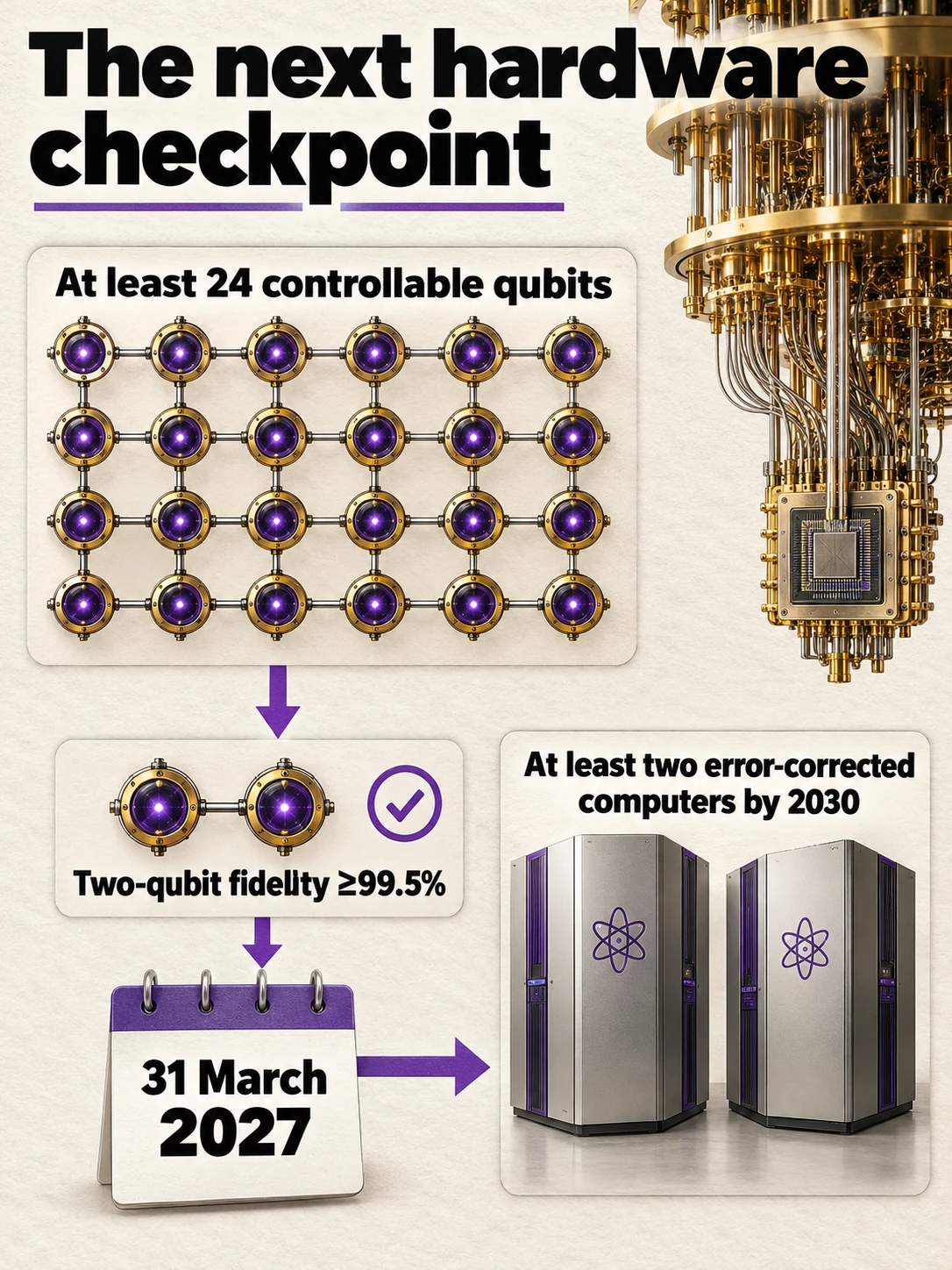
Those measurable checkpoints give the competition a way to assess progress from laboratory systems towards usable processors and manufacturing capacity. The six teams now have defined architectures and development goals against which their next results can be judged.
Sources
- Quantum systems programme office: six consortia advance, 25 September 2026quantensysteme.info
- Planqc: LOGIQC selected for Germany's competition, 22 September 2026planqc.eu
- Quantum Valley Lower Saxony: NFQC-1k reaches the next round, 23 September 2026qvls.de
- QUDORA: NFQC-1k project and funding framework, 22 September 2026qudora.com