Open source coding models close the gap in a single week
Two releases on 18 June changed the arithmetic for anyone paying for a frontier coding model. Z.ai published GLM-5.2, a 753 billion parameter mixture of experts model under an MIT licence with a one million token context window.
Listen to this articleListen
Two releases on 18 June changed the arithmetic for anyone paying for a frontier coding model. Z.ai published GLM-5.2, a 753 billion parameter mixture of experts model under an MIT licence with a one million token context window. Moonshot AI open sourced Kimi K2.7 Code, a trillion parameter mixture of experts coding model with benchmark gains over its predecessor and roughly 30 per cent fewer reasoning tokens. Both are open source coding models at a scale that was proprietary six months ago.
The timing was pointed. The releases landed in the same week that Anthropic disabled Claude Fable 5 and Mythos 5 for every user under a US export control directive, leaving developers who had built workflows around the model with nothing to run them on. Open weights do not get switched off by a government letter on a Friday evening, and a substantial number of teams drew the obvious conclusion.
The MIT licence on GLM-5.2 is worth dwelling on. It permits commercial use, modification and redistribution with almost no conditions, which is more permissive than the community licences that have accompanied most large open releases. A 753 billion parameter model with a million token context under MIT is a serious asset to hand to the public, and it reflects a strategy of buying adoption and developer familiarity in place of licence revenue.
Serving infrastructure appeared immediately, which is the part that converts a weights release into usable capacity. Kimi K2.7 Code went live on the Weights and Biases and CoreWeave inference platform with Blackwell NVFP4 serving and speculative decoding, reporting 289 tokens per second and placing near the top of the Artificial Analysis speed and price-performance charts. Serving at that throughput within days of release is a different situation from a weights drop that takes the community a month to make practical.
Routing was the third development of the same week. OpenRouter launched its Fusion API, which routes or ensembles a panel of lower cost models to approach frontier results. Its published comparisons show it beating GPT-5.5 and Claude Opus 4.8 in some cases and landing within roughly one per cent of Claude Fable 5 at half the price. If a routing layer over cheap open source coding models reaches within a point of the most expensive proprietary model, the premium on the flagship starts to require justification on each workload.
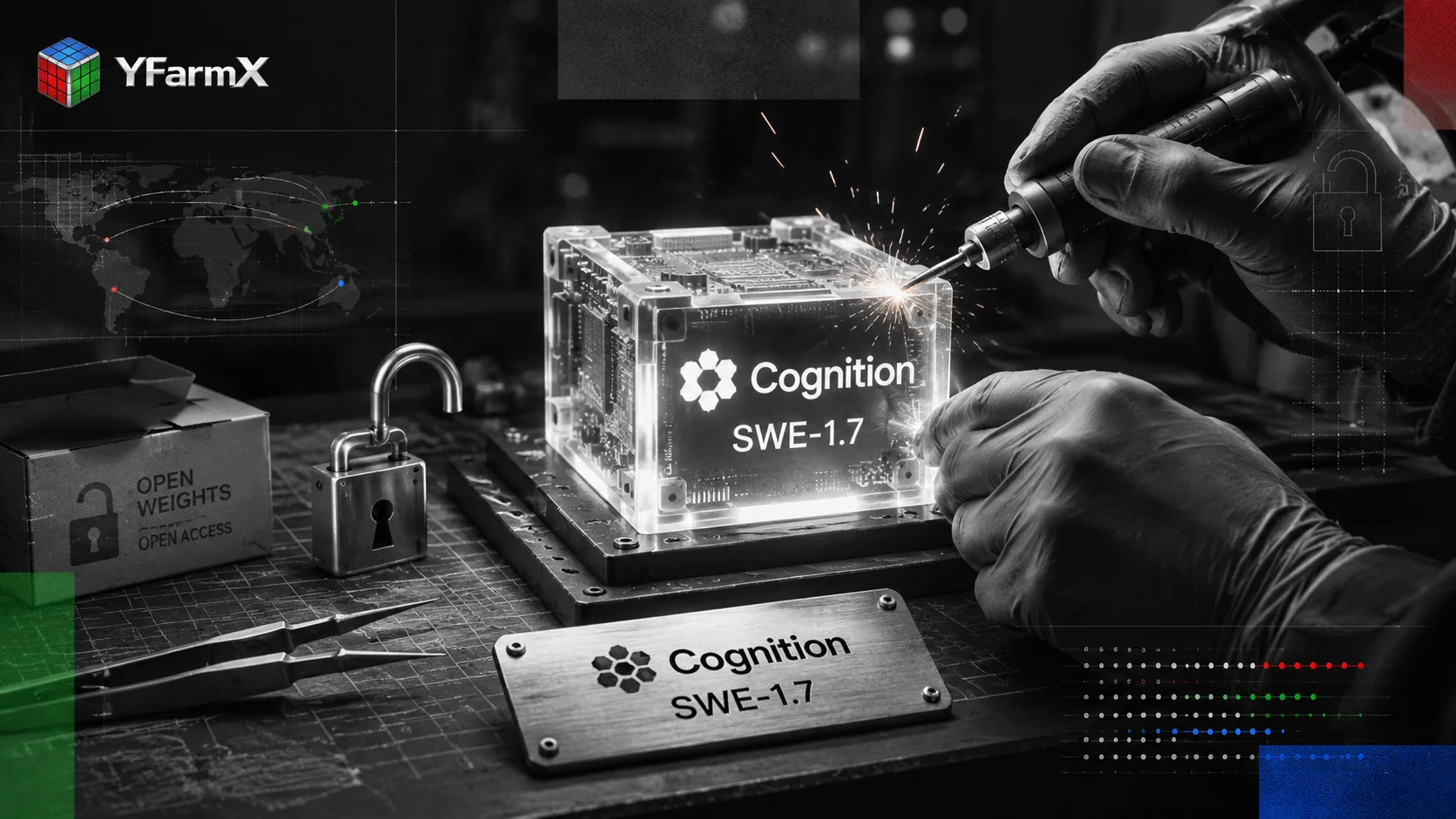
The subsequent five weeks confirmed the direction. Cognition built SWE-1.7 on the Kimi K2.7 base and gained twelve points on FrontierCode. Meituan disclosed LongCat-2.0, 1.6 trillion parameters trained entirely on Chinese accelerators at $0.038 per million tokens. Moonshot released Kimi K3 at 2.8 trillion parameters, taking first place on Arena’s Frontend Code leaderboard ahead of Fable 5 and GPT-5.6 Sol, with weights due on 27 July. Chinese open weight models rose to roughly 30 per cent of usage on OpenRouter from 1.2 per cent eleven months earlier.
Western contributions to the same week were substantial and differently positioned. NVIDIA released Nemotron 3 Ultra, a 550 billion parameter sparse mixture of experts model with 55 billion active parameters built for long running agent harnesses, published with weights, training data, recipes, a reward model and a quantised checkpoint. JetBrains open sourced Mellum 2, a 12 billion parameter mixture of experts coding model with 2.5 billion active parameters trained from scratch over ten trillion tokens by a small team, which reads as an IDE company converting years of developer workflow context into a model.
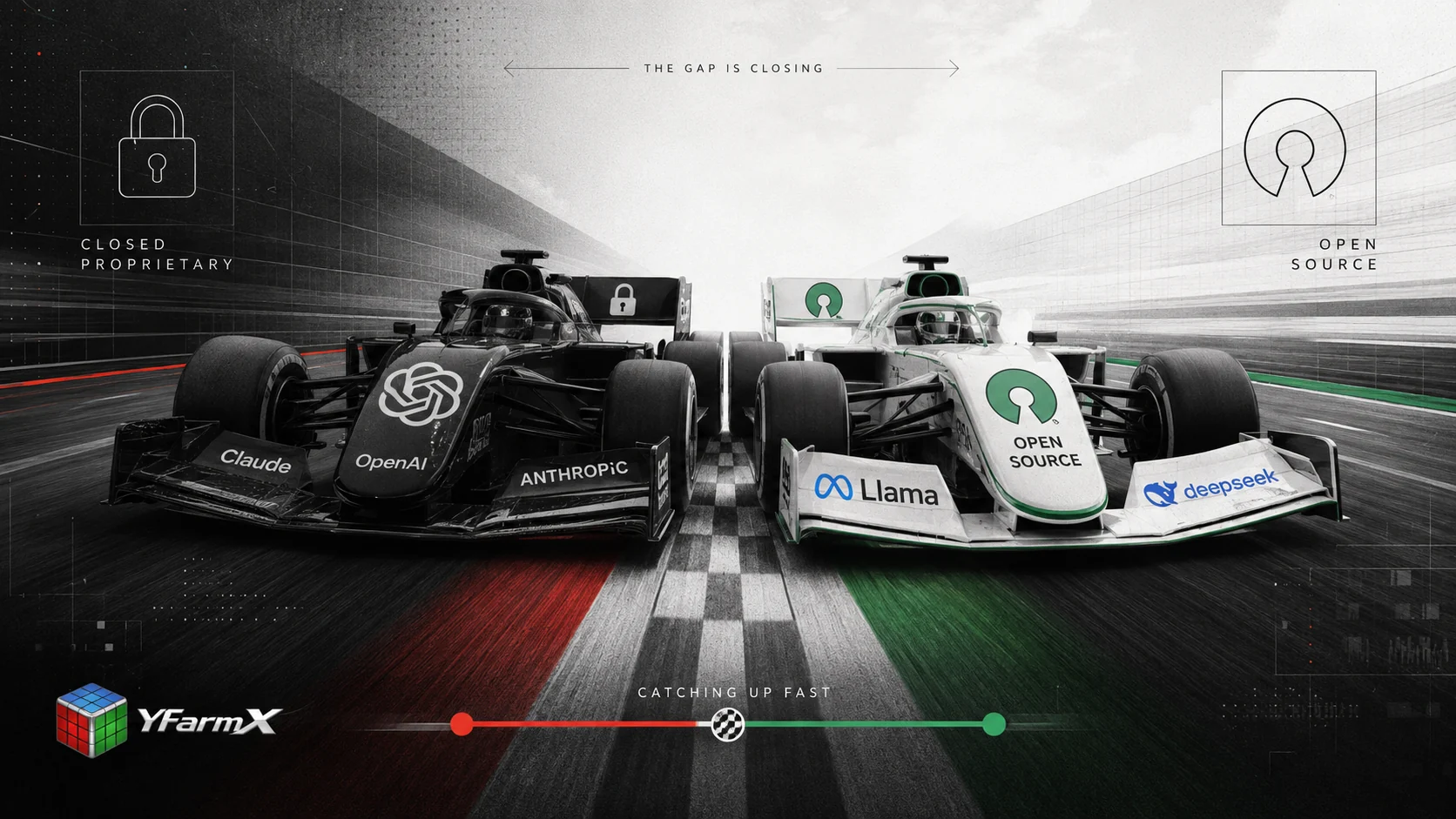
The practical guidance for engineering leaders is to treat model choice as a routing problem with a cost function. Measure which workloads consume the most tokens, test open source coding models on those specific tasks, and reserve frontier access for the work where the difference is demonstrable. The gap is now small enough on most coding tasks that paying five times the rate by default is a decision that should be made deliberately.
QUANTUM
Sources
- Kimikimi.ai
- Openrouteropenrouter.ai
- Zz.ai