IQM Nasdaq listing is a European first
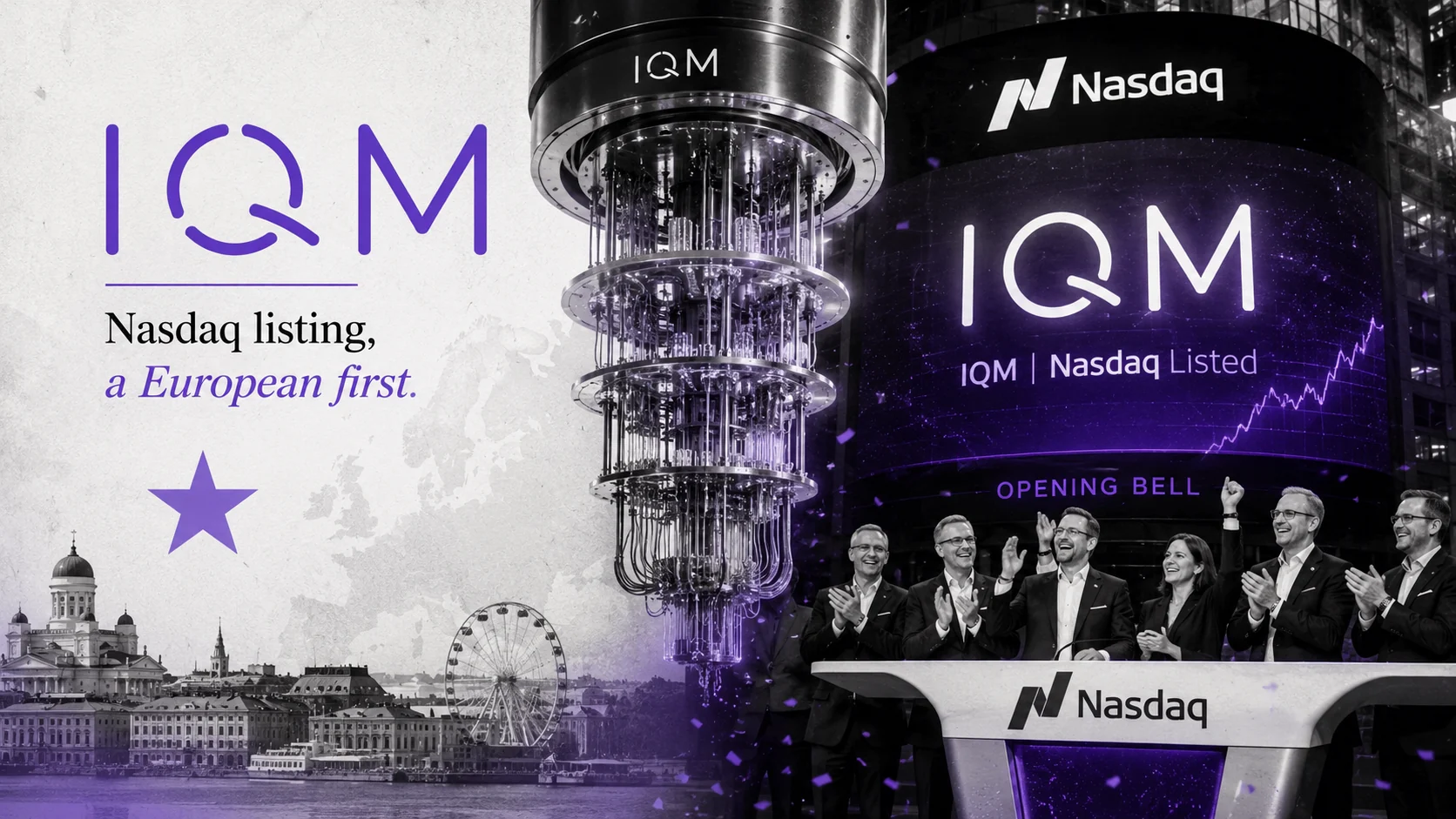
IQM Quantum Computers began trading on Nasdaq on 2 July under the ticker IQMX, becoming the first European quantum computing company to list on a major American exchange.
Listen to this articleListen
IQM Quantum Computers began trading on Nasdaq on 2 July under the ticker IQMX, becoming the first European quantum computing company to list on a major American exchange. The IQM Nasdaq listing, structured as a business combination and accompanied by a dual listing in Helsinki, left the company with 337 million euros of cash to fund what it describes as transatlantic scaling.
The strategic reasoning behind listing in New York while remaining Finnish is not difficult to follow. European public markets have historically valued deep technology companies conservatively, and the pool of investors willing to underwrite a decade long hardware programme is deeper in the United States. Retaining the Helsinki listing preserves the domestic shareholder base and the political relationships that count for a company whose largest customers are European public institutions.
IQM builds superconducting quantum computers, competing directly with IBM, Google and Rigetti on the same qubit technology, and has concentrated on on-premises systems for research institutions and national laboratories. That is a different commercial model from the cloud access approach most of its rivals lead with, and it suits customers with data residency requirements or a desire to build operational expertise in house. The Halocene product line is built on a modular error correction stack, with a 150 qubit system commercially available in 2026 and a system above 1,000 qubits planned.
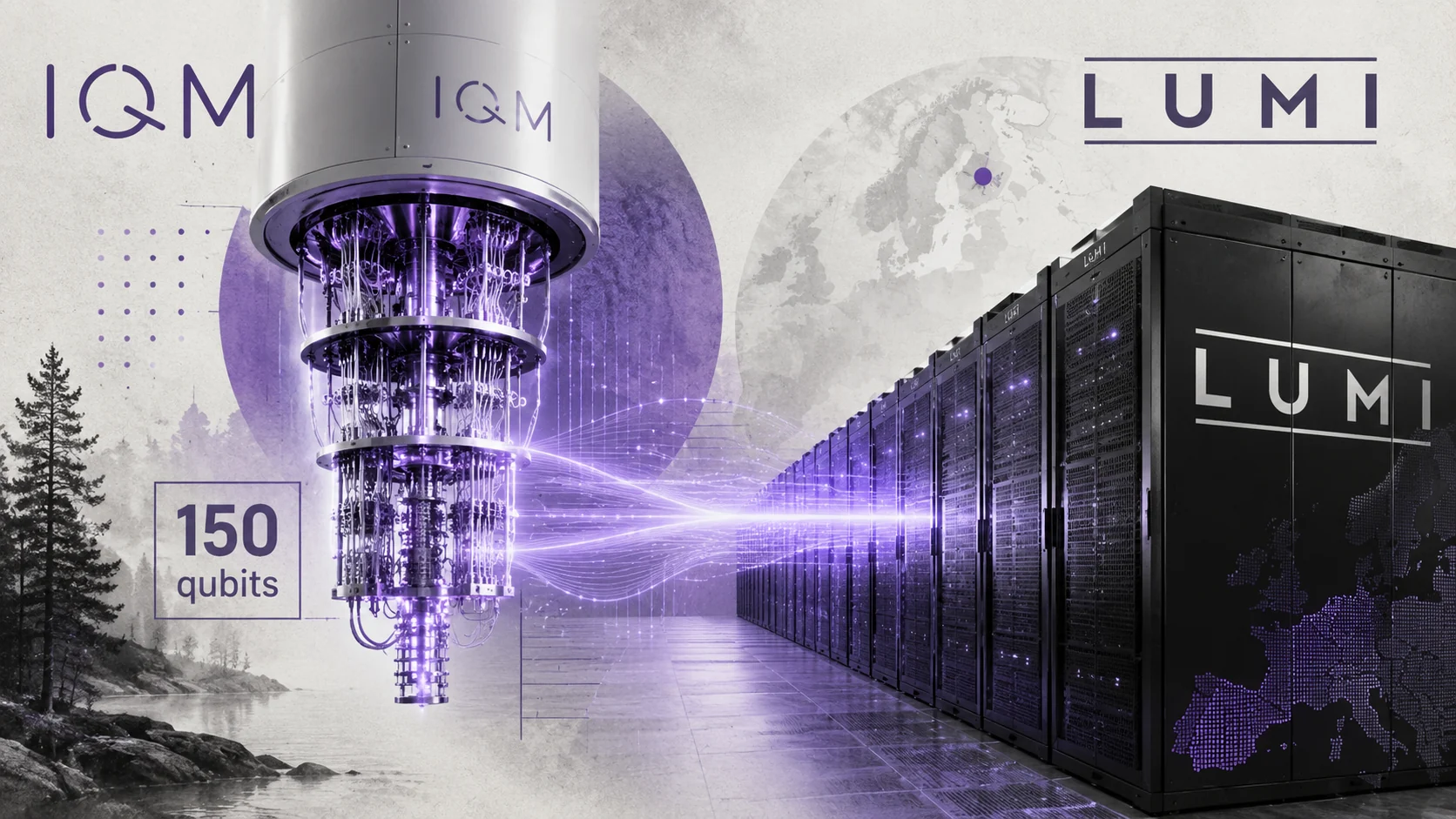
The IQM Nasdaq listing was quickly followed by validation. On 8 July the LUMI AI Factory selected IQM to deliver a 150 qubit Halocene H4 to Kajaani by 2027, integrated with the LUMI supercomputer and jointly funded by the EuroHPC Joint Undertaking with Finland, Czechia, Norway and Poland. The contract’s value approximates the company’s entire 2025 revenue of 31 million euros. Announcing a deal of that relative scale within a week of listing is favourable timing.
The market environment was less favourable. Quantum equities fell heavily through July, with IonQ, Rigetti and D-Wave finishing the week to 17 July between 60 and 76 per cent below their 52 week highs after shedding a further 17 to 20 per cent in five sessions. Quantinuum, which completed its own Nasdaq offering in June at $60 per share and raised $1.68 billion in an upsized and heavily oversubscribed deal, traded around 35 per cent below its peak. IQM listed into a sector correction, which is uncomfortable for early shareholders and largely irrelevant to a company holding 337 million euros against a multi-year development programme.
The competitive position deserves a clear-eyed assessment. IQM is small beside IBM, whose roadmap runs to a 200 logical qubit Starling system in 2029, and beside Google, whose Willow results established below threshold error correction. Its advantages are focus and geography. It sells complete on-premises systems to institutions that want to own hardware, and it is the European option at a moment when European institutions are explicitly trying to avoid dependence on American and Chinese technology. The EuroHPC funding structure behind LUMI-IQ is a direct expression of that preference.
The revenue base is thin, as it is across the sector. Thirty one million euros in 2025 against the capital requirements of superconducting hardware development means the 337 million euros raised is a runway measured in a few years, and the company will need either recurring government contracts or a commercial inflection before it runs out.
For European technology policy the IQM Nasdaq listing carries a mixed message. A European company reaching a major listing is a success for a continent that produces excellent research and struggles to build companies from it. Choosing New York for that listing is a comment on European capital markets that policymakers in Brussels and Helsinki will have noticed. Both readings are correct, and the second is the one more likely to prompt action.
Sources
- Nasdaqomxnordicnasdaqomxnordic.com
- Meetiqmmeetiqm.com
- Nasdaqnasdaq.com