
Nano Banana Pro and Nano Banana 2
the 4K value leader
Key facts
- 13909th, arena.ai, 7 Sep
- Edit Elo
- $0.24per full-res image
- 4K price
- $0.067per 2K image
- Batch price
- 1261Nano Banana 2, 7 Sep
- Flash Elo
- <4sNano Banana 2 Lite
- Lite speed
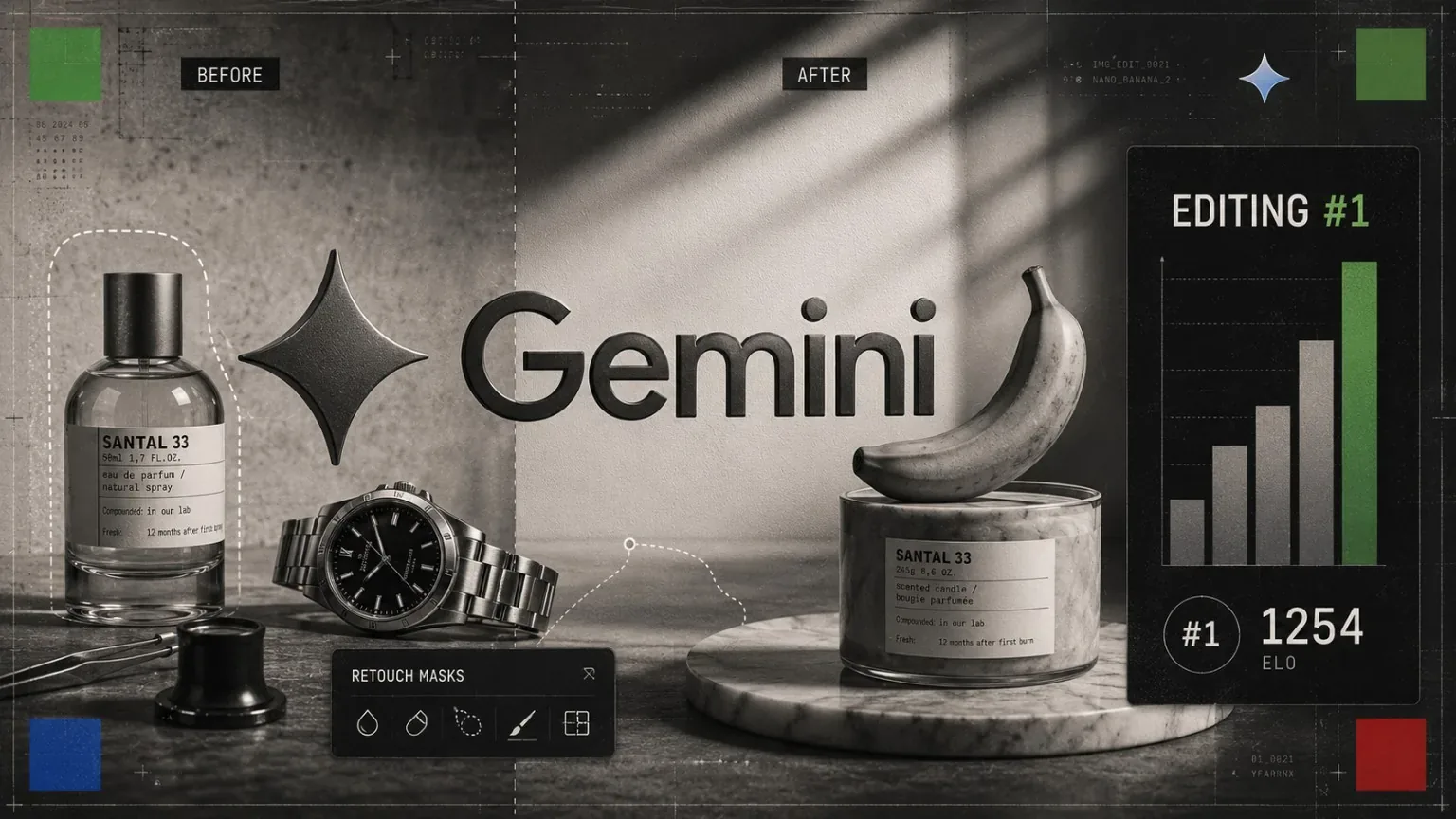
The 4K value leader. Nano Banana Pro is Gemini 3 Pro Image, ninth on the arena.ai image-edit board at Elo 1390; Nano Banana 2 is Gemini 3.1 Flash Image, ninth on text-to-image at 1261, both on the 15 September 2026 reading.
What it is
Nano Banana Pro is Google’s in-house codename for Gemini 3 Pro Image, the upper half of a two-model image family. Its companion, Nano Banana 2, is Gemini 3.1 Flash Image and sits below it at an Elo of 1261, ninth on the arena.ai text-to-image board on the 15 September 2026 reading (the board itself is dated 7 September). The names are light-hearted, the positioning less so: the Pro tier is tuned for quality and fine control, while the Flash tier is tuned for speed and volume. On the arena.ai image-edit board, the leaderboard that measures how well a model alters an existing picture rather than inventing one from scratch, Nano Banana Pro sits ninth at an Elo of 1390 on the same reading, with a second Pro variant thirteenth at 1385, beneath a top three held outright by OpenAI’s GPT Image 2.5 and GPT Image 2 line.
Editing versus generation
That split between editing and generation is the useful thing to grasp here. Generating an image means producing one from a text prompt alone. Editing means taking a supplied photograph or render and changing part of it, swapping a background, recolouring an object, adjusting a pose, while keeping the rest intact and believable. Editing is the harder discipline for most working teams, because production work usually starts from an existing asset rather than a blank canvas, and it is exactly the ground this family was built for.
The technical reason is the family’s handling of physics-accurate materials and lighting. Reflections, textures, shadows and the way light falls across a surface are where edited images most often betray themselves, and the Pro model keeps them consistent. That is why product photographers and e-commerce teams reach for it: a system that renders glass, metal, fabric and skin correctly can stand in for an expensive studio shoot across a large share of catalogue work, and do it in seconds rather than days.
Pricing and access
Pricing is a second draw. The family is the cheapest credible route to genuine 4K output, at about $0.24 for a full-resolution image, and a batch mode roughly halves the 2K rate to around $0.067 per image for teams generating in bulk. Speed is covered by a third variant, Nano Banana 2 Lite, generally available since 30 June 2026, which produces images in under four seconds from about $0.034 per 1K image, cheap enough to sit inside interactive tools where a user waits for the result.
Access is broad. The weights are closed, so the models cannot be downloaded and run privately, but they are reachable through the Gemini app for casual use, through Google AI Studio for prototyping, and through the Gemini API for production, with a free tier that lets a team judge the output before committing any spend. That mix of a no-cost entry point and low per-image pricing at the top end is unusual, and it lowers the barrier to trying Nano Banana Pro against an incumbent before a single invoice is raised.
The three tiers
The lineup is best read as a single strategy expressed across three points. The Pro model answers the demand for maximum quality and editing control, Nano Banana 2 covers the middle ground where its Elo of 1261 still buys competitive output at lower cost, and the Lite variant takes the floor on price and latency. A team can therefore stay within one family as a job moves from a carefully composed hero image to thousands of routine variations, without learning a new tool or migrating between suppliers at each step. Few rivals present so tidy a ladder from premium quality down to high-volume speed.
What to watch
Within the broader set of image models, the family occupies a clear position: the value leader at high resolution. On the 15 September 2026 arena read the top of both boards belongs to OpenAI’s line, with Nano Banana Pro ninth on image edit and Nano Banana 2 ninth on text-to-image; the family’s case rests on its handling of physics-accurate materials and lighting, its native 4K output and its pricing, and for teams that want genuine 4K at the lowest credible price it is the reference point. What to watch is whether rivals can match that grasp of materials and lighting at the same price, and whether the Flash and Lite tiers pull more real-time and on-device work towards Google as prices keep falling.
Nano Banana 2.1 joins the family
The Nano Banana 2.1 guide covers the 6 October release and its access details. The Pro and Nano Banana 2 descriptions above refer to those earlier models.
More in Image Generation
All Image →- Black Forest LabsFLUX 3 ImageFLUX 3 Image creates and edits pictures with up to ten reference images
- TencentHY Image 3.5 PreviewTencent’s image generation and editing preview
- IdeogramIdeogram 4.5image generation and precise editing
- AlibabaQwen-Image-2.1-TurboAn eight-step image generator with downloadable weights
- Google DeepMindNano Banana 2.1Image generation, reference pictures and conversational edits
- OpenAIGPT Image 2.5two variants, one price, the top two seats