Cognition SWE-1.7 shows Western labs building on Chinese open weights
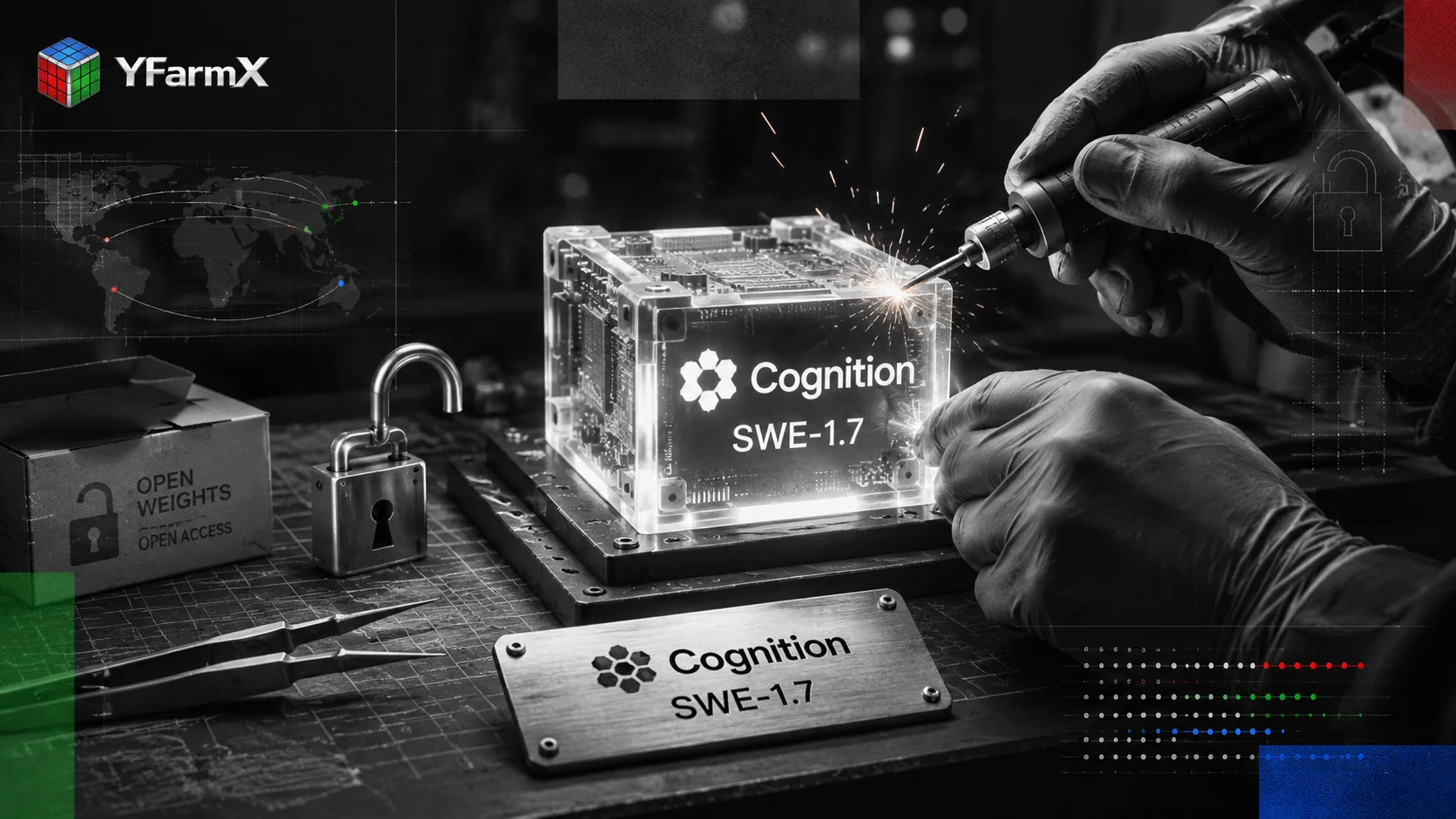
Cognition released SWE-1.7 on 8 July, a coding model served at 1,000 tokens per second, and disclosed something its previous release did not. Cognition SWE-1.7 is a reinforcement learning fine tune of Moonshot's open Kimi K2.7 Code base.
Listen to this articleListen
Cognition released SWE-1.7 on 8 July, a coding model served at 1,000 tokens per second, and disclosed something its previous release did not. Cognition SWE-1.7 is a reinforcement learning fine tune of Moonshot’s open Kimi K2.7 Code base. Its predecessor, SWE-1.5, was built on a GLM base that the company did not name at the time. Stating the provenance up front is a small change in practice with a large change in meaning.
The performance gain from the fine tune is substantial. FrontierCode 1.1 scores rose from 30.1 per cent for the base model to 42.3 per cent, which puts Cognition SWE-1.7 level with GPT-5.5 while remaining behind Claude Opus 4.8. Cost works out at roughly $1.97 per FrontierCode task. Serving includes a Cerebras hosted Lightning tier at 1,000 tokens per second, and the model was made free to paying Devin users for a month. There is no public API at launch, with availability restricted to Devin and Windsurf.
The economics here are the story. Moonshot open sourced Kimi K2.7 Code on 18 June, a trillion parameter mixture of experts coding model with roughly 30 per cent fewer reasoning tokens than its predecessor. Three weeks later an American company had taken those weights, applied reinforcement learning to its own agent traces, gained twelve percentage points on a coding benchmark and put the result into a commercial product. The entire pre-training expenditure, which is where the overwhelming majority of frontier model cost sits, was borne by someone else and given away.
That is the open weight strategy operating exactly as intended, and the direction of the flow deserves attention. The conventional framing of open models has Western laboratories publishing weights and the rest of the world building on them. In July 2026 the largest and most capable open weight models come from Chinese laboratories, and Western product companies are the downstream beneficiaries. Chinese open weight models now account for roughly 30 per cent of usage on OpenRouter, up from 1.2 per cent eleven months ago.
Serving speed is the second theme. At 1,000 tokens per second on Cerebras hardware, Cognition SWE-1.7 changes what an agent session feels like. A coding agent that produces a 3,000 token patch in three seconds is a different tool in daily use from one that takes thirty, because the developer stays in the loop while it works. OpenAI is serving GPT-5.6 Sol on the same hardware at over 700 tokens per second using identical weights to the API model. Inference speed has become a product feature that vendors market directly, having previously been an implementation concern.
Cognition’s position in the market explains the choices. The company owns Devin, the autonomous engineer product, and acquired Windsurf, which it rebranded as Devin Desktop in June and repositioned as a multi-agent command centre with Agent Client Protocol support. It is a product company that needs a good enough model at a controllable cost, and it competes with Cursor, now inside SpaceXAI, and with Anthropic’s Claude Code. Paying frontier API rates to a competitor while building an agent product is an uncomfortable position. Fine tuning open weights removes that dependency.
The disclosure practice deserves credit. Building on open weights is legitimate and the licences permit it, but customers evaluating a coding model reasonably want to know what sits underneath, because it determines the failure modes, the languages the model handles well and the licence terms attached to output. Naming the base is the beginning of a norm the sector needs.
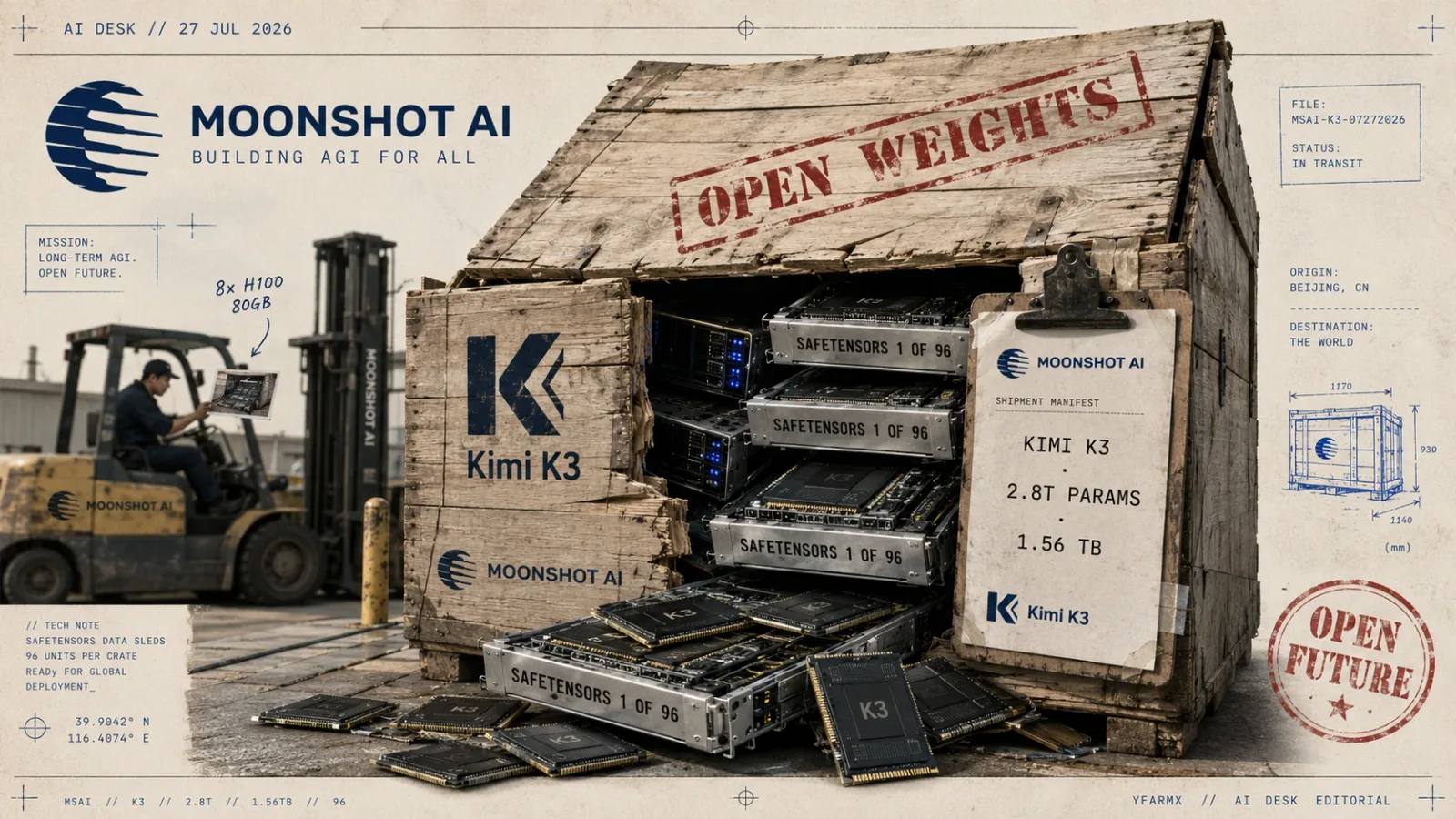
The strategic implication for frontier laboratories is uncomfortable. If a competent product team can close a twelve point gap on a coding benchmark with reinforcement learning over open weights in three weeks, the defensible advantage of a closed frontier model narrows to the months before an open equivalent appears. Moonshot’s Kimi K3, released eight days after SWE-1.7, will have its weights published on 27 July. The next fine tune starts from a stronger base.