IQM LUMI AI factory contract puts 150 qubits beside a supercomputer
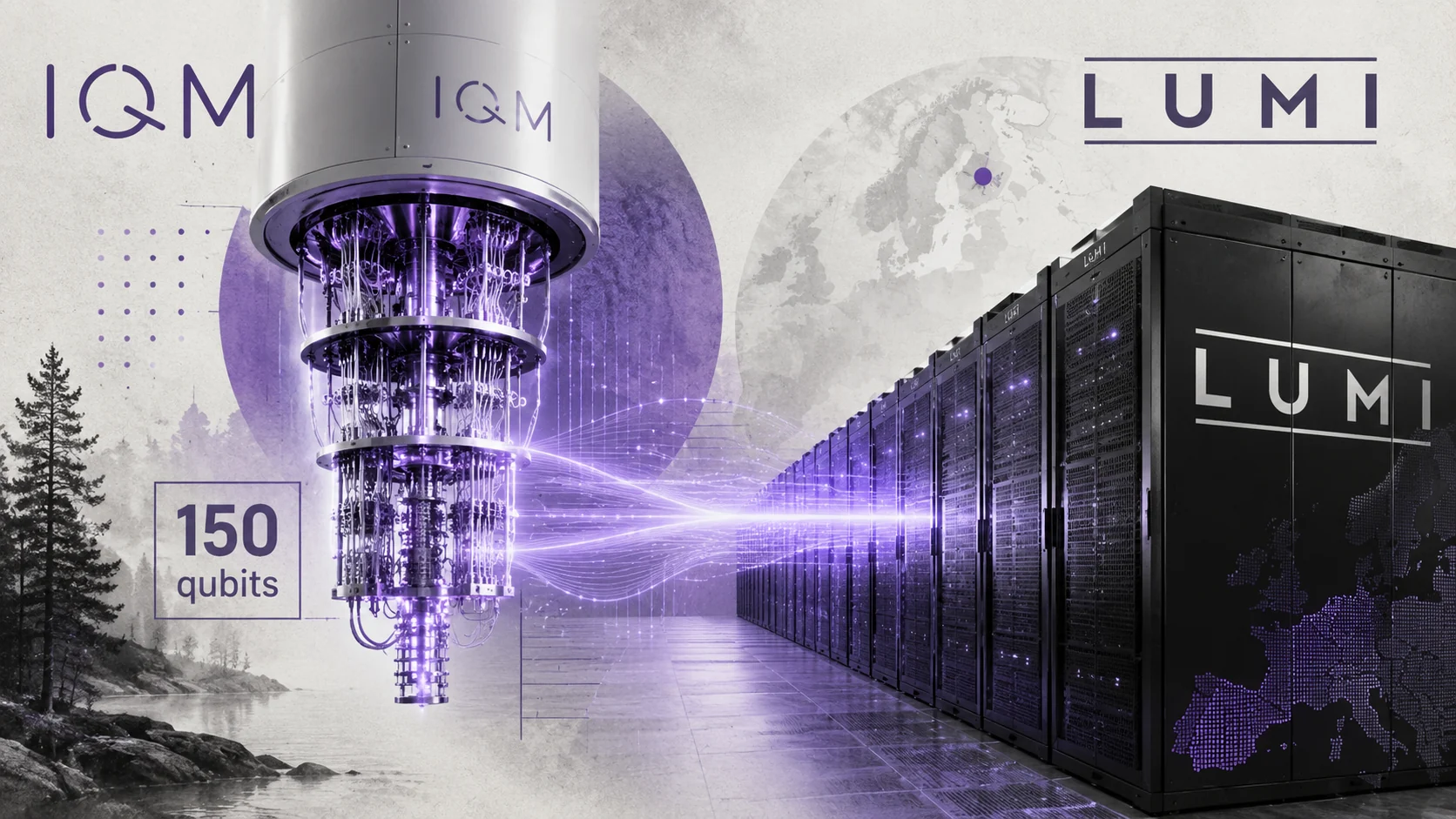
The LUMI AI Factory selected IQM Quantum Computers on 8 July to deliver a 150 qubit superconducting system to Kajaani in Finland by 2027.
Listen to this articleListen
The LUMI AI Factory selected IQM Quantum Computers on 8 July to deliver a 150 qubit superconducting system to Kajaani in Finland by 2027. The machine, an IQM Halocene H4 to be named LUMI-IQ, will integrate directly with the LUMI supercomputer to support co-processing between classical and quantum resources. The IQM LUMI AI Factory contract is worth approximately the company’s entire revenue for the year ended 31 December 2025, which IQM’s prospectus of 1 July put at 31 million euros.
The IQM LUMI AI Factory proposition is hybrid from the outset. LUMI is among Europe’s most capable supercomputers and the AI Factory designation reflects its role in national and European AI workloads. Attaching a quantum processor to that infrastructure is aimed at workflows in which a classical machine handles the overwhelming bulk of the computation and hands specific subroutines to the quantum device. That architecture is how the technology will be used for the foreseeable future, whatever the standalone quantum computer of popular imagination suggests.
The Halocene H4 combines quantum error correction with noisy intermediate scale qubits, and IQM describes it as the first on-premises superconducting system of its kind. The deployment is phased. The 2027 delivery brings 150 qubits, followed by upgrades that increase both qubit count and the number of logical qubits over an unspecified period, with the stated ambition of evolving into a fault tolerant machine. Mikael Johansson, manager for quantum technologies at CSC, the Finnish IT Center for Science, has described LUMI-IQ as intended to become a European hybrid platform combining AI and quantum computing.
The error correction access is the most valuable part for European researchers. LUMI consortium users will be able to develop and implement quantum error correction concepts on a leading system, which is currently difficult outside a small number of corporate laboratories. Error correction is where the field’s decisive problems sit, and hands-on access for academic groups is how a research base gets built.
Funding comes jointly from the EuroHPC Joint Undertaking together with the governments of Finland, Czechia, Norway and Poland. That structure is the European approach in miniature: pooled funding across several member states, an infrastructure asset in one country and access shared across the consortium. It spreads cost and political ownership, and it moves more slowly than a single national programme would.
For IQM the contract’s timing is favourable. The company began trading on Nasdaq and the Helsinki Stock Exchange on 2 July, becoming the first European quantum computing company to list in the United States, with 337 million euros of cash to fund transatlantic expansion. Announcing a contract equal to a full year of revenue six days later gives investors something concrete in a month when quantum equities fell heavily.
The strategic argument is about sovereignty. Europe’s position in quantum is stronger than its position in artificial intelligence, with substantial research capacity in Finland, the Netherlands, Germany, France and the United Kingdom, and companies including IQM, Pasqal and Quantinuum’s British operations building at commercial scale. Deploying a European quantum system on European supercomputing infrastructure under European public funding is a deliberate attempt to avoid repeating the AI outcome, in which the continent consumes technology built elsewhere.
The realistic assessment is that 150 qubits in 2027 will not solve commercially decisive problems. What it will do is give European researchers a machine to develop error correction on, give industrial users a platform to test hybrid workflows against, and give the supply chain a customer. Those are the conditions under which a domestic capability develops, and the IQM LUMI AI Factory award is a reasonable use of public money on that basis.
Delivery risk remains. A 2027 date for a system of this specification allows little slack, and quantum hardware schedules have a poor record.
Sources
- Europaeurohpc-ju.europa.eu
- Lumi-Supercomputerlumi-supercomputer.eu
- Meetiqmmeetiqm.com