
OpenClaw Foundation
OpenClaw
the open-source agent that took over GitHub
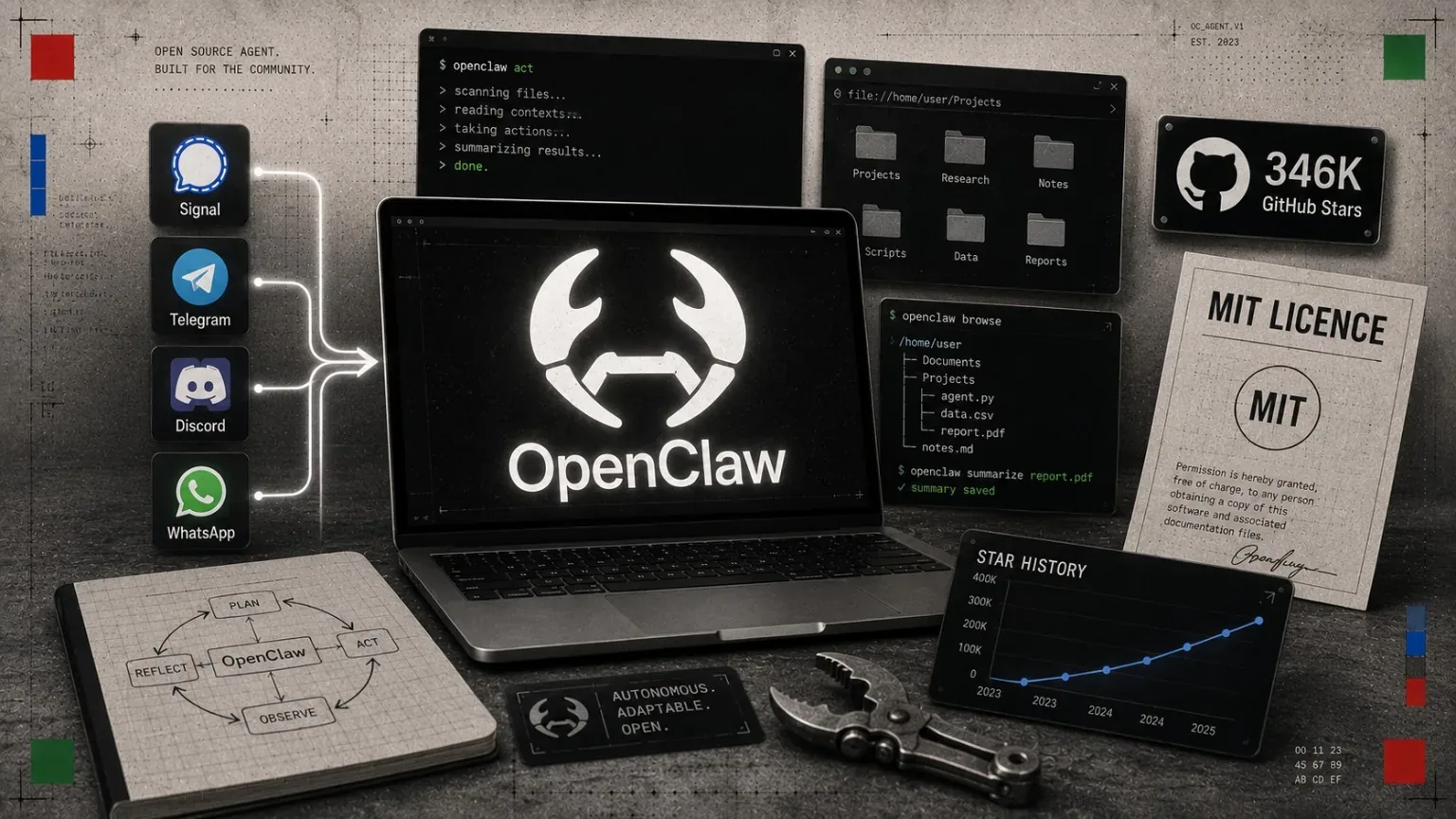
Key facts
- 346k+most-starred repo
- GitHub stars
- Nov 2025as Warelay
- First release
- MITopen source
- Licence
- TypeScriptand Swift
- Built in
- Localself-hosted
- Runs
OpenClaw is a free, open-source autonomous AI agent that runs on your own machine, talks to you through the messaging apps you already use, and takes real action across your files, shell, browser and services.
OpenClaw is the open-source autonomous AI agent that went from a weekend project to the most-starred software repository on GitHub in under five months. Where a chatbot answers, OpenClaw acts: it runs on your own machine, connects through the messaging apps you already use, and carries out real work across your files, shell, browser, email and calendar. It is the clearest example so far of the shift from AI that talks to AI that does things.
What it is
At its core OpenClaw is a piece of software you host yourself rather than a subscription service. It wires a large language model of your choice, whether Claude, GPT, DeepSeek, Gemini, Grok or a fully local model, to the parts of your computer that actually get things done. From there it can execute shell commands, drive a browser, manage files and reach dozens of other services. You talk to it not through a bespoke web app but through Signal, Telegram, Discord or WhatsApp, so instructing an agent feels like messaging a colleague. Configuration and interaction history are stored locally, which keeps control of the data with the person running it. The project is written in TypeScript and Swift and released under the permissive MIT licence, which is a large part of why it spread so fast.
Where it came from
OpenClaw is the work of Peter Steinberger, an Austrian programmer, who first published it on 24 November 2025 under the name Warelay. The next two months were chaotic in the way only a runaway open-source hit can be. It was renamed to CLAWDIS, then Clawdbot, then Moltbot on 27 January 2026 following trademark complaints from Anthropic, and finally to OpenClaw on 30 January 2026, a name Steinberger settled on after deciding the previous one never quite rolled off the tongue. Underneath the renaming, adoption climbed relentlessly, and by early 2026 the repository had passed a quarter of a million GitHub stars and tens of thousands of forks on its way to the top of the whole platform.
How it works
The feature that keeps users is its skills system. OpenClaw can hold skills at three levels, bundled with the software, global to your setup, and specific to a given workspace, so an agent can carry general competence while still learning the particulars of one project. Because the messaging layer is the interface, the same agent is reachable from a phone or a desktop without a separate client, and because everything runs locally there is no cloud account sitting between you and your own files. That design is what lets people trust it with tasks a hosted service would never be given.
The governance turn
The project’s success quickly outgrew a single maintainer. On 14 February 2026 Steinberger announced he was joining OpenAI, and that an OpenClaw Foundation would be set up to provide long-term stewardship, a common path for open-source projects that become infrastructure. Moving governance to a foundation is an attempt to keep the software credible and maintained independently of any one person or employer, which is the same question that hangs over every fast-growing open project.
What to watch
An agent that can run shell commands and read files is powerful for the same reason it is risky, and OpenClaw has already paid for it. In March 2026 the Chinese government restricted state agencies and banks from using it, citing security concerns, a reminder that autonomous local agents raise questions no chatbot ever did. The open question for OpenClaw and its peers, including the Nous Research Hermes Agent, is whether the convenience of an agent that acts on your behalf can be squared with the guardrails that acting on your behalf demands. For anyone tracking where AI is heading, the agentic AI field is where the next phase is being fought out.
More AI
All AI →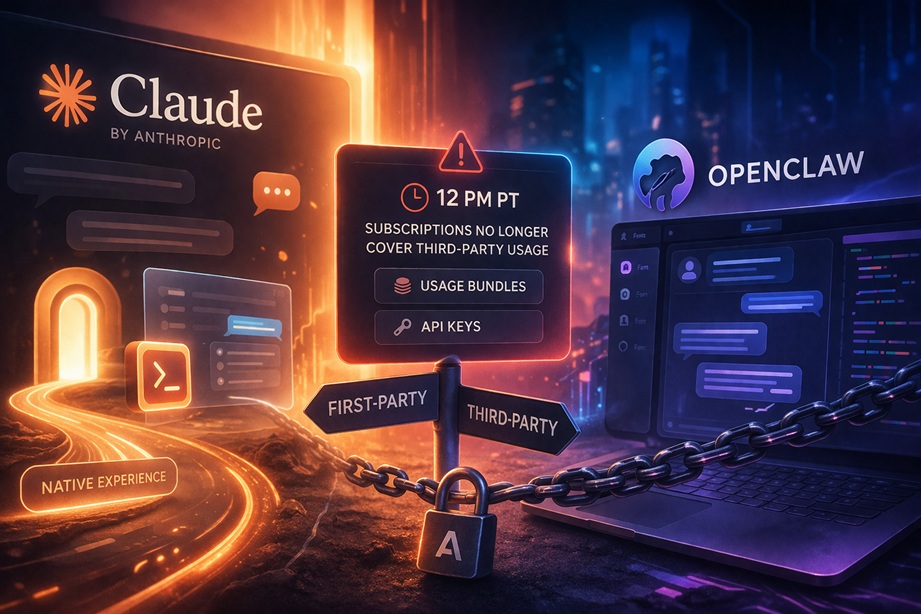
Anthropic tightens third-party Claude access as OpenClaw users brace for a native rival
Anthropic says Claude subscriptions will no longer cover third-party tools such as OpenClaw. The immediate commercial shift is clear. The strategic read is harder to ignore.
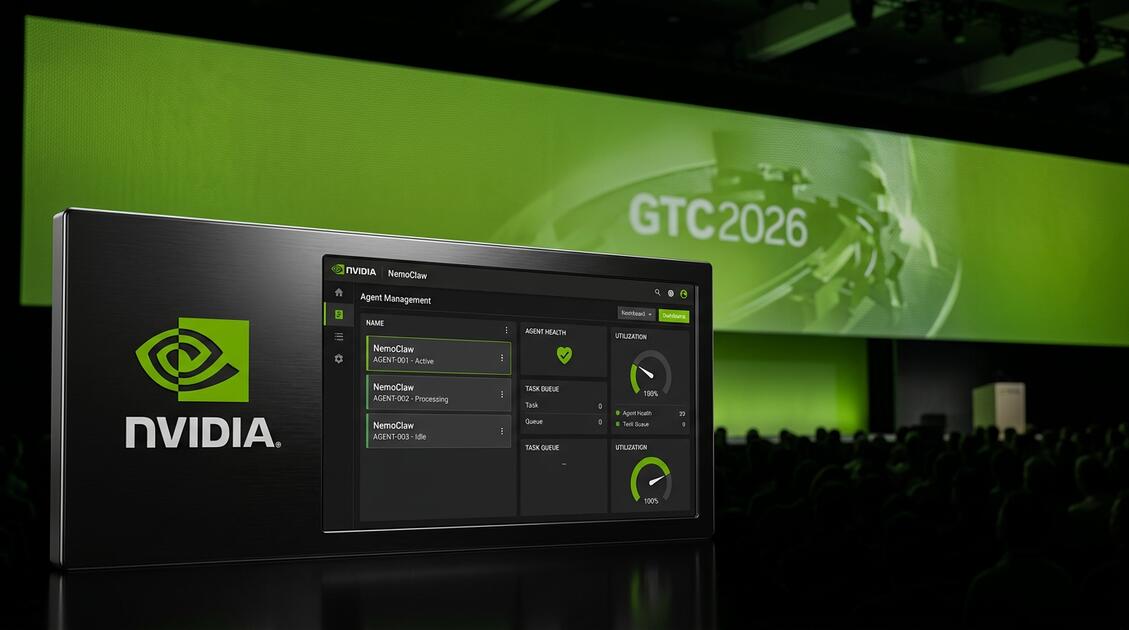
NVIDIA Launches NemoClaw at GTC 2026
NVIDIA launches NemoClaw at GTC 2026, an open-source enterprise AI agent platform that adds security and privacy to OpenClaw, installable in a single command alongside OpenShell security runtime.
Solana Agent Skills Give AI Builders a Cleaner Way to Work With Solana
Solana Agent Skills give AI builders a cleaner way to work with Solana programmes, tokens and developer tooling. Here is what Solana Agent Skills does, why it matters, and what developers should watch next.
More in Agentic AI
All Agentic AI →- Nous ResearchHermes Agentthe self-improving open-source agent
- AnthropicClaude Codethe agent that lives in your terminal
- GuideHermes Agent promptinghow to get real work out of it
- OpenAIOpenAI Codexthe agent that spans every surface
- Linux FoundationModel Context Protocolthe USB-C port for AI agents
- AnysphereCursorthe editor that became an agent