
MiniMax
Hailuo 2.3
the character-motion specialist
Key facts
- 1 of 6models teams test
- Shortlist
- 3 modalitiestext, audio, video
- Family span
- Open weightMiniMax M3
- Sibling LLM
The character-motion specialist. MiniMax's flagship from October 2025 until MiniMax H3 took over in July 2026, and still a fixture on working teams' shortlists.
What it is
Hailuo 2.3, released on 28 October 2025, was MiniMax’s flagship video model until MiniMax H3 took over at the end of July 2026, and it remains the character-motion specialist of the field with a steady place on the shortlists that count. It is one of the six models that working teams actually evaluate when they sit down to choose a video vendor, which is a more telling measure than any single benchmark: it means practitioners keep putting Hailuo 2.3 in front of real briefs rather than admiring it from a distance. A model can top a leaderboard and still never get used; the surer sign of quality is that people reach for it when there is work to be done.
Why teams pick it
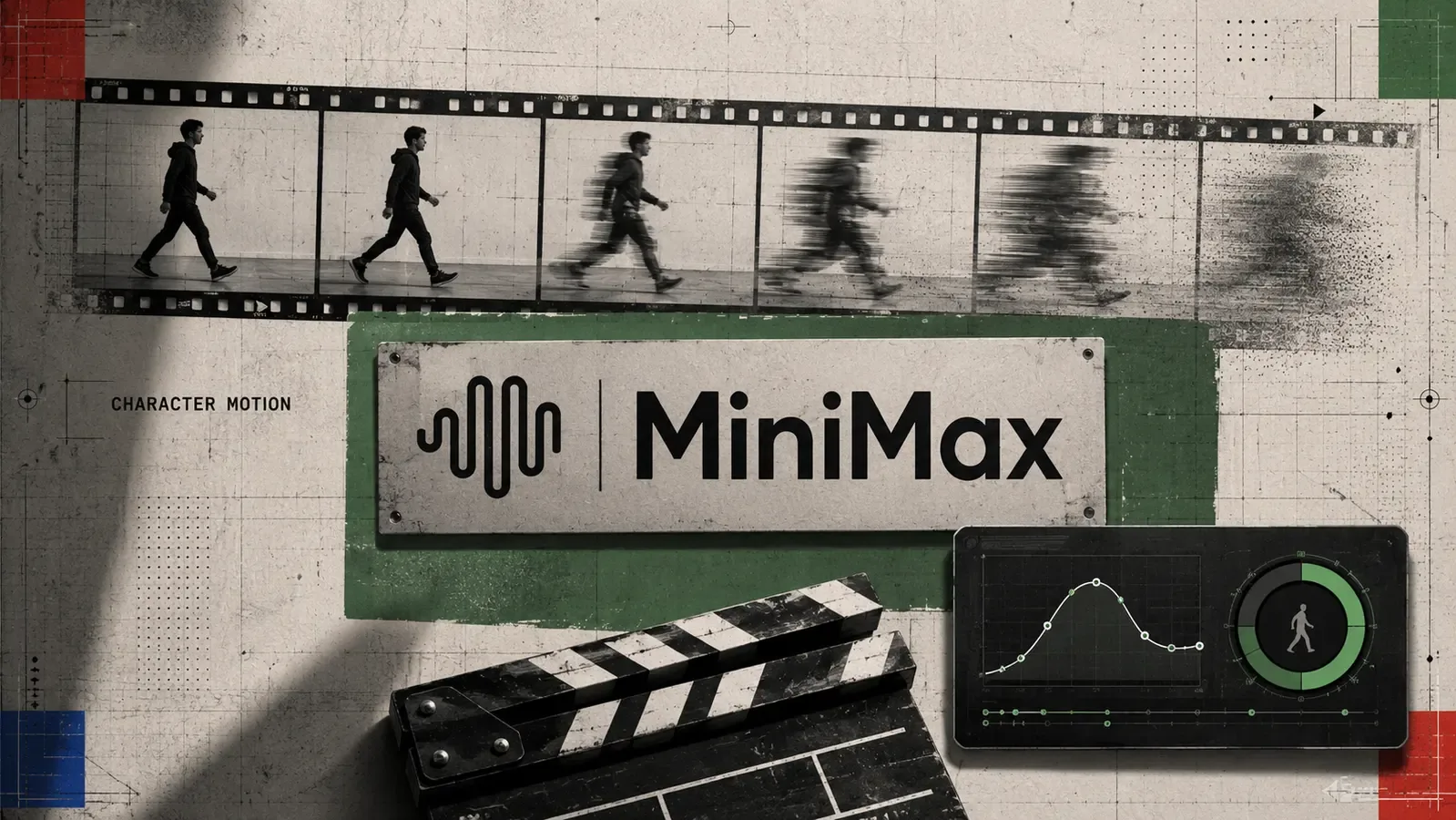
The reason they reach for it is motion, specifically human and character motion. Hailuo 2.3 is strong at rendering people and characters moving convincingly, which is one of the hardest things a video model has to do. Audiences are unforgiving about human movement: we spend our whole lives watching other people, so a gait that is slightly off, a gesture that lands wrong or a face that moves unnaturally registers immediately, even to a viewer who could not say why the shot feels false. A model that handles character motion well clears a bar that trips up a great many of its rivals, and for any project built around people on screen, that competence is the first thing to look for.
That specialism shapes who should reach for Hailuo 2.3. For character-driven content, narrative scenes, presenter formats, anything where a person or a figure has to carry the shot, it is a natural fit, and its reputation in this area is why it keeps appearing among the handful of models teams take seriously. A studio whose footage is dominated by human performance has a different priority from one generating scenery or abstract motion, and Hailuo 2.3 is tuned for the former.
The MiniMax family
MiniMax itself is worth understanding, because it explains why Hailuo 2.3 is more than a one-off. The company also ships Music 2.5, an audio model, and M3, an open-weight large language model, which makes it one of the few labs credible across text, audio and video at once. That breadth is rare. Most outfits do one thing well and buy in the rest, whereas MiniMax is building capability across all three modalities under one roof, and a team already using its audio models (see our AI audio hub) or its open-weight language models may find real value in keeping video in the same family. Shared tooling, shared billing and a single vendor relationship count for a lot once a workflow grows.
The buyer’s caveats
For a Western buyer the familiar caveats apply, since MiniMax is a Chinese lab: procurement, data residency and the lack of mandatory provenance watermarking are all worth checking before committing. What Hailuo 2.3 offers in return is a specific, dependable strength in the area that most often decides whether generated footage looks real, and a parent company with genuine range behind it. For teams whose work lives or dies on believable character movement, that is a strong combination.
How it compares
Seen across the wider field, Hailuo 2.3 is a good example of a model that competes by being excellent at one important thing rather than adequate at everything. The leaderboard’s top places are contested by others, but the list of models teams actually evaluate is shorter and more revealing, and Hailuo 2.3 sits firmly on it. The multi-modal strategy it hinted at has since delivered: MiniMax H3, released at the end of July 2026, folds native audio into the video pass and now carries the family’s flag, so new projects should start their evaluation there. For how the rest compare, see our AI video models hub.
More in Video Generation
All Video →- GuideClaude + MCP for videofrom a written brief to a finished shot
- GuideSeedance 2.5 promptingthe official method, decoded
- xAIGrok Imagine Video 1.5 Liteshort video generation at three resolutions
- HeyGenHeyGen Video 1.0short video with native audio
- Google DeepMindGemini Omni 1.1 Flashthe production release of Google's video line
- AlibabaWan 3.0hosted only, with nothing to download