Quantinuum Rolls-Royce quantum project takes aim at fluid dynamics
Quantinuum, Rolls-Royce, Riverlane and EPCC signed a multi-year agreement on 14 July to test whether near term quantum hardware can accelerate computational fluid dynamics for gas turbine design.
Listen to this articleListen
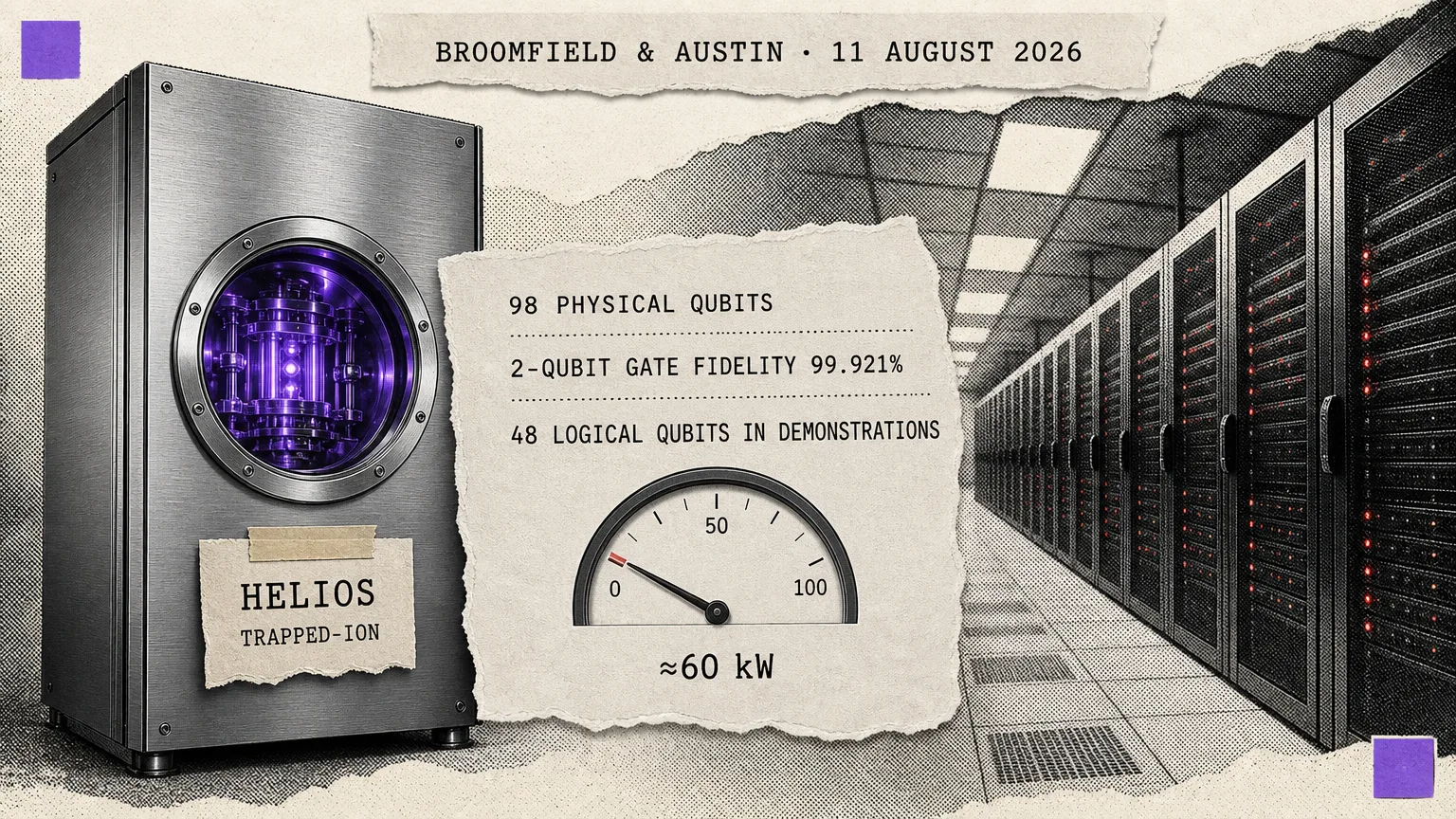
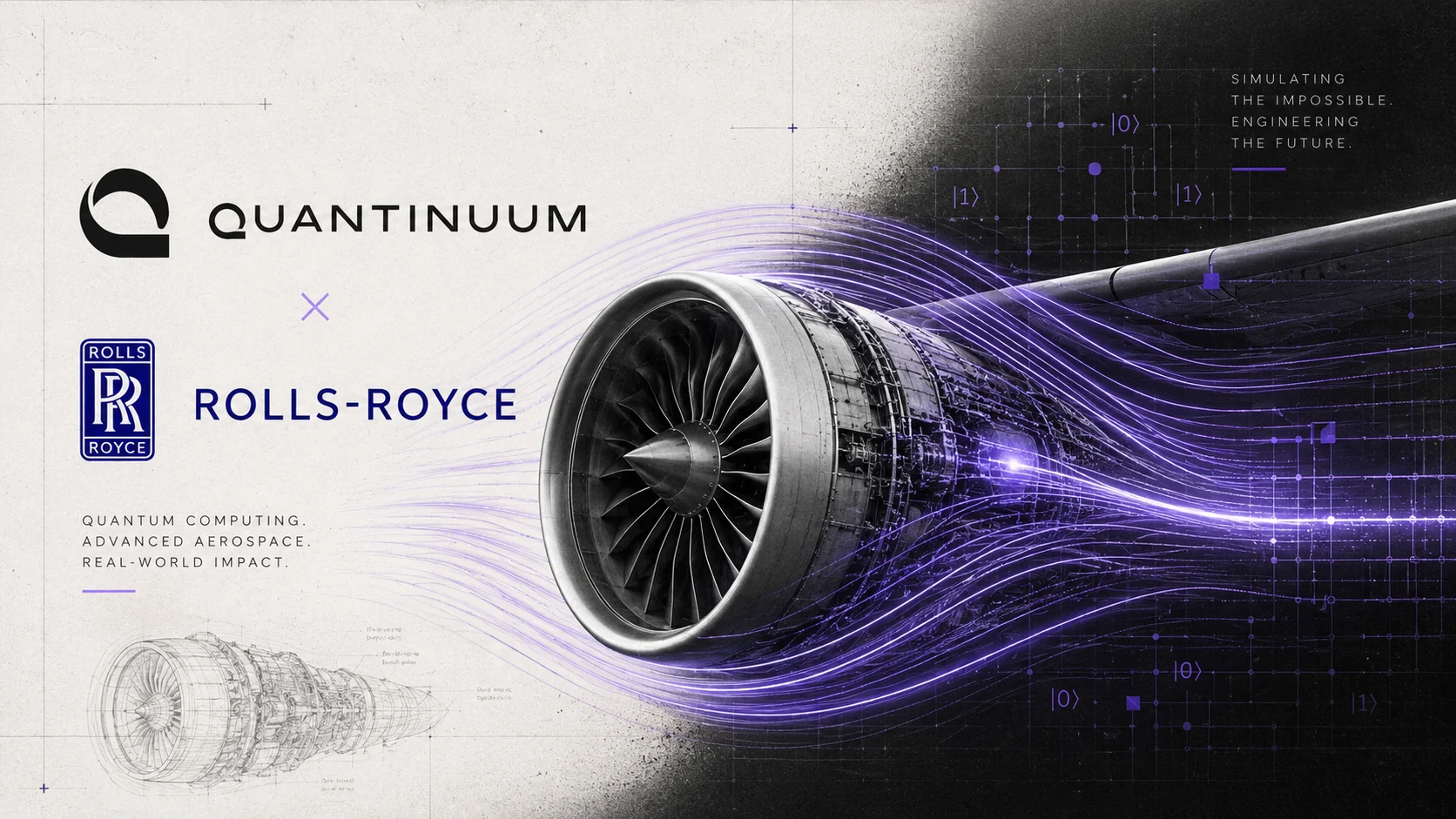
Quantinuum, Rolls-Royce, Riverlane and EPCC signed a multi-year agreement on 14 July to test whether near term quantum hardware can accelerate computational fluid dynamics for gas turbine design. The Quantinuum Rolls-Royce quantum collaboration will run on Helios, Quantinuum’s 98 qubit trapped ion processor, with EPCC, the UK National Supercomputing Centre at the University of Edinburgh, supplying the classical side and Riverlane contributing error correction and fault tolerant algorithm expertise.
Computational fluid dynamics is a well chosen target for a Quantinuum Rolls-Royce quantum project. Turbine design requires simulating turbulent flow through complex geometries at conditions that are expensive to test physically, and the subroutines involved are among the most stubborn workloads in industrial engineering. Existing simulations consume very large amounts of classical supercomputing time and still require approximation. If a hybrid workflow can accelerate specific bottleneck subroutines, the value is measurable in engineering cycles.
The hardware specification is the strongest part of the announcement. Helios records average single qubit gate infidelities of 2.5 times ten to the minus five and two qubit gate infidelities of 7.9 times ten to the minus four across all operational zones, with state preparation and measurement fidelity of 3.3 times ten to the minus four. Those figures were independently evaluated by Sandia National Laboratories and published in Nature this month, which places them in a different category from vendor stated specifications. The system provides all-to-all qubit connectivity through a rotatable ion storage ring linking two quantum operation regions, which removes the routing overhead that constrains fixed lattice architectures.
The partners are explicit that this is exploratory. The plan is to test computational building blocks for industrially relevant algorithms on Helios and assess how they would scale on planned future systems, named Sol at 192 physical qubits and, further out, Apollo. Leigh Lapworth, Fellow in Computational Science at Rolls-Royce, framed it as the start of a new phase after almost five years of algorithm development with Riverlane using classical emulators in collaboration with EPCC. Five years of preparatory work before touching hardware is a reasonable indication that the participants understand what 98 qubits can and cannot do.
The commercial significance for Quantinuum is that this is its first named aerospace use case since listing. The company completed a Nasdaq initial public offering in June at $60 per share, raising $1.68 billion in an upsized offering that was reported to be more than twenty times oversubscribed, and now carries a market capitalisation around $15.7 billion against first quarter net revenue of $5.24 million and a net loss of $136.59 million. A named blue chip industrial partner with a defined technical problem is worth a great deal to a company at that stage of the revenue curve.
There is a national dimension. The collaboration is positioned as advancing the UK quantum strategy, and three of the four participants are British: Rolls-Royce, Riverlane in Cambridge and EPCC in Edinburgh. Britain has consistently produced strong quantum research and struggled to convert it into commercial scale. A hardware partner listed in the United States, working with a British industrial customer, a British error correction specialist and a British supercomputing centre, is a workable model for keeping the applications work domestic even where the hardware is not.
The appropriate scepticism is about timelines. Nothing in this announcement claims quantum advantage on turbine design. It claims an agreement to test whether the building blocks work and to assess scaling on machines that do not yet exist. Bank of America’s assessment at the Quantum.Tech World Conference on 3 July, that the industry lacks commercially relevant algorithms and fault tolerant hardware, applies to this project as much as to any other.
What separates it from the sector’s less serious announcements is specificity. A named problem, a named machine with independently verified fidelities, a named scaling path and a partner with five years of prior algorithm work. That is a research programme with a defined question, and the Quantinuum Rolls-Royce quantum agreement will produce a real answer within a few years, whichever way it goes.
Sources
- Acepcc.ed.ac.uk
- Quantinuumquantinuum.com
- Rolls-Roycerolls-royce.com