Deutsche Bank opens custody as OKXICE schedules tokenised trading
Deutsche Bank’s digital-asset custody is available in Germany. Separately, OKXICE targets 23 November for a conditional-exemption US securities venue.
Listen to this articleListen
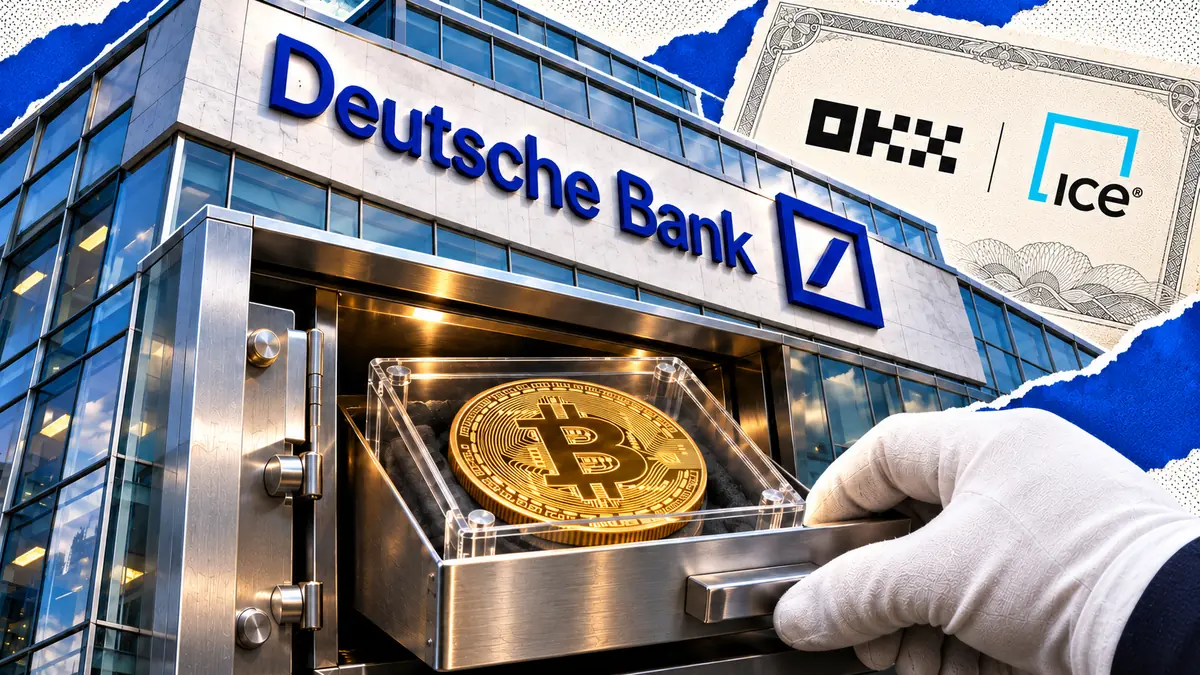
Deutsche Bank’s institutional digital-asset custody service is available in Germany, while OKXICE plans to begin trading tokenised US securities on 23 November. The bank’s product site describes custody and transfers for eligible institutional customers; Reuters reports that the separate OKX–Intercontinental Exchange venture has set its launch date under the SEC’s conditional tokenised-securities framework.
The developments address two different jobs in financial markets. Custody safeguards a client’s assets and the keys used to move them. A securities venue brings together buyers and sellers, with rules for the instruments being traded and the rights attached to them. Both are necessary services as digital assets enter institutional workflows.
Deutsche Bank’s custody service starts with five assets
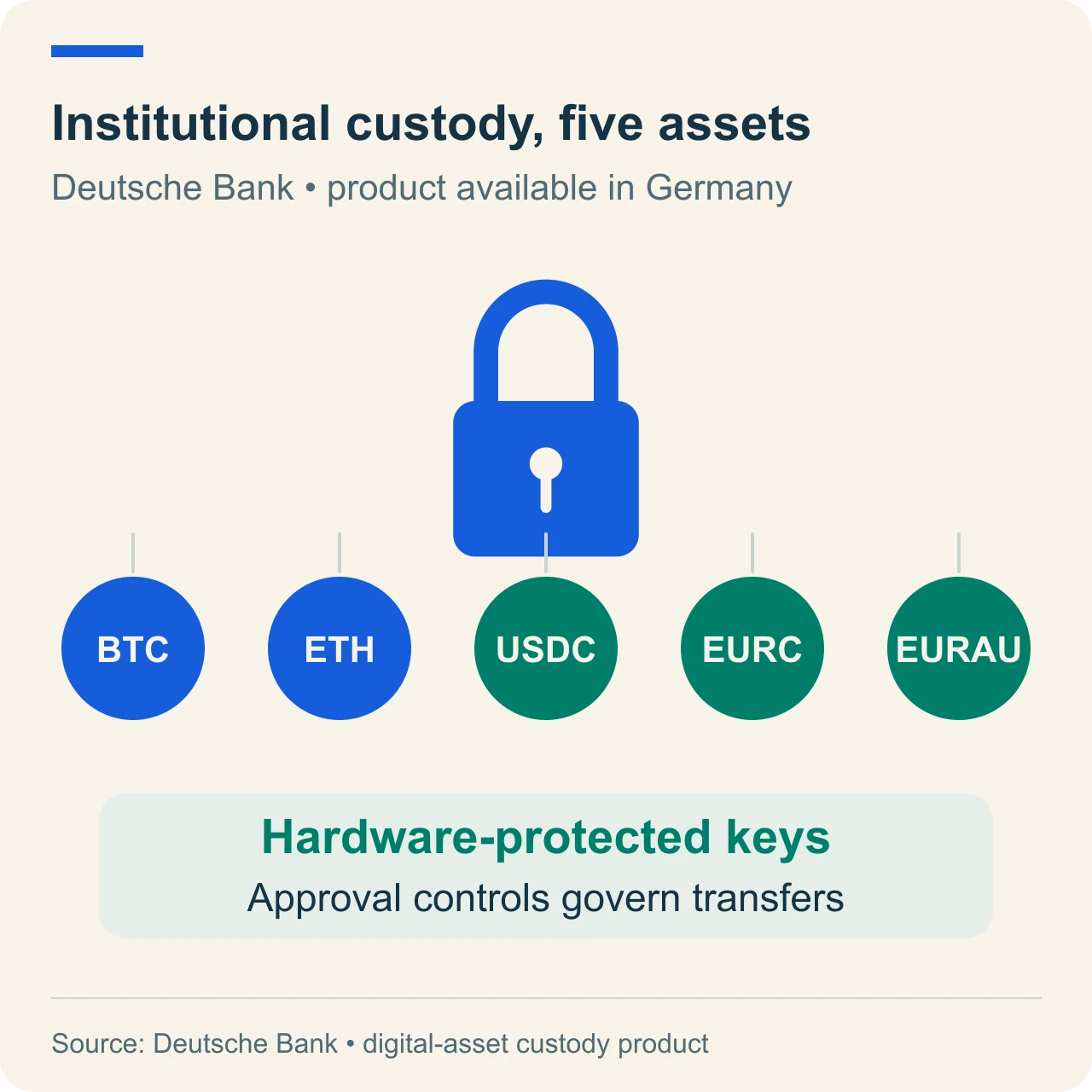
Deutsche Bank lists Bitcoin, Ether, USDC, EURC and EURAU among the assets its service supports. Its product page describes availability through Deutsche Bank AG Frankfurt, with cross-border servicing across Europe subject to applicable regulations.
Eligible customers include institutional investors, multinational companies, sovereign organisations and wealth managers. The service provides custody, transfers to third parties and internal transfers between warm and cold storage. Customers access it through the bank’s Autobahn gateway and Corporate Bank Portal.
The bank’s 16 September announcement had outlined those assets and a launch subject to completion of the regulatory process. The operational product page now describes the available service, with segregation of client assets, hardware-protected keys and a customisable approval process.
Key management becomes a controlled bank operation
Deutsche Bank says private keys are protected in hardware security modules, with multiple layers of access and approval controls. A private key authorises movement of a blockchain asset. Losing control of it can therefore expose the asset itself.
The custody arrangement places that responsibility within a professional service with separate storage environments, recovery arrangements and multiple-person approvals for important actions. The September announcement also describes a roadmap that includes tokenised financial instruments, with additional assets depending on demand, internal approval and regulatory processes.
The commercial attraction for institutional customers is operational: asset segregation, documented permissions and integration with their existing banking access. Those functions support the customer’s holding and transfer of assets, while the assets retain their market-price risk.
OKXICE targets round-the-clock securities trading
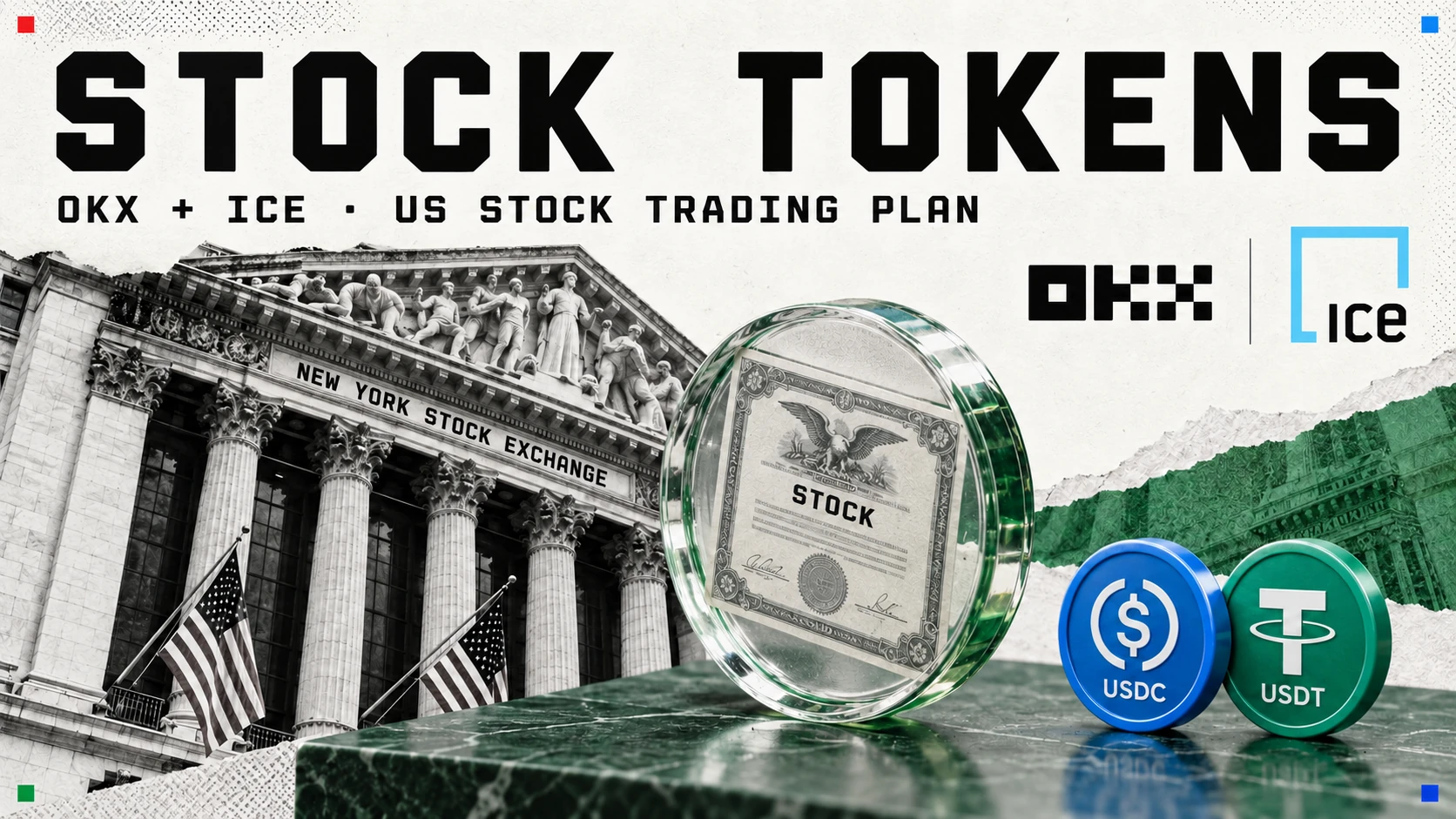
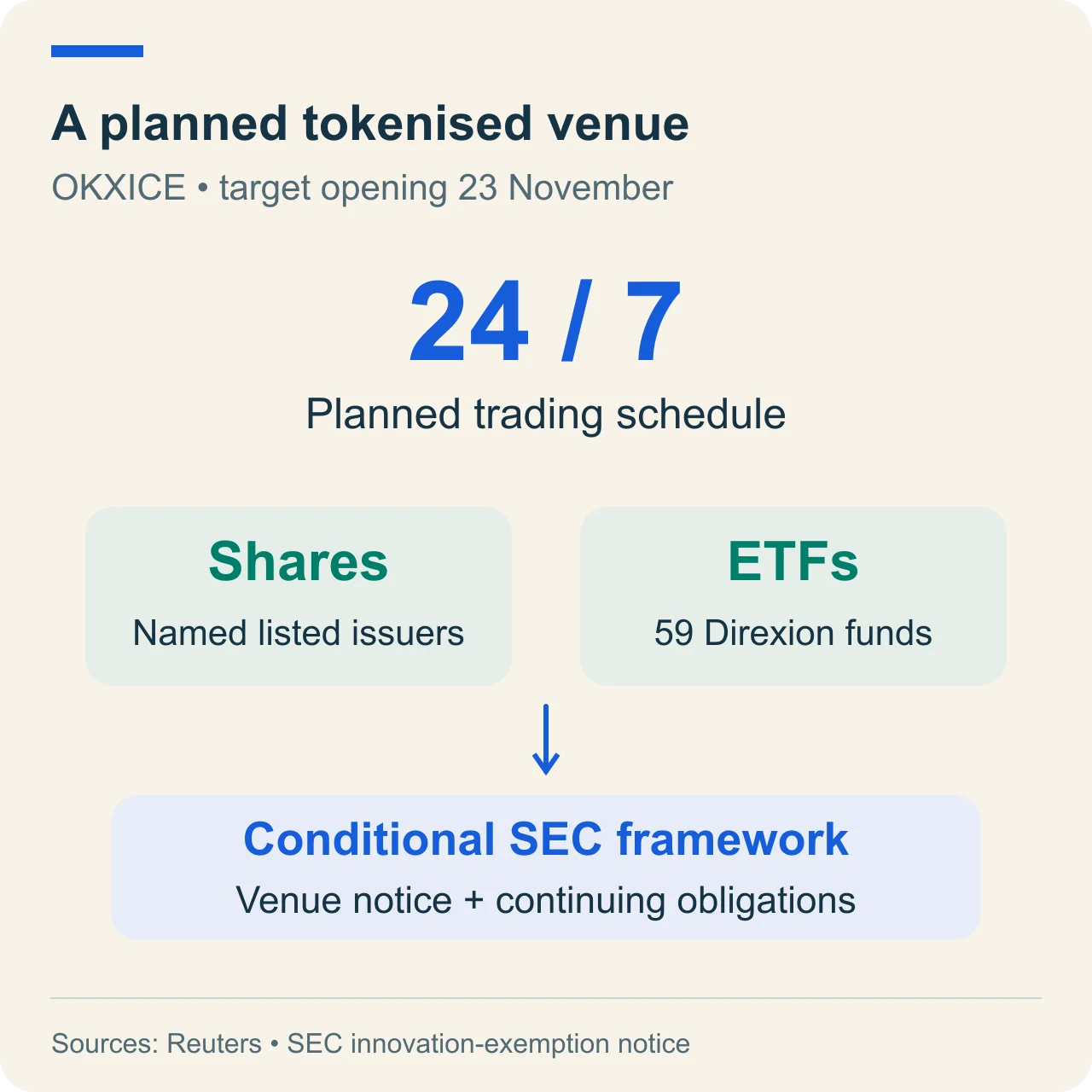
OKXICE says it will launch on 23 November with more than 70 assets, Reuters reported on 11 November. The reported initial offering includes tokenised shares of Coinbase, Circle and Robinhood, alongside 59 exchange-traded funds from Direxion.
The venture combines crypto exchange OKX with Intercontinental Exchange, the owner of the New York Stock Exchange. Its proposed venue extends the tokenisation discussion from how an asset is held to how a security can be traded. Tokenisation represents rights to a security through a digital token, making the underlying legal rights and their connection to the token central to the product.
Round-the-clock access is one attraction. Investors also need arrangements that keep tokens, underlying securities, ownership records and corporate actions aligned. Dividends, voting rights and the treatment of a security during exceptional events remain part of operating a securities market, however its trades are recorded.
The exemption comes with conditions and an issuer process
The SEC’s innovation-exemption materials require a tokenised-securities venue to publish a notice at least 30 calendar days before operating. The regulator’s list records OKXICE’s notice submission on 4 October. OKXICE maintains its own public-notice page, with subsequent versions shown there.
The framework grants temporary, conditional relief for covered activities. The SEC says its notice list records submissions; compliance with the exemption’s definition and conditions remains the venue’s responsibility. Reuters also reports that multiple issuers objected to tokenised trading of their shares, making issuer eligibility a practical part of the launch.
The two developments bring familiar financial responsibilities into digital-asset markets: Deutsche Bank manages safekeeping and authorised transfers, while OKXICE prepares securities trading tied to underlying rights. Their progress will be measured in the services clients can use and the obligations those services fulfil.