Claude cuts quantum circuit costs; Xanadu reduces optical losses
QuEra, Harvard and Anthropic report lower quantum circuit resource estimates. Separately, Xanadu and HyperLight report 7 mdB optical switch insertion loss.
Listen to this articleListen
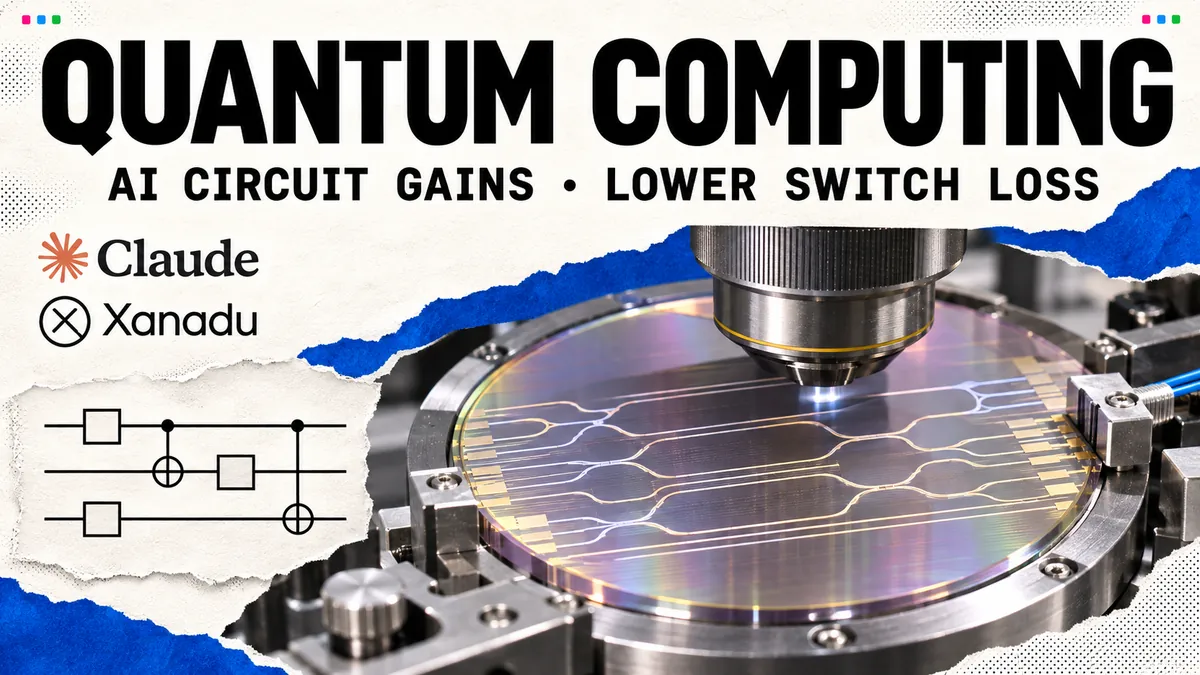
AI-designed circuits and lower-loss optical switches are reducing different resource demands in quantum computing. QuEra highlighted research with Harvard and Anthropic on 10 November showing a 39-fold improvement in the combined resource score for one circuit. Separately, Xanadu and HyperLight reported optical-switch insertion loss of 7 millidecibels, improving on their earlier 20-millidecibel benchmark.
The circuit work reduces the operations and logical qubits an algorithm needs. The switch work preserves more light as information moves through photonic hardware. Each result addresses a different constraint on building useful quantum computers.
Claude’s Gaussian circuit uses fewer gates and qubits
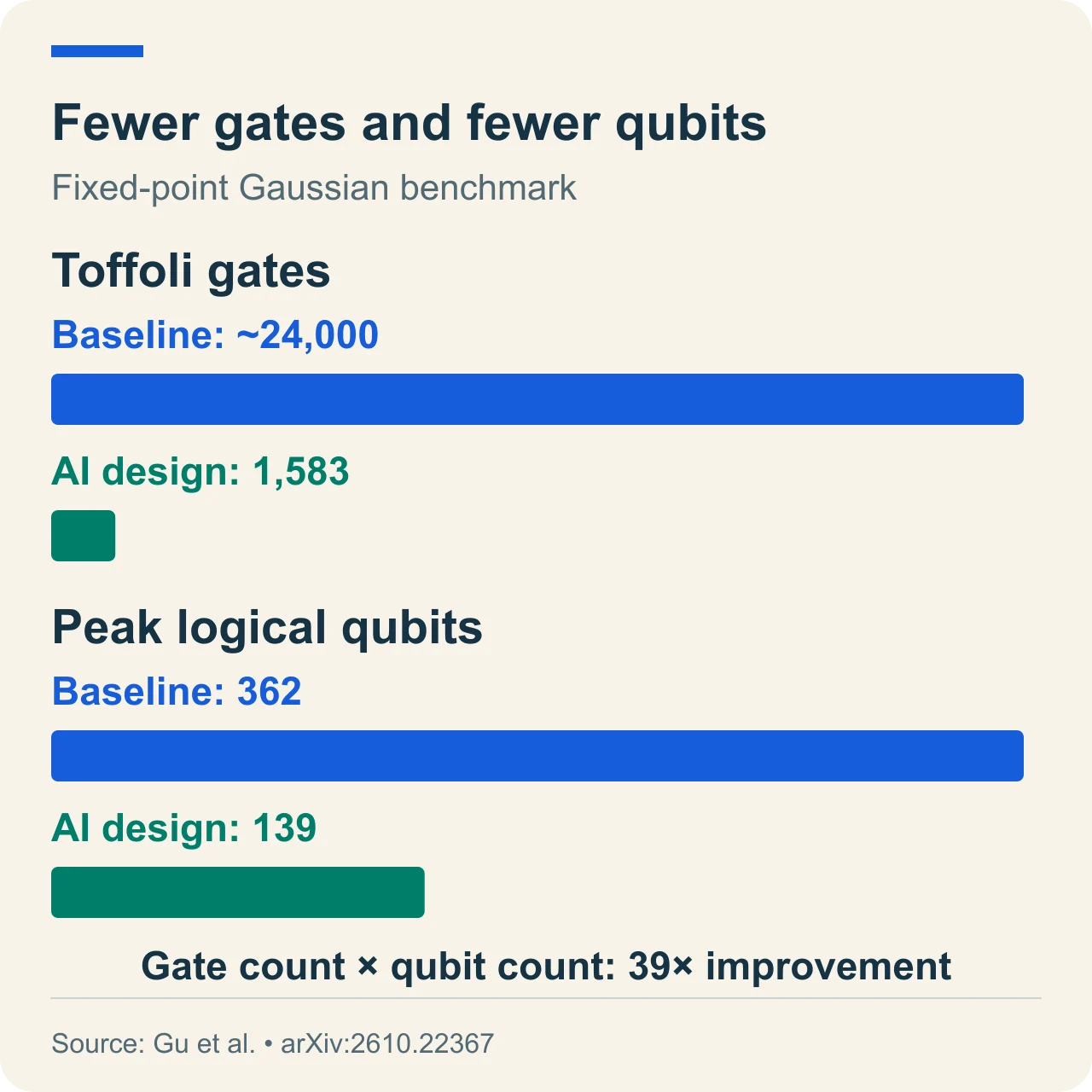
The 39× result applies to a fixed-point Gaussian circuit, a mathematical building block. In the research preprint, its baseline uses about 24,000 Toffoli gates and 362 logical qubits. The AI-designed circuit uses 1,583 gates and 139 qubits.
A gate is an operation in a quantum circuit; a logical qubit is a unit of quantum information protected through error correction. The study’s combined score multiplies the Toffoli-gate count by the peak logical-qubit count. The 39× improvement therefore describes that product for this benchmark. Translating the design into runtime and physical hardware depends on the machine executing it.
Independent evaluation guided the circuit search
The researchers paired Claude with an automated evaluator that checked correctness and measured resource use. Claude proposed designs and used the feedback to improve them, as Anthropic explained in October. The preprint was submitted on 15 October; QuEra’s November announcement draws attention to that work.
Seven of the eight tasks improved both gate and qubit counts relative to their baselines. The eighth produced a new reversible approach to modular inversion, an arithmetic operation used in elliptic-curve calculations, giving designers additional ways to trade gate use against qubit use.
These are estimates for computational building blocks. Their value to a complete application depends on how often the application uses those components and the other resources it needs.
Xanadu and HyperLight report 7 mdB switch loss
Xanadu and HyperLight’s 10 November announcement reports optical-switch insertion loss of 7 mdB, down from 20 mdB in 2025. Seven millidecibels equals 0.007 decibels. Insertion loss measures how much signal is lost as it passes through a component.
In photonic quantum computing, photons carry quantum information and switches route them through the system. Loss can remove those information carriers, making it harder to scale a useful machine.
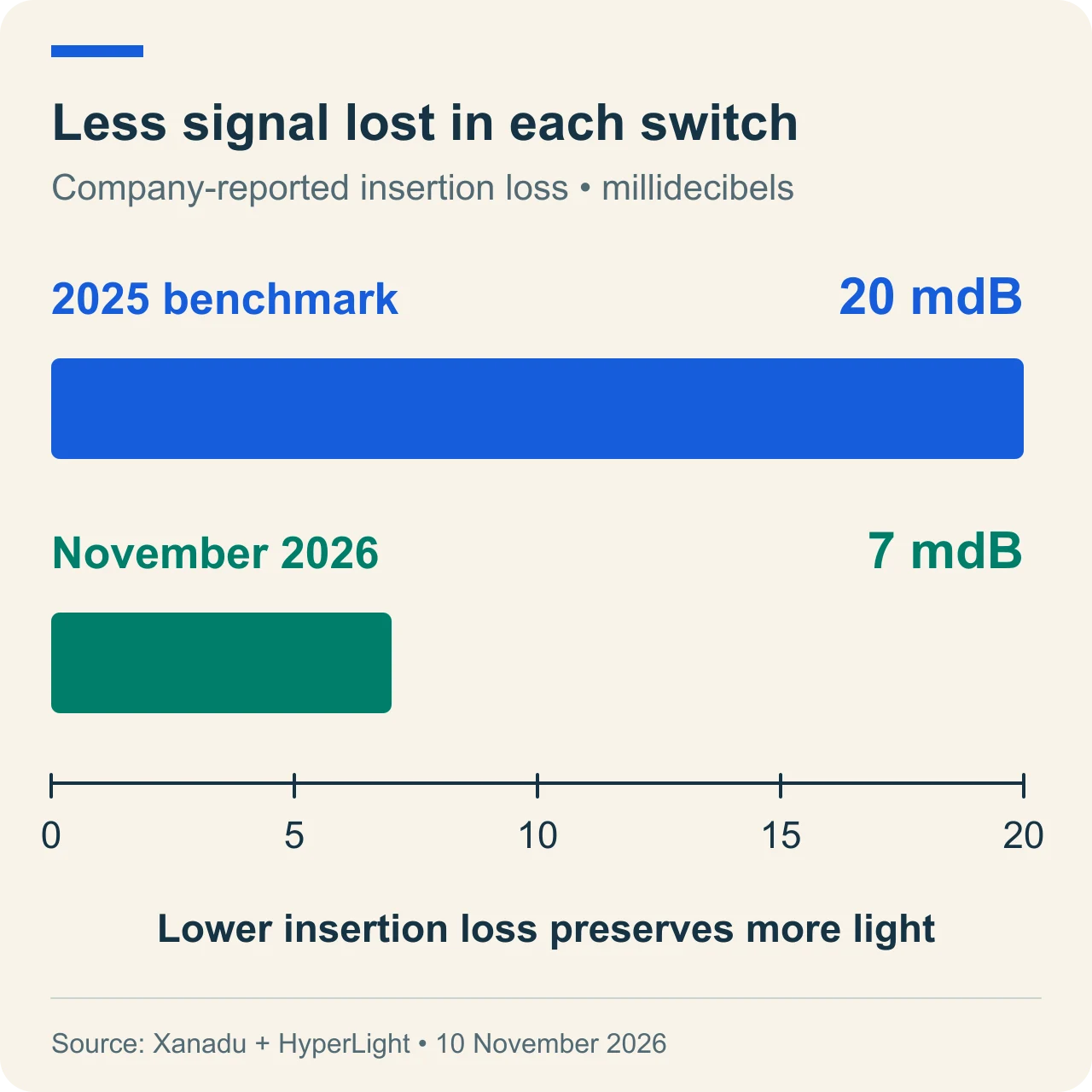
The companies say they demonstrated the result on HyperLight’s thin-film lithium-niobate Chiplet manufacturing platform. Lower loss in the switch addresses one part of the optical system; the resulting system-level benefit also depends on the other components and how the switches are connected.
The two advances offer complementary ways to reduce quantum computing’s resource burden: improve the instructions a machine must execute, and preserve more of the information moving through its hardware.
Sources
- QuEra: AI circuit research highlighted on 10 November 2026quera.com
- Gu and colleagues: circuit-design preprint, 15 October 2026arxiv.org
- Anthropic: circuit-design method, 16 October 2026anthropic.com
- Xanadu and HyperLight: company release, 10 November 2026, distributed by GlobeNewswireca.finance.yahoo.com