
Anthropic
Claude Fable 5
the first model in Anthropic's Mythos class
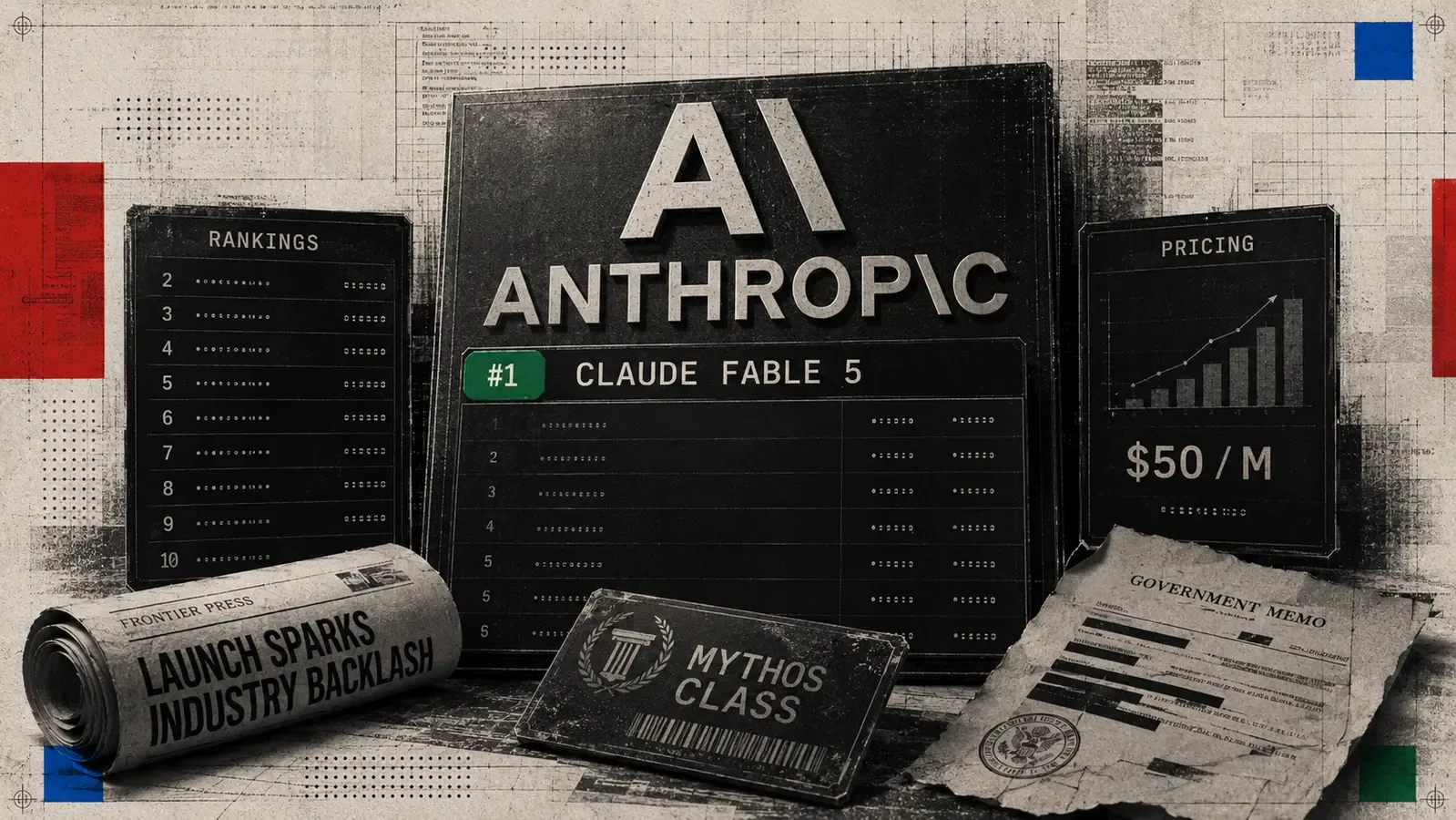
Key facts
- Anthropicflagship, Aug 2026
- Lab
- Mythostier above Opus
- Class
- $50per M output
- Price
- Ceilingof the Claude range
- Position
- Claude 5first model
- Family
Claude Fable 5 was Anthropic’s June 2026 flagship release. This guide records its launch, safeguards and dated evaluations; Fable 5.1 is its current successor.
What it is
Claude Fable 5 was Anthropic’s June 2026 flagship large language model, and it held first place on the Arena text leaderboard through August 2026; on the board dated 25 September 2026 it sits third on 1,504, behind Claude Opus 5.5 on 1,509 and Claude Opus 4.6 High on 1,505. It is the first release in the Claude 5 family and the debut of a new class Anthropic calls Mythos, which the company positions a tier above its earlier Opus line. The dated leaderboard observations describe its position at those measurement times.
Two editions from one model
The release comes in two forms that share a single model. Claude Fable 5 is the generally available version, shipped with added safeguards on dual-use capability, meaning the sorts of skills that could aid harm as readily as legitimate work. Claude Mythos 5 is the same underlying model offered to approved organisations without those extra measures. Splitting one system into a broadly available, safeguarded edition and a gated, less restricted one is a deliberate design choice, and it shows how Anthropic is thinking about who should be trusted with the fuller capability. The restricted twin is covered on its own page.
Anthropic used the Mythos class to distinguish the underlying capability tier from its earlier Opus line. Later releases, including Fable 5.1 and Opus 5.5, have changed the current lineup.
Where it stands
On capability, Claude Fable 5 is widely treated as one of the most capable generally available models on the market, and the two boards that carry the most weight read differently. On 29 August 2026 it held first place on the Arena text leaderboard at arena.ai, the head-to-head preference board formerly found at lmarena.ai, on 1507, ahead of Claude Opus 4.6 High on 1505 and Claude Opus 4.7 High on 1502. The Artificial Analysis Intelligence Index on the same day puts its stablemate Claude Opus 5 first at maximum effort on 63, with Fable 5 at maximum effort second on 62 and GPT-5.6 Sol at maximum third on 61. Another sign of Fable 5’s standing is that even Moonshot, whose Kimi K3 is one of this year’s headline rivals, places Fable 5 first on its own comparison charts. When a competitor’s own marketing puts your model ahead of its, the claim carries more weight than a lab’s self-report usually would. Independent benchmarking will refine the picture, but the direction of travel is not in serious dispute.
Pricing and controversy
That standing comes at a price. Fable 5 is positioned as a premium product, with output reported at around $50 per million tokens, which places it well above the cheaper open-weight models drawing attention this year. The gap is deliberate. Anthropic is selling capability and reliability at the top of the range rather than competing on cost, a strategy that holds only while Claude Fable 5 stays at the top on quality.
Two stories have shadowed the launch. The first was a weeks-long dispute over access involving the US government, resolved in early July 2026, which underlined how closely governments now track who may use the strongest models and on what terms. The second was public criticism from Microsoft’s Nadella, who described Fable as “editorially controlled”. The phrase points at Anthropic’s willingness to shape what the model will and will not say, and it captures a real disagreement running through the field about how far a lab should steer the system it builds.
What to watch
For readers, the takeaway is about position. A model that a rival ranks first, that governments negotiate over, and that a major industry figure singles out for criticism is, by any measure, the one setting the terms of the debate. That was Fable 5’s position at launch, and it is why its pricing and its safeguards draw as much scrutiny as its benchmark scores. It also explains why a page on a single model doubles as a snapshot of where the whole frontier stood through the middle of 2026.
For the current premium release, see Claude Fable 5.1. The large language models index compares the available families and links to each dated release.
The current successor
Anthropic’s current model overview lists Fable 5.1, Opus 5.5, Sonnet 5.5 and Haiku 5.5. It recommends Opus 5.5 as a starting point for most work. See the successor guide for that release; the model-specific settings and dated observations above describe the earlier version.
More AI
All AI →
Claude Fable 5 decision splits Max and Pro users after a 27-million-view row
Anthropic's post settling the Claude Fable 5 deadline saga drew more than 27 million views. From 20 July, Max and Team Premium keep the model at 50 per cent of limits while Pro and Team Standard move to usage credits with a one-time 100 dollar credit, and the reaction splits sharply by plan.
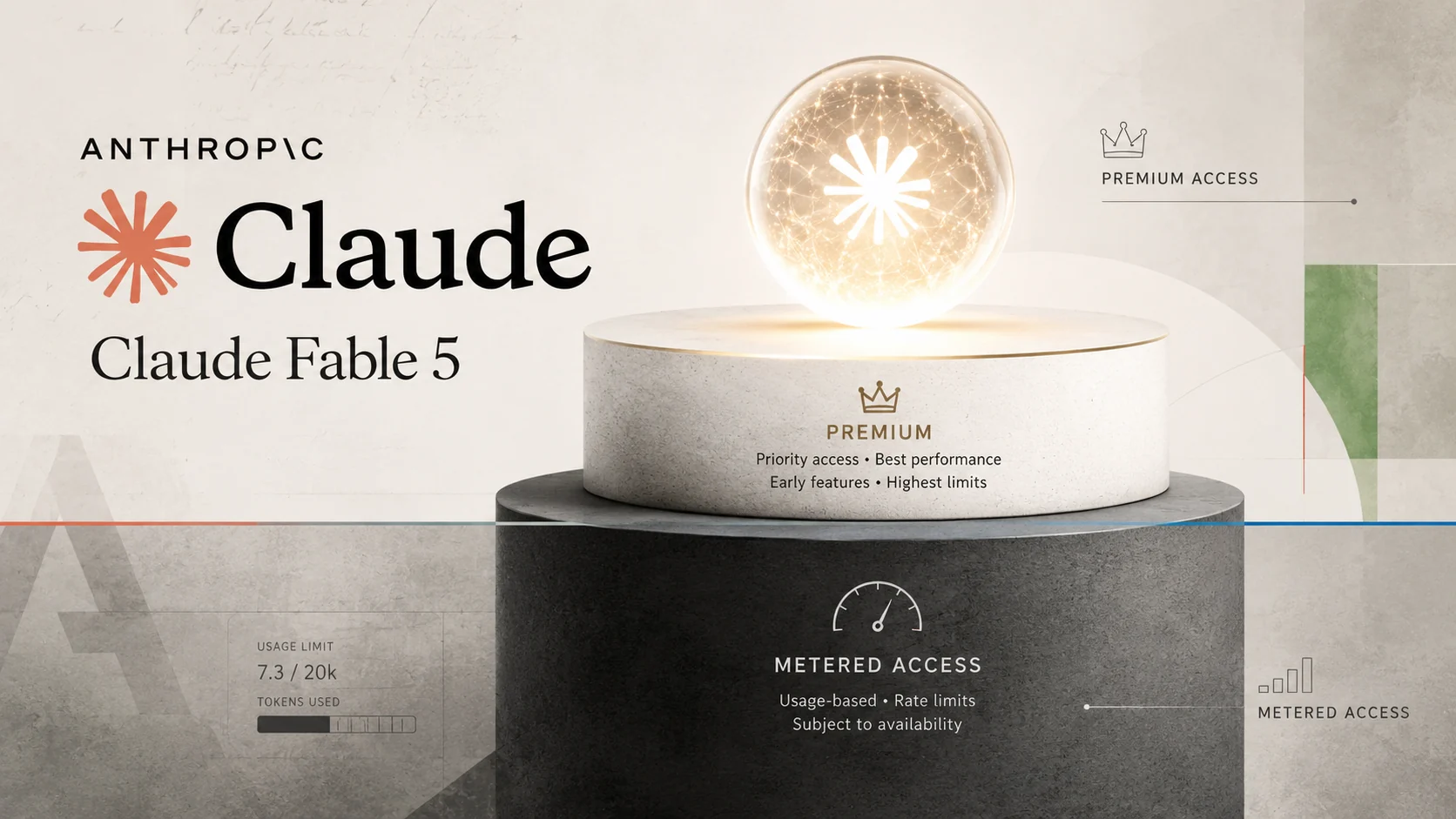
Claude Fable 5 subscription access settles into a two tier split
Anthropic has ended six weeks of rolling deadlines around Claude Fable 5 subscription access, confirming on Saturday that its most capable model will be included in all Max and Team Premium plans from 20 July, capped at 50 per cent of those plans' usage limits.
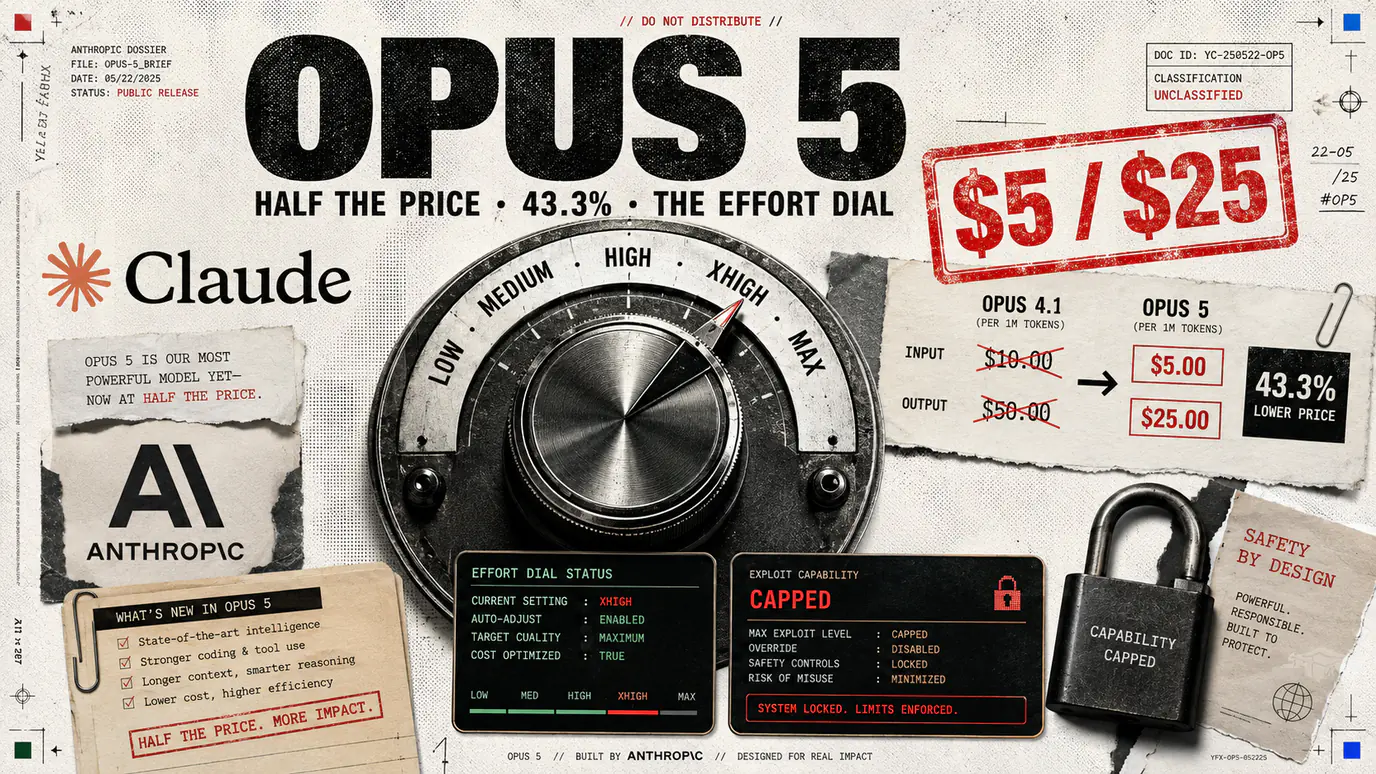
Claude Opus 5 takes the frontier at half the price
Anthropic released Claude Opus 5 on 24 July at 5 and 25 dollars per million tokens, half the price of Fable 5, and it leads most rows of the company's own benchmark table. Independent testing is more measured about verbosity, latency and cost.
More in Large Language Models
All LLMs →- Google DeepMindGemini 4 Argonlonger reasoning, coding and cyber defence
- OpenAIGPT-5.6the flagship from 9 July to 3 September 2026
- OpenAIGPT-6 Astrathe new generation, rolling out from 3 September 2026
- OpenAIGPT-6.1 Solthe upgraded mid-price GPT-6 model, released 29 September 2026
- OpenAIGPT-6 Sol and Lunathe mid-price and budget GPT-6 models, released 22 September 2026
- AnthropicClaude Opus 5.5the first Claude 5.5 model, cheaper and faster than Opus 5