
Meta
Muse Spark
Meta's proprietary frontier family
Key facts
- MetaSuperintelligence Labs
- Lab
- 1.32 Sep 2026, efficiency update
- Latest
- $1.25/$4.25per million tokens, standard
- API price
- $0.10/$0.20trains on your prompts
- Contributor tier
- Multimodalreasoning + agents
- Type
Meta's Muse Spark is the proprietary model family from Meta Superintelligence Labs: a natively multimodal reasoning model launched on 8 April 2026, given a paid API at version 1.1 in July, and updated for coding as version 1.2 on 5 August 2026.
What it is
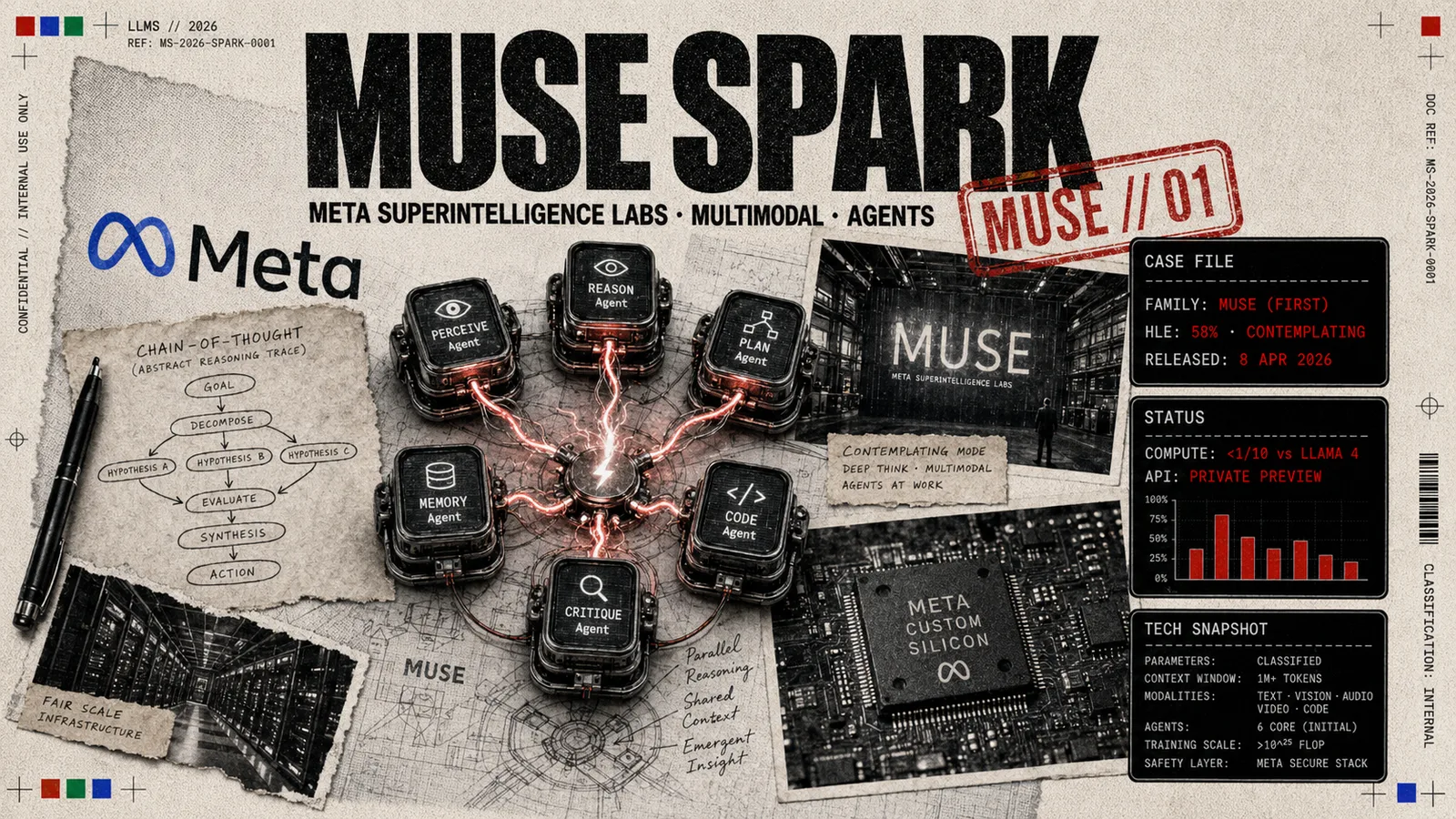
Muse Spark is the proprietary model family from Meta Superintelligence Labs, first released on 8 April 2026 at meta.ai and in the Meta AI app. Meta describes it as “a natively multimodal reasoning model with support for tool-use, visual chain of thought, and multi-agent orchestration,” with particular strength in visual STEM reasoning, entity recognition and localisation.
The name signals a break. Muse is a new proprietary family, part of what Meta calls “a ground-up overhaul of our AI efforts.” It is not billed as a replacement for Llama but as the opening step in a different direction, built by the Superintelligence Labs group Meta stood up in 2025. Every Muse Spark release is closed, and the API is the only way in. That changed for the family as a whole on 10 August 2026, when Meta published the weights of Muse Glimmer, a 30-billion-parameter model distilled from Muse Spark, under the Apache 2.0 licence. Mark Zuckerberg said the same day that Muse Spark 1.2’s weights would follow “soon”. As of 21 August 2026 they have not been released: no Muse Spark repository exists on Hugging Face, and the Glimmer announcement describes that model only as distilled from Muse Spark rather than promising Spark’s own weights.
The versions
Muse Spark (8 April 2026). The launch model, available in Meta’s own products with a private API preview for selected users.
Muse Spark 1.1 (9 July 2026). The version that came with the first paid developer API in Meta’s history, at $1.25 per million input tokens and $4.25 per million output, with $20 in free credits and United States availability at launch. It has a one-million-token context window, supports computer use across desktop, browser and mobile surfaces, and delegates work to parallel subagents while acting as the lead agent itself. Meta positioned it against GPT-5.5 and Claude Opus 4.8, claiming first place on MCP Atlas, JobBench, Humanity’s Last Exam and Finance Agent V2. Replit, Cline and Box were named as early partners.
Muse Spark 1.3 (2 September 2026). An efficiency release: Meta reports about 20 per cent fewer tool calls and about 25 per cent fewer tokens than 1.2 on coding tasks, so the same work costs less and finishes sooner. On the Artificial Analysis Intelligence Index, rebased to v4.3 on 7 September 2026, it scores 48 at maximum effort. At our 2 October 2026 read that puts it level with GPT-6 Sol, behind Claude Opus 5.5 on 58, Claude Sonnet 5.5 on 56, Claude Fable 5.1, GPT-6 Astra and Gemini 4 Argon on 53, GPT-6.1 Sol on 52 and Claude Opus 5 on 51. Announced on Meta’s own research blog.
Muse Spark 1.2 (5 August 2026). A coding-focused update, released alongside Muse Code and co-trained with that harness on rejection-sampled trajectories from it. Meta scaled training compute on coding tasks and widened the range of training environments, targeting whole-repository generation, long end-to-end projects and auto-research. It is available in Muse Code and in the Meta Model API with what Meta calls expanded global access. Meta’s documentation lists a 1,048,576-token context window for 1.1 and gives no figure of its own for 1.2.
Contemplating mode
The headline feature of the original release is Contemplating mode, which Meta says “orchestrates multiple agents that reason in parallel” rather than running a single chain of thought. In that mode Meta reports 58 per cent on Humanity’s Last Exam and 38 per cent on the FrontierScience Research benchmark. As with any launch benchmark, these are the lab’s own figures and are best read alongside independent testing, but the design choice is the point: Muse Spark is built to spread a hard problem across several reasoning agents at once.
What it costs
Meta sells the same 1.2 model on two tiers, and the gap between them is the strategy.
| Tier | Per M: in / cached / out | Requests/min | Trains on your data |
|---|---|---|---|
Standard (muse-spark-1.2) |
$1.25 / $0.15 / $4.25 | 3,000 | No |
Contributor (muse-spark-1.2-contributor) |
$0.10 / $0.002 / $0.20 | 100 | Yes |
Prices are per million tokens. The contributor tier trades heavily discounted tokens for permission to use prompts and completions to train future Meta models; the standard tier states that prompts and completions are not used for training. Token throughput is 4 million a minute on standard against 3 million on contributor.
Built on a rebuilt stack
Meta frames Muse Spark as the product of a rebuilt pretraining stack rather than a larger version of an old one. It says the new approach reaches its capabilities “with over an order of magnitude less compute” than its earlier Llama 4 Maverick model. The company has not published a parameter count for any Muse Spark version.
Why it stands out
Muse Spark is significant less for any single score than for what it represents: Meta moving its frontier effort under a new brand and a new lab, away from the open-weight Llama line that made its name, then pricing it as a customer acquisition instrument. On the coding benchmarks Meta published with 1.2, Opus 5 leads on all three, including Meta’s own internal evaluation at 79.4 against 70.6. Advertising revenue funds the clusters, so the family can be sold below the rates rivals need to charge, and the contributor tier converts that discount into training data. For how it compares with the rest of the field, see our large language models hub and the wider AI section.
More AI
All AI →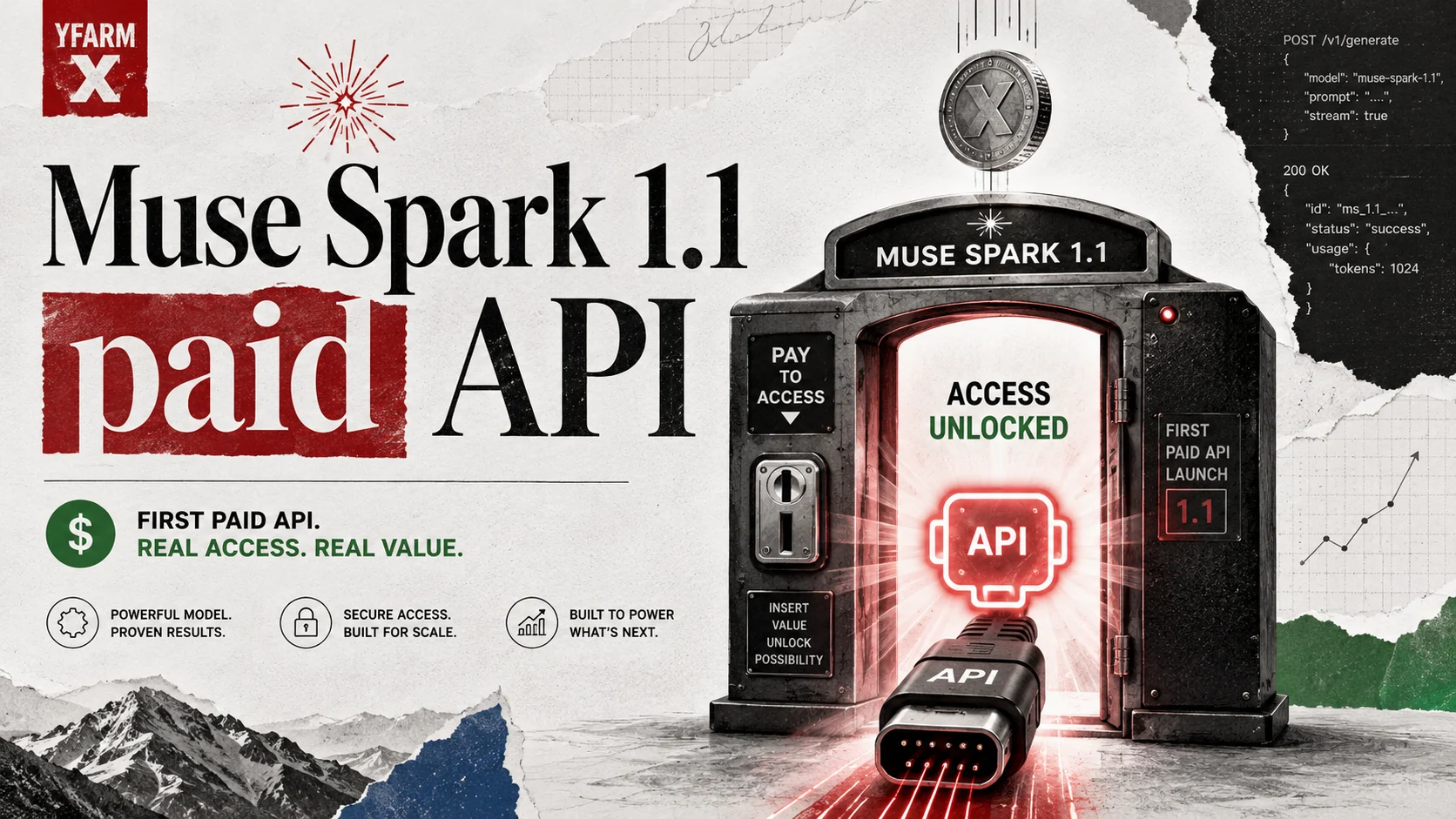
Muse Spark 1.1 gives Meta its first paid developer API
Mark Zuckerberg announced Muse Spark 1.1 on 9 July, and with it the first paid developer API in Meta's history.
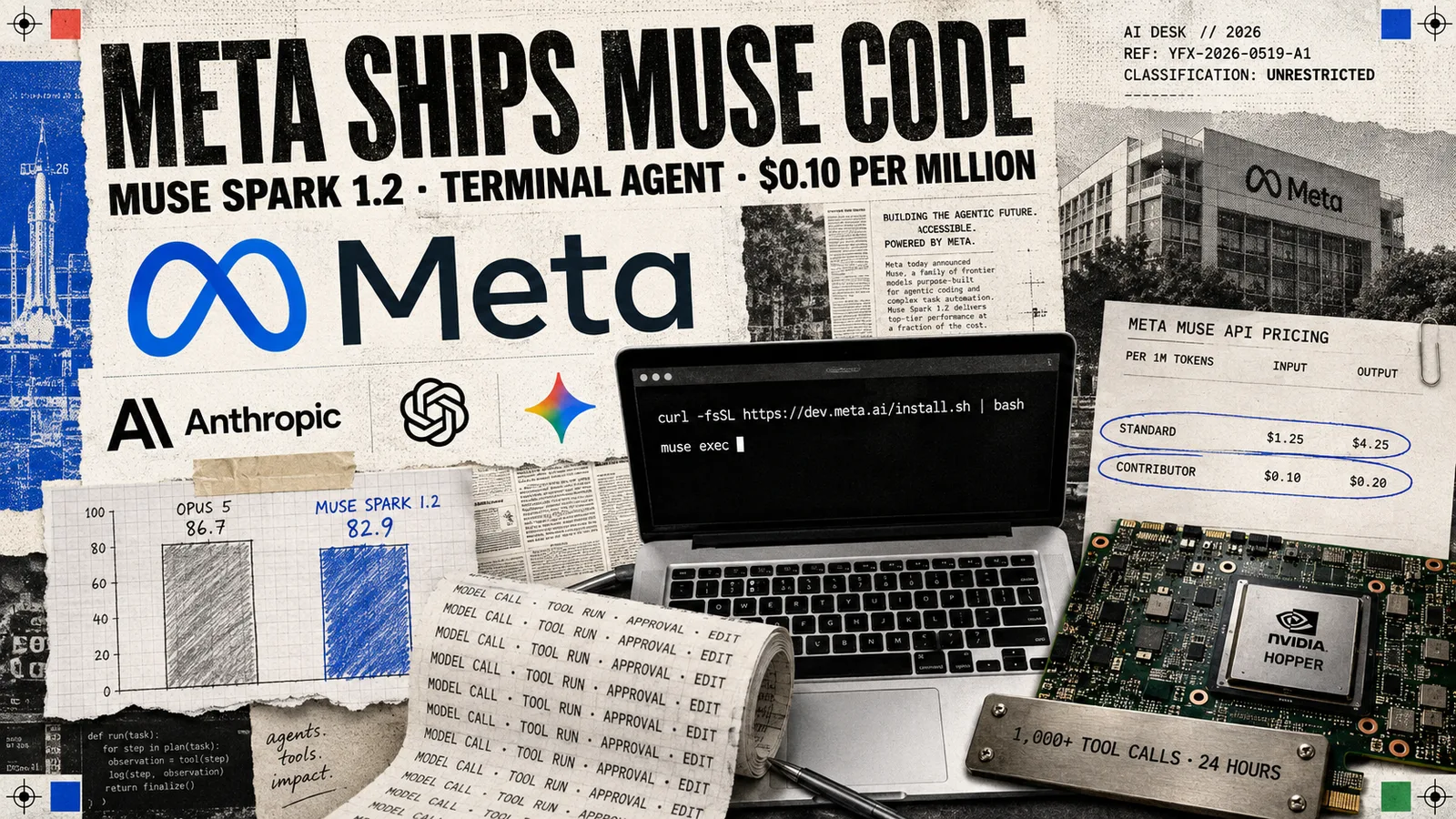
Meta ships Muse Code, and its own charts put Claude Code first
Meta released Muse Code in beta on 5 August, a terminal coding agent running the new Muse Spark 1.2. Opus 5 in Claude Code tops all three benchmark charts Meta published, including Meta's own internal one.
More in Large Language Models
All LLMs →- Google DeepMindGemini 4 Argonlonger reasoning, coding and cyber defence
- OpenAIGPT-5.6the flagship from 9 July to 3 September 2026
- OpenAIGPT-6 Astrathe new generation, rolling out from 3 September 2026
- OpenAIGPT-6.1 Solthe upgraded mid-price GPT-6 model, released 29 September 2026
- OpenAIGPT-6 Sol and Lunathe mid-price and budget GPT-6 models, released 22 September 2026
- AnthropicClaude Opus 5.5the first Claude 5.5 model, cheaper and faster than Opus 5