Muse Spark 1.1 gives Meta its first paid developer API
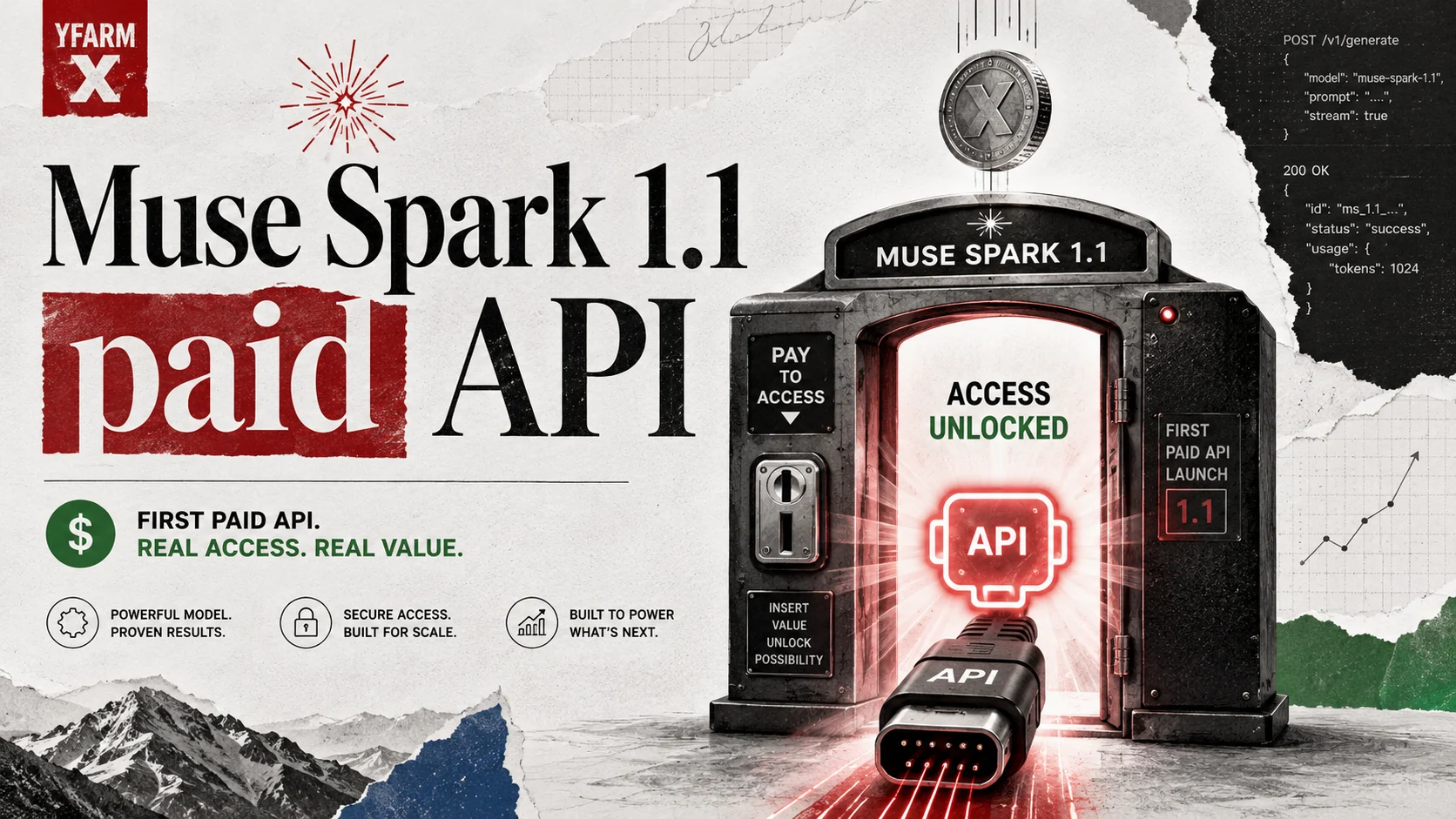
Mark Zuckerberg announced Muse Spark 1.1 on 9 July, and with it the first paid developer API in Meta's history.
Listen to this articleListen
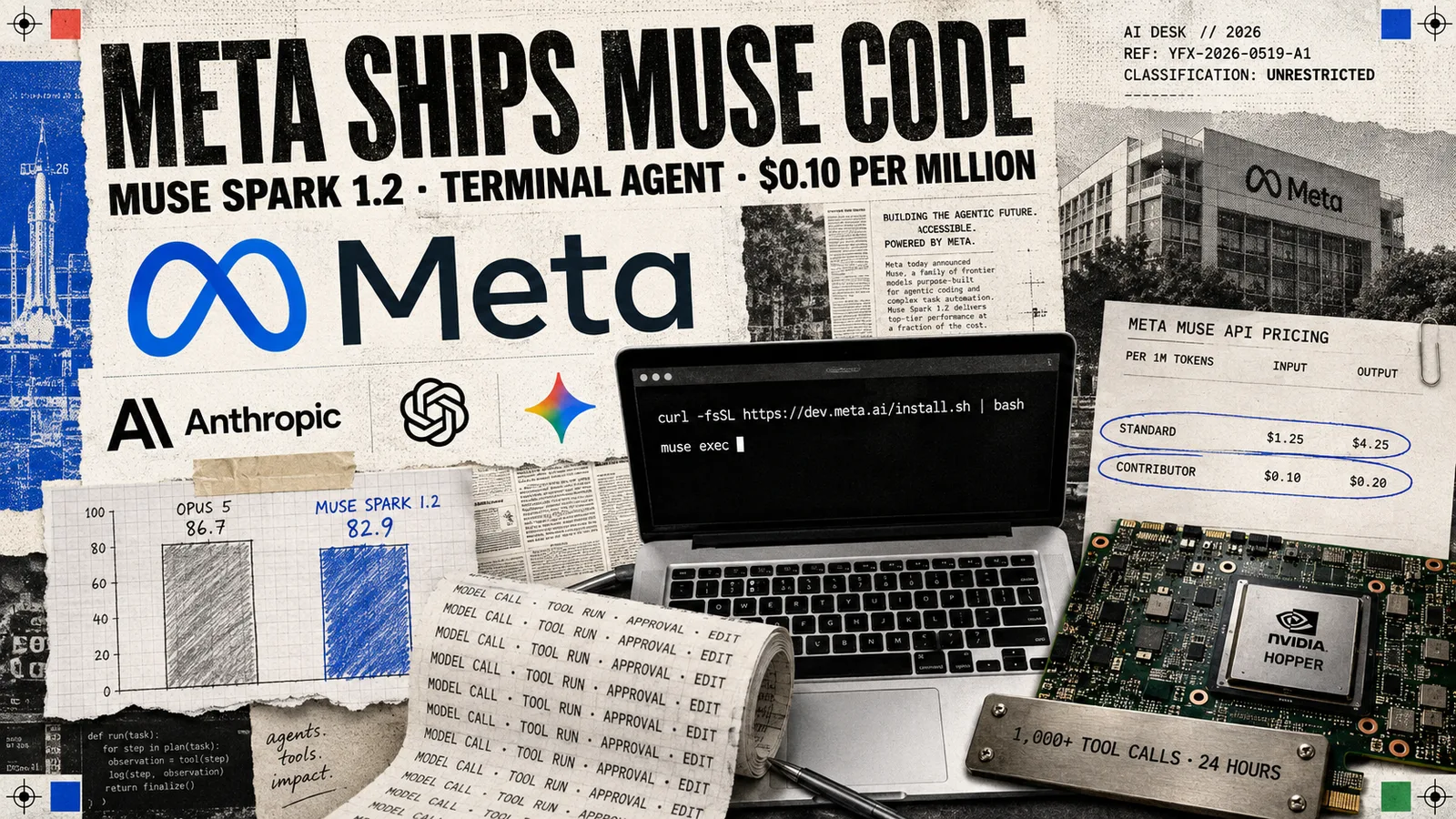
Mark Zuckerberg announced Muse Spark 1.1 on 9 July, and with it the first paid developer API in Meta’s history. The model is an agentic system with a one million token context window that the company positions against GPT-5.5 and Claude Opus 4.8 on agentic evaluations, claiming first place on MCP Atlas, JobBench, Humanity’s Last Exam and Finance Agent V2. Muse Spark 1.1 is priced at $1.25 per million input tokens and $4.25 per million output tokens, which undercuts every comparable Western flagship by a wide margin.
The API is the more significant part of the announcement. Meta has spent a decade releasing model weights and monetising nothing directly, treating open Llama releases as a commoditisation strategy aimed at rivals’ margins. A paid API in public preview, with $20 of free credits and United States availability at launch, marks a change in that posture. Muse Spark 1.1 ships with no open weights.
The capability set is aimed squarely at agent builders. The model supports computer use across desktop, browser and mobile surfaces, and delegates work to parallel subagents while operating as the lead agent itself. Replit, Cline and Box are named as early partners. The number Meta chose to highlight is from the Vals AI Harvey legal agent benchmark, which is held back from public disclosure to limit contamination: Muse Spark 1.1 scores 20 per cent against Claude Fable 5 on 11 per cent. Held out benchmarks carry more weight than public ones for exactly this reason, though a single result on a proprietary evaluation is not a body of evidence.
The release completes an unusually productive fortnight for Meta Superintelligence Labs, the division formed in mid 2025 under Alexandr Wang after Meta took a 49 per cent stake in Scale AI. Two days before Muse Spark, the lab shipped Muse Image and previewed Muse Video, its first media generation models. Muse Image debuted at second on Arena’s text to image leaderboard with a score of 1280 and is live in the Meta AI application, Instagram Stories in the United States and WhatsApp, with agentic generation that calls web search and code execution, multi-reference composition and Instagram social context conditioning. Muse Video shares the same pre-training base, adds native audio and entered at third on text to video. Neither has a public API, and public Instagram accounts are opted into at-mention remixing by default, a decision that has attracted predictable criticism.
The turnaround narrative has been set out publicly by Meta’s chief technology officer Andrew Bosworth, who described Zuckerberg operating in founder mode, the Wang hire, and an emergency pivot that pulled thousands of staff onto hand written expert traces to post-train the current model. Whatever one makes of the framing, the underlying resources are real. SemiAnalysis projects that Meta will hold more AI compute than either OpenAI or Anthropic by the end of 2026, on the strength of a hyperscaler balance sheet and a willingness to run free cash flow negative. The company is building five clusters above one gigawatt simultaneously, at Prometheus in Ohio, Hyperion in Louisiana and unnamed sites in El Paso, Iowa and Indiana, connected by a scale-across network spanning more than 2,000 kilometres.
The competitive question is whether price wins. At $1.25 and $4.25, Muse Spark 1.1 is roughly a quarter of Sol’s input cost and an eighth of Fable 5’s. Meta can afford to price a model as a customer acquisition instrument in a way that a company whose entire revenue comes from inference cannot. Advertising cash flow funding frontier inference is a structural advantage, and Google is the only other firm positioned the same way.
Muse Image held second place on the image leaderboard for roughly thirty hours before Reve 2.1 took it back with a score of 1306. That is the pace of the current cycle, and a reminder that leaderboard positions are perishable assets. The API, priced where it is, will last longer.