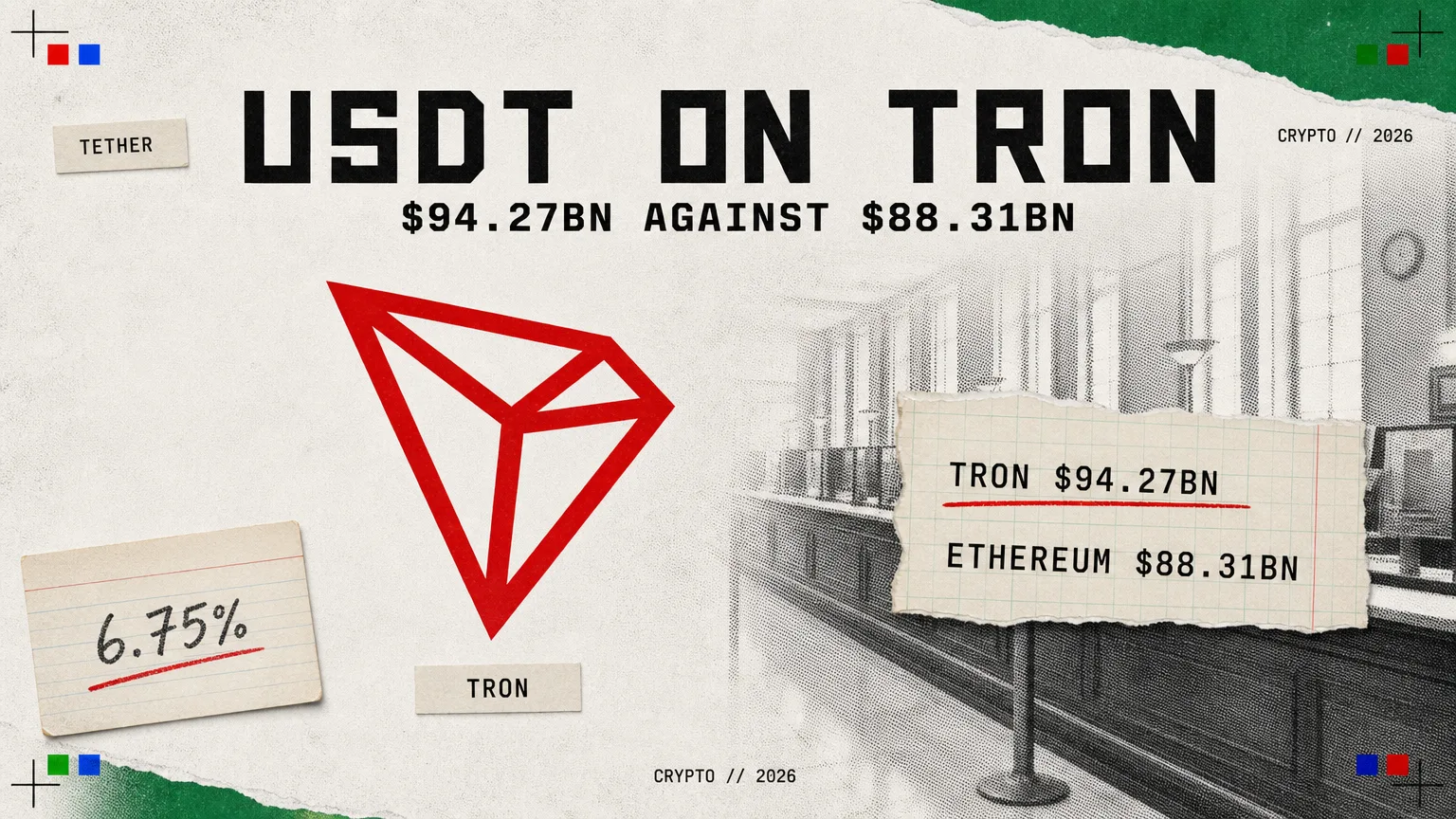
Tron holds $94.27bn of USDT against Ethereum's $88.31bn
USDT on Tron has reached $94.27bn against $88.31bn on Ethereum. We read both figures off the contracts themselves rather than taking Tether's word. The lead has changed hands more than once, and the fee gap normally used to explain it has inverted.
Listen to this articleListen
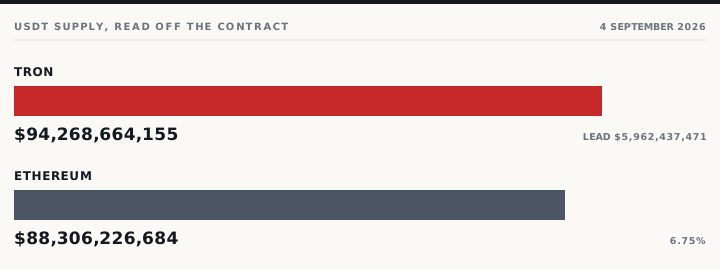
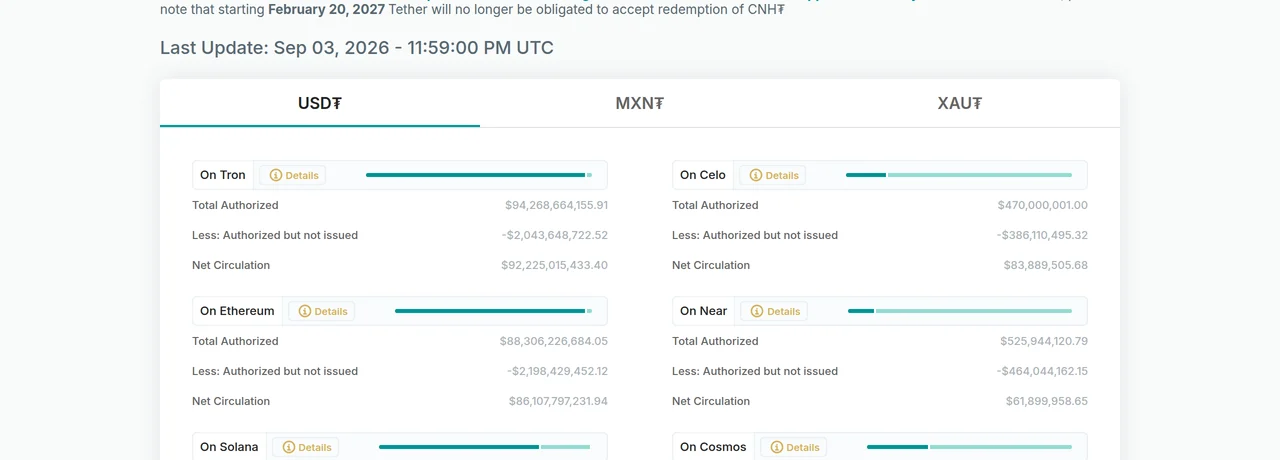
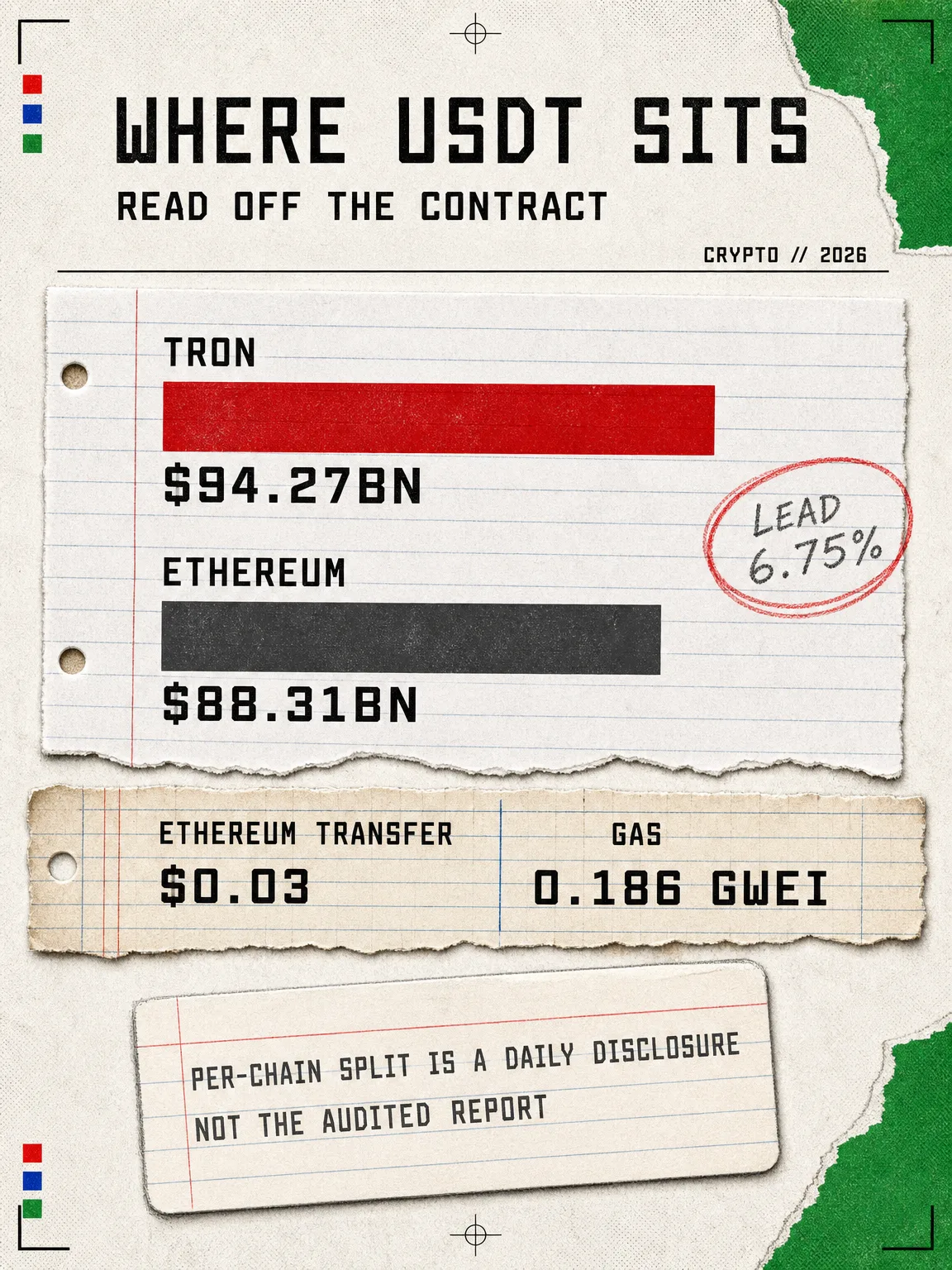
There is $94,268,664,155 of USDT on Tron and $88,306,226,684 on Ethereum. Tron leads by $5.96bn, or 6.75%.
Both figures come from two independent places. Tether publishes them on its transparency page, and we checked both against the chains themselves, calling totalSupply() on the USDT contract on each network. Ethereum returned $88,306,226,684. Tron returned $94,268,664,155. Both agree with Tether’s own disclosure to the dollar.
The lead has changed hands more than once, and the dates come from what each side has said about it.
The line in TRON DAO’s own boilerplate
TRON DAO announced on 10 July 2026 that the circulating supply of USDT on Tron had passed $90bn. The claim it made for that milestone was modest: it “further strengthens TRON’s position as a leading network for USDT activity.”
The interesting line is in the boilerplate at the foot of the same release. There, TRON DAO writes that “until recently, TRON hosted the largest circulating supply of USD Tether (USDT) stablecoin, which currently exceeds $90 billion.” In its own words, on 10 July another chain held the most USDT.
By this morning’s read of both contracts it is again, by $5.96bn. So the ranking has changed hands at least twice, on the participants’ own account: Tron held it, had lost it by 10 July, and holds it this morning. The fresh part of today’s number is the number: $94.27bn is a record for the chain.
Where the per-chain split comes from
Tether’s disclosure separates two things the figures usually arrive fused together.
The per-chain breakdown lives on Tether’s transparency page, which updates daily and is the company’s own statement of where its tokens sit. Tether’s quarterly reserve reports, prepared under an assurance engagement, cover something else: the reserves backing all USDT in aggregate. They are the attested artefact, and the chain-by-chain split stays with the daily page.
$94.27bn stands either way. Our own reads off both chains match it exactly, which is the strongest check available and stronger than either document. It does mean the chain-by-chain league table is a company disclosure rather than an audited one, and it is worth knowing which of the two you are quoting.
What a transfer costs on each chain today
The usual account of why USDT concentrated on Tron is cost. Ethereum was expensive, Tron was cheap, and stablecoin transfers are the most fee-sensitive traffic on any chain because the sender’s only interest is the lowest available price.
This morning’s readings put the two chains the other way round.
| Measured 4 September 2026 | |
|---|---|
| Ethereum gas price | 0.186 gwei |
| Standard ERC-20 transfer | about $0.03 |
| Tron energy fee | 100 sun per unit |
At 0.186 gwei, an ordinary USDT transfer on Ethereum costs roughly three cents. A Tron transfer that pays for its energy by burning TRX outright costs appreciably more than that at the current fee schedule of 100 sun per unit. The two chains are paid for in different ways: a Tron account that stakes TRX draws an energy allowance that covers its transfers, and high-volume senders stake or rent. Measured on the burn route this morning, Ethereum is the cheaper chain to move USDT on.
Gas is volatile and this is one reading on one morning. The narrow point stands: the supply gap is being maintained through a morning on which an Ethereum transfer is the cheaper of the two.
How far the evidence goes
The supply figures are as solid as this kind of number gets: a company disclosure and an independent read of the contract agreeing to the dollar, on both chains.
The history rests on two dated statements. TRON DAO’s own release of 10 July 2026 places the largest USDT supply on another chain as of that day, and this morning’s reads of both contracts place it back on Tron by $5.96bn. Those two points are the primary record this article stands on, and Tether’s transparency page is a live daily snapshot, so the dating of each handover between them comes from the participants’ own accounts.
Sources
- Tether transparency, tokens in circulation by chaintether.to
- Tether supported protocols, with contract addressestether.to
- USDT on Tron exceeds $90 billion (TRON DAO, 10 July 2026)globenewswire.com
- Tronscan token data for the USDT TRC-20 contractapilist.tronscanapi.com