
Tether
Tether
the largest dollar stablecoin
Key facts
- #3by market value
- Rank
- Stablecoindollar-pegged, fiat-backed
- Type
- 2014as Realcoin
- Launched
- Fiat-backedgrows with issuance
- Supply
Tether's USDT is a dollar-pegged stablecoin with about $184.07 billion in market value, rank 3, on 13 October 2026, the most widely traded token in crypto.
What it is
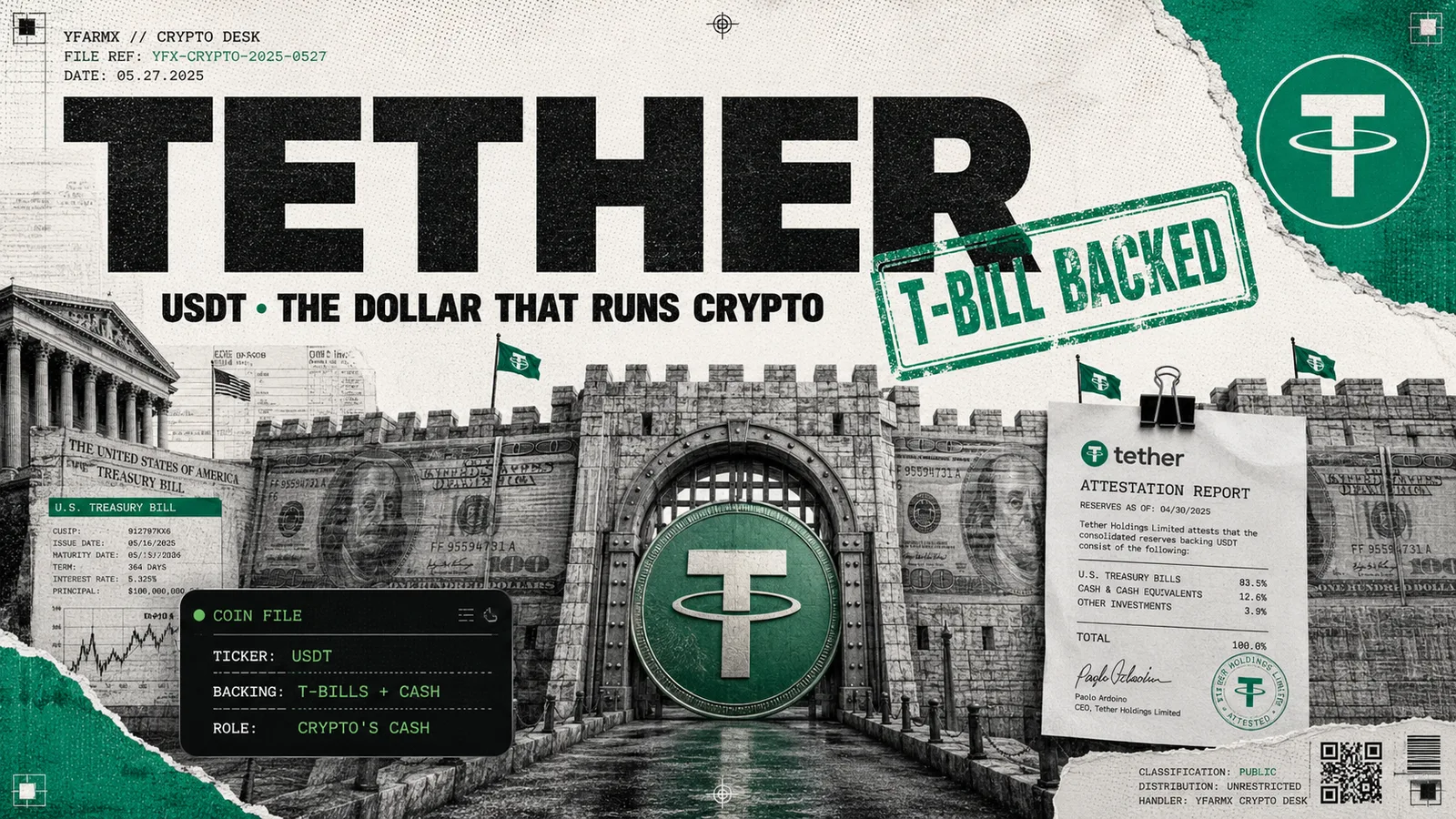
Tether (USDT) is a stablecoin, a token built to hold the value of one US dollar so that traders can park money or move it between exchanges without waiting on a bank transfer. It launched in July 2014 under the name Realcoin, created by Brock Pierce, Reeve Collins and Craig Sellars, and was renamed Tether later that year. The issuer, Tether Limited, sits in the same corporate group as the Bitfinex exchange. It solved a real problem, dollars that settle at crypto speed, and grew into the most traded token in the market: USDT’s daily trading volume routinely exceeds bitcoin’s, according to CoinGecko data.
How it works
Tether mints new USDT when verified customers deposit dollars and destroys tokens when they redeem, so the supply expands and contracts with demand. If the market price slips away from $1, arbitrage traders buy cheap tokens to redeem at par, or mint at par to sell high, pulling the peg back into line. The company states that every token is backed by reserves, dominated by short-dated US Treasury bills, and it publishes quarterly attestations signed by the accountancy firm BDO. An attestation is a snapshot of the books on a single date rather than a full audit, and no full audit has ever been published. USDT circulates across many blockchains, with Tron and Ethereum long hosting the largest shares according to the company’s own transparency page.
The story so far
Tether spent years dogged by questions about its backing, and two regulators eventually put facts on the record. In February 2021 the New York Attorney General found that Tether had at times operated without full backing, including while covering an $850 million shortfall at a payment processor; the companies paid $18.5 million and were barred from doing business in New York, without admitting wrongdoing. In October 2021 the US Commodity Futures Trading Commission fined Tether $41 million for claiming the token was fully backed “at all times” when it was not. Since then the firm has shifted its reserves heavily into US government debt, reported large quarterly profits in its attestations, and in January 2025 announced the relocation of its headquarters to El Salvador.
Where it stands
On 13 October 2026 at 01:46 UTC, USDT traded at $0.9993, with a market value of about $184.07 billion and a rank of 3 among the assets tracked by CoinGecko. The things to watch are regulatory. The United States passed the GENIUS Act stablecoin framework in July 2025, and how an offshore issuer of Tether’s size fits that regime, along with the long-promised full audit, will shape the token’s next chapter. Its lead has survived every controversy so far; whether it survives regulated competition is the live question for 2026.
More Crypto
All Crypto →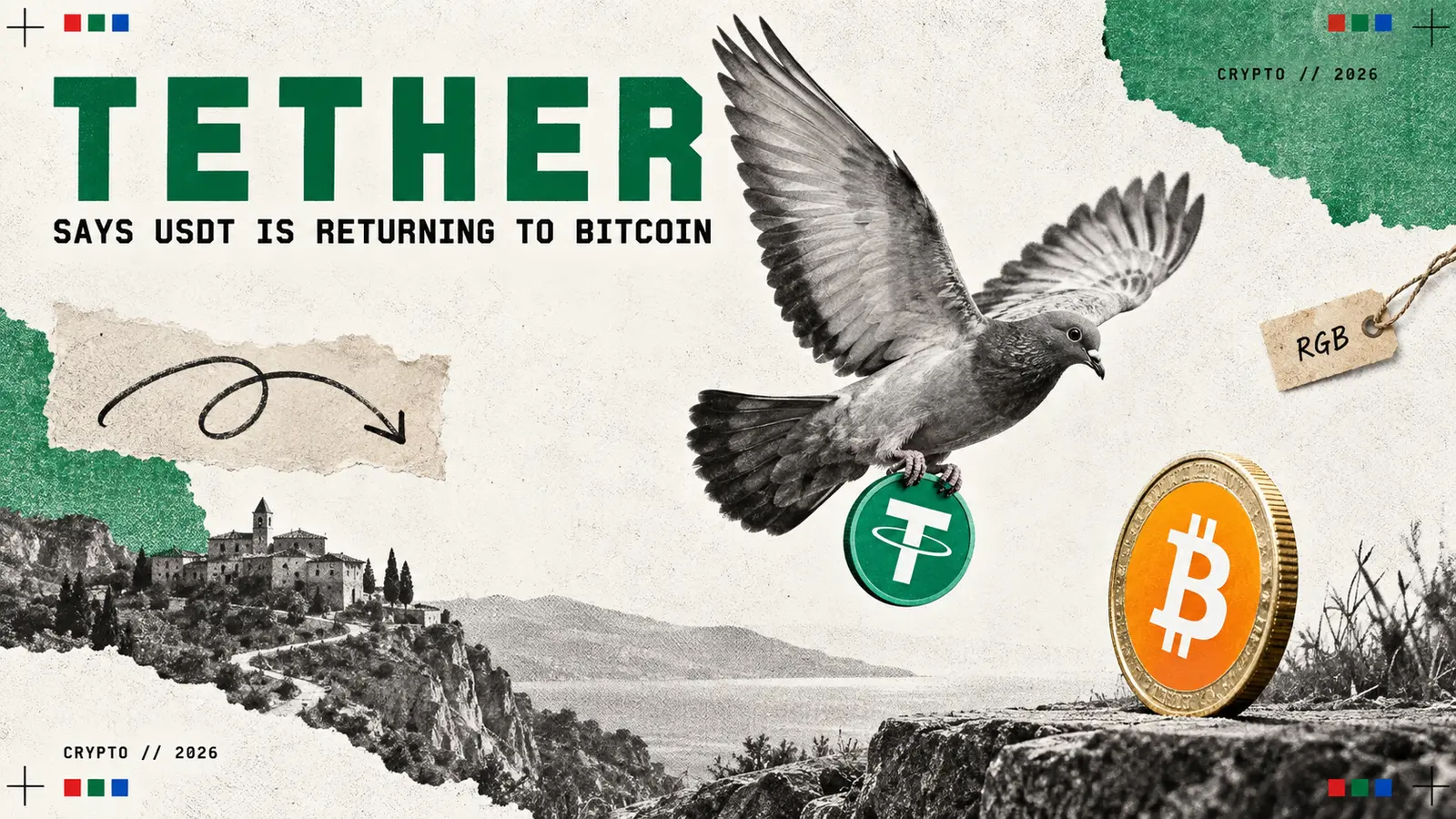
Tether says USDT is returning to Bitcoin, where it began
Tether chief executive Paolo Ardoino wrote on 24 September 2026 that USDT on Bitcoin is 'coming home'. Tether's sister exchange Bitfinex said the relaunch runs on Utexo and the RGB protocol, which keeps payment details off Bitcoin's public ledger. USDT first launched on Bitcoin on 6 October 2014.
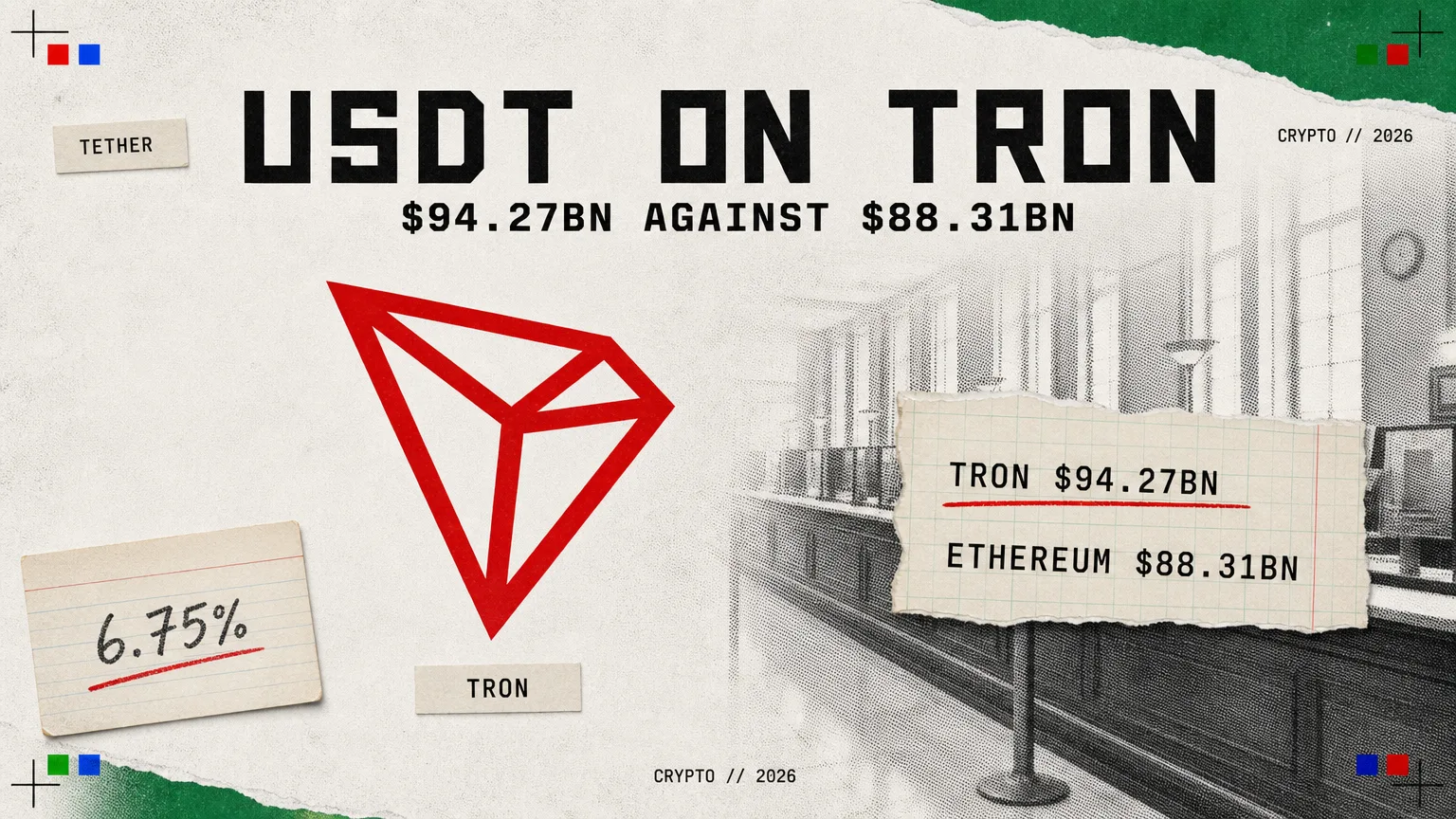
Tron holds $94.27bn of USDT against Ethereum's $88.31bn
USDT on Tron has reached $94.27bn against $88.31bn on Ethereum. We read both figures off the contracts themselves rather than taking Tether's word. The lead has changed hands more than once, and the fee gap normally used to explain it has inverted.

Tether downgrade: Ardoino hits back at S&P’s ‘weak’ label
On 30 November 2025, Tether chief Paolo Ardoino issued a fresh X thread attacking S&P’s “weak” USDT rating.