
XRP
the asset with the most direct legislative exposure
Key facts
- $1.3513 October 2026
- Price
- CommoditySEC/CFTC, Mar 2026
- Classification
- XRPZFranklin XRP ETF
- Example fund
- 0.19%annual sponsor fee
- XRPZ fee
The asset with the most direct legislative exposure. XRP trades at $1.35 in the 13 October 2026 snapshot.
Why XRP is exposed
XRP is the native token of the XRP Ledger, a blockchain associated with Ripple and designed for fast payments. At 01:46 UTC on 13 October 2026, CoinGecko priced XRP at $1.35, with a market value of $85.13bn and a rank of 5. Spot XRP exchange-traded funds give investors another way to hold exposure to the asset, through an ordinary brokerage account.
The commodity classification
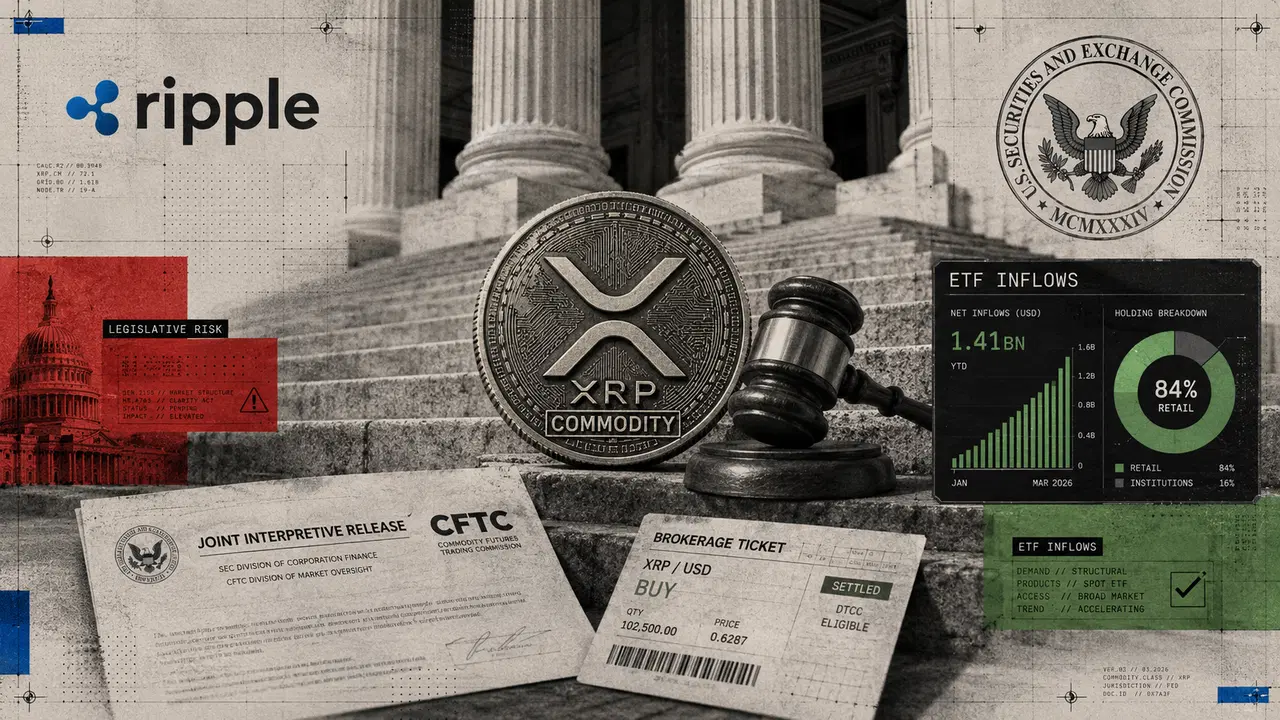
On 17 March 2026 the SEC and the CFTC issued a joint interpretive release that classified 16 digital assets, including Bitcoin, Ether and XRP, as digital commodities. The significance for XRP is hard to overstate, given its long and contested history with the SEC. A digital-commodity classification places the asset outside the securities regime and under the more permissive commodities framework. The caution to keep in mind is that this is an agency interpretation, and an interpretation can be reversed by a later administration or a court. The proposed CLARITY Act would turn the same treatment into statute, which is why XRP carries the most direct legislative exposure of any major token: its status is tied to a specific bill. For a token that spent years fighting to establish that it is not a security, that reclassification is a substantial change of footing.
The ETF story
Spot XRP funds let investors hold price exposure through a brokerage account. Franklin’s XRPZ, launched on 24 November 2025, charges a 0.19% annual sponsor fee and holds XRP with Coinbase Custody. Bitwise also operates a US XRP fund: its June 2026 filing records $299.1m in net assets at 30 June. Each fund’s asset figure needs its own date, because price moves change assets even when investors make no purchases or withdrawals.
What to watch
What ties the asset, the classification and the ETF together is a single dependency: legislation. XRP’s regulatory footing rests on an interpretation that the CLARITY Act would make permanent, its investment demand is being priced partly on the assumption that the bill passes, and the more optimistic forecasts fall away entirely if it stalls. That is an unusual amount of legislative risk to concentrate in one token, and it cuts both ways. Few other large tokens have their regulatory and market outlook bound so tightly to the fate of one piece of legislation.
For readers watching the sector, the XRP ETF is worth following less for its price than for what it reveals about how a single asset’s fortunes can hinge on a vote in Congress. The things to track are the progress of the CLARITY Act, which failed a Senate cloture vote by 49 votes to 50 on 15 September 2026, whether ETF inflows keep building or stall, and whether the digital-commodity classification survives contact with the courts. Our crypto explainers hub follows how these threads run through the wider crypto market.
More Crypto
All Crypto →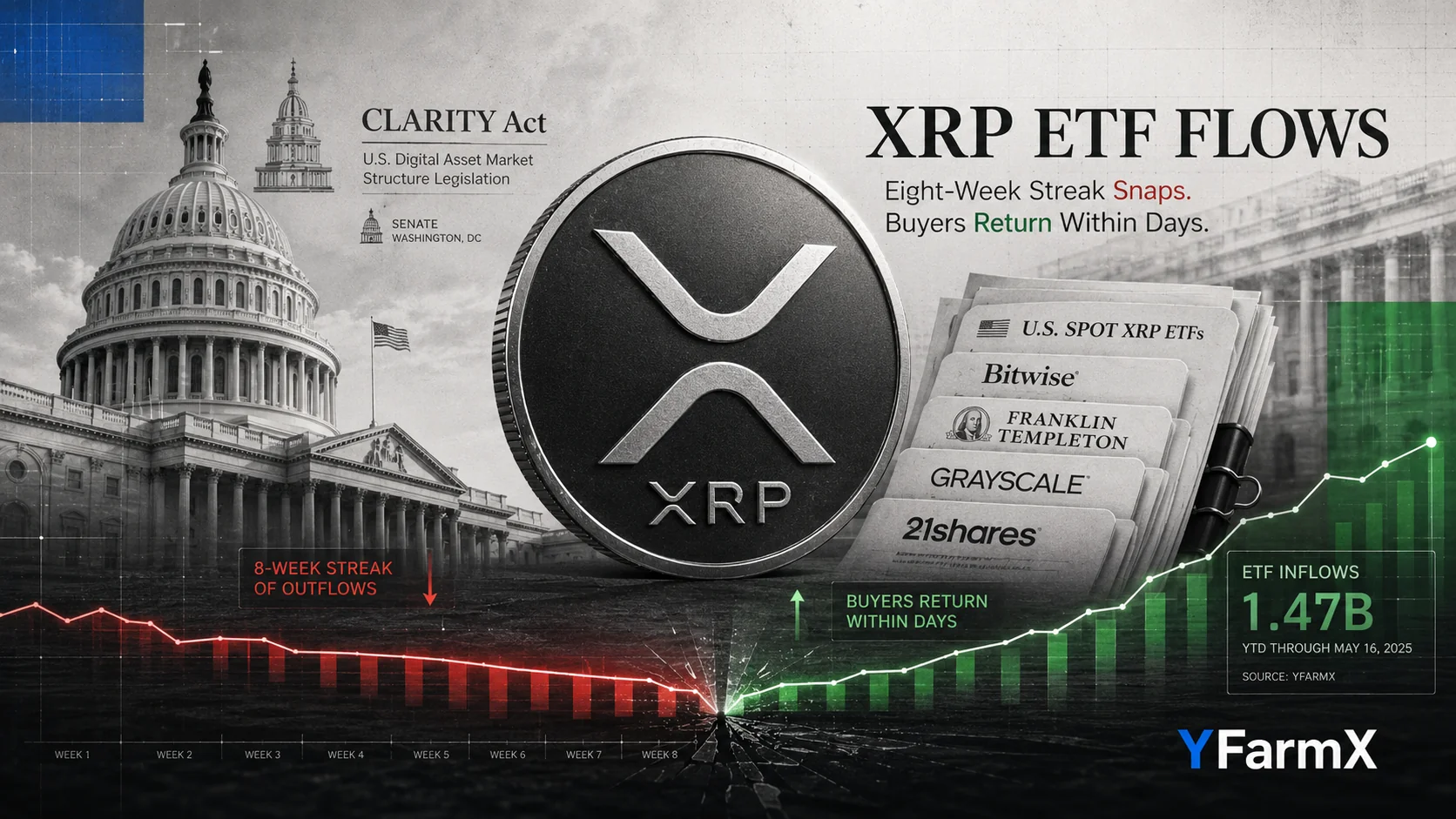
XRP ETF flows: an eight-week streak snaps, then buyers return within days
Watching XRP ETF flows this month has been an education in how quickly a narrative can wobble and re-form.

Canary Capital’s XRP ETF: Loud money, carefully dressed
When Canary Capital’s XRP ETF (XRPC) rang the opening bell on Nasdaq on Thursday, it didn’t so much launch as arrive with a calling card. Day-one trading hit $58 million, the highest debut of any ETF in 2025 across more than 900 launches, neatly edging out Bitwise’s Solana ETF.
XRP Ledger patches decade-old bug that could mint XRP
RippleX disclosed an integer-overflow flaw that could create spendable XRP through crafted DEX payments. The emergency xrpld 3.4.1 release fixed it on 25 September.