
Binance
BNB
the exchange token that became a chain
Key facts
- #4by market value
- Rank
- Exchange tokenalso fuels BNB Chain
- Type
- 2017by Binance
- Launched
- 200mburning toward 100m
- Supply
BNB began in 2017 as a fee-discount token for Binance and now powers BNB Chain. Its market value was about $99.46bn on 11 October 2026.
What it is
BNB is the token of Binance, the world’s largest crypto exchange by traded volume, and the fuel of BNB Chain, the smart-contract network that grew out of it. It was sold in an initial coin offering in July 2017, days before the exchange itself opened, raising about $15 million for founder Changpeng Zhao and his team. The original pitch was simple: pay your trading fees in BNB and get a discount. One memorable fact: BNB began life as a token on Ethereum, the very platform its own chain would later be built to compete with.
How it works
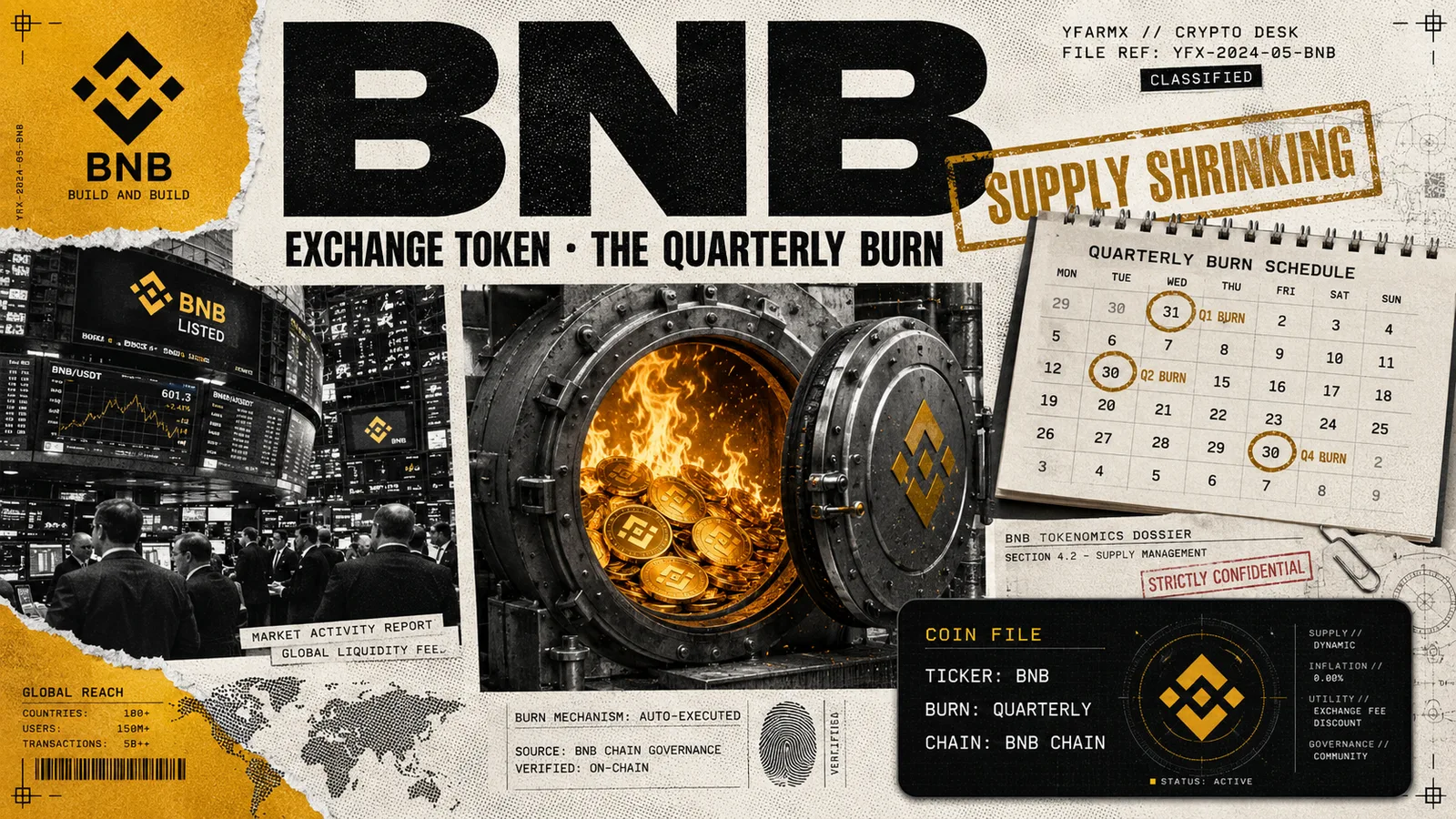
BNB Chain runs on a system its documentation calls Proof of Staked Authority, in which a small set of validators, elected by BNB staking, take turns producing blocks. The design trades away Ethereum’s large validator count in exchange for speed and low fees. BNB pays gas on the chain, secures it through staking, and still buys the original fee discounts on the exchange. The supply is engineered downwards. Binance committed to removing half of the original 200 million BNB from existence: a quarterly Auto-Burn, set by a published formula, destroys tokens in bulk, and the BEP-95 mechanism burns a portion of gas fees in real time, until only 100 million remain.
The story so far
The token migrated from Ethereum to the standalone Binance Chain in 2019; a parallel smart-contract chain followed in 2020 and boomed during the low-fee DeFi wave; the two merged under the BNB Chain name in 2022. The heaviest moment came in November 2023, when Binance pleaded guilty to US anti-money-laundering and sanctions failures and agreed to pay $4.3 billion, one of the largest corporate penalties in US history. Zhao stepped down as chief executive, later serving a four-month sentence, and the exchange continued under Richard Teng. Through all of it, the burn programme kept to its schedule and the chain kept producing blocks.
Where it stands
On 13 October 2026 at 01:46 UTC, BNB traded at $734.74, with a market value of about $97.82 billion and a rank of 4 among the assets tracked by CoinGecko. What to watch: the pace of the quarterly burns, activity on BNB Chain relative to rival low-fee networks, and how far Binance’s regulatory rehabilitation restores its access to institutional customers. BNB remains unusually tied to one company’s fortunes, which has been both its engine and its principal risk since the first day of trading in 2017.
More Crypto
All Crypto →
Ondo Finance RWA expands with Chainlink and BNB chain
Ondo Finance is redefining real-world asset tokenisation. In the span of 48 hours, it launched Ondo Global Markets on BNB Chain, introduced 100+ tokenised U.S. stocks and ETFs, and announced a strategic partnership with Chainlink. Wall Street, now on BNB Chain.
BNB Reload Airdrop aims to revive meme coin market
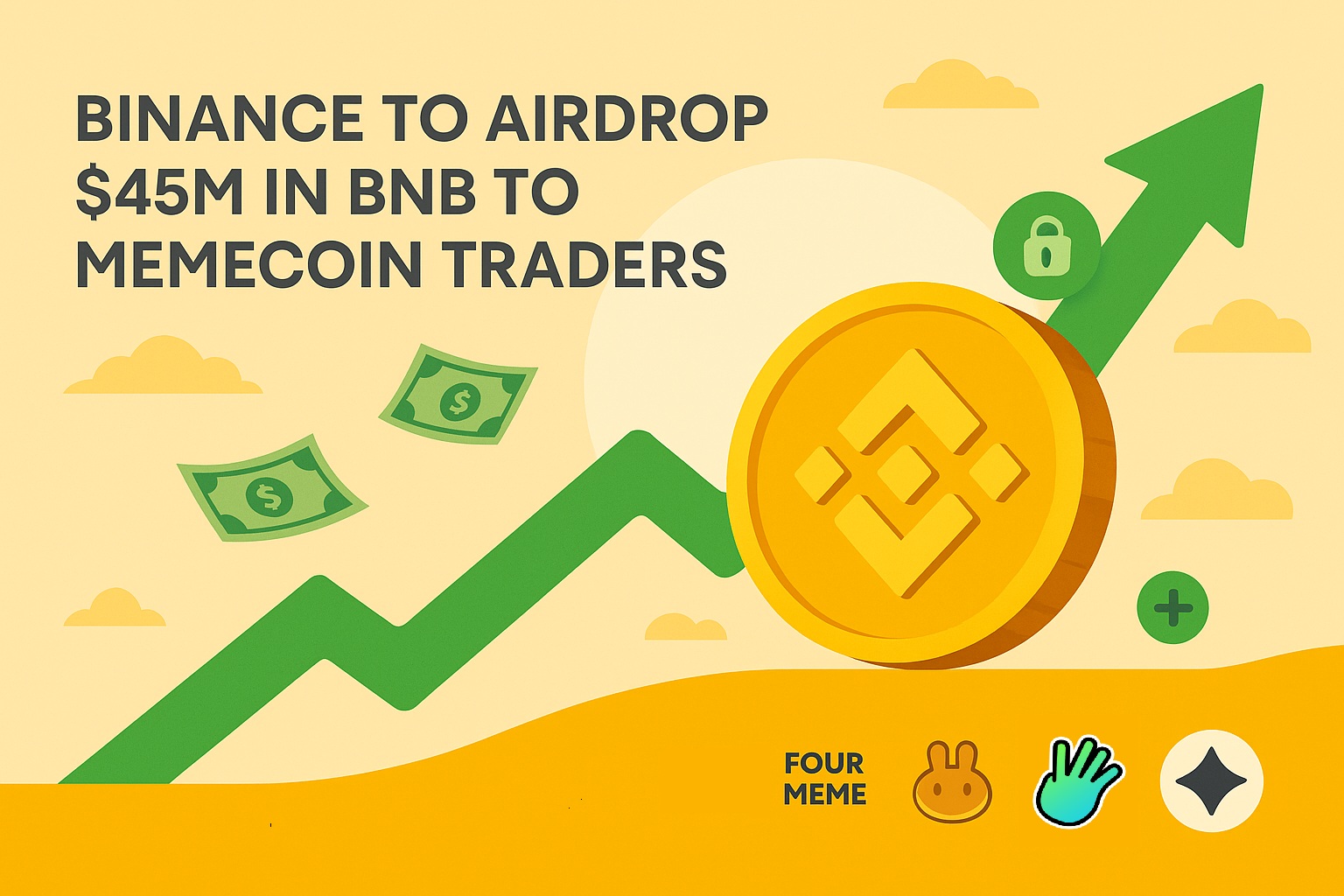
BNB Reload Airdrop compensates traders hit by the market crash, aiming to revive meme coin momentum.

BNB All-Time High Overtakes Nike’s Valuation
Discover how BNB’s all-time high surpasses Nike’s valuation, marking a significant shift in market dynamics between digital and traditional assets.