
Robinhood Chain memecoins
Speculative tokens, current prices and stock-token pairings
Key facts
- 94of 100 returned
- Current entries
- $357.0mcurrent entries only
- Combined value
- $32.6mreported turnover
- Volume 24h
- CASHCAT$91.9m
- Largest entry
Memecoins are crypto tokens built around characters, jokes or online communities. This Robinhood Chain snapshot covers current values, trading pools and contract checks.
Memecoins are speculative crypto tokens built around a name, joke or online community. On Robinhood Chain they trade alongside stock tokens and stablecoins, and some pools pair a memecoin directly with a token that tracks a share price.
On 25 October 2026, the first 100 entries returned by CoinGecko’s Robinhood Chain Meme category included 94 with current readings, worth $357.0m and reporting $32.6m in 24-hour turnover. This is a snapshot of the returned entries. The chain also carries tokens outside that list.
Cash Cat leads the current entries
CoinGecko’s current entries on 25 October 2026, ranked by market value:
| Coin | Market value | Volume 24h | Price change 24h |
|---|---|---|---|
| CASHCAT (Cash Cat) | $91.9m | $5.8m | +0.7% |
| AI (Artificial Inu) | $57.3m | $5.5m | +6.0% |
| DEGEN (Degen) | $32.5m | $4.1m | -2.7% |
| BABY (BabyCashCat) | $24.5m | $0.0m | -1.6% |
| PORKU (HoodPork) | $15.2m | $0.0m | +14.7% |
| BONER (Boner Coin) | $14.4m | $0.4m | +17.1% |
| BUN (Bundle Cat) | $8.3m | $1.3m | -4.3% |
| AMC (A Meme Coin) | $7.3m | $1.6m | +9.9% |
| ZZZ (ZZZ) | $7.1m | $0.8m | -3.2% |
| GF (GongFu) | $6.4m | $0.0m | Not supplied |
6 entries had readings older than three days: Little John (13 July 2026), Goose Token (19 October 2026), GreenHood (20 October 2026), CATGPT (15 October 2026), LongCat (30 September 2026), Froge (8 October 2026). Their historical prices and market values stay outside these current totals.
High turnover can come from repeated trading
On 25 October 2026, YOLO (YOLO) had the highest reported daily turnover relative to market value among the current entries, at 1.67 times. Both figures come from the same category snapshot.
That ratio describes reported turnover relative to a valuation. Repeated trades can pass the same tokens around many times. Liquidity, wallet concentration and the ability to sell a position need separate checks.
A stock-token pool has two moving prices
Robinhood’s stock tokens are ERC-20 assets, so liquidity pools can combine them with other tokens. GeckoTerminal’s pool list includes quotes in USDG, wrapped ETH and stock tokens. USDG is Paxos’s dollar-pegged asset.
A memecoin paired with a stock token has exposure to both sides of the pool. Existing stock tokens keep trading when the underlying exchange is closed, while new issuance follows Robinhood’s Monday-to-Saturday mint-and-burn window. Thin liquidity can amplify price movement on either side.
Check the contract and the launch history
Match the chain ID and token contract to the relevant register or explorer. Pool addresses identify trading contracts; token addresses identify assets. Names and ticker symbols can be reused by unrelated tokens.
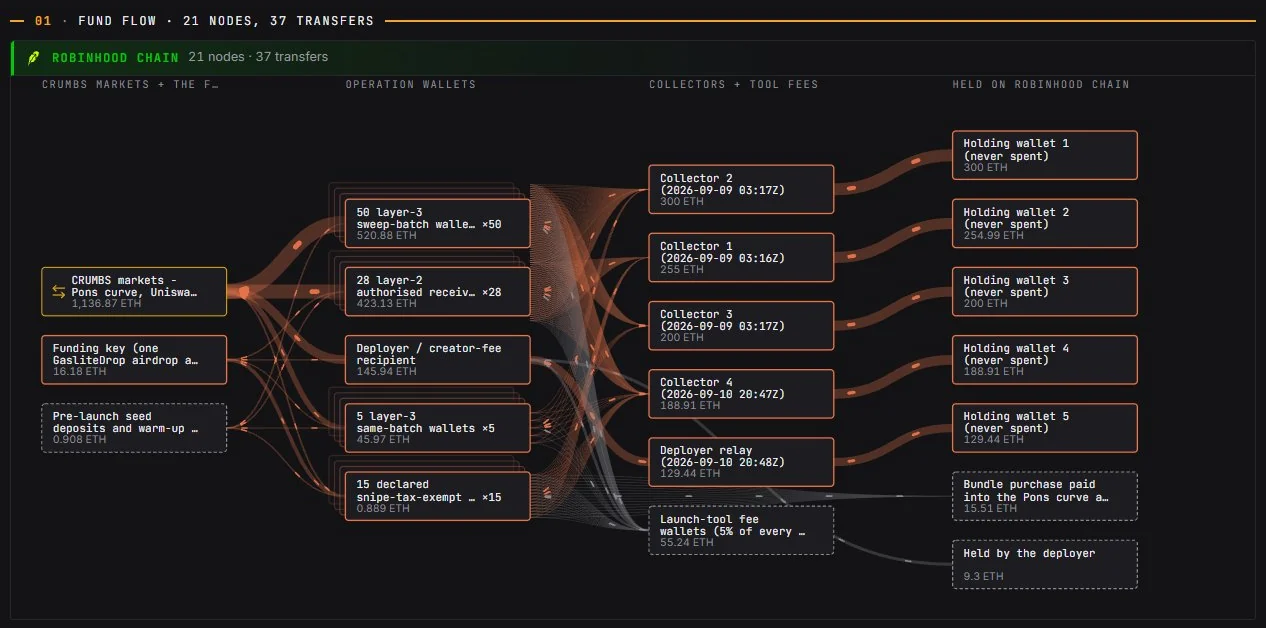
The launch history also deserves attention. In a 27 September investigation, analyst Wazz linked 53 launches to one operation and put its extraction at 7,447.45 ETH, valued at $18.43m in the investigation. Those are the analyst’s findings. Our report follows the wallet links and launch examples.
More Crypto
All Crypto →
Analyst ties 53 Robinhood Chain memecoins to one $18.4m operation
On-chain analyst Wazz has linked 53 memecoin launches on Robinhood Chain, made between 10 July and 21 September 2026, to one operation that extracted 7,447.45 ETH, about $18.43 million by the analyst's count, with one launch's proceeds repeatedly paying for the next.
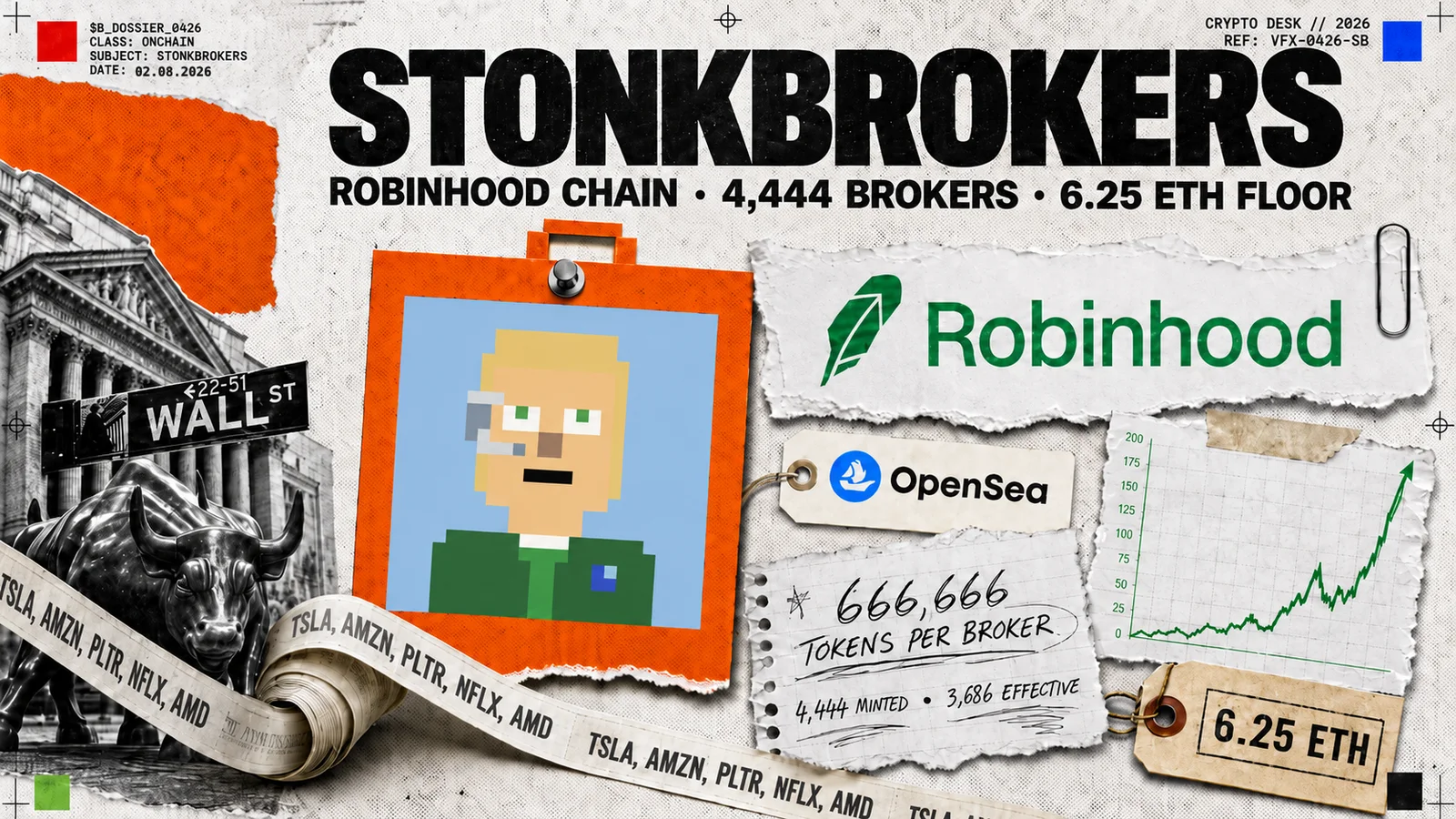
StonkBrokers: the Robinhood Chain NFT that owns a share portfolio
4,444 pixel stockbrokers on Robinhood Chain minted free on 17 July and now trade for the price of a used car. Each one owns an on-chain wallet holding tokenised shares its buyer may not be permitted to hold directly.

Robinhood's CEO was hacked to shill a coin on Robinhood's own chain
Robinhood confirmed CEO Vlad Tenev's X account was hijacked to promote a fake 'official Robinhood chain' memecoin. It spiked near $8 million in minutes, and a cluster of wallets funded two hours earlier walked away with about $1.2 million.