Quantum X Labs reports fewer decoding failures on IBM data
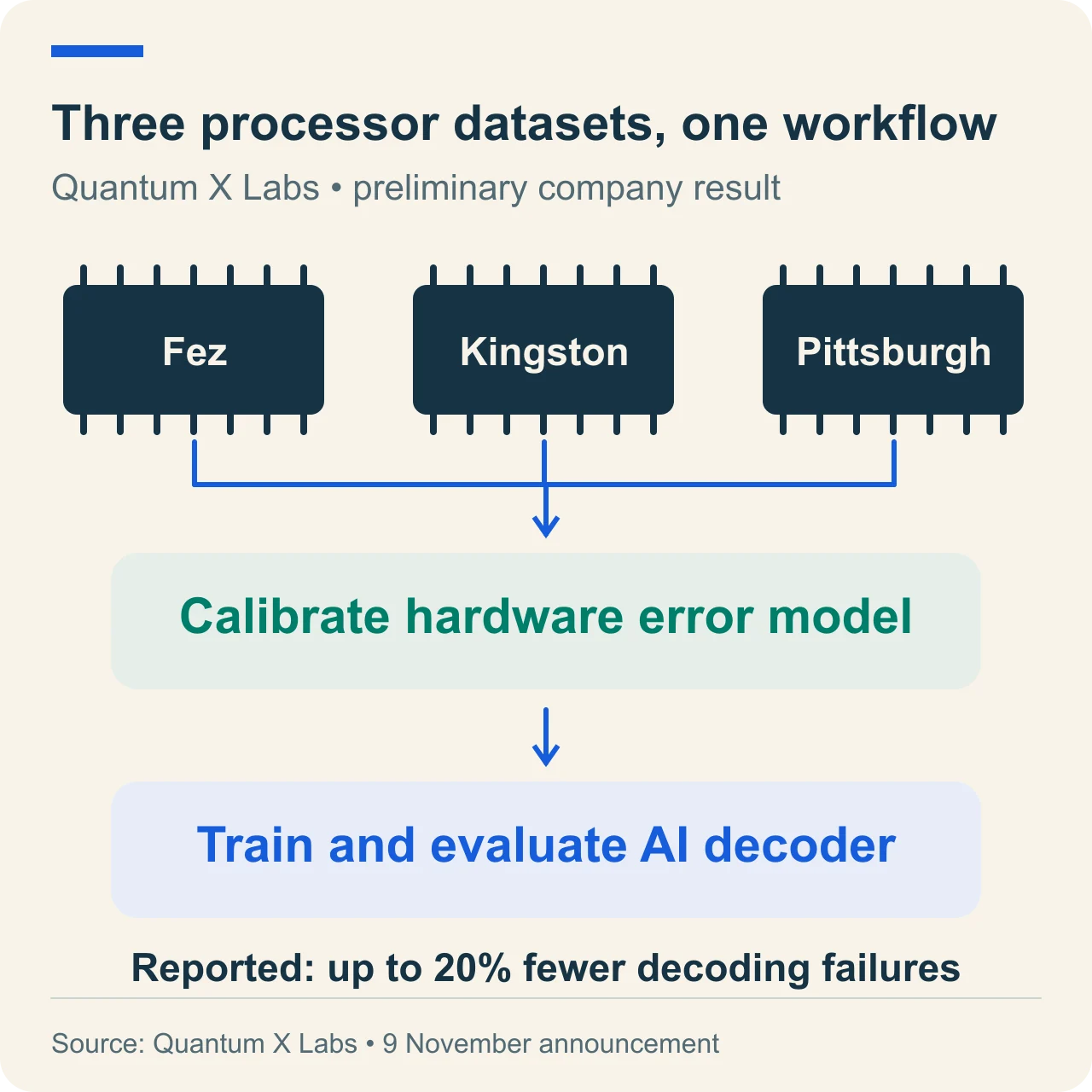
Quantum X Labs reports up to 20% fewer logical decoding failures in preliminary benchmarks using data from IBM Fez, Kingston and Pittsburgh.
Listen to this articleListen
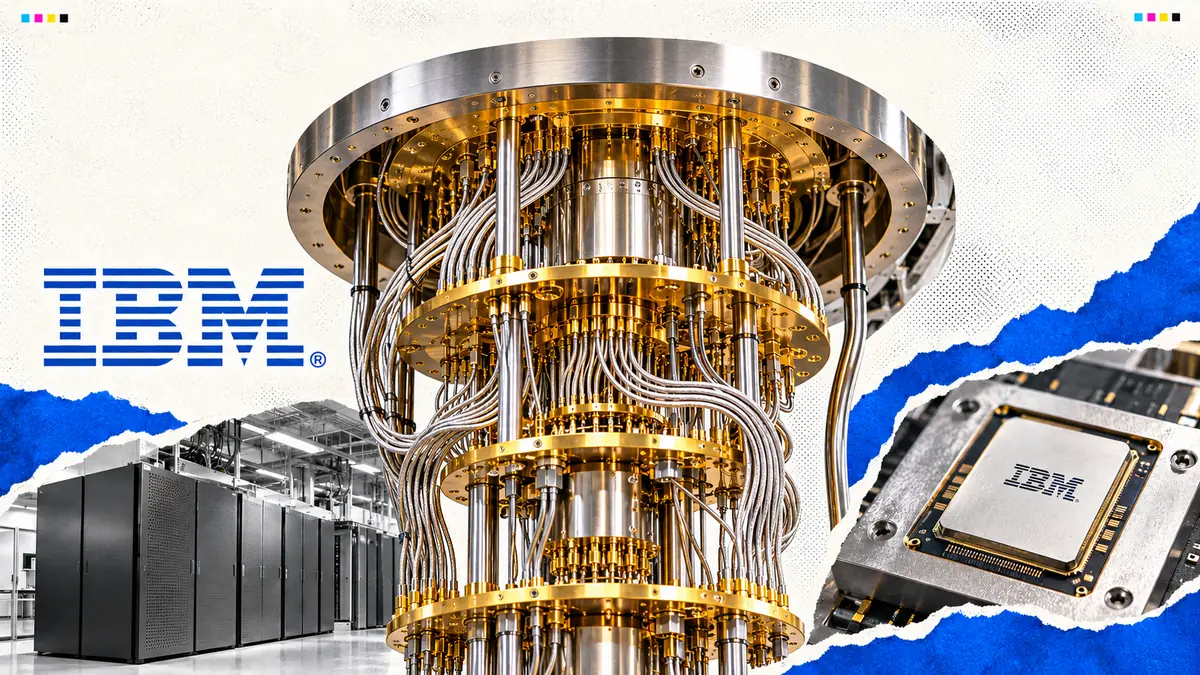
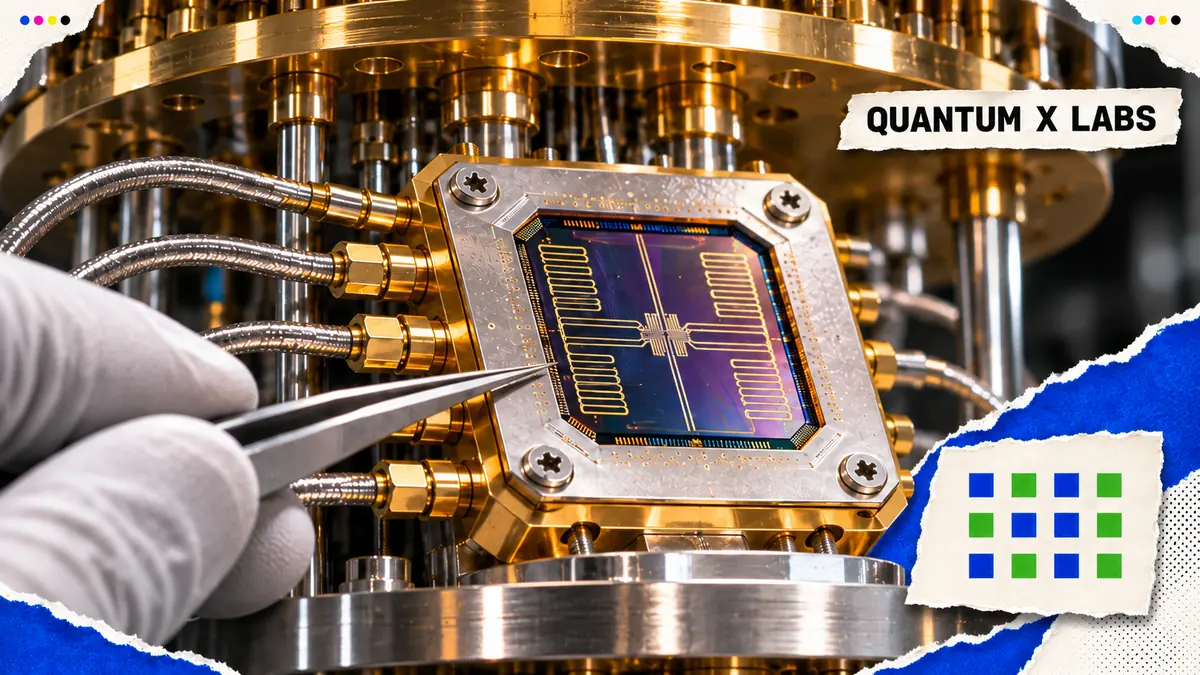
Quantum X Labs says its AI-assisted error-correction work produced up to 20% fewer logical decoding failures in preliminary tests using experimental data from three IBM quantum processors. The company’s 9 November announcement names IBM Fez, Kingston and Pittsburgh as the sources of the processor datasets.
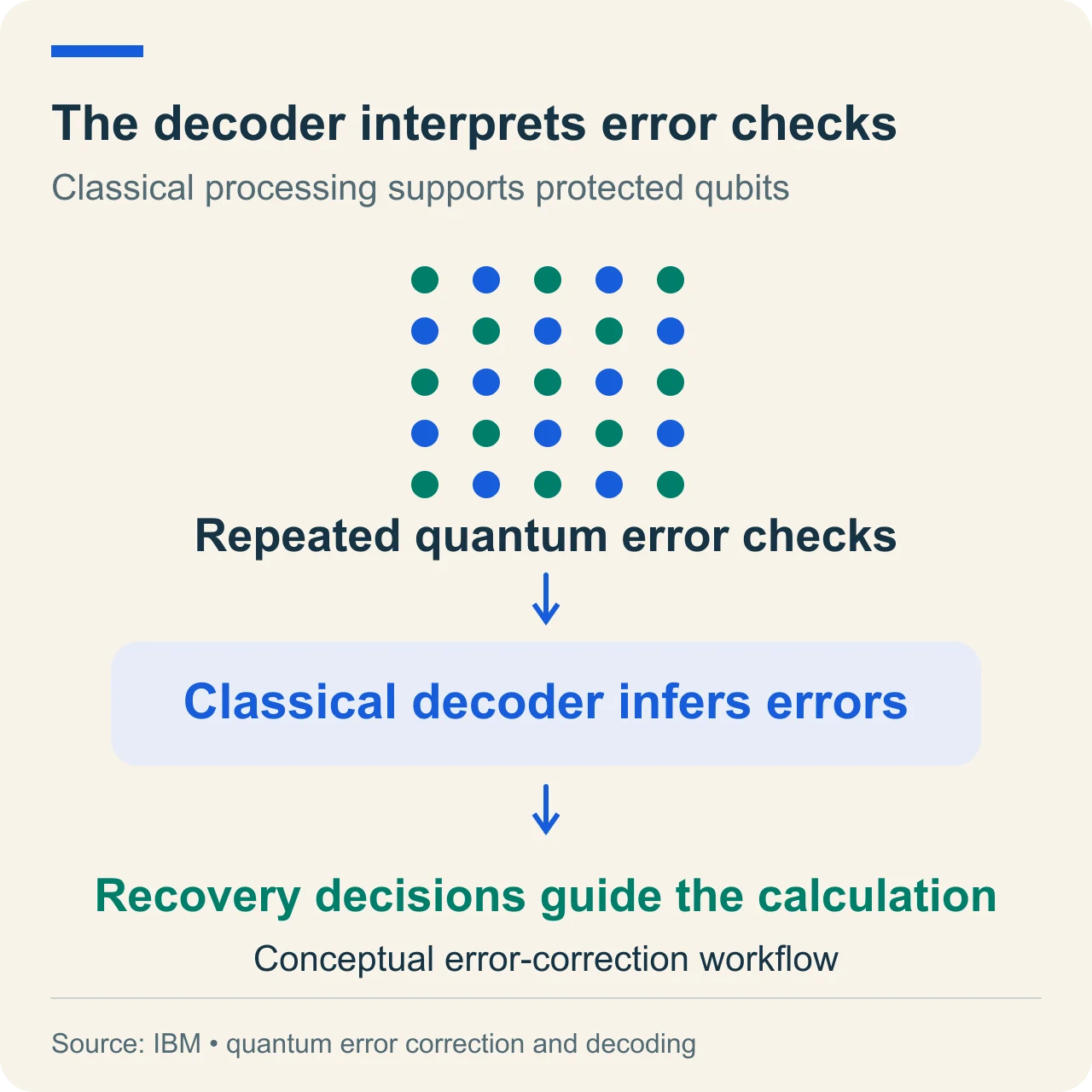
The work concerns the classical decoding stage of quantum error correction. A decoder interprets error-check measurements and decides how to recover the encoded information. Better interpretation of those measurements can improve a protected calculation’s reliability using the information the hardware already produces.
The programme now covers three IBM processor datasets
Quantum X Labs describes a workflow combining experimental measurements, hardware-error calibration, GPU-accelerated AI training and decoder evaluation. The latest expansion adds datasets from three IBM processors to earlier work using surface-code data associated with Google quantum hardware.
The company’s stated aim is a hardware-agnostic decoding approach that can adapt to different processors and error-correcting codes. Testing more than one device is relevant to that aim because a decoder’s useful assumptions depend on the errors present in the hardware and the way the experiment is configured.
IBM’s processor documentation describes different device families and revisions, with changes to connectivity, control and performance. A decoder-evaluation result needs to be read alongside those experimental conditions and the code used to protect the information.
Logical decoding failure is a specific reliability measure
The reported reduction concerns cases where decoding fails to recover the intended logical information. Error correction distributes quantum information across physical qubits and repeatedly measures checks that reveal evidence of errors. The decoder uses those checks to infer a likely error pattern and select a response.
The quality of that inference depends on its assumptions. A calibrated model of the hardware’s errors can help a decoder distinguish likely patterns from unlikely ones, improving its decisions on the same kind of measurement data.
An up-to-20% reduction is a relative comparison with the baseline used in the company’s preliminary tests. A useful evaluation identifies the code, the baseline decoder, the error conditions and the trial set. Those choices establish the task on which the improvement is measured and the conditions under which another evaluator could test it.
AI operates in the classical part of the recovery process
Quantum X Labs uses AI training and calibration to improve the decoder’s handling of experimental error data. The quantum processor supplies measurement results; classical computing performs the inference needed to choose a correction.
IBM’s explanation of quantum error correction describes the need to turn measurements into fast, accurate corrective decisions. As quantum hardware grows, that classical work must keep pace with repeated rounds of error checks. Accuracy and response time both influence how a protected computation performs.
GPU-accelerated training is one part of preparing such a decoder. Evaluation against experimental datasets tests the resulting model on the recorded conditions. Integrating the complete process with a running quantum system adds the timing and control requirements of that live system.
Broader testing is the next commercial test
The company describes the IBM results as preliminary benchmarks and its cross-platform architecture as a development goal. The extension from earlier Google-associated datasets to IBM measurements broadens the hardware conditions on which it can evaluate that goal.
For potential users, the practical comparison is how a decoder performs on their code, hardware and timing requirements. A reduction in logical failures can support longer or more reliable calculations, while the system still needs suitable measurements, controls and processing speed to apply corrections.
The reported advance is therefore a specific software-side result within the error-correction stack: improved calibration and decoding on experimental data, now tested across three named IBM processors. It adds a measurable task for further evaluation as the company develops its wider platform.
Sources
- Quantum X Labs: preliminary decoder benchmarks, 9 November 2026globenewswire.com
- IBM: processor families and revisionsquantum.cloud.ibm.com
- IBM: quantum error correction and decodingibm.com