
The Robinhood Chain network
Ethereum settlement, ETH fees and fast sequencer receipts
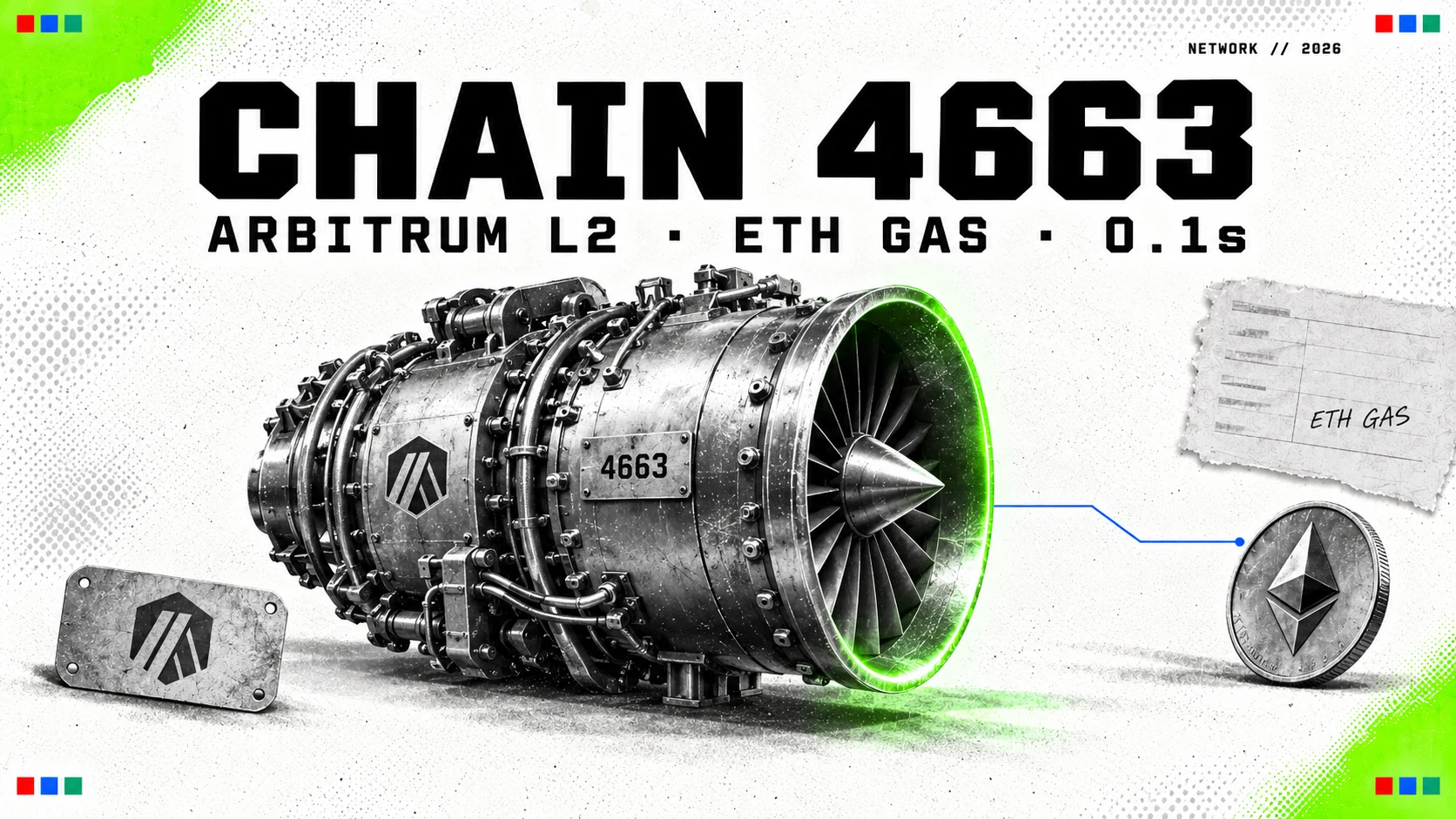
Key facts
- 4663testnet 46630
- Chain ID
- 0.101s5,000-block sample
- Block interval
- ETHtransaction fees
- Gas token
- ArbitrumDedicated Blockchains
- Stack
Robinhood Chain is a blockchain for stock tokens and trading apps. It runs on Arbitrum and settles on Ethereum, with authorised challengers and upgrade controls.
Robinhood Chain is a blockchain for stock tokens, trading apps and lending markets. It processes transactions on its own network, then publishes transaction data to Ethereum. That arrangement is called a Layer 2.
Robinhood’s developer documentation identifies the software as Arbitrum Dedicated Blockchains, also known as Arbitrum Orbit. Users pay transaction fees in ETH. Data needed to reconstruct the chain is published on Ethereum as blobs or calldata.
Blocks arrive about ten times a second
A 5,000-block sample on 5 October 2026 measured an average interval of 0.101 seconds. The network stood at block 80,980,158, with a gas price of 0.02049 gwei at 17:59 UTC. These are dated readings; fees change with demand.
Robinhood orders transactions by arrival at its sequencer. Higher priority fees cannot move a transaction ahead in that queue. Developers can sponsor gas, batch calls and use session keys through ERC-4337 account abstraction.
Ethereum settlement takes longer
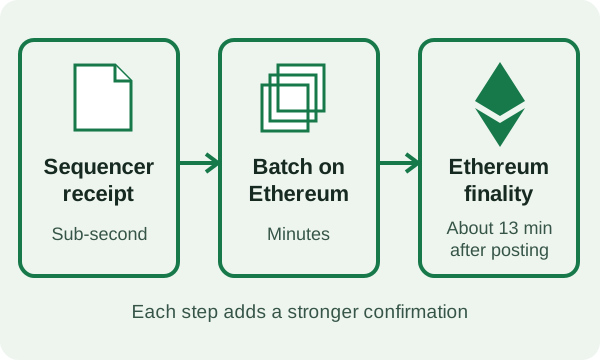
Robinhood’s finality guide separates the fast sequencer receipt from the later stages of settlement:
| Stage | What happens | Typical time |
|---|---|---|
| Soft confirmation | The sequencer accepts and executes the transaction | Sub-second |
| Batch posted | Its transaction batch reaches Ethereum | Minutes |
| Ethereum finality | Ethereum finalises the block holding that batch | About 13 minutes after posting |
Two authorised actors can challenge the state
On 3 October 2026, L2Beat recorded two whitelisted challengers and a 6-day 8-hour challenge period. It also recorded immediate upgrade powers and an authorised transaction filter that can make specified transactions fail, including transactions forced through Ethereum.
L2Beat’s stage panel places the node-software availability requirement under review. The practical trust assumptions sit with the challengers, the upgrade controllers and the transaction filter. Ethereum publishes the data used for proofs.
Choose a bridge by its withdrawal process
Robinhood’s bridge guide describes canonical Ethereum deposits as taking about ten minutes and withdrawals as taking roughly seven days, followed by an Ethereum claim transaction. That withdrawal estimate includes a challenge period.
The same guide lists Relay and Across for transfers fulfilled by liquidity providers, LayerZero/Stargate and Chainlink CCIP for token transfers and messages, and LiFi/0x for swap-and-bridge routing. Each route has its own contracts, fees and settlement process.
Connect with the published network details
The connection guide lists the public networks:
| Property | Mainnet | Testnet |
|---|---|---|
| Chain ID | 4663 | 46630 |
| Gas currency | ETH | ETH |
| Public connection | rpc.mainnet.chain.robinhood.com |
rpc.testnet.chain.robinhood.com |
Use Robinhood’s connection guide and token-contract register to check network settings and asset addresses before transferring funds.
More Crypto
All Crypto →
Analyst ties 53 Robinhood Chain memecoins to one $18.4m operation
On-chain analyst Wazz has linked 53 memecoin launches on Robinhood Chain, made between 10 July and 21 September 2026, to one operation that extracted 7,447.45 ETH, about $18.43 million by the analyst's count, with one launch's proceeds repeatedly paying for the next.
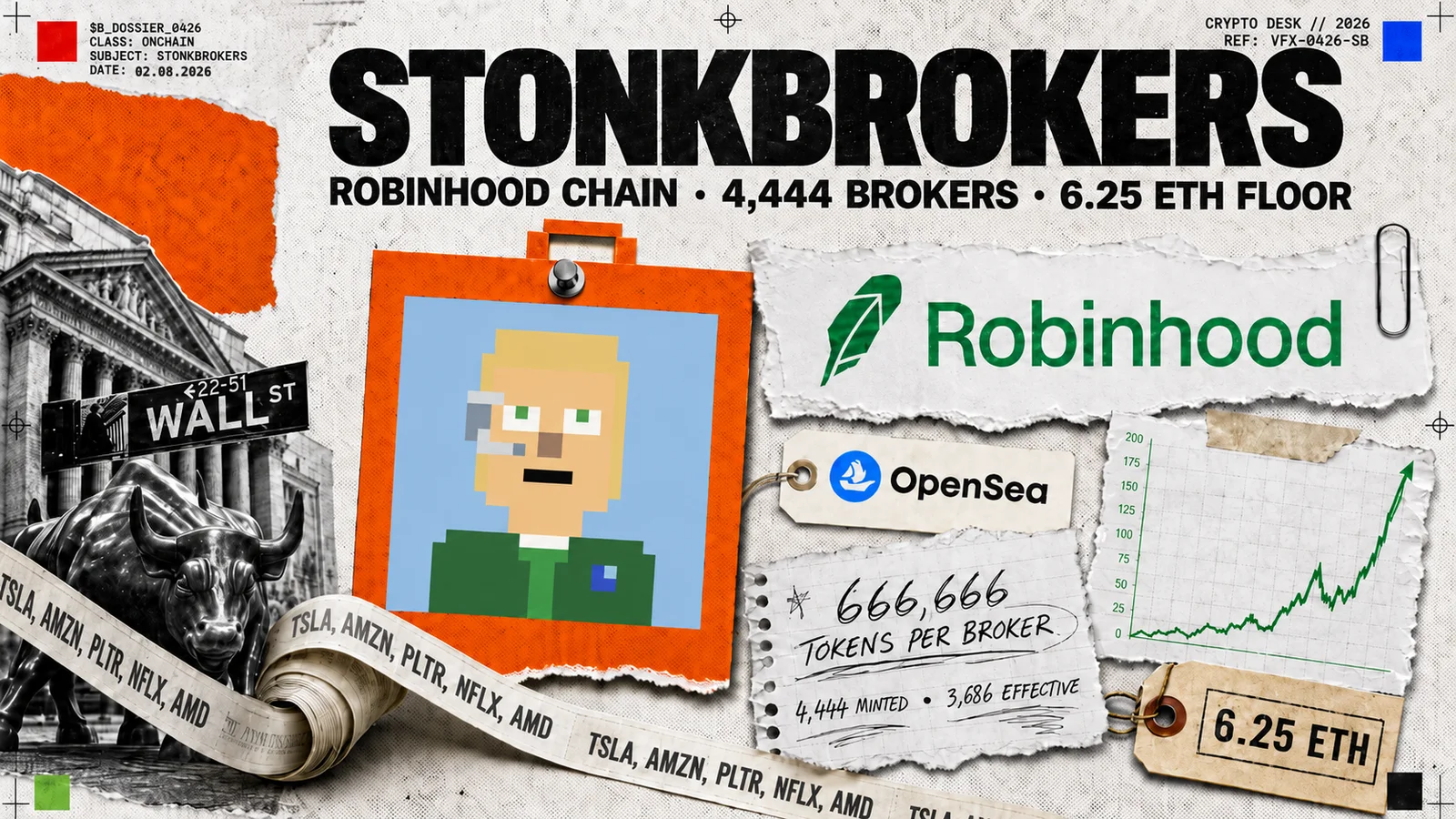
StonkBrokers: the Robinhood Chain NFT that owns a share portfolio
4,444 pixel stockbrokers on Robinhood Chain minted free on 17 July and now trade for the price of a used car. Each one owns an on-chain wallet holding tokenised shares its buyer may not be permitted to hold directly.

Robinhood's CEO was hacked to shill a coin on Robinhood's own chain
Robinhood confirmed CEO Vlad Tenev's X account was hijacked to promote a fake 'official Robinhood chain' memecoin. It spiked near $8 million in minutes, and a cluster of wallets funded two hours earlier walked away with about $1.2 million.