Starfish loses Otter contact, ending NASA’s satellite inspection mission
NASA and Starfish Space concluded Otter is unrecoverable after a fault-protection issue kept its radio off. The spacecraft lost contact during commissioning.
Listen to this articleListen
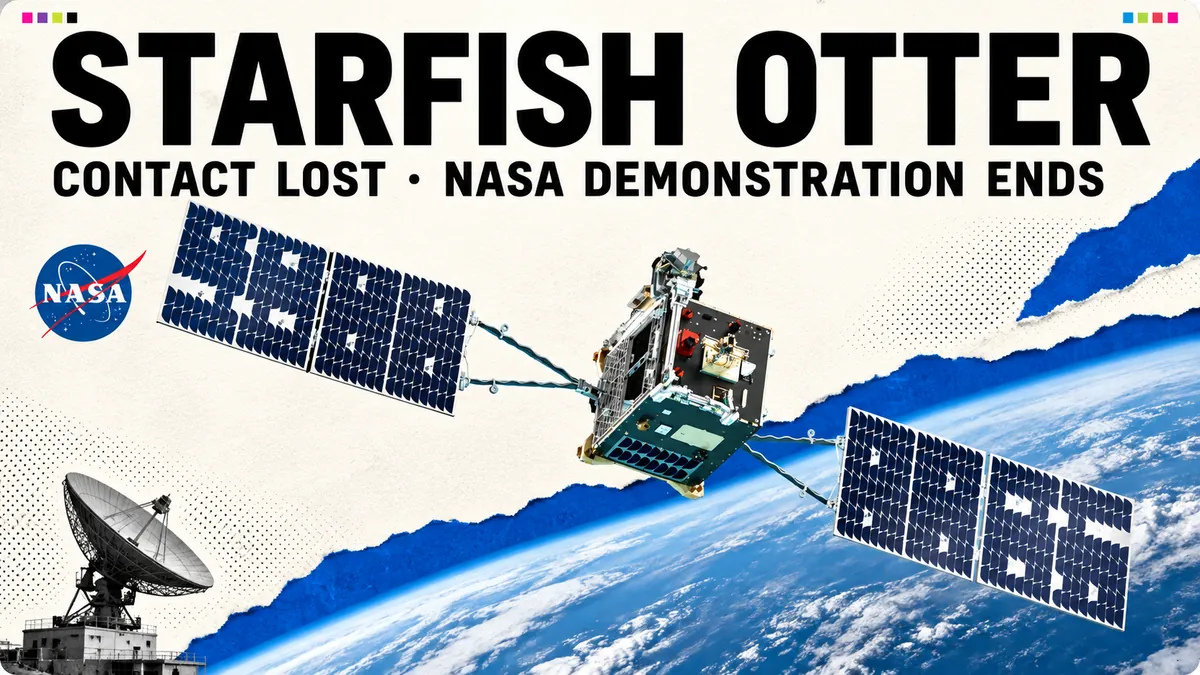
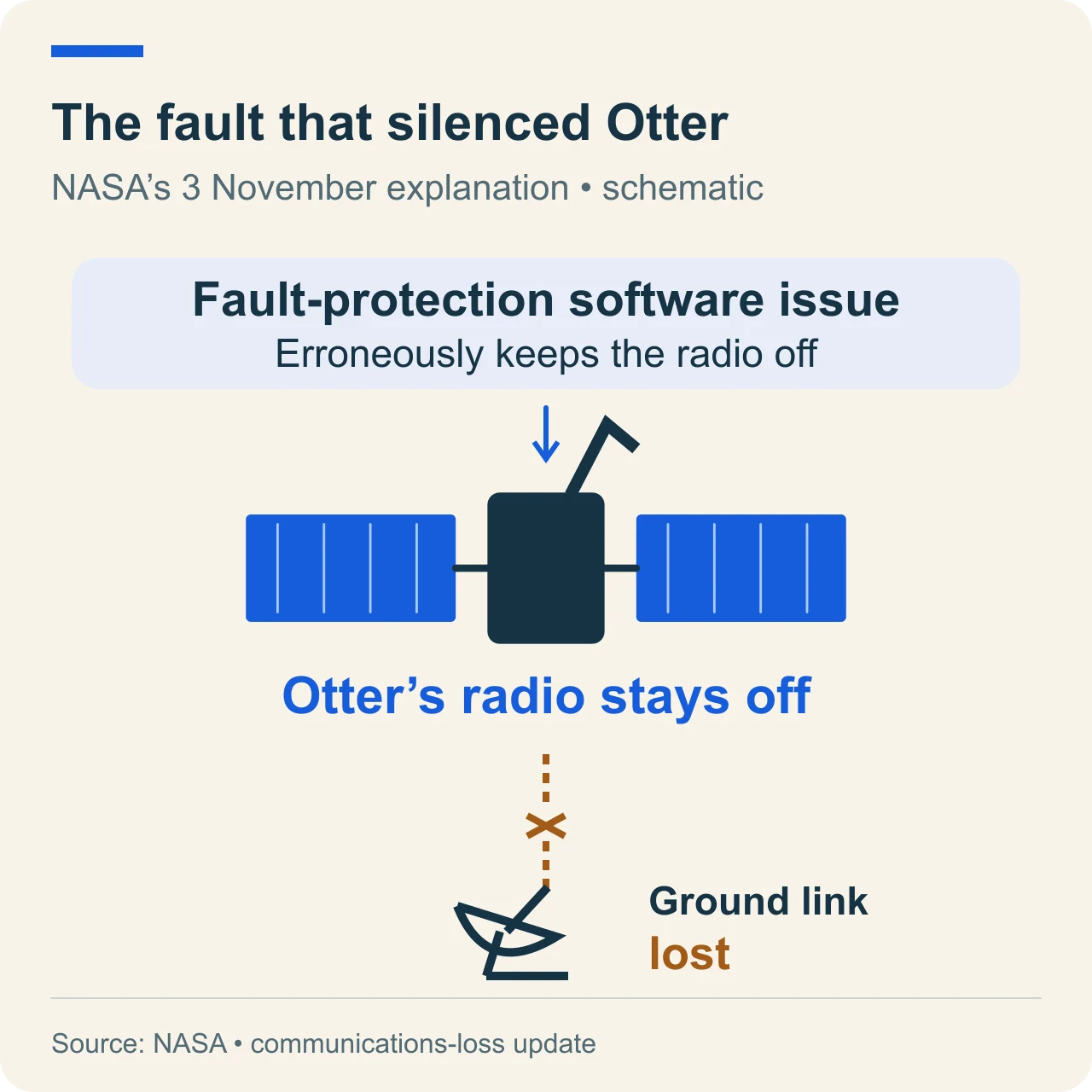
Starfish Space’s first Otter spacecraft is unrecoverable after losing contact during commissioning, NASA said on 3 November 2026. NASA and the company traced the failure to a fault-protection issue that kept the spacecraft’s radio erroneously turned off, ending the planned satellite-inspection demonstration.
Otter launched on 1 October for NASA’s Small Spacecraft Propulsion and Inspection Capability mission, known as SSPICY. Starfish established initial communications, then lost the link while preparing the spacecraft for normal operations. Commissioning is the stage when operators activate systems, calibrate instruments and check that the vehicle can carry out its mission.
The protection system kept the radio turned off
NASA and Starfish found that Otter’s onboard fault-protection system was preventing communications with ground operators. That software is intended to detect problems and respond automatically. In this case, its response left the radio switched off.
The teams investigated and attempted to restore contact. NASA’s 3 November update says they concluded that the spacecraft could not be recovered after two-way communication remained unavailable.
Otter was built to inspect inactive spacecraft
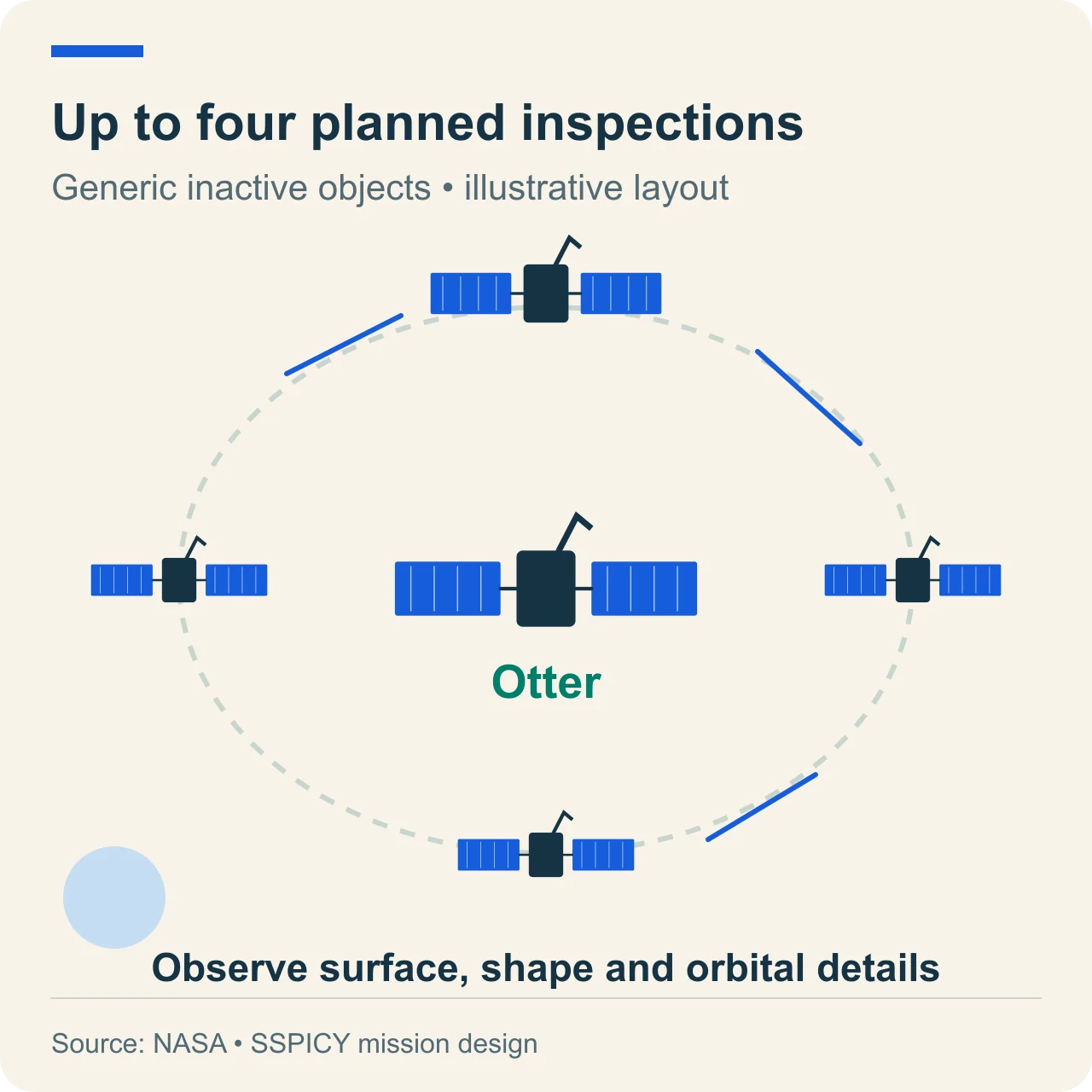
SSPICY was designed to approach and visually inspect up to four inoperable objects of US origin in low Earth orbit. NASA’s mission description identifies targets such as inactive satellites and rocket bodies. The planned observations included their surface condition, shape and orbital characteristics.
The 335kg vehicle was designed to move between objects and approach within hundreds of metres. Those observations would help engineers plan later servicing and debris-removal missions, where a target’s position, motion and physical condition affect how another spacecraft can approach it.
Starfish’s September launch announcement described the first Otter as the step from technology development toward providing services in orbit. The spacecraft’s broader design supports life-extension and end-of-life disposal missions for customers.
The demonstration brought its technologies together
SSPICY was the first integration of Starfish’s navigation and propulsion technologies into one spacecraft system. NASA’s update describes a demonstration spanning propulsion, guidance, navigation and control, together with an articulating robotic boom.
The mission description identifies computer-vision navigation and a boom that can reposition the thruster. Close inspection was the planned demonstration task; the spacecraft’s wider servicing design also includes a docking mechanism for other missions.
NASA says Starfish intends to continue collecting technology-performance information and orbital-debris inspection data for the agency during future Otter missions. Those flights provide the next opportunity to test the integrated servicing systems and gather the observations SSPICY was designed to deliver.