
The NEAR network
Parallel execution, readable accounts and resource fees
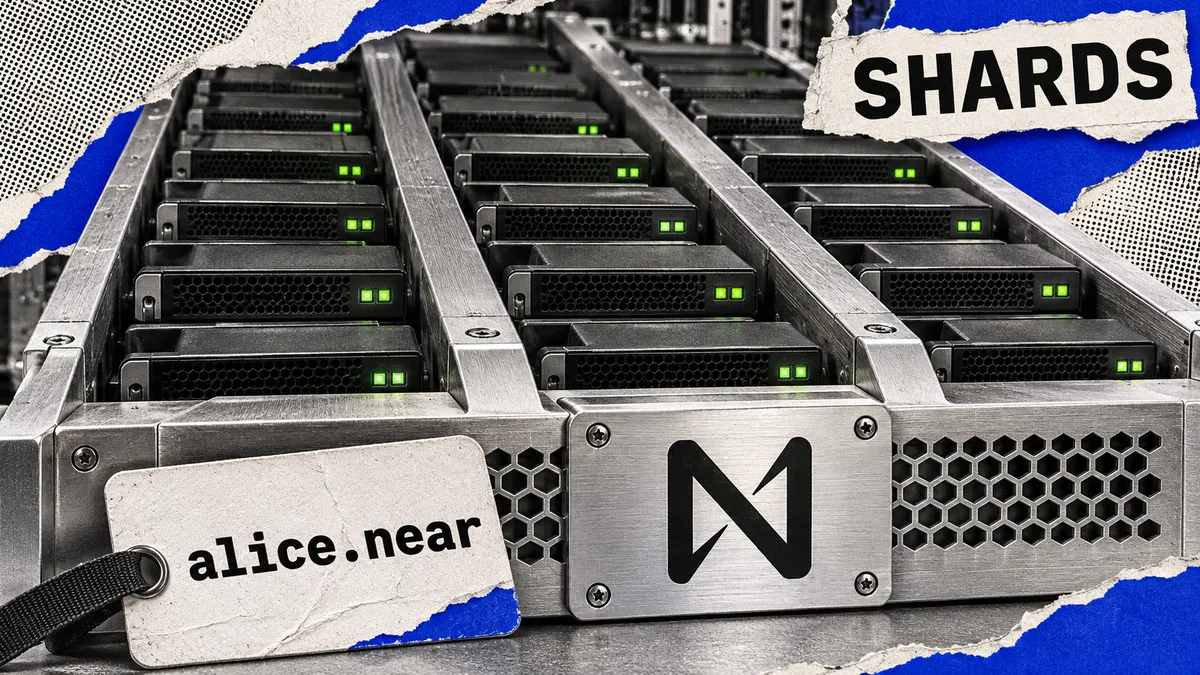
NEAR spreads application activity across shards. Users sign transactions with account keys; validators process the resulting work and record the outcome. A transaction can trigger several execution steps before an application finishes what the user requested.
Sharding divides the work
Think of shards as parallel processing lanes. Accounts are assigned to shards, and each shard contributes chunks to the blockchain. A request involving accounts on different shards passes between them through internal messages called receipts. The network maintains one blockchain while distributing execution. This is why a simple transfer and a complex application interaction can involve different numbers of steps.
Transactions, receipts and shards.
Follow the transaction through its receipts
A signed transaction requests an action. Its first outcome can refer to a receipt that still needs to execute. A contract calling another contract can create further receipts, including work on another shard. The full set of outcomes establishes whether the requested operation completed. The number of steps and the applications involved determine how long that operation takes.
Transactions, receipts and shards.
Readable names and permissioned keys
A NEAR account can hold a balance, access keys and a smart contract. Named accounts such as alice.near are one address type; the protocol also supports other forms of account ID. An account can have several keys with different permissions. Full-access keys control the account, while function-call keys can authorise a narrower set of contract interactions. Before granting access, check the contract and permissions shown by the wallet. Function-call keys specify a receiving contract, can restrict method names and gas spending, and cannot attach NEAR to a call. A permitted contract method can still change assets managed by that contract.
NEAR account model. Access keys.
Gas pays for execution
Gas measures the resources used by a transaction, and the fee is charged in NEAR. Operations have defined gas costs; the network’s gas price determines what those units cost in tokens. Attached gas sets an execution budget. Unused prepaid gas is refunded under the protocol’s rules, including any applicable refund fee. A fee quoted in NEAR also changes in dollar value when the token price moves.
Storage reserves a separate balance
An account storing contract code or data reserves NEAR according to its storage use. The balance requirement grows with the number of bytes stored; deleting data can free the corresponding reserve. A token contract can ask users to pay a storage deposit when registering their balances. Validator staking supports consensus and earns protocol rewards. Storage staking instead reserves a balance to support stored data.