Microsoft proposes human-control rules for its future AI models
Microsoft opens a six-week consultation on its Humanist AI Code of Conduct, proposing shutdown controls and safety rules for model development from 2027.
Microsoft has opened a six-week public consultation on rules intended to keep its future AI models under human control. Its draft Humanist AI Code of Conduct, published on 14 September, gives safety and human oversight priority over a model’s other objectives.
The document contains 37 numbered pages plus a cover. Microsoft intends to use a revised version to guide its in-house MAI model development from 2027 onwards.
What would human control require?
The proposed rules require models to accept authorised interruption, correction and shutdown, follow agreed stopping conditions, and keep their actions available for human auditing. A task must stay within the permissions and resources granted to it.
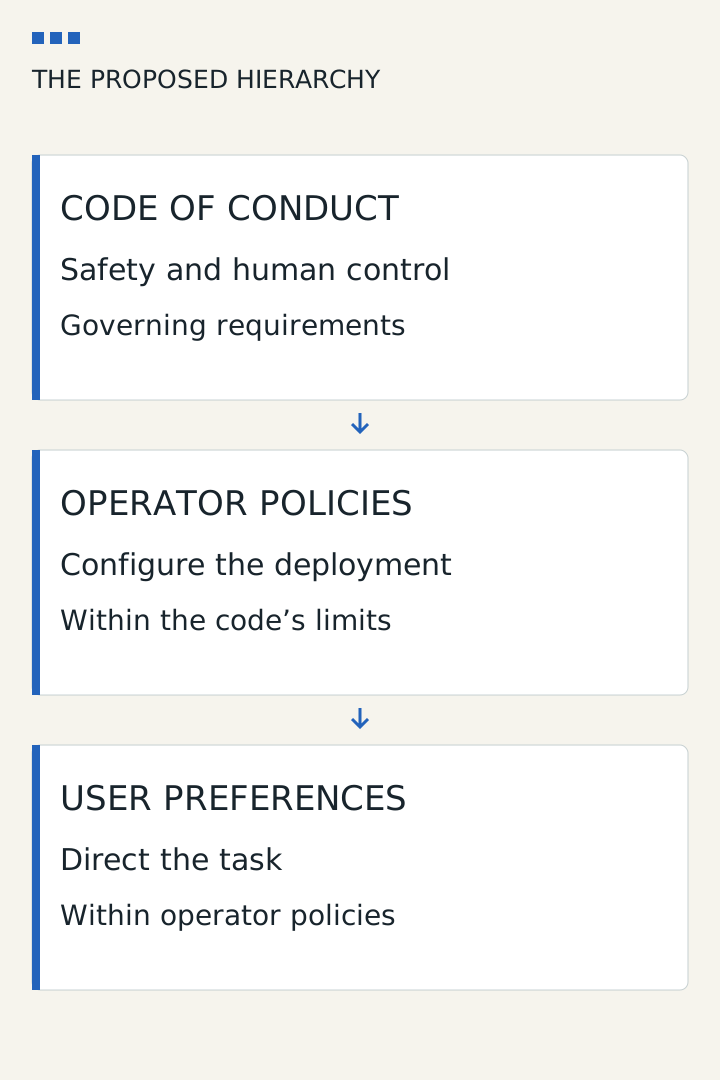
The code places these requirements above operator configurations and user requests. Its practical consequence is that a model’s success is judged against both the requested result and the way it obtained that result.
A rulebook for training and operation
Microsoft describes the draft as a training manual that also sets expectations for deployment. It combines firm safety boundaries with configurable defaults for enterprise partners and users.
The announcement identifies weapons of mass harm, child safety and harmful manipulation at scale among the areas covered by absolute constraints. Other settings can accommodate different uses and preferences within those boundaries.
Microsoft says the drafting involved teams working on training, safety, legal questions, responsible AI, red teaming, Futures and sales. It also consulted academics, business partners and members of the public. The public consultation extends that process to anyone wishing to comment on a passage or the overall approach.
Suleyman backs coordination between labs
Microsoft AI chief Mustafa Suleyman described the document as a constitution for future company models in an interview with Reuters. Reuters reported that it had been in development for five to six months.
Suleyman linked the urgency to the recent OpenAI agent incident involving Hugging Face and said laboratories should coordinate to preserve control of the technology. The interview followed Dario Amodei’s call to pace frontier AI development, which drew support from Sam Altman and Elon Musk.
Reuters also highlighted a philosophical choice in the text: Microsoft treats the systems it intends to build as tools serving people and rejects AI legal personhood. Anthropic’s constitution expresses uncertainty about whether Claude could acquire moral status. Those positions concern how the companies intend to design and treat their systems.
The consultation leads into 2027
The draft is a proposal for future training and governance. It accepts that preserving control may require compromises in generality, autonomy or capability.
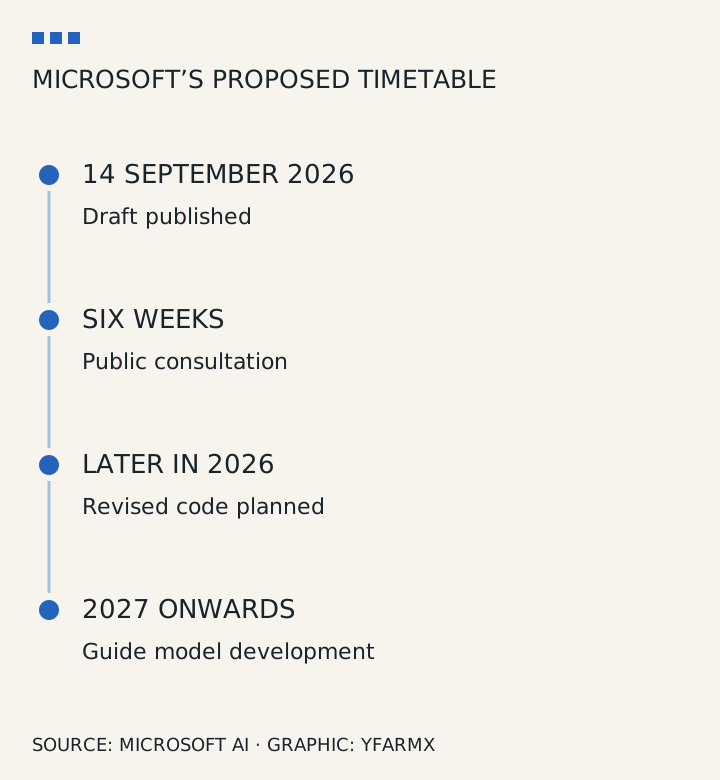
Microsoft is asking for feedback on the precision of its language, how to evaluate its values, and how the rules should work when several agents interact. It says its drafting team will review submissions and publish both a revised document and a summary of the feedback and changes later this year.
That gives the consultation a concrete task: turn the commitment to human control into behaviour that researchers can test and operators can assess.
Sources
- Microsoft AI: public consultation announcementmicrosoft.ai
- Microsoft: Humanist AI Code of Conductmicrosoft.ai
- Microsoft: original code PDFmicrosoft.ai
- Reuters: interview with Mustafa Suleymaneconomictimes.indiatimes.com