FBI arrests OpenAI engineer over hidden conference-room recorder
US prosecutors charged Abdulrahman Alfozan after a covert recorder was found behind a conference-room television at OpenAI. The allegations were disclosed on 13 October.

Listen to this articleListen
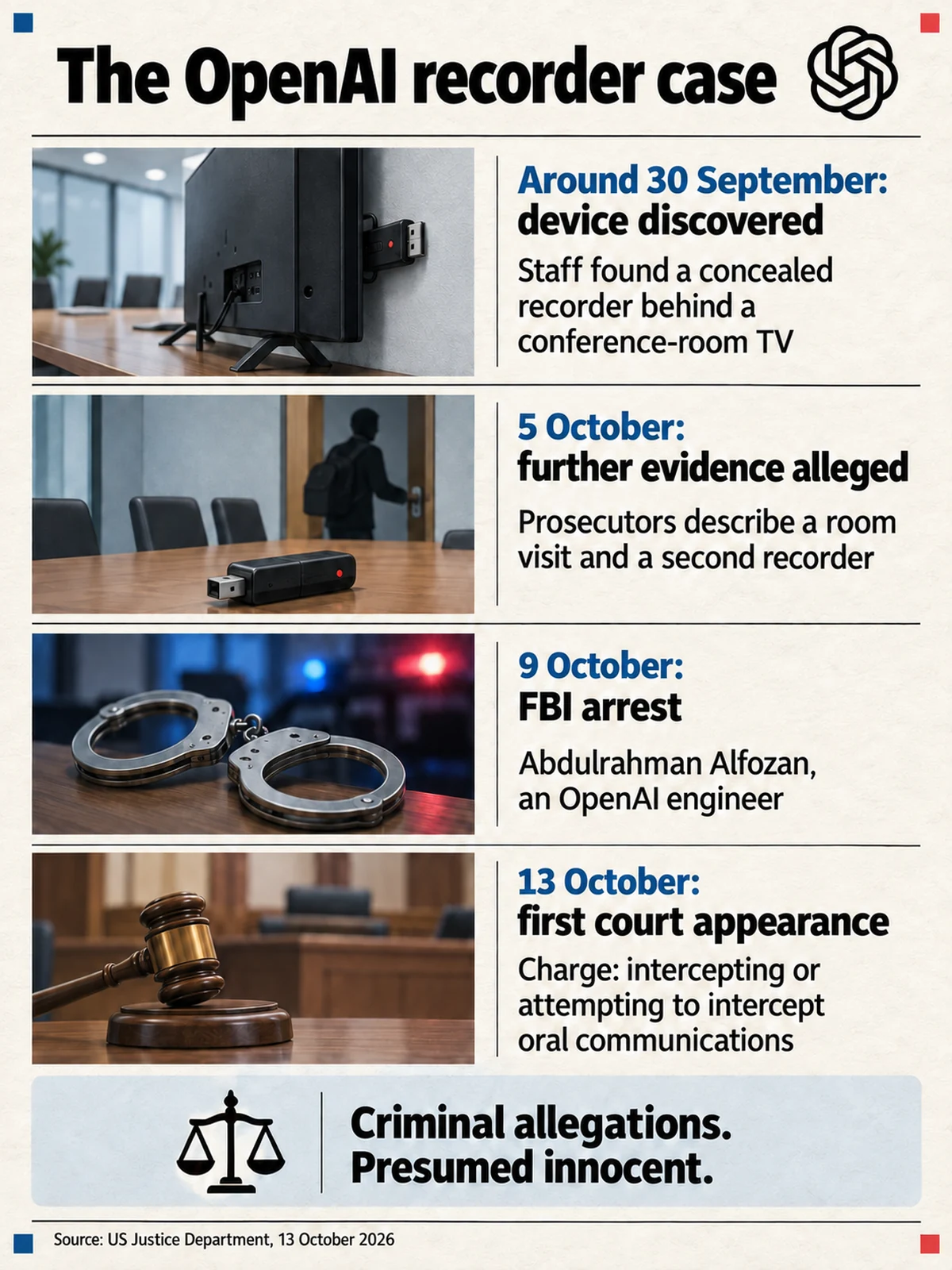
The FBI has arrested an OpenAI engineer accused of concealing a recording device in an executive conference room at the company’s San Francisco offices. Federal prosecutors disclosed the case on 13 October, when Abdulrahman Alfozan made his initial appearance in court.
Alfozan, 35, a Saudi national employed by OpenAI since July 2025, was arrested on 9 October, according to the US Justice Department. The case concerns alleged interception of oral communications. The accusations will be tested through the criminal proceedings, and he is presumed innocent.
Staff found the device behind a television
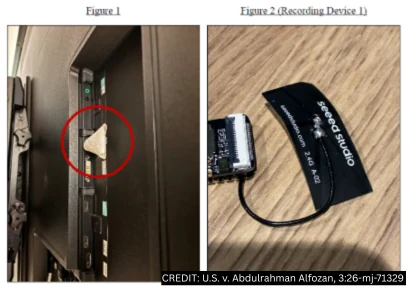
OpenAI personnel discovered the recorder on or around 30 September, prosecutors say. It was inserted into a USB port on the back of a television in an executive conference room and concealed with toilet paper.
The Justice Department’s account of the complaint says the company determined that the device had been installed on or around 28 September and that its contents were encrypted. The room was used for discussions involving confidential research, product plans and commercial relationships.
The department published a photograph of the recording device with its announcement. That physical discovery is the starting point for the allegations about how the room and its meetings were targeted.
Prosecutors describe searches for rooms and calendars
The complaint alleges that Alfozan used an internal productivity tool to query office addresses, meeting rooms, capacities and calendars. Prosecutors say the searches included the locations of leadership and external-partner meetings before the alleged installation date.
The department also describes recording-equipment queries submitted through a chatbot account associated with Alfozan’s spouse. Prosecutors say that account shared identifiers and attributes with his account, and that the requests concerned recording, testing, remote access and encryption.
Those are parts of the prosecution’s account of preparation and intent. The alleged objective was to capture discussions containing sensitive technical, commercial and strategic information.
The investigation followed further visits to the room
Prosecutors say surveillance footage showed Alfozan looking behind the television on 5 October. The Justice Department also alleges that security personnel found a second, similar recorder in a bag he left unattended in a different OpenAI room that day, alongside his wallet and identification.
Reuters reported the arrest and the company’s response. The case places the security of offices and executive discussions alongside the digital controls companies use to protect their AI research.
The charge carries a five-year maximum
Alfozan is charged with using or attempting to use a device to intercept oral communications. If convicted, the Justice Department says he faces a maximum of five years in prison, a $250,000 fine and three years of supervised release.
The FBI is investigating. The court process will determine the evidence supporting the charge and the defendant’s response. For OpenAI, the incident concerns access to a physical meeting space where valuable research and business decisions were discussed.