The EU orders Google to open Android to rival AI assistants and share search data
The European Commission issued two binding Digital Markets Act decisions to Google on 16 July: one opening Android to rival AI assistants by July 2027, the other forcing Google to share search data with competitors from January 2027.
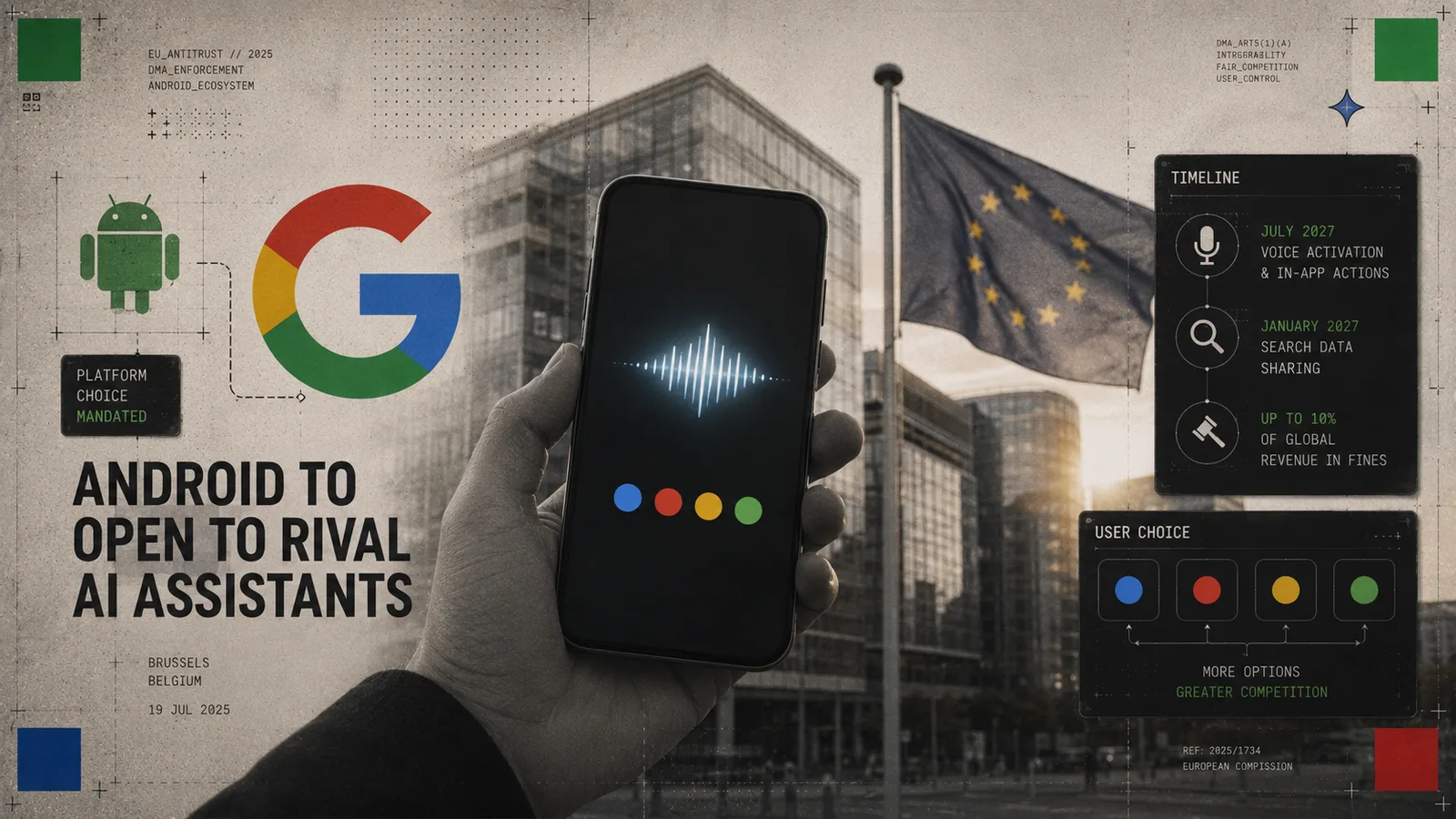
On 16 July the European Commission issued two binding specification decisions to Google under the Digital Markets Act, one forcing Android open to rival AI assistants, the other compelling Google to share search data with competitors.
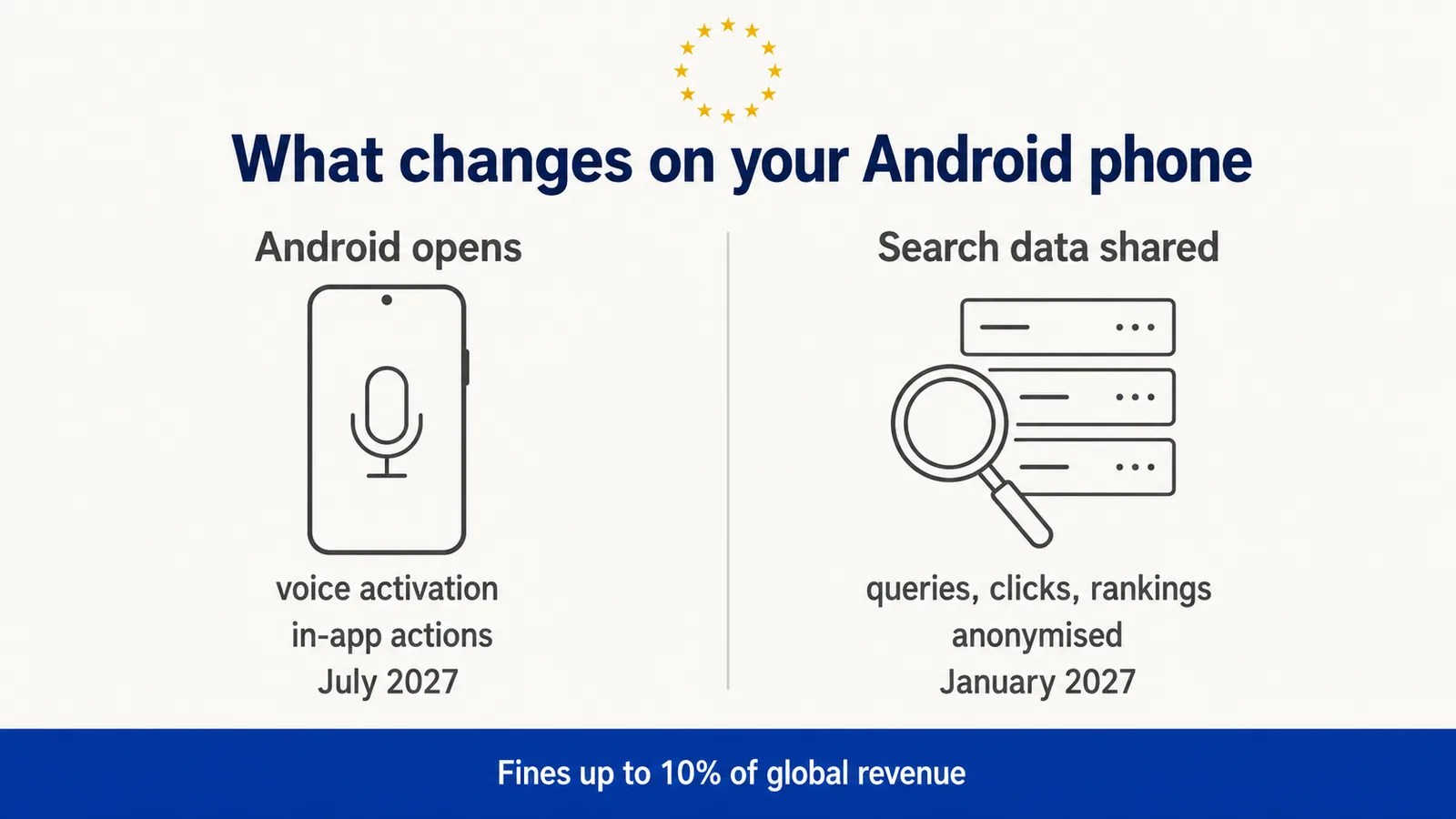
The Android decision attacks default placement. The Commission’s text states that competitors’ AI assistants currently have restricted access to key Android functionality while Google’s own services enjoy full access, in front of the 60 per cent of EU users on Android devices. The remedy: users must be able to activate their preferred assistant by voice, in the manner of “Hey Google”, and delegate real actions inside apps, with the Commission’s own examples including booking a taxi, receiving suggested replies in chat apps, and asking about a recently visited place. Interoperability is due by July 2027, subject to certification, user consent and what the decision calls robust safeguards for privacy, device integrity and security. For ChatGPT, Claude, Mistral and every other assistant currently living inside a sandboxed app on Android, this is the difference between being an app and being the phone’s brain.
The search-data decision attacks the moat. From January 2027, Google must share the query, click and ranking data it uses to optimise its own search products with third-party search engines, and the decision explicitly makes AI chatbots offering search functionality eligible recipients. The terms: a multi-layered anonymisation method developed with privacy experts and aligned with draft Commission and European Data Protection Board guidelines, a fair pricing formula, a transparent access process, and a right for Google to refuse a specific recipient on serious cybersecurity or data-protection grounds, with the Commission reserving the power to amend the anonymisation rules as the market evolves.
Google’s response came the same day and has hardened since. President of global affairs Kent Walker argued the measures risk weakening privacy and security for Europeans, and the company has circulated a claim that its own researchers defeated the planned anonymisation scheme in under two hours. The Commission’s counter is embedded in the decision itself: the safeguards were co-designed with data-protection authorities and remain adjustable. Between those positions sits the enforcement reality that DMA breaches carry fines of up to 10 per cent of global revenue.
Why this is the most consequential AI regulatory action of the year: it targets the two structural assets, distribution and data, that no benchmark chart captures. Every rival lab can build a comparable model; none can currently be summoned by voice on two billion devices or train search products on Google’s behavioural exhaust. Whether Brussels has just created a genuine marketplace of assistants or a compliance theatre with 2027 deadlines will be decided in implementation, and the first technical proposals from Google are the next concrete milestone to watch.
Sources
- European Commission (Digital Markets Act)digital-markets-act.ec.europa.eu
- European Commission pressec.europa.eu
- Google (The Keyword)blog.google