
Utah tests AI prescription renewals with doctor review
Utah's Doctronic pilot tests AI renewals of existing prescriptions. Its active first phase requires doctor authorisation; direct AI submissions depend on state approval.

Listen to this articleListen
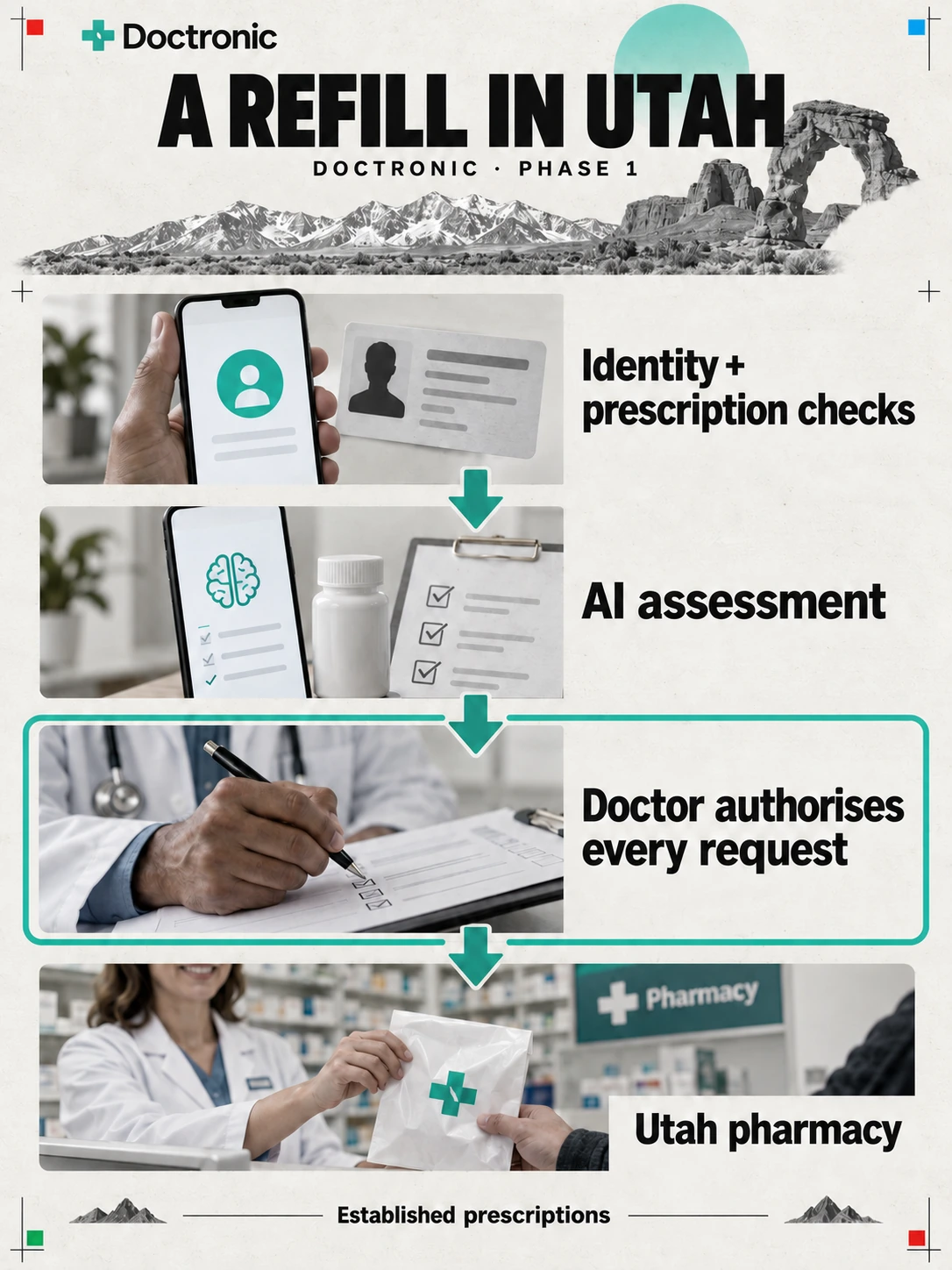
Utah has authorised a pilot in which AI can eventually send eligible prescription renewals directly to a pharmacy. Doctronic, the company running the service, is currently listed in Phase 1, where a licensed medical practitioner authorises every request, according to the state’s active-pilot register.
Utah announced the programme on 6 January 2026, describing it as the country’s first state-approved programme allowing AI to participate in prescription-renewal decisions. The pilot creates a route towards authorisation under a doctor’s protocol, with the state deciding when supervision can change.
The service renews medicines patients already take
Doctronic’s Utah pilot handles 30-, 60- or 90-day renewals of selected medicines previously prescribed by a licensed healthcare provider. Patients continue an established treatment plan, with the medicine and renewal limits governed by the agreement’s protocols and approved drug list.
The process verifies the patient’s identity and existing prescription, checks pharmacy records, and gathers a medication-focused medical history. The assessment includes allergies, side effects, other medicines and changes in the patient’s condition. Cases requiring additional clinical attention go to a Utah-licensed provider.
Each medication group needs approval to advance
Utah requires 250 filled prescriptions within each medication group before that group becomes eligible for Phase 2. The Office of Artificial Intelligence Policy must then approve the transition, under the amended rules.
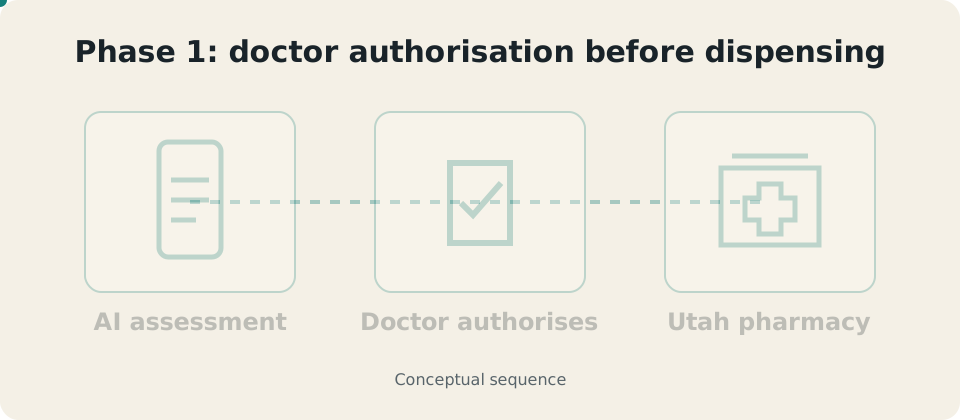
In Phase 2, the AI may submit an eligible renewal directly to the pharmacist, with physicians reviewing every renewal retrospectively during that phase. Pharmacists retain a route to a licensed physician for questions or escalation. A physician’s name remains attached to the prescription, and the service must maintain malpractice cover for AI-related risks.
The state’s current register identifies Doctronic’s agreement as active, running from 24 October 2025 to 24 October 2026, and places the service in the phase requiring authorisation of every request. Progression is a separate decision for each medication group.
Early results show how often doctors asked for more
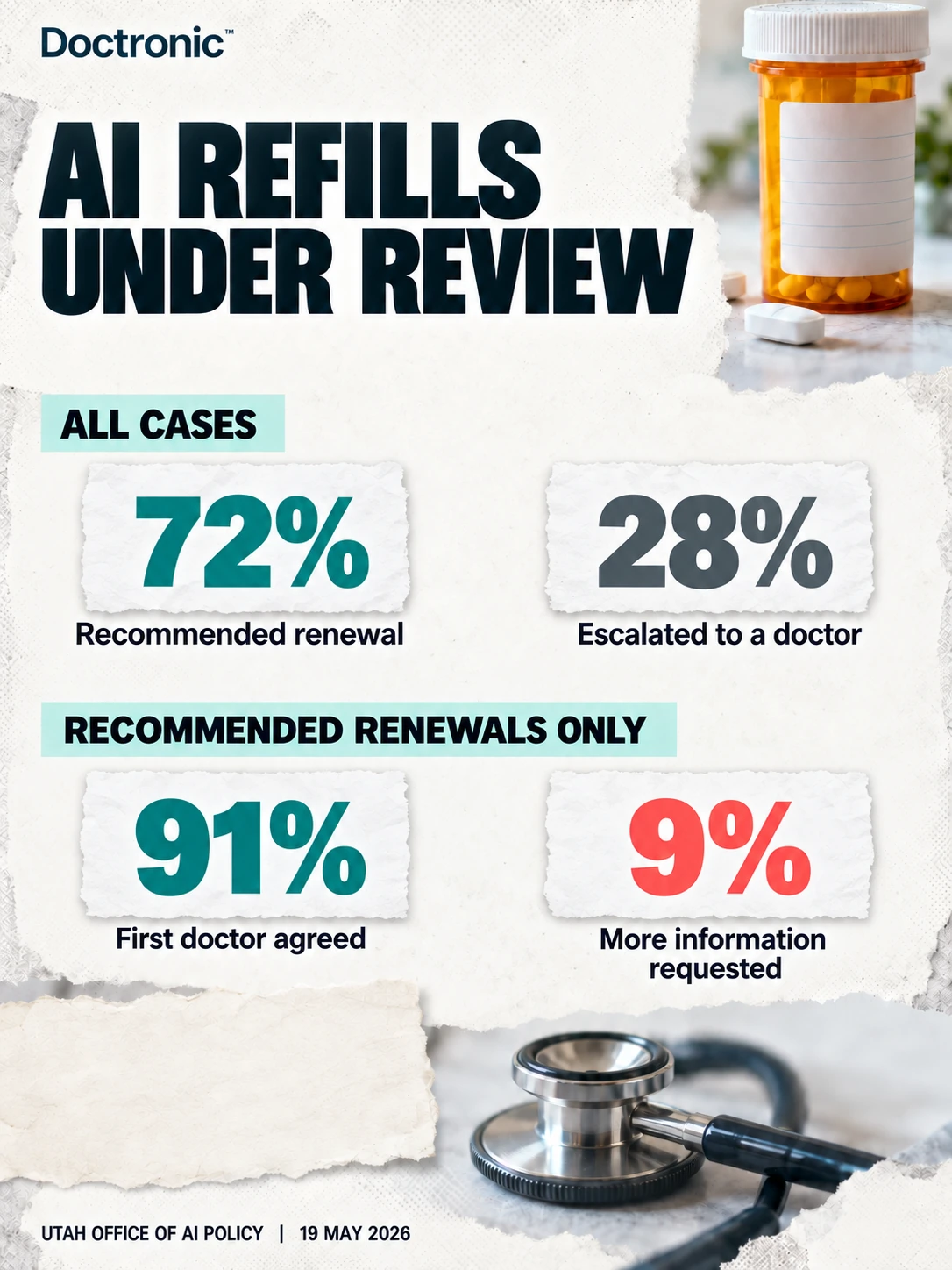
Utah’s outcomes report dated 19 May 2026 describes the pilot’s early physician-reviewed cases. The AI recommended renewal in 72% of cases and escalated the remaining 28% for further clinical attention.
Among cases recommended for renewal, the first reviewing physician agreed in 91%. In the other 9%, the physician wanted additional information, such as laboratory confirmation or more detail about symptoms, and a telehealth appointment took place before authorisation reached the pharmacy.
| Measure | Reported result |
|---|---|
| AI recommended renewal, followed by physician review | 72% of all cases |
| AI escalated for further clinical attention | 28% of all cases |
| First physician agreed with an AI renewal recommendation | 91% of recommended-renewal cases |
| First physician requested more information | 9% of recommended-renewal cases |
The figures come from Doctronic physicians’ reports. The office said it had initiated a separate independent review. These are measures of recommendations and clinical agreement within a supervised pilot.
Doctors want each refill treated as a clinical decision
The Utah Medical Licensing Board recommended suspending the programme on 20 April 2026. It argued that prescription renewals require reassessment of side effects, interactions and whether treatment remains appropriate, and called for medical professionals to review proposals before implementation.
Utah’s pilot continues under a framework that requires identity and prescription checks, monthly reporting and physician escalation. The next step towards direct AI authorisation is a state-approved transition for a qualifying medication group, with pharmacists retaining access to clinical support.
Sources
- Utah Office of AI Policy: authorised pilots and current Doctronic statuscommerce.utah.gov
- Utah Department of Commerce: Doctronic announcement, 6 January 2026commerce.utah.gov
- Utah Office of AI Policy: Doctronic pilot and amended phase rulescommerce.utah.gov
- Utah and Doctronic: signed regulatory mitigation agreementcommerce.utah.gov
- Utah Office of AI Policy: Doctronic outcomes report, 19 May 2026commerce.utah.gov
- Utah Medical Licensing Board: letter on AI prescription renewals, 20 April 2026commerce.utah.gov