
xAI
Grok Voice 3.0
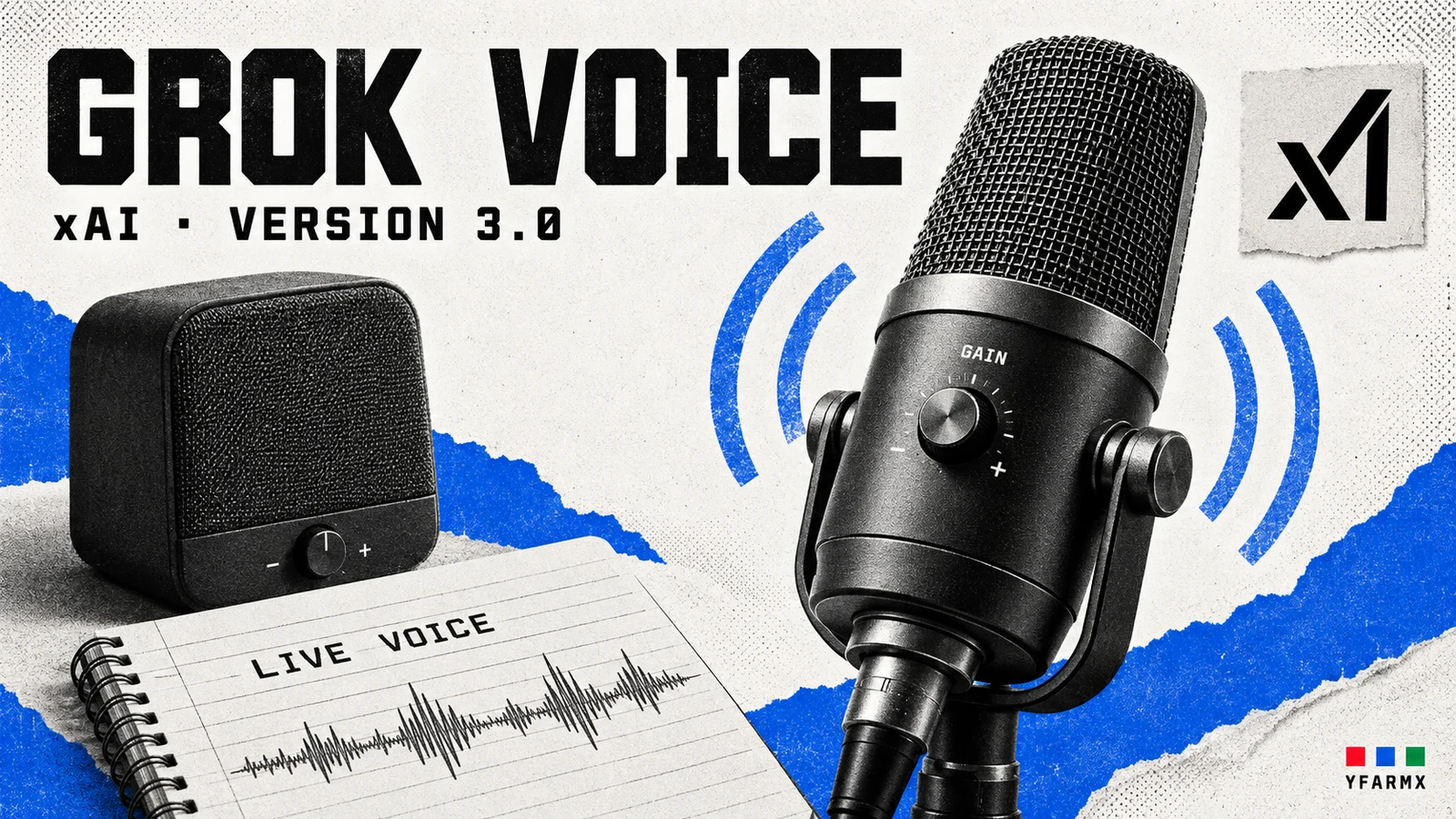
Grok Voice 3.0 handles spoken input and replies with speech. Released on 14 October 2026, it replaces Voice 2.0 behind the latest-model alias.
Key facts
- 14 Oct 2026
- Released
- Speech
- Input and output
- grok-voice-3.0
- Model ID
- Hosted API
- Access
Grok Voice 3.0 handles spoken input and replies with speech. Released on 14 October 2026, it replaces Voice 2.0 behind the latest-model alias.
Grok Voice 3.0 is xAI’s model for live spoken conversations: an application sends speech and receives spoken replies. The 14 October 2026 release notes announce its API availability and mark Voice 2.0 as deprecated.
The latest-model alias now selects version 3.0
The versioned identifier is grok-voice-3.0. Requests using grok-voice-latest now select this version. The speech-to-speech guide explains the supported session controls, audio events and tool calls.
Existing applications use the same endpoint, parameters and event structure. xAI says pricing is unchanged from Voice 2.0. Developers should check the current price schedule and test their own conversation flows before moving traffic.
Test the complete conversation
A voice application combines the model with microphones, playback, network transport and any tools it can call. Test interruption handling, recognition in the intended environment and confirmation before consequential actions. Those checks establish how a particular application behaves.
Speech-to-speech models handle the conversation itself. Standalone transcription converts audio into text; speech synthesis converts supplied text into audio. The audio directory covers those other tasks.
More in Audio and Voice
All Audio →- Alibaba QwenQwen-Audio-3.1Alibaba's upgraded audio stack, announced 23 September 2026
- Technology Innovation InstituteFalcon-ASRspeech recognition with Arabic dialect support
- NvidiaNemotron 3 DiarizationNvidia’s Nemotron 3 Diarization marks when each speaker is active in recorded or live audio
- Microsoft AIMAI-Transcribe-2-Streaming, MAI-Voice-2.1 and MAI-Voice-2.1-Flashlive transcription that tops the streaming accuracy board, and two new voices
- AlibabaHappyShrimp 1.0the name is a eulogy
- Microsoft AIMAI-Transcribe-2speech recognition at ten cents an hour