
AI data centres and the grid
six grid operators, ordered to justify their connection rules
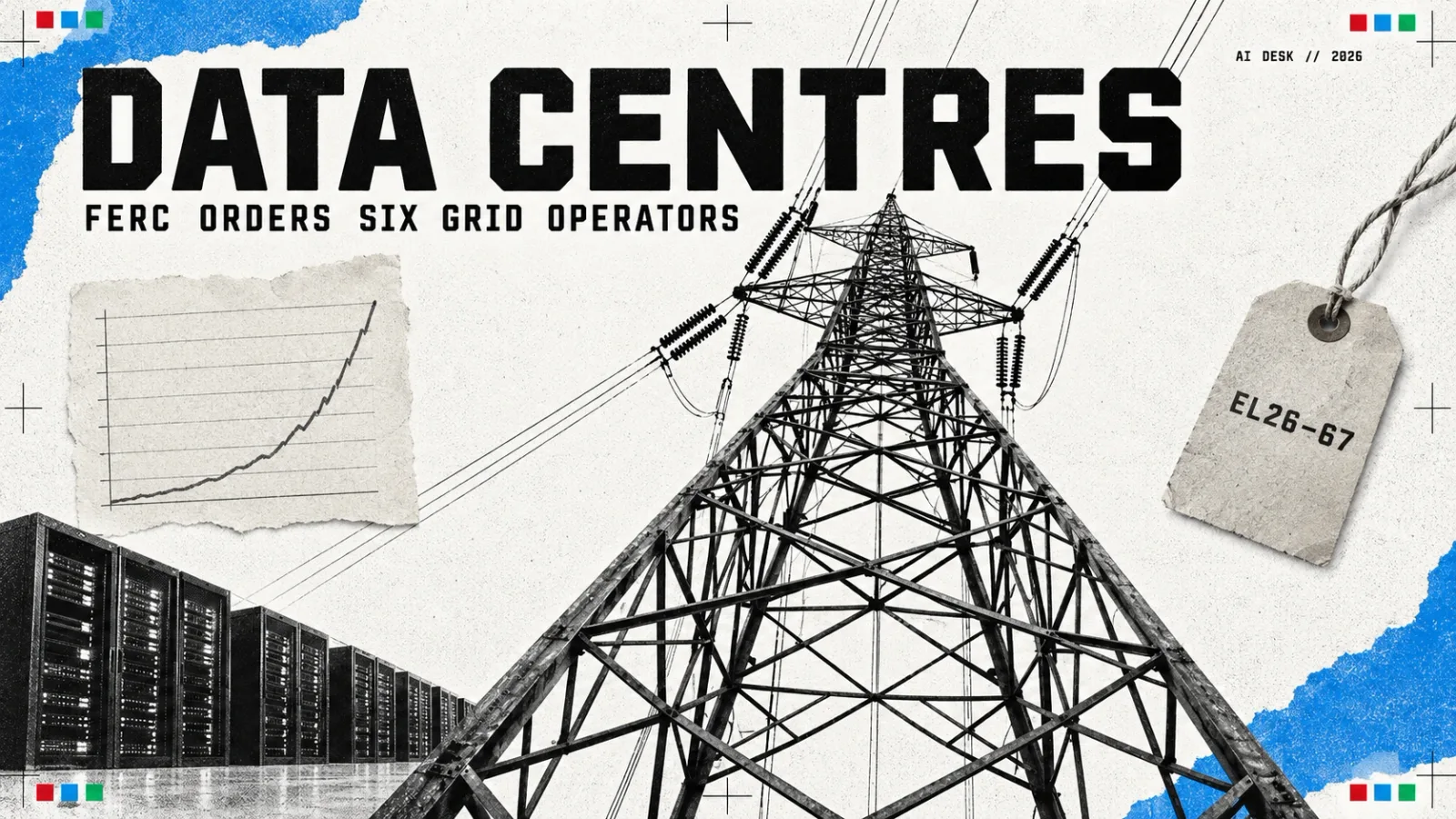
Key facts
- 6one per grid operator, 18 Jun 2026
- Orders
- 60 daysjustify or reform
- Tariff response
- 14 Aug 202690-day abeyance granted
- Paused
- +224 GWNERC 10-year summer peak
- Demand growth
- 3.6%/yr10-year summer average
- PJM growth
The US electricity regulator has put the data centre boom on the docket. Six show cause orders, one per regional grid operator, demand justification or reform of the rules connecting large loads, against a NERC forecast that has ten-year summer peak demand growing by over 224 GW with data centres the biggest driver. Since 14 August the cases have sat on a 90-day pause.
The machines training and serving AI models plug into the same grid as everyone else, and in the United States the regulator of that grid has now made their arrival a formal legal question. On 18 June 2026 the Federal Energy Regulatory Commission issued show cause orders under section 206 of the Federal Power Act to all six regional grid operators it oversees, directing each to justify the rules that govern how data centres and other large loads connect, or to change them. The orders sit in six dockets, EL26-67 through EL26-72, one each for PJM, Southwest Power Pool, the New York ISO, the Midcontinent ISO, the California ISO and ISO New England.
Since 14 August 2026 the whole set has been on a 90-day pause at the grid operators’ own request, which makes this a rare regulatory story whose current state is officially “held”. Here is what was ordered, why, and what the demand numbers underneath it look like, as of 18 September 2026.
What FERC ordered in June
A section 206 show cause order flips the burden: the regulator asserts that existing tariffs may be unjust and unreasonable, and the utility must prove otherwise or file reforms. Each grid operator and its transmission owners drew two deadlines. Within 30 days, an informational report on how it will ensure enough generation for existing and new large loads; the six reports were filed in July. Within 60 days, the main event: justify the current connection rules or propose new ones.
Chairman Laura Swett’s framing gave the order its politics: “We are setting the stage for a resilient, reliable, and forward-thinking grid that empowers communities and safeguards consumers by transforming the way large energy users access the grid.” Commissioner David Rosner’s remarks named the consumer stake, describing cost recovery agreements built so that when a promised data centre never materialises, “residential customers are not left on the hook to pay the costs”. All five commissioners concurred.
The five things the grid operators must justify
The orders press on five areas, and together they are a map of every fight the data centre boom has started inside the US grid:
| Area | The question underneath |
|---|---|
| Application and study processes | How fast can a large load actually get connected? |
| Cost shifting and transparency | Who pays for the network upgrades a data centre triggers? |
| Co-location and behind-the-meter generation | Can a data centre sit at a power plant and skip the grid? |
| Services for flexible loads | Does a load that can turn down deserve different terms? |
| Studying co-located generation | How is nearby generation counted when a big load arrives? |
August put the cases on hold
The 60-day tariff deadline would have landed in mid-August. Between late July and early August the grid operators, PJM, MISO, CAISO and NYISO among them, moved instead for a 90-day abeyance, and on 14 August 2026 FERC granted it by letter order in the dockets. The proceedings are expected to pick back up around mid-November 2026, which is the date to watch. The pause reads less as retreat than as timetabling: the same commission spent the summer processing the six 30-day reports, errata and a partial rehearing of its December PJM order, and the industry asked for room to write real tariff proposals rather than 60-day defences.
How the fight got here
The show cause orders are the third act of a story that started at a nuclear plant. In November 2024 FERC rejected an amended interconnection agreement that would have grown the co-located Amazon load at Talen’s Susquehanna nuclear station from 300 MW to 480 MW, the first time the co-location question produced a federal ruling. In February 2025 the commission opened a show cause proceeding on PJM’s co-location rules in docket EL25-49, and in December 2025 it ordered PJM to write new rules for large loads at generating facilities, with Swett calling the order “a monumental step towards fortifying America’s national and economic security in the AI revolution”. On the same June day as the six new orders, the commission partially set that December order aside on rehearing and sent PJM back for a further filing.
The rulemaking track runs alongside. On 23 October 2025 the Secretary of Energy formally directed FERC to consider a rulemaking on connecting large loads to the interstate transmission system, and the resulting advance notice docket, RM26-4-000, built the record the June orders draw on. The orders themselves are the enforcement-shaped instrument; the rulemaking is the slower, generic one.
The demand numbers behind it
The regulatory urgency tracks the forecasts, which have moved faster than any planning cycle. NERC’s long-term reliability assessment, published in January 2026, forecasts aggregated summer peak demand rising by over 224 GW across ten years, 69% higher than the previous year’s ten-year projection, with winter peak growth of 245 GW, and states the cause in one sentence: “New data centers for artificial intelligence and the digital economy account for most of the projected increase in North American electricity demand over the next 10 years.”
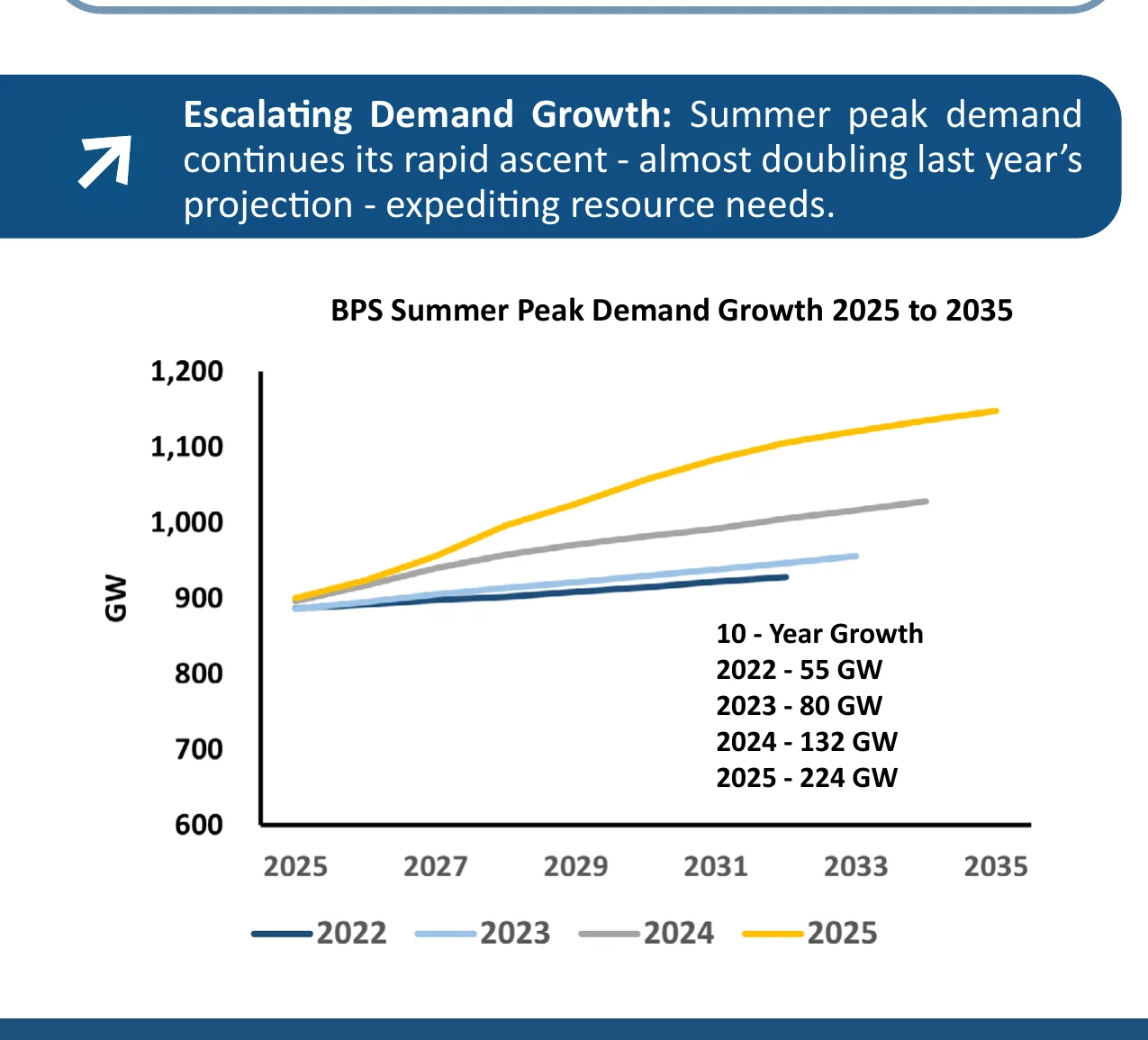
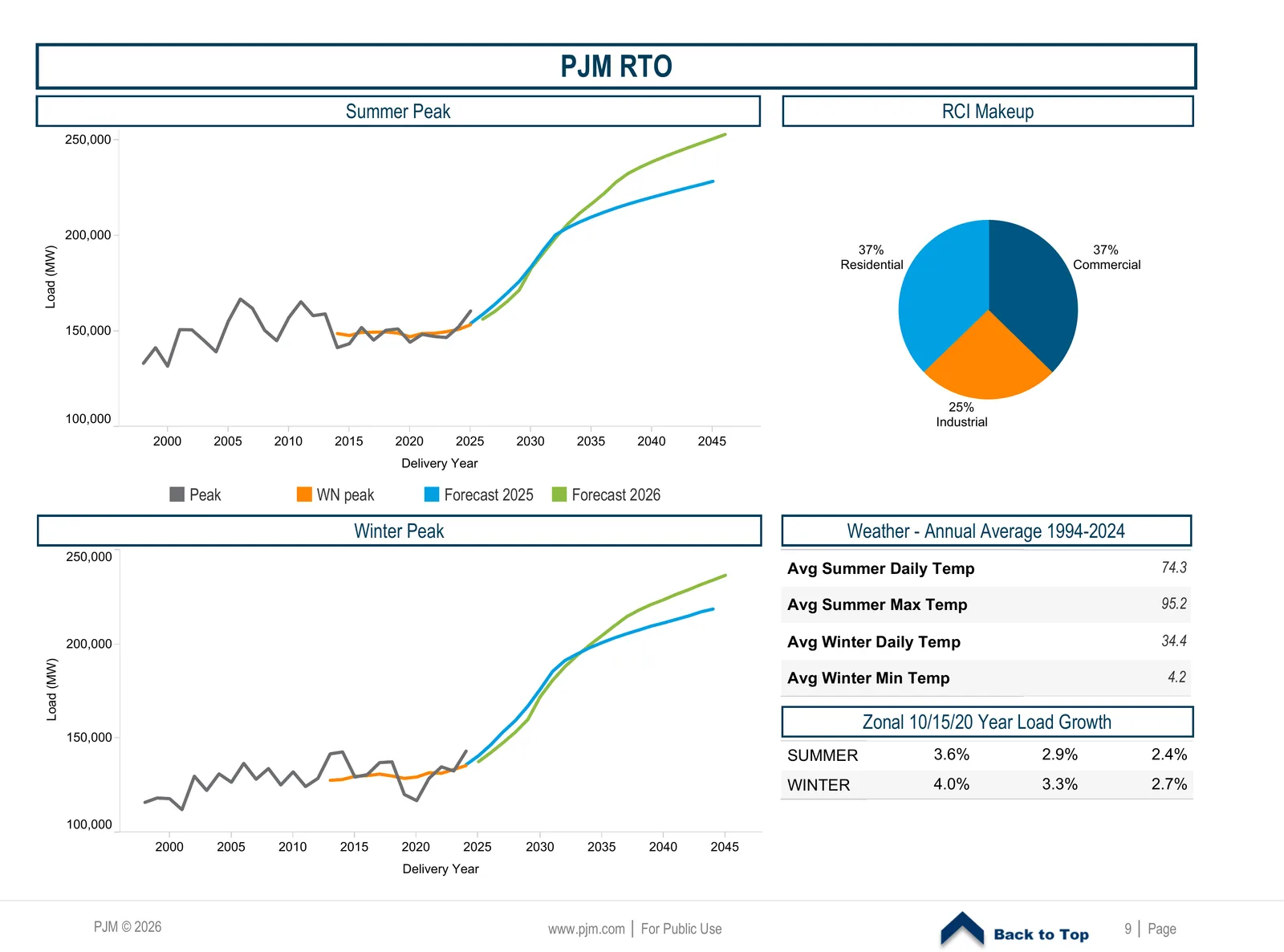
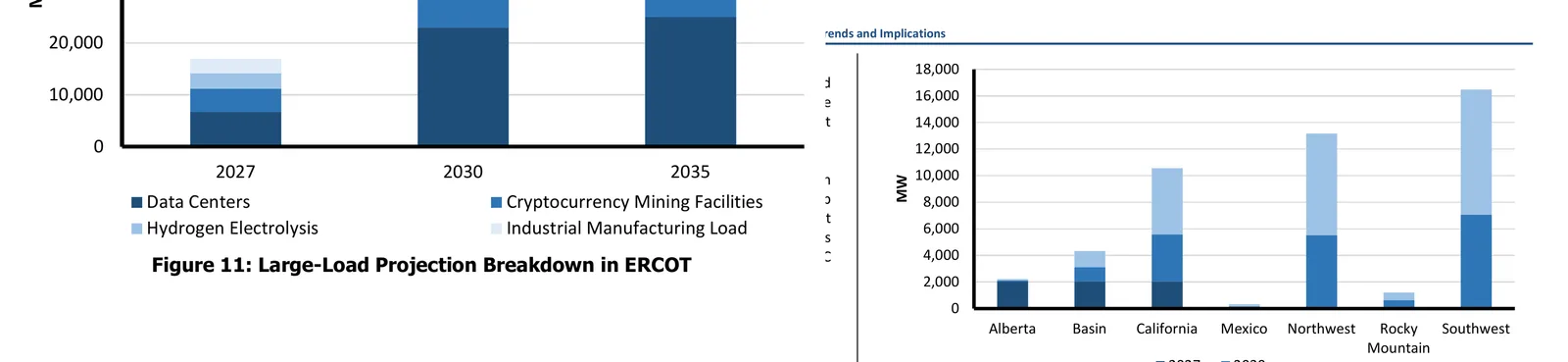
The regional figures carry the detail. PJM, the largest US grid operator, projects summer peak growth averaging 3.6% a year for a decade, reaching 222,106 MW by 2036, an increase of 65,733 MW, and lists zone after zone whose forecast is adjusted for growth in data centre load. MISO projects 18 GW of data centre additions by 2035. ERCOT, outside FERC’s jurisdiction and so outside the June orders, forecasts 45 GW of new large loads by 2030, 23 GW of them data centres. The federal statistics agency EIA expects US generation to hit a record 4,368 billion kilowatt-hours in 2026, growth it attributes to data centre development, and its long-run outlook has servers alone reaching 22% to 33% of commercial building electricity use by 2050.
The dates to watch
| Date | What happens |
|---|---|
| ~Mid-November 2026 | The 90-day abeyance runs out; the six proceedings resume |
| Then + 60 days | Tariff justifications or reform filings come due |
| In parallel | The RM26-4 rulemaking record keeps building |
| In parallel | PJM’s further co-location compliance filing lands |
The outcome that ends up governing the AI build-out is whichever of these tracks produces binding tariff language first. For the model labs and hyperscalers the stakes are concrete: connection queues measured in years, upgrade bills measured in billions, and the co-location question, whether a data centre can buy its way out of both by sitting at a power station, now squarely in front of the one regulator with authority over all six markets at once.