
Nvidia H200 exports to China
from presumption of denial to case-by-case, with strings
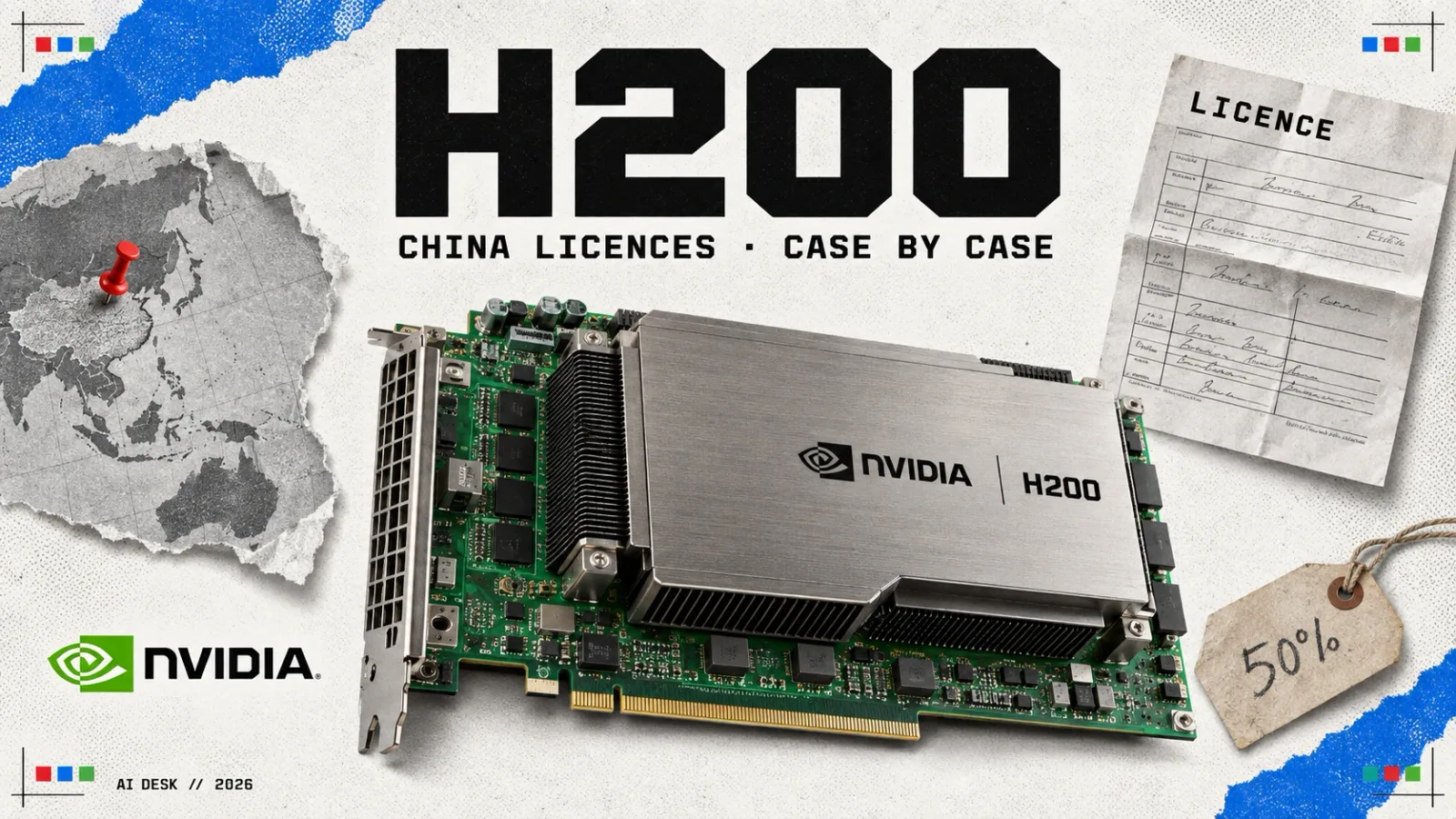
Key facts
- 13 Jan 2026rule effective 15 Jan
- Announced
- Case-by-casewas presumption of denial
- Review policy
- 50%of TPP shipped to US buyers
- Performance cap
- <1%of data centre revenue, Q2 FY27
- H200 shipments
- $0.4bnexcess inventory, 1H FY27
- H200 charge
Washington now says yes, with conditions: case-by-case licences for the H200 since January 2026, capped at half the performance shipped to US customers and routed through mandatory inspections. Beijing then restricted the buying side, and Nvidia's own filings put the shipments at under 1% of data centre revenue.
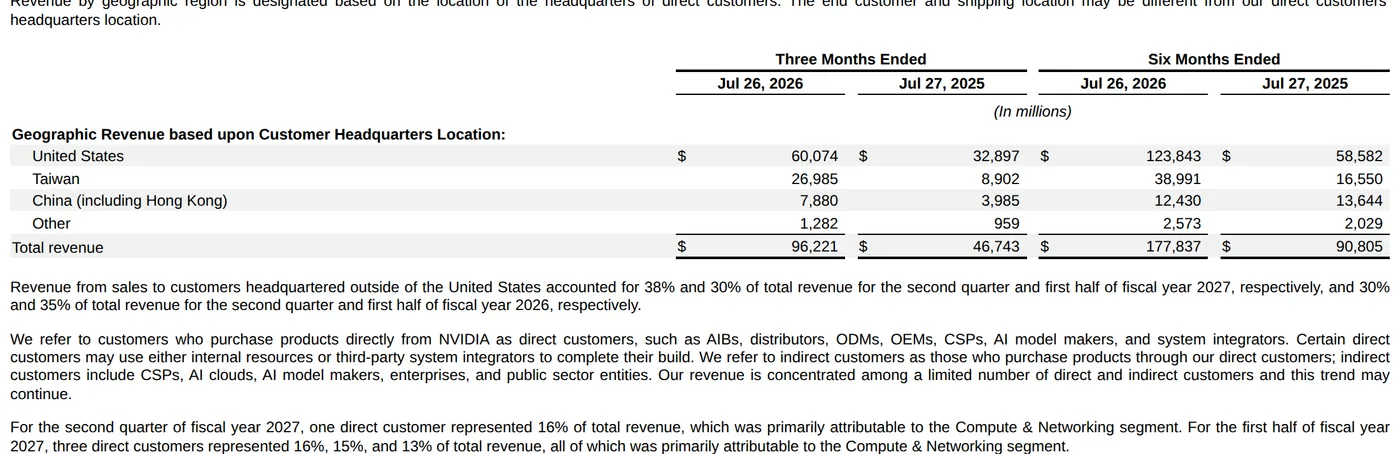
Can Nvidia sell its H200 chip to China? The answer has changed four times in four years. As of 18 September 2026 the position is: yes, under a case-by-case US licence carrying nine conditions, and mostly no in practice, because Beijing has restricted the buying side. Nvidia’s own filing for the quarter ended 26 July 2026 puts licensed H200 shipments at less than 1% of its data centre revenue.
Everything below comes from the rule itself, the Bureau of Industry and Security’s own announcement, and Nvidia’s SEC filings.
What changed in January
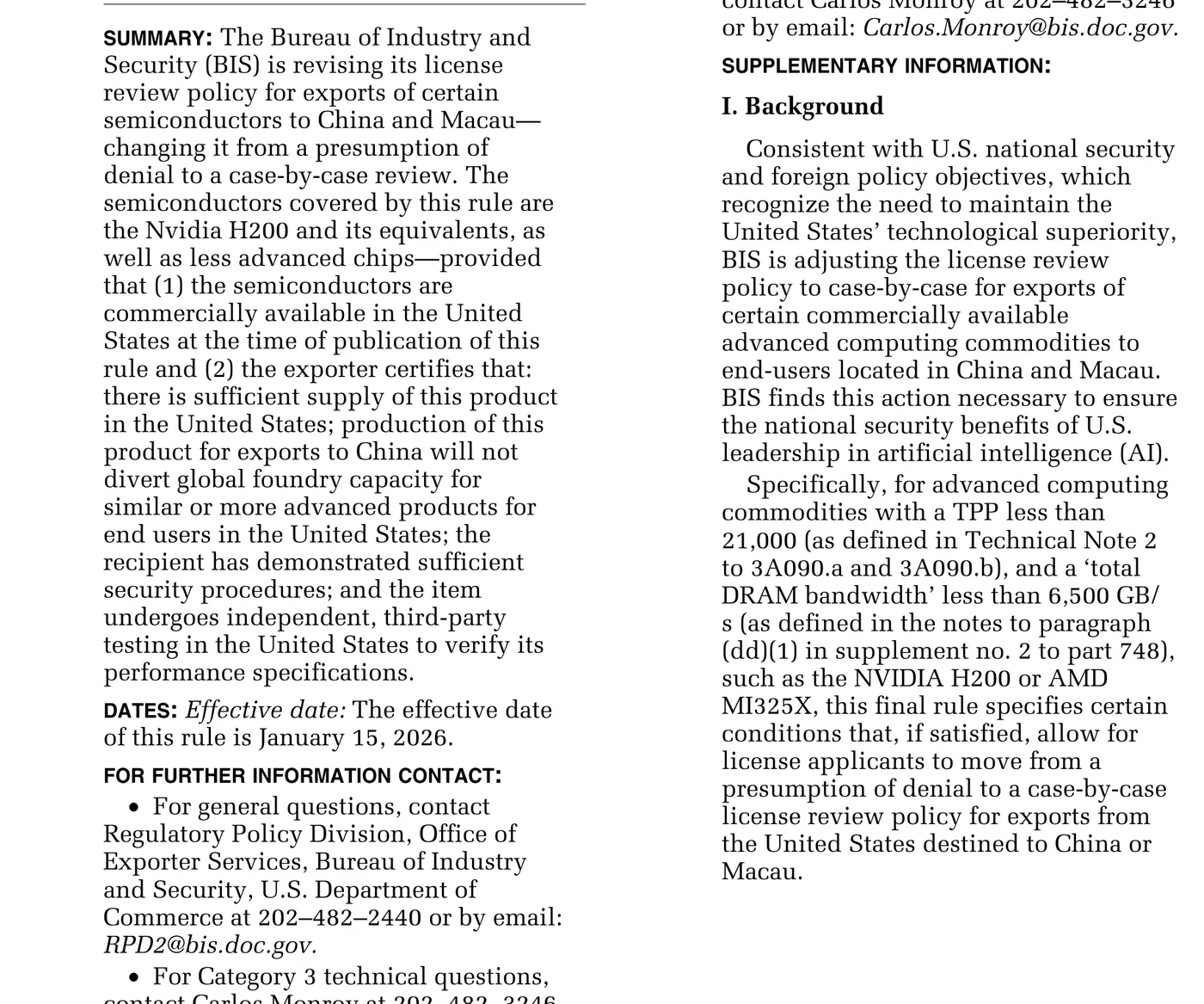
On 13 January 2026 BIS announced it would revise its licence review policy for advanced computing chips exported to China. The rule, published in the Federal Register on 15 January as 91 FR 1684 and effective the same day, states its own change in one line: “changing it from a presumption of denial to a case-by-case review.”
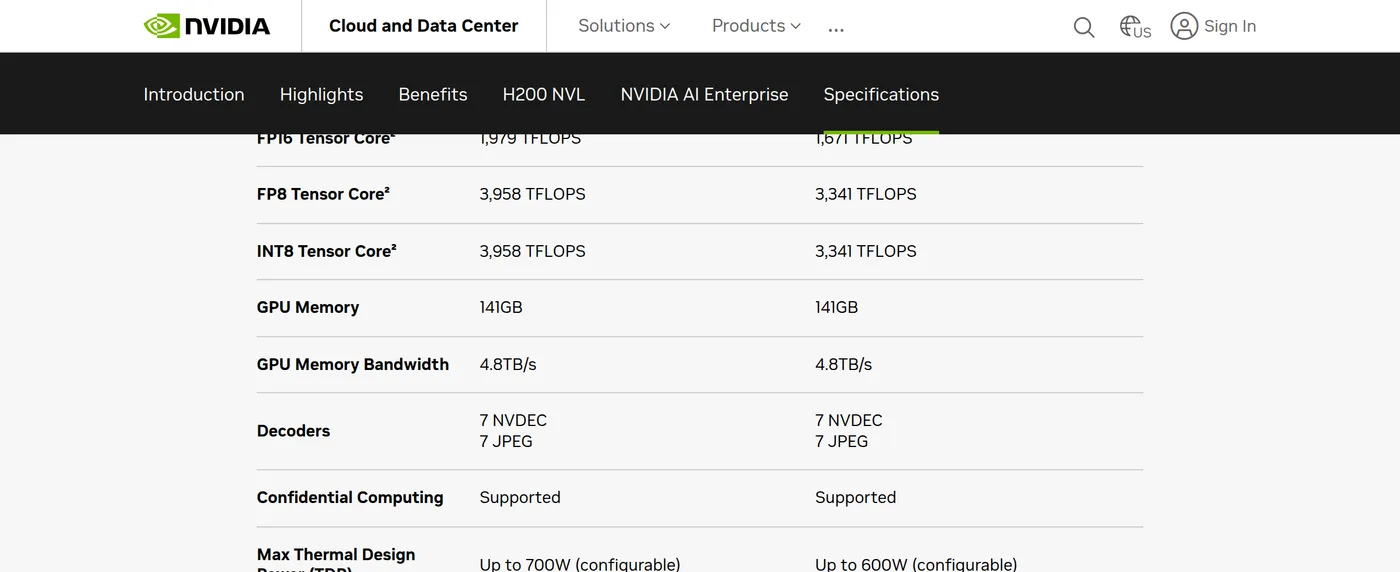
The scope is drawn by two performance ceilings. The revised policy covers chips with a total processing performance below 21,000 and a total DRAM bandwidth below 6,500 GB/s, “such as the NVIDIA H200 or AMD MI325X” in the rule’s own words. The H200 sits under both lines: Nvidia’s spec sheet gives it 141GB of HBM3e and 4.8TB/s of memory bandwidth. Anything above the ceilings, the B200 and GB300 class, keeps the presumption of denial, as do exports to arms-embargoed destinations and entities headquartered there.
Under Secretary for Industry and Security Jeffrey Kessler framed the move in the announcement: “Export controls should evolve with changes in technology, while protecting national security. Permitting the sale of the H200 to China under controlled conditions will strengthen the American technology ecosystem.”
The conditions a licence carries
The rule attaches nine conditions, and three of them do most of the work:
- A 50% performance cap. The aggregate total processing performance of covered chips exported to China and Macau may reach no more than half the aggregate performance shipped to US customers for the same product. The cap is set in performance, so counting units or dollars against it misreads the rule.
- A US-first certification. The exporter must certify that supply is sufficient, that Chinese orders will delay no US customer order, and that foundry capacity is diverted from no more advanced US-bound chip.
- Mandatory inspection. Every export goes through a pre-shipment inspection by a US-headquartered, financially independent testing laboratory, whose qualification BIS can revoke at any time.
The rest: full disclosure of units and specifications to BIS, no military or military-intelligence end users, no weapons-of-mass-destruction end uses, know-your-customer procedures, a list of any infrastructure-as-a-service customers in a named set of countries, and demonstrated physical security. Nvidia’s filings add a cost the rule never mentions: chips routed through the US inspection leg attract a 25% tariff on importation into the United States, and “we have been unable to pass along any of the tariff to our customers”.
Four years of rules, in order
| Date | What happened |
|---|---|
| Oct 2022 | First controls: A100 and H100 class chips need licences for China |
| Oct 2023 | Thresholds widened; H800, L40S and consumer 4090 caught |
| Jan 2025 | AI Diffusion rule: a worldwide three-tier licensing scheme |
| Apr 2025 | H20 export to China made licensable; Nvidia books a $4.5bn charge |
| May 2025 | AI Diffusion rule rescinded before its compliance date |
| Jul-Aug 2025 | H20 sales resume under licences; a 15% revenue expectation surfaces |
| 13-15 Jan 2026 | H200 class moves to case-by-case review, the rule in force today |
| Feb 2026 | First H200 licences granted; Beijing restricts the buyers |
Two figures in that table are routinely misreported and worth pinning. The H20 charge was estimated at up to $5.5bn in Nvidia’s April 2025 8-K; the booked figure in the 10-Q was $4.5bn. And the 15% arrangement, under which US officials expected a share of licensed H20 revenue, was never codified: Nvidia’s August 2025 filing states “USG officials have expressed an expectation that the USG will receive 15% of the revenue generated from licensed H20 sales, but to date, the USG has not published a regulation codifying such requirement”, and the language has gone from its August 2026 filing altogether. The January 2026 H200 rule contains no revenue share.
China pushed back harder than Washington opened up
The licence gate opened in January; the sales followed only in part, and the reason sits on the other side. On 31 July 2025 the Cyberspace Administration of China had summoned Nvidia over alleged security backdoors in the H20, demanding an explanation and supporting documentation, on its own published notice. Nvidia publicly answered that its GPUs carry no such backdoors. The pressure continued into the H200 era: Nvidia’s current filing records that “such sales were restricted by the PRC government, and we have been unable to sell all the products for which we have licenses”, that Beijing “has encouraged customers to purchase from our China-based competitors”, and that a Chinese agency’s action plan endorses new efficiency standards for accelerators in new and renovated data centres.
The commercial result is stark. Nvidia took a $0.4bn charge in the first half of its fiscal 2027 for excess H200 inventory “as the demand for H200 products diminished”, and licensed H200 shipments came to less than 1% of data centre revenue in the July 2026 quarter.
Why the answer keeps changing
The pattern across the table above is a licensing regime being used as a live policy dial rather than a fixed wall. The 2022 and 2023 rules drew hard lines around chip performance. The January 2025 diffusion framework tried to license the whole world in tiers, and lasted four months. The 2026 revision treats the H200 tier as tradeable under supervision, keeping the frontier tier closed. Each turn of the dial has moved with the argument inside Washington between denying China compute and keeping Chinese buyers inside the American ecosystem, and Kessler’s announcement puts the current administration on the second side of it for this class of chip.
What has not moved is the frontier line: nothing in the January rule licenses the B200 or GB300 class to China, and the rule keeps the presumption of denial for them in place. The live question for the rest of 2026 is on the Chinese side, where the restrictions on buying licensed American chips have so far done more to shape the trade than the American licence policy itself.
More AI
All AI →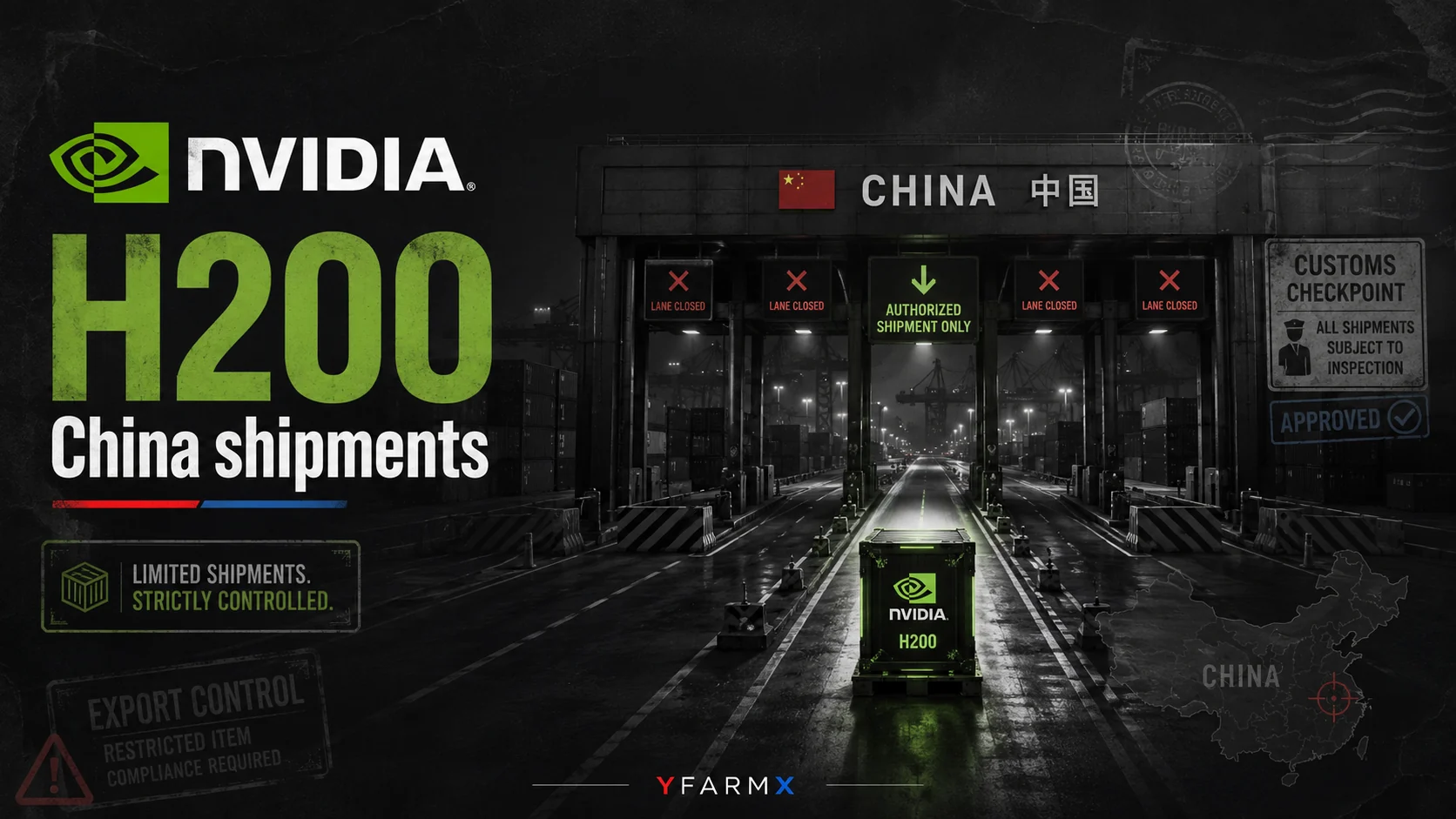
Nvidia H200 China shipments restart in token volumes
The most senior US official responsible for export controls confirmed on Tuesday that Nvidia H200 China shipments have begun, while taking care to describe the quantity as trivial.
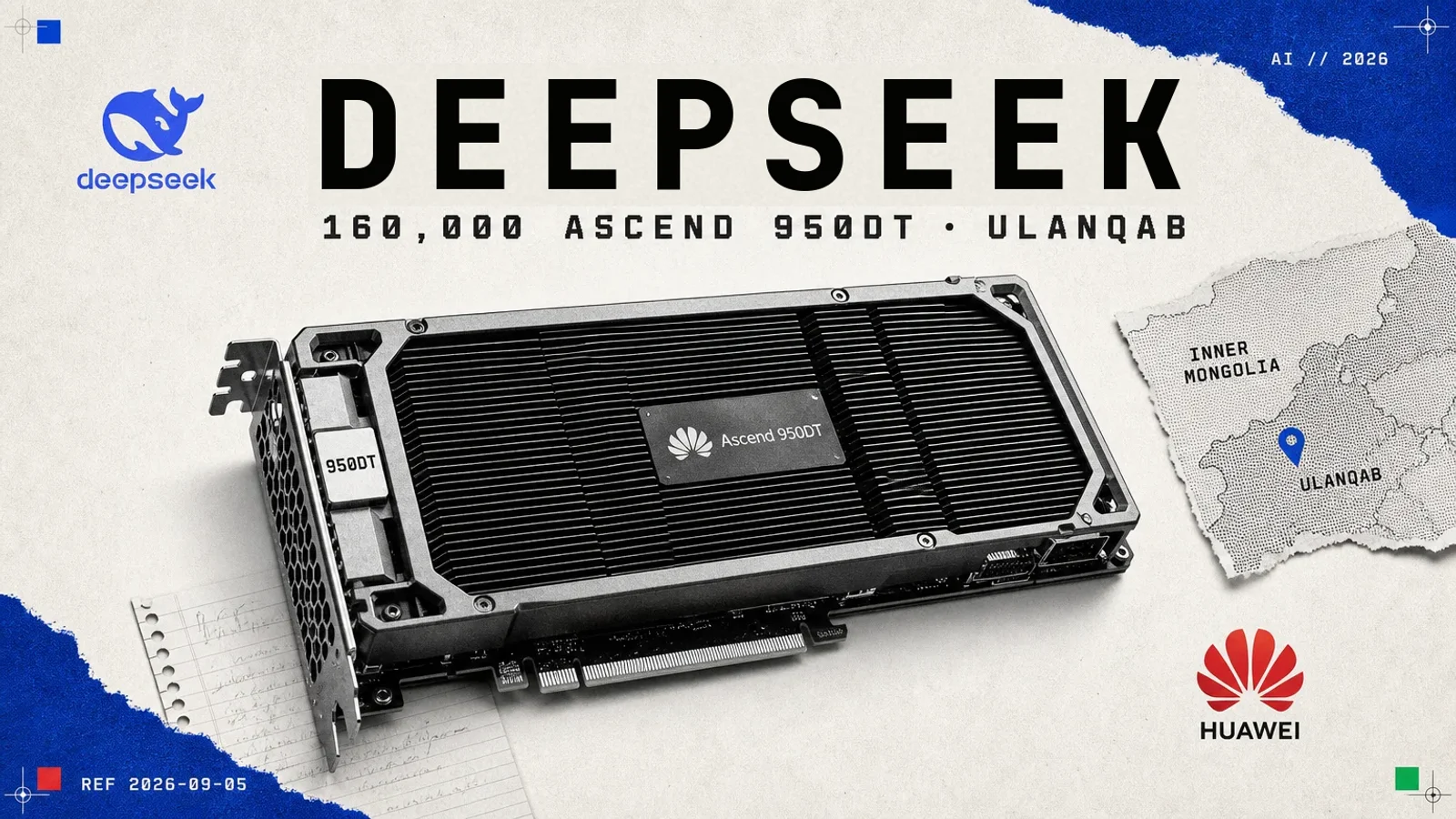
DeepSeek plans at least 160,000 Huawei Ascend chips in Inner Mongolia
Bloomberg says DeepSeek wants at least 160,000 of Huawei's Ascend 950DT accelerators for a data centre at Ulanqab in Inner Mongolia. Huawei sells that chip for decode and training. DeepSeek's plan uses it for decode, and keeps Nvidia for the training runs.
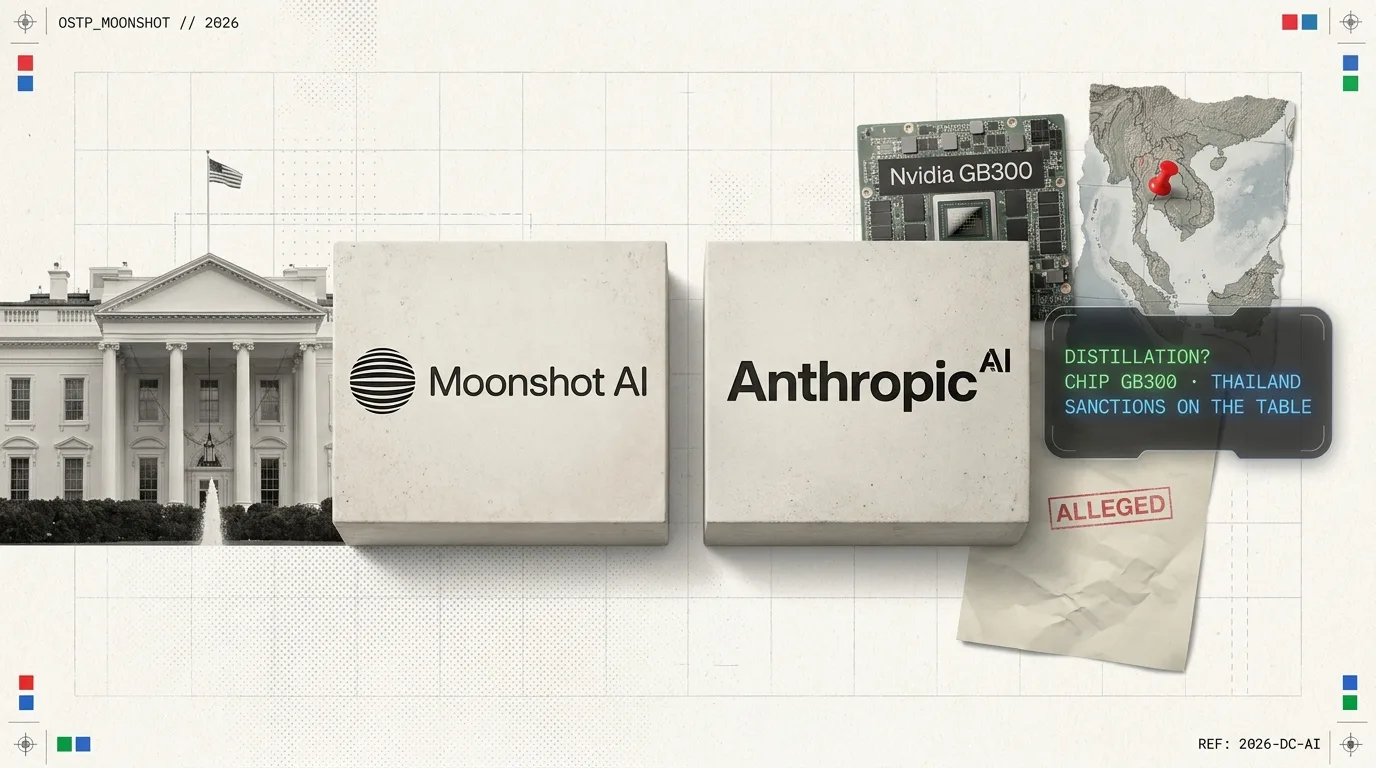
The White House accuses Moonshot AI of copying Anthropic's Fable, and Treasury dangles sanctions
The White House OSTP director Michael Kratsios has accused Chinese lab Moonshot AI of distilling Anthropic's Fable to build Kimi K3, and of accessing barred Nvidia GB300 chips in Thailand. Treasury says sanctions are on the table. No evidence has been published; the claims are allegations.