
Google opens SynthID watermark detector to everyone
Google's public SynthID Detector checks uploaded images, videos and audio for supported AI watermarks. Access opens globally in English on 7 October.
Listen to this articleListen
Google has opened its SynthID Detector to the public, giving people a website where they can upload an image, video or audio file and check for supported AI watermarks. The service became available globally in English on 7 October 2026.
Google’s launch announcement describes an expansion of the earlier detector offered to media professionals. The public tool looks for signals placed in content by Google and participating providers, including OpenAI, NVIDIA and Kakao, with Apple coming soon.
What does SynthID look for?
SynthID looks for an imperceptible watermark embedded in generated media. The generator adds the signal as it creates the file, and a compatible detector searches for that pattern later.
For an image, the signal is carried in the pixels. Video watermarking operates across frames, while an audio watermark is embedded in the sound. Google DeepMind explains that the technology is designed to survive a range of common changes, including image cropping and compression.
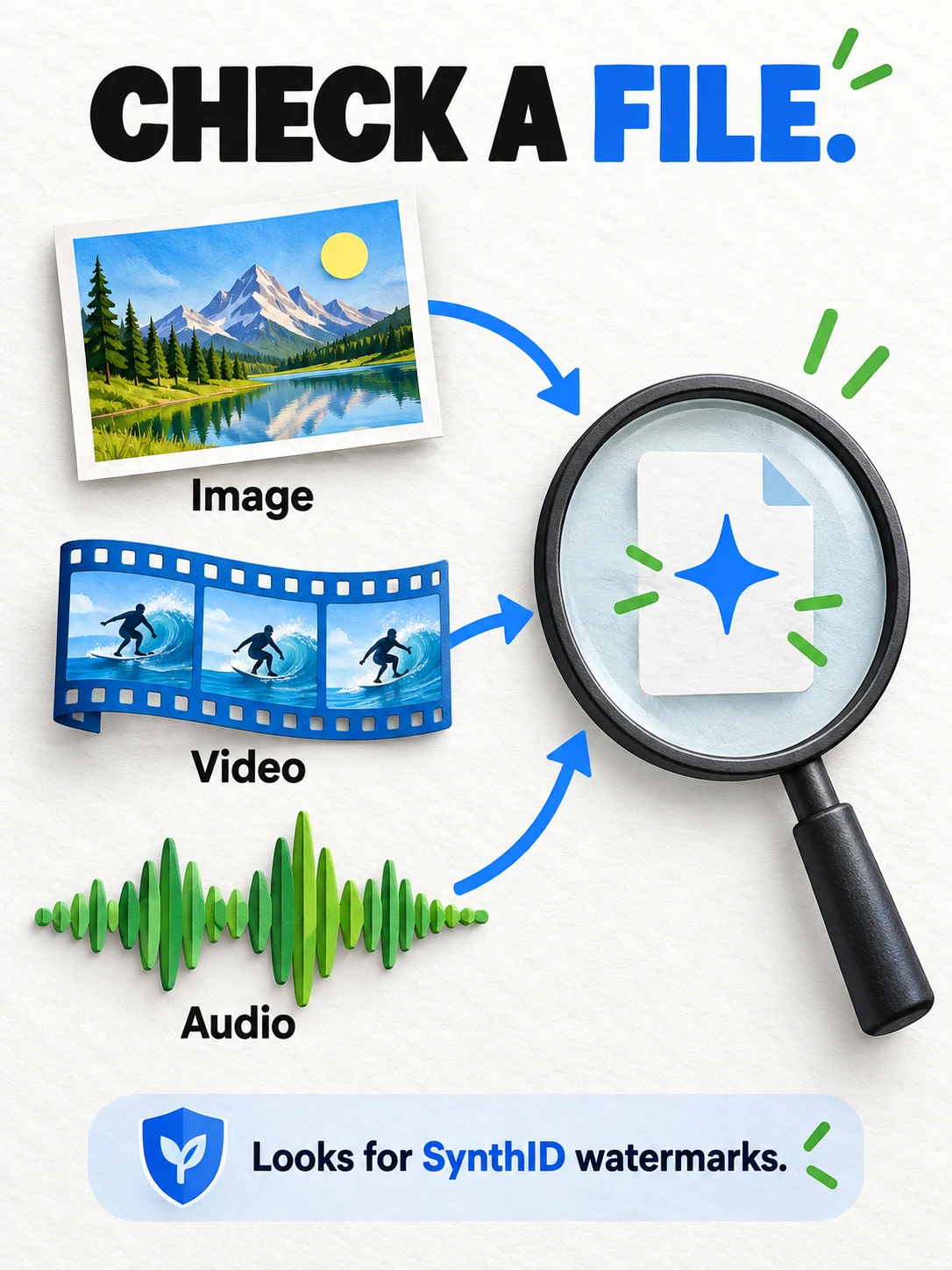
How do you check a file?
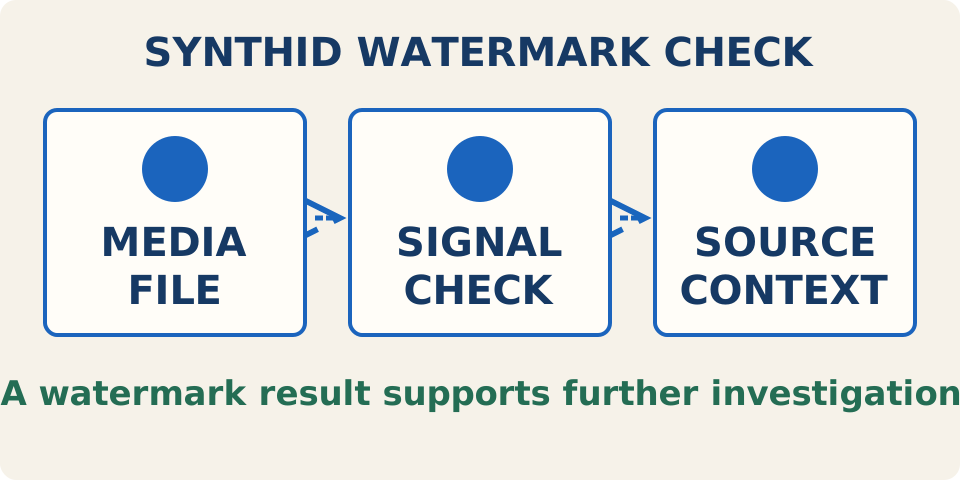
Go to synthid.com and follow the portal’s sign-in and upload flow. Supply the file you want checked, then assess the returned watermark result together with where the file came from and what it depicts.
The portal’s privacy notice says uploaded media is processed in real time and deleted after results are returned. It retains a digital signature associated with the user’s identifier for 24 hours to enforce usage limits and prevent abuse.
When possible, retain the original exported file for verification. Edits and conversions can affect the signals available to a detector; keeping the original also gives you a better record of the file’s source.
A watermark gives you a clue about origin
A detected watermark is evidence about how a file was generated or processed. OpenAI’s guidance says supported images and audio can carry SynthID signals, with coverage varying by product, model, file type and export path.
Watermarking and Content Credentials, based on the C2PA standard, carry information in different ways. A watermark sits within the media itself; Content Credentials attach provenance metadata describing aspects of a file’s origin or history.
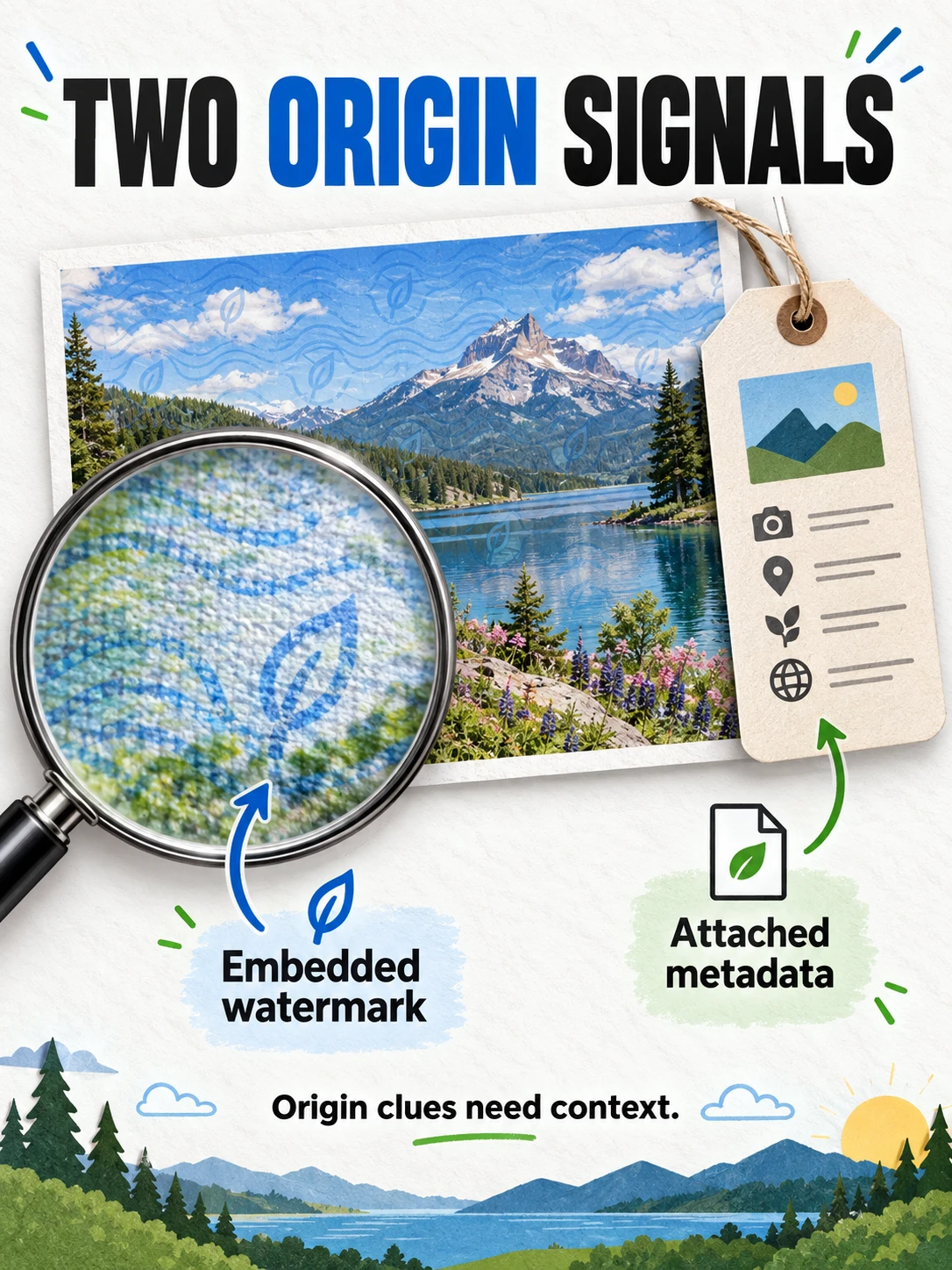
An undetected signal leaves the file’s origin open to further checking. The content may come from an unsupported generator or export, predate watermark coverage, or have undergone changes that weakened the signal. Even a successful watermark check needs separate assessment of the depicted event and its context.
Public access makes checks easier to share
Google’s public portal gives readers, journalists and creators a common place to check supported media. The company introduced SynthID in 2023 and says it has since marked more than 180 billion images and videos, alongside 240,000 years of audio.
For someone assessing a clip or picture, the useful next step is concrete: check the file for a supported signal, trace its original source and examine the claim being made about it.