ORCA launches photonic quantum computer with NVIDIA hardware
ORCA launched its PT-3 alongside NVIDIA computing in London, reporting better protein-design results and a faster energy-scheduling workflow than its previous generation.
Listen to this articleListen
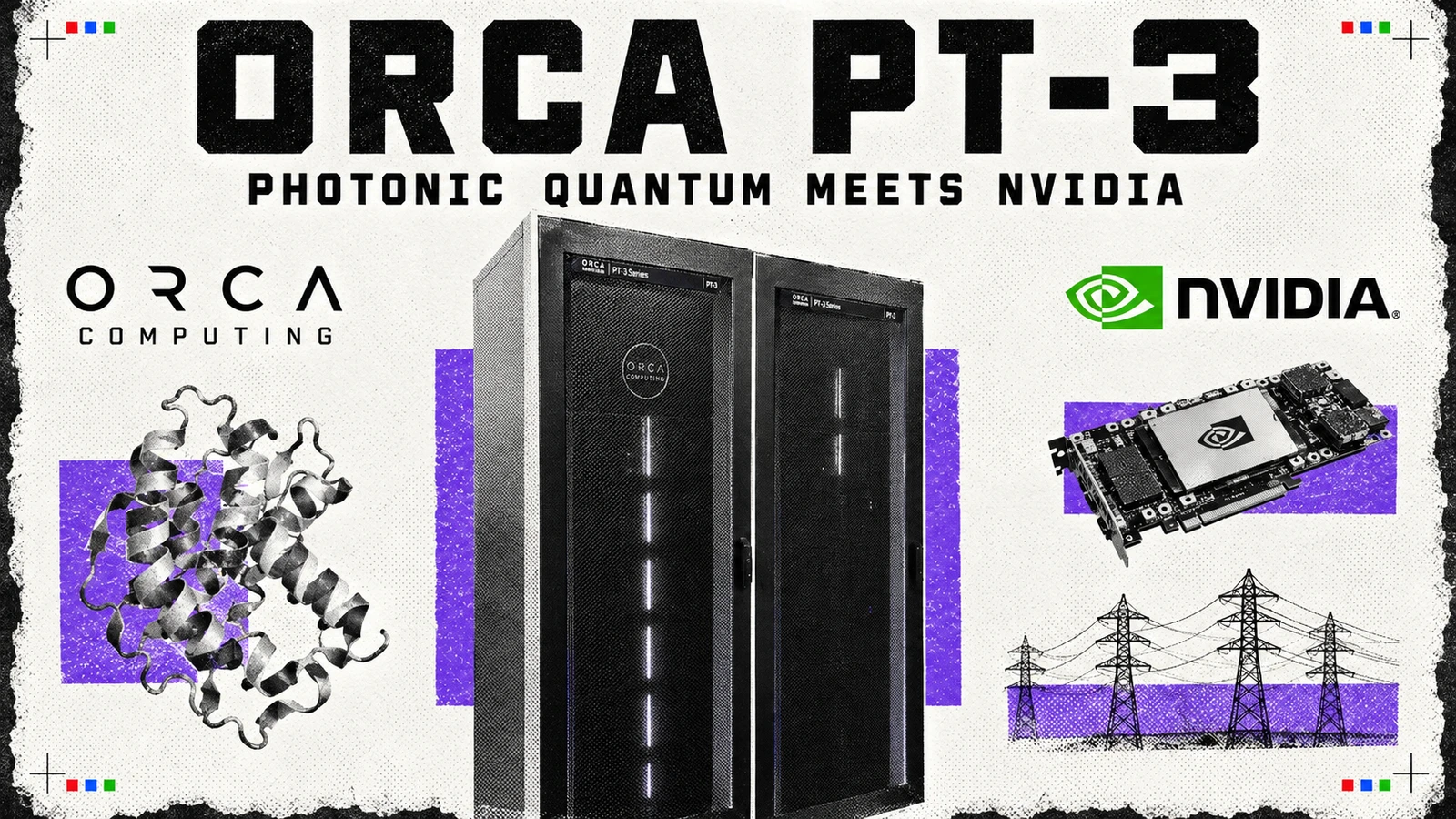
ORCA Computing has launched its PT-3 photonic quantum computer alongside NVIDIA accelerated computing in London. The company reports better protein-design results and a substantially faster energy-scheduling workflow from the new hybrid system.
The first installation is operating at Digital Realty’s Innovation Lab, according to ORCA’s 15 October 2026 announcement. Photonic computers use light for quantum processing; this system works with conventional GPU hardware as part of a larger computing workflow.
The protein test improved the share of useful designs
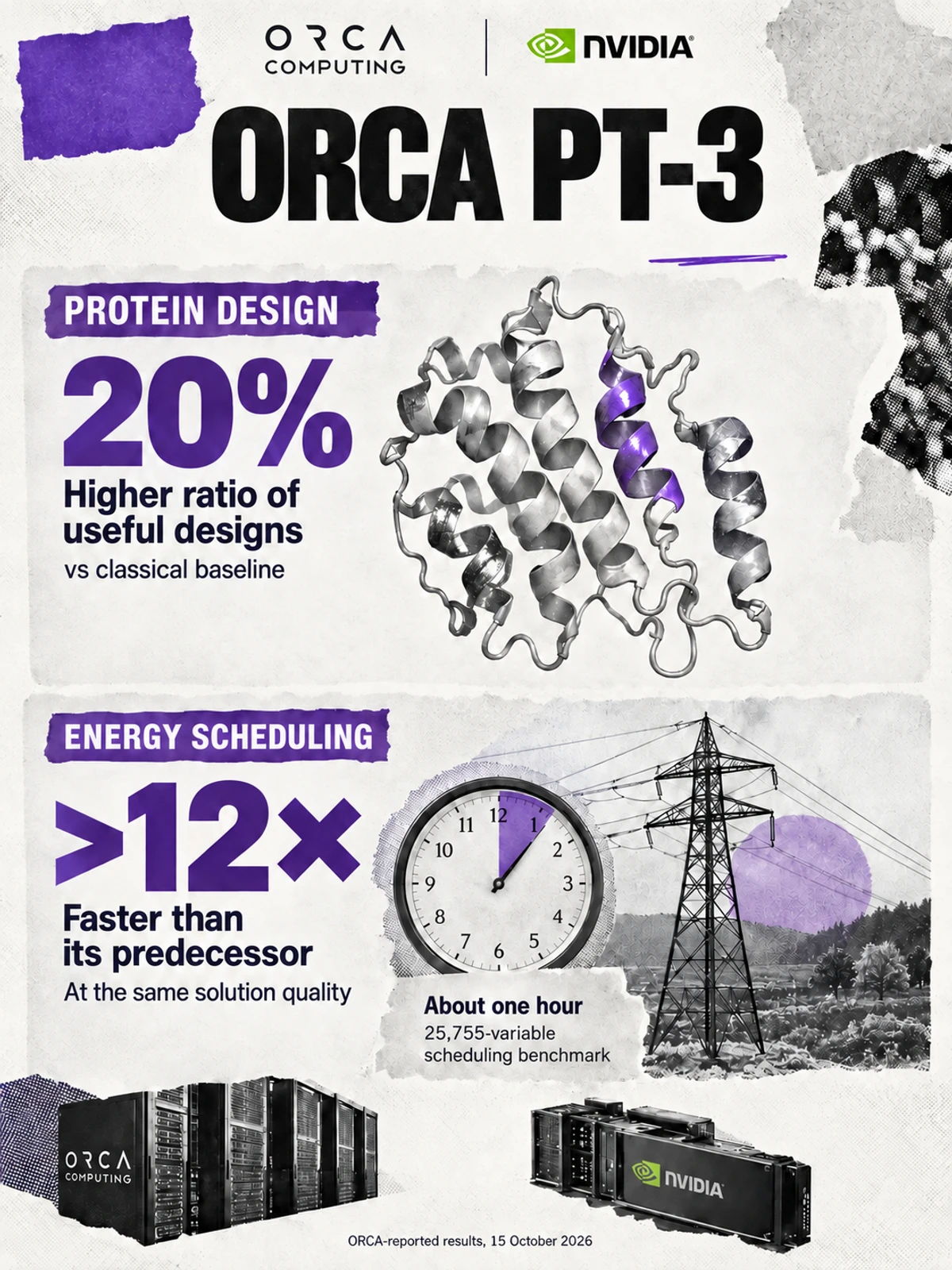
ORCA reports a 20% improvement in the ratio of useful protein designs over a classical baseline. The experiment extended NVIDIA’s Proteína generative model with a quantum component.
NVIDIA’s research description explains that Proteína generates protein backbones: the three-dimensional frameworks on which protein structures are built. The model can also be guided towards particular fold classes and can build a supporting structure around a selected functional motif.
Designability asks whether a generated backbone can be paired with an amino-acid sequence predicted to fold into the intended shape. That is a computational test of the design, with experimental work providing the next level of validation.
ORCA’s result concerns the proportion of useful generated structures. It is a design-quality comparison, with the launch announcement crediting the hybrid model with a different mix of protein secondary structures as well.
The quantum processor works with NVIDIA GPUs
The protein experiment combined a PT-3 with 32 NVIDIA Hopper GPUs. ORCA describes a quantum configuration using 64 photons across 128 qumodes, the optical modes used by the system.
The division of work is central to the hybrid approach. The conventional computer runs the wider AI workflow, while the photonic system contributes a quantum component. Proteína’s underlying model remains a generative protein-design system, with the quantum extension changing how the combined model represents candidate structures.
ORCA’s reported comparison is between that hybrid extension and a classical baseline. The result gives researchers a specific quality measure to investigate across further protein-design tasks.
Energy scheduling took about an hour
A separate PT-3 workflow completed a 25,755-variable energy-scheduling benchmark in about an hour, according to ORCA. The company reports a speed-up of more than 12 times over its predecessor at the same solution quality.
The task is called unit commitment: choosing which electricity generators should operate over a schedule while meeting demand and operating constraints. A useful solver has to produce a good schedule as well as finish it in a practical amount of time.
The JIJ case study explains the division of work: the photonic processor handles generator start-and-stop choices, while classical computers handle continuous quantities such as output levels. JIJ’s earlier report covered PT-2 measurements and PT-3 projections; ORCA’s October announcement reports the new system’s workflow result.
The UK’s National Quantum Computing Centre identifies JIJ as project lead and bp as an industry observer. ORCA’s speed comparison measures generation-to-generation workflow performance. The company separately describes solution quality as competitive with a leading commercial optimisation solver.

The hardware fits into a data-centre installation
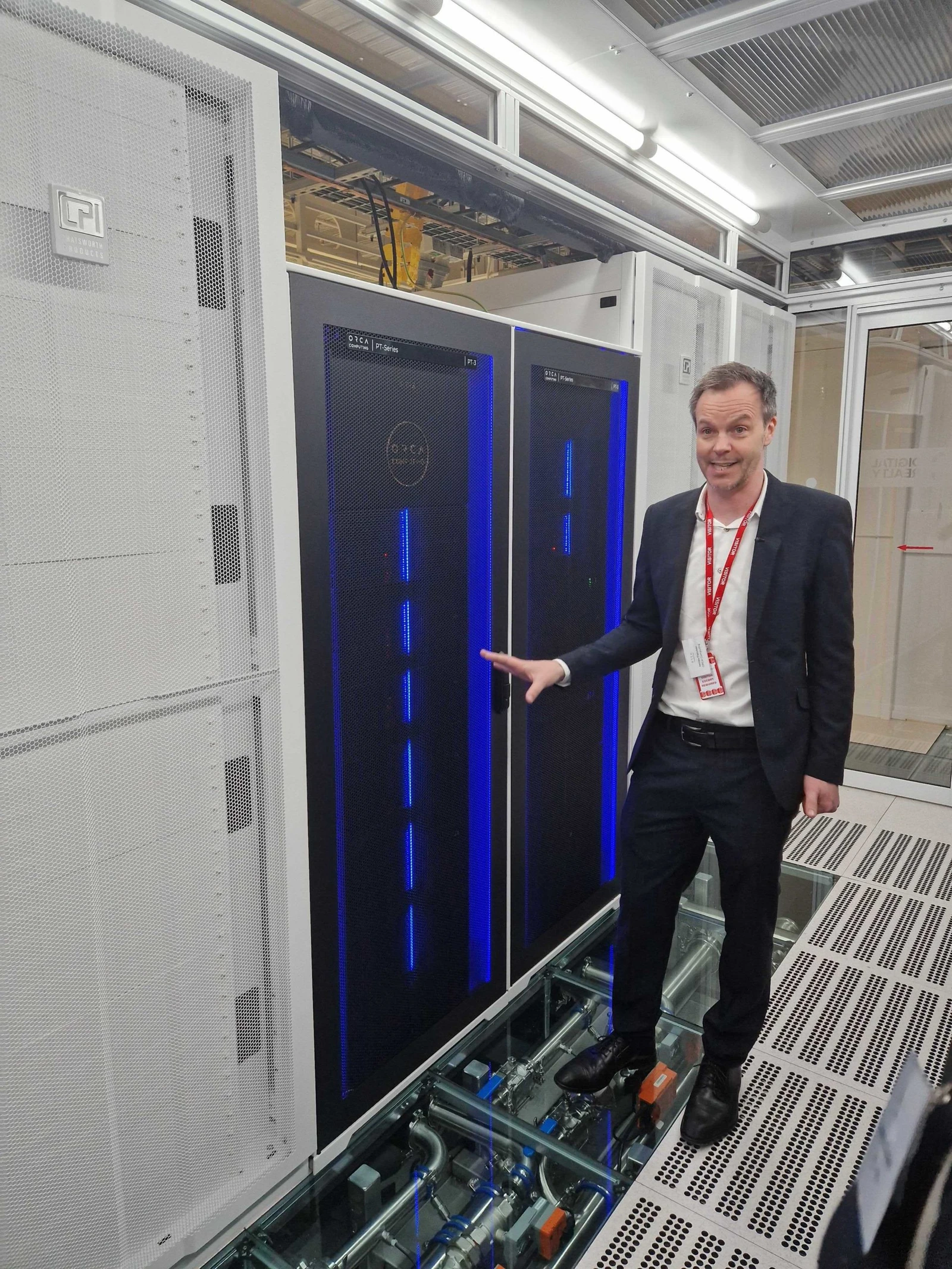
PT-3 operates at room temperature and occupies two standard racks, ORCA says. The company gives a power figure of 6 kW and describes a modular system that can be upgraded at the installation.
Those are the PT-3 system figures reported by ORCA; the wider hybrid installation also includes conventional accelerated computing. Deployment puts the photonic processor next to the equipment that runs the surrounding applications.
The launch presents two concrete workloads for that combination: generating more useful protein structures and completing an energy schedule faster while maintaining its solution quality.