
Pump.fun and Hyperliquid swap daily revenue leads
Pump.fun overtook Hyperliquid in daily revenue on 19 October in DefiLlama's series. Hyperliquid regained the lead by 24 October.
Listen to this articleListen
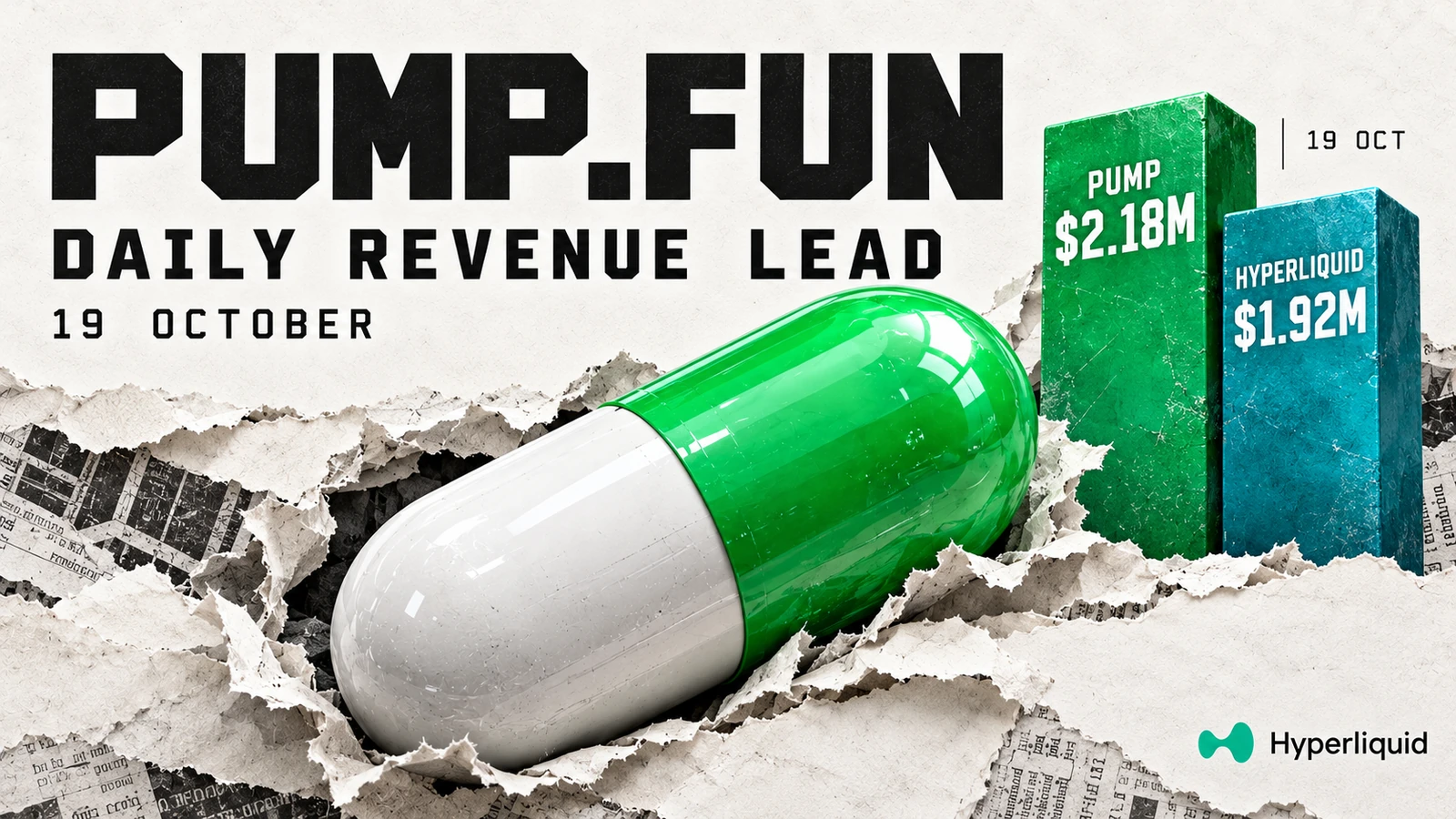
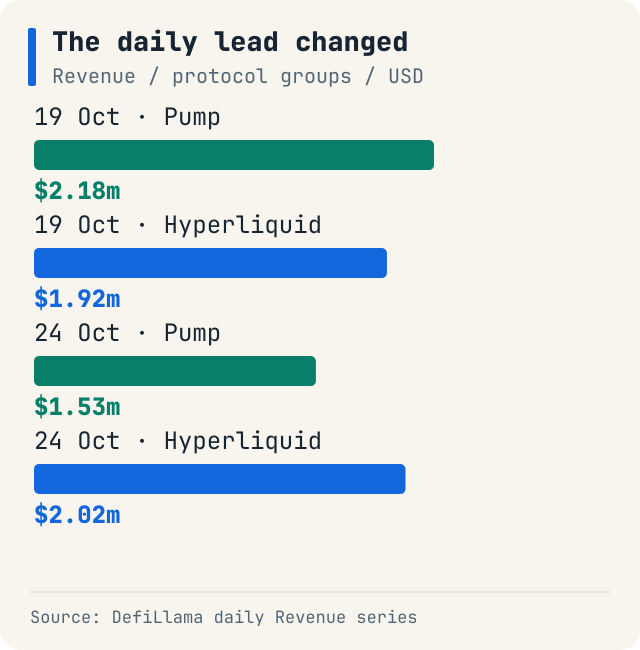
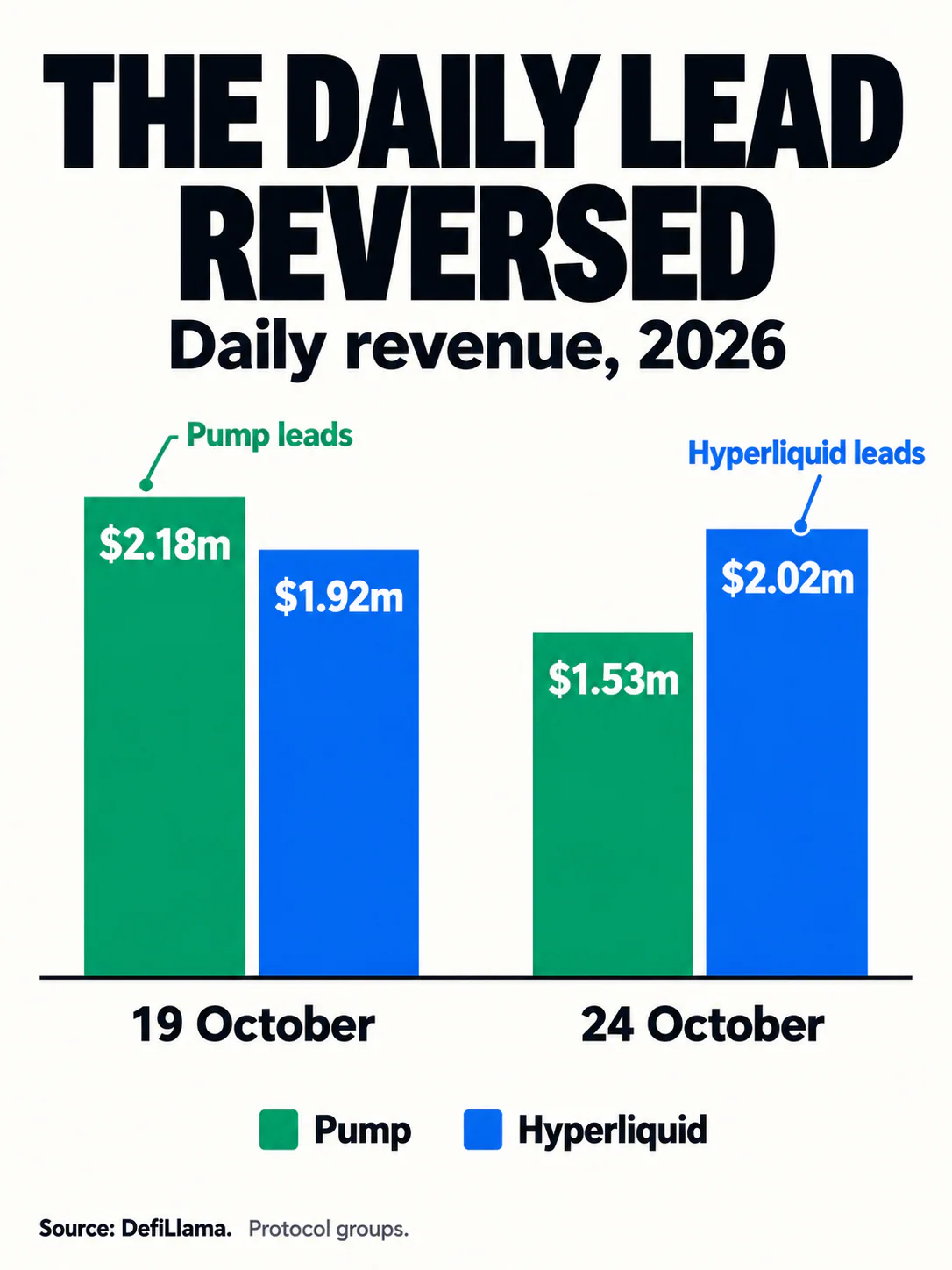
Pump.fun and Hyperliquid have exchanged places in daily revenue rankings during October. In DefiLlama's daily series, Pump generated about $2.18 million on 19 October against Hyperliquid's $1.92 million. By 24 October, Hyperliquid was ahead again, at $2.02 million against Pump's $1.53 million.
A revenue leaderboard is a changing record of trading activity, and a short-lived lead can reverse as another day's fees arrive. DefiLlama's revenue figures cover protocol groups; Pump includes pump.fun, PumpSwap and Terminal.
The daily lead changed during the week
DefiLlama’s Pump series records $2,177,760 on 19 October. Its Hyperliquid series records $1,921,508 for the same date.
By 24 October, daily revenue was $1,534,732 for Pump and $2,022,702 for Hyperliquid.
Revenue counts a particular share of the fees
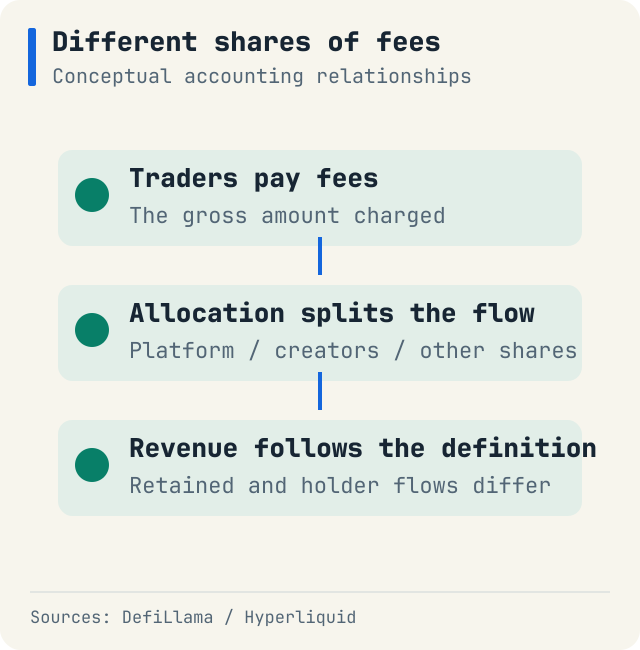
DefiLlama distinguishes the fees paid by traders from the revenue assigned to a platform. For Pump.fun, its published adapter separates the platform’s share from creator payments and cashback. It also tracks graduation and platform fees.
Buybacks introduce a further measure: money spent purchasing tokens for holders. Retained protocol income and holder-directed spending have their own categories. Adding those categories without checking their definitions can count the same economic activity more than once.
Hyperliquid’s fee documentation describes trading fees and how they are distributed. A comparison using gross fees for one platform and a narrower revenue figure for the other would answer a different question.
A daily ranking changes faster than a business
Pump’s activity comes from a token-launch and trading ecosystem. Hyperliquid earns fees across its trading products. Their daily positions respond to different flows of users and transactions, even when a dashboard places them in the same table.
Sources
- DefiLlama: Pump daily revenue seriesapi.llama.fi
- DefiLlama: Hyperliquid daily revenue seriesapi.llama.fi
- DefiLlama: Pump.fun fee and revenue definitionsgithub.com
- Hyperliquid: trading feeshyperliquid.gitbook.io