
xAI
Grok Bot
an AI teammate with its own computer
Key facts
- 11 Aug 2026early beta
- Released
- cloud VMpersistent, shared per account
- Runs on
- 50bots and group chats
- Roster cap
- 3 plansSuperGrok Heavy, Cursor Ultra & Teams Premium
- Access via
- $200 / $120Ultra / Premium seat, per month
- Price
- Mac, Win, iOSno Linux, no Android
- Platforms
xAI's answer to the agent products: not a chat window but a roster of up to fifty 'teammates', each living on the same persistent cloud computer, signing into your tools and coming back with finished work. The docs are franker than the marketing, and the frankest line in them is about security.
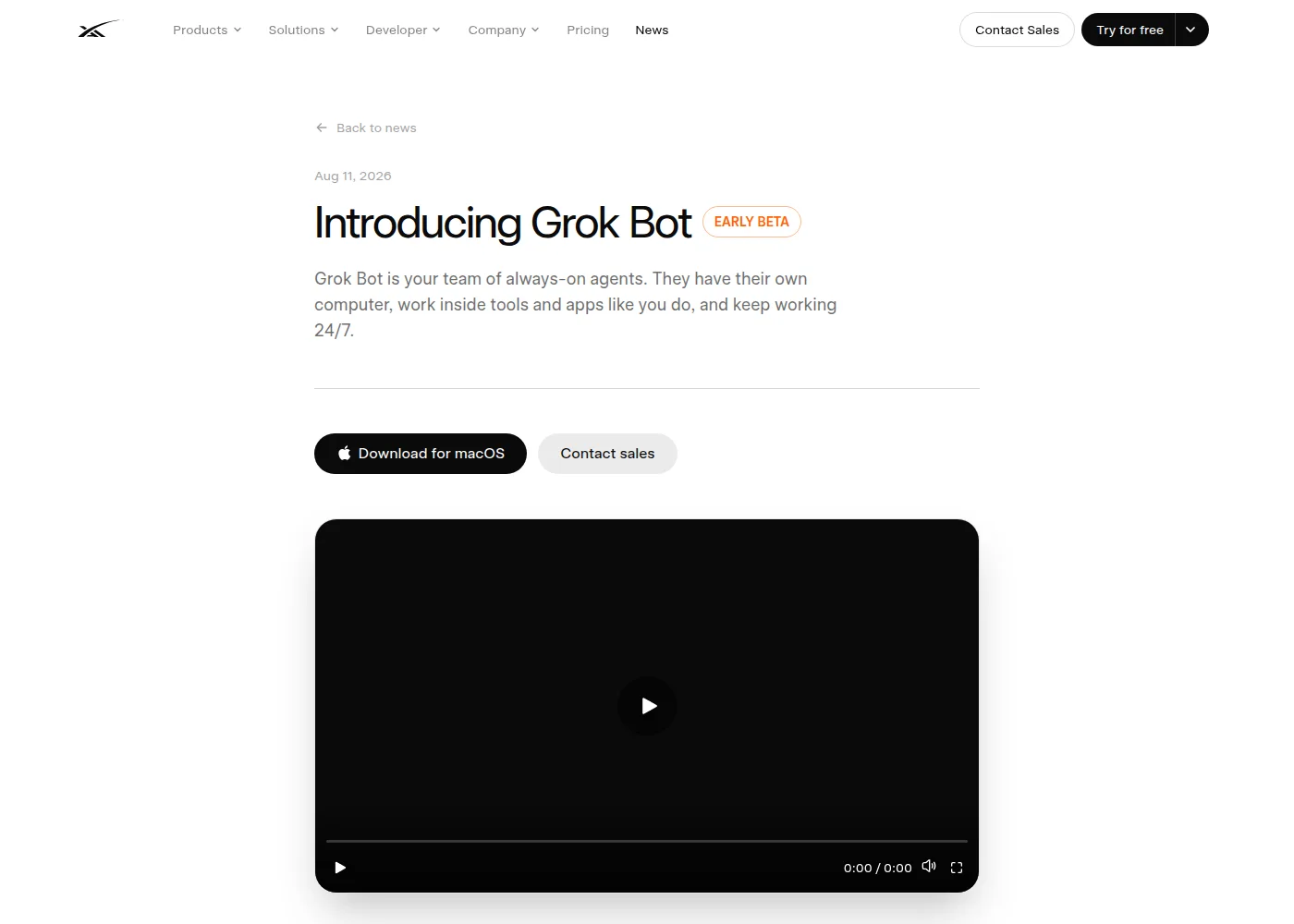
Grok Bot is xAI’s agent product, launched into early beta on 11 August 2026. The pitch, in the company’s words: “Bots are AI teammates that do real work for you. They sign in to your tools, use them just like you do, and come back with finished work.” Where the coding agents put a model inside an editor or a terminal, Grok Bot gives it something closer to a desk: a computer of its own, running around the clock.
How it works
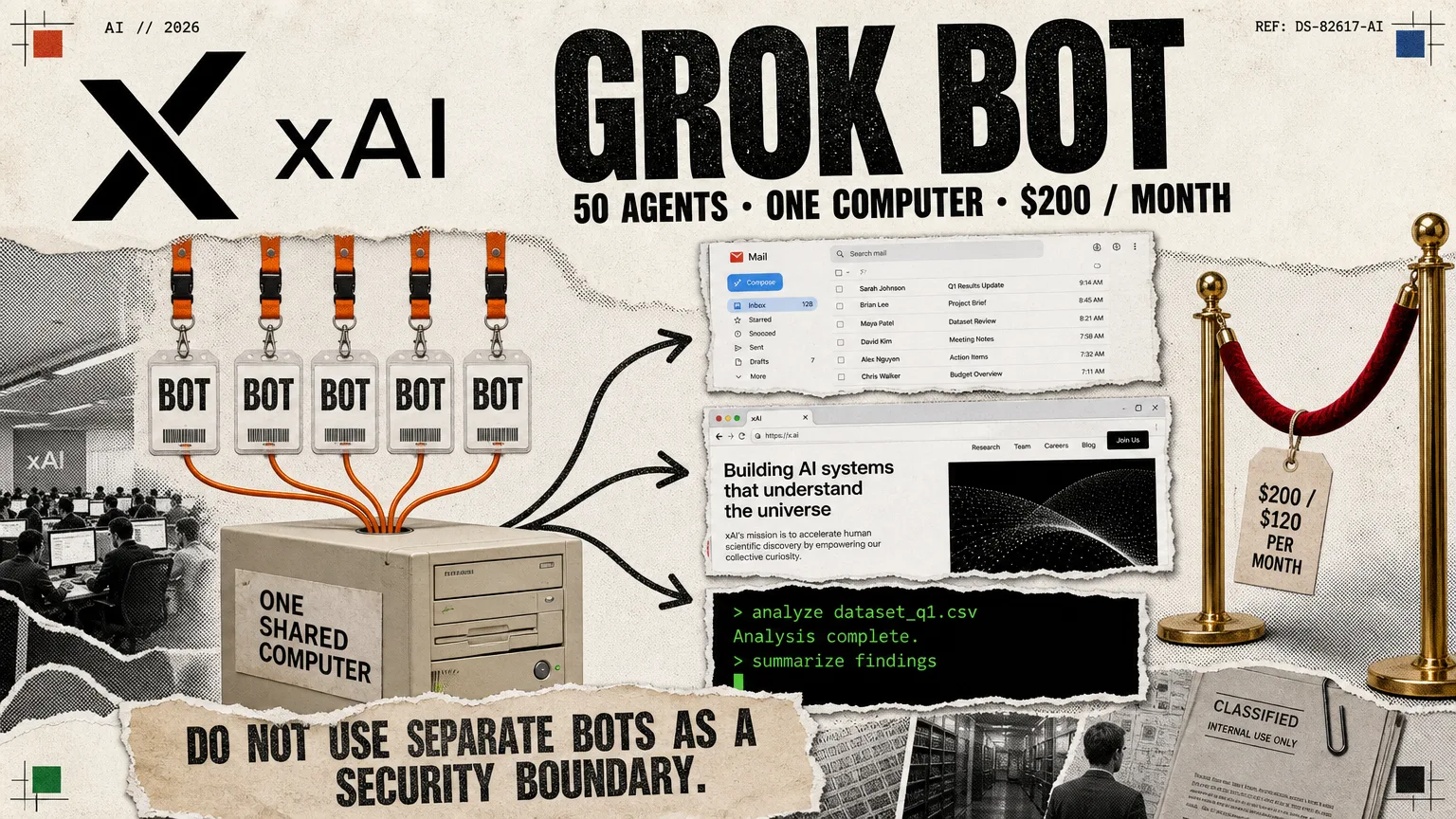
The documentation is the clearest source, and it describes a specific architecture: “each Bot runs on a persistent cloud VM with a browser, filesystem, and terminal.” An account can hold up to fifty bots and group chats combined, and every bot in the roster shares one machine: “all of your Bots use the same persistent cloud computer. They share files, browser sessions, and app logins, which makes handoffs possible without repeating setup.”
The working loop runs through sign-ins and approvals. A bot signs into the tools you already use, works across apps and inboxes, and, per the announcement, bots “finish jobs end to end, and only come back when something needs your approval”. Where a service offers a clean interface a bot uses connectors and MCP, the docs say, falling back to “computer use for apps and websites without a clean API, so work finishes in the real tools rather than as chat drafts”. Passwords, two-factor codes and payment details are typed by the human, with secret values “masked, excluded from the transcript, and not shown to the model”. Bots remember prior conversations and can be taught by demonstration, with screen recordings capped at ten minutes.
The gate, and the murky price list
Access is by subscription tier, and the announcement names three: “Grok Bot is in beta and available today for SuperGrok Heavy, Cursor Ultra, and Cursor Teams Premium subscribers on desktop and iOS.” The Cursor route exists because Cursor belongs to SpaceX. SpaceX’s Form 8-K records a merger agreement with Cursor’s maker, Anysphere, entered on 16 June 2026 and made effective on 14 August 2026, an all-stock deal “based on an implied equity value of Cursor of $60.0 billion”, and Cursor’s own announcement calls the combined AI unit SpaceXAI.
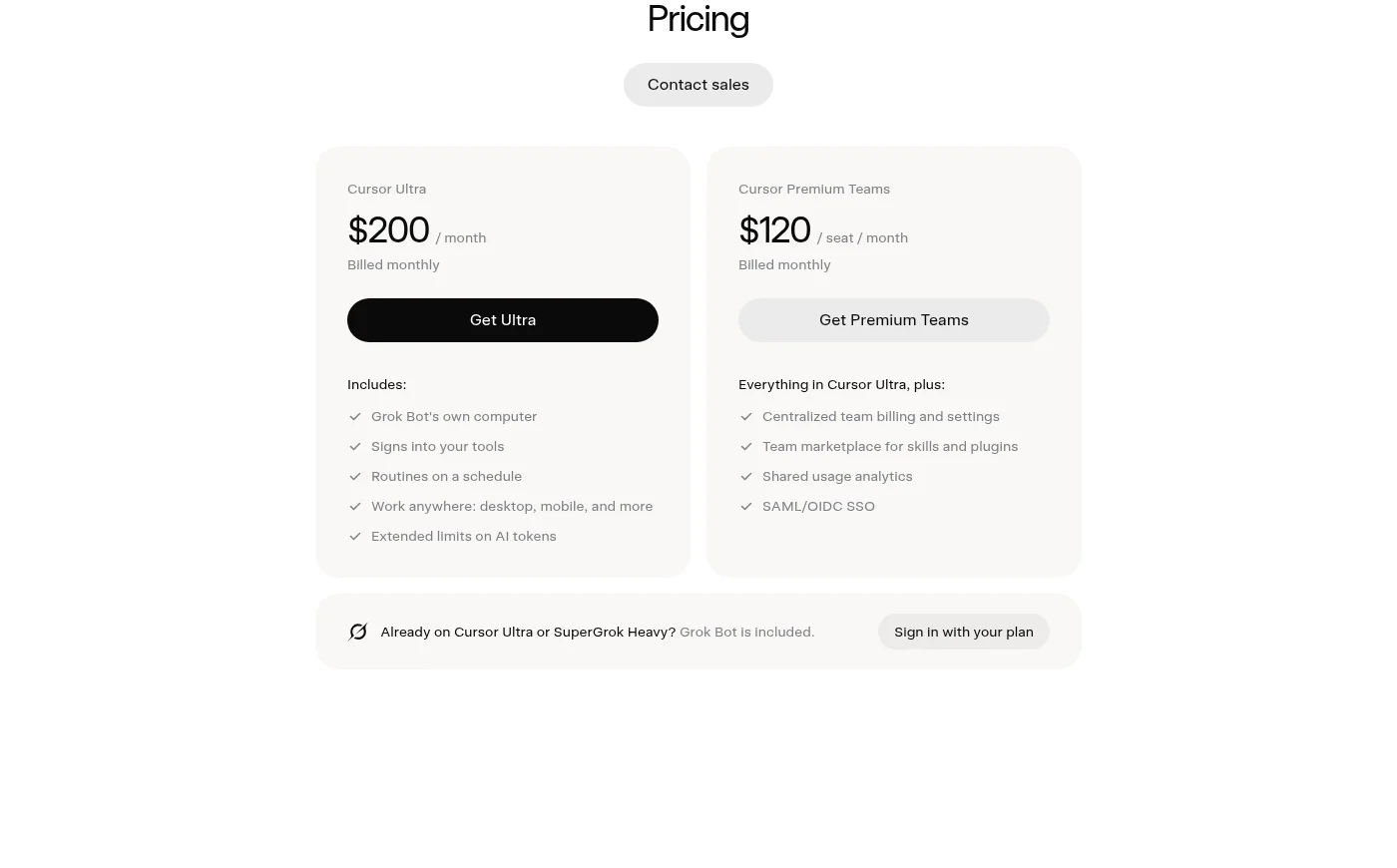
The prices sit on xAI’s own product page: Cursor Ultra at $200 a month, and Cursor Premium Teams at $120 a seat a month, billed monthly, with the Teams tier framed as “everything in Cursor Ultra, plus” team billing and a skills marketplace. Cursor’s own pricing page agrees, though it takes a toggle to see it, since the Teams card defaults to the $40 Standard seat that does not include a bot. No public price exists for SuperGrok Heavy. For teams, the docs say premium seats include “a weekly Grok Bot usage allowance”, invoices combine Cursor and Grok Bot charges, and, in the docs’ own words, “there is no Grok Bot-specific spend cap yet”. Platform support is macOS, Windows and iOS 18 or later; there is no Linux desktop app and no Android.
What the small print says, and what nothing says
Two disclosures in the documentation deserve more attention than the launch copy. The first is verbatim: “Do not use separate Bots as a security boundary.” Because the roster shares one computer, files, browser sessions and command-line credentials are available across every bot an account runs. The second: Grok Bot “requires data storage and does not support Legacy Privacy Mode”, so accounts on Cursor’s strictest privacy setting must loosen it before a bot will start.
And one absence runs through every page: xAI never says which model powers Grok Bot. Grok 4.6 shipped one day later, and the closest the documentation comes to naming it is a “Meet grok-4.6” button at the top of the overview page. Third-party write-ups assume the pairing; neither the announcement nor the docs write it down. The launch testimonials are worth reading with the same eye: five enthusiastic quotes, all from first-name-only staff, none from a named external customer. This is a beta, and it reads like one.
For the products it is squaring up against, see Devin and Claude Code.
More in Agentic AI
All Agentic AI →- AnysphereCursorthe editor that became an agent
- CognitionDevinthe agent sold as a colleague
- AnthropicClaude Codethe agent that lives in your terminal
- OpenClaw FoundationOpenClawthe open-source agent that took over GitHub
- Nous ResearchHermes Agentthe self-improving open-source agent
- GuideHermes Agent promptinghow to get real work out of it