
Anthropic
Prompting Claude Opus 5
Anthropic's agentic-coding default, and how to keep it in bounds
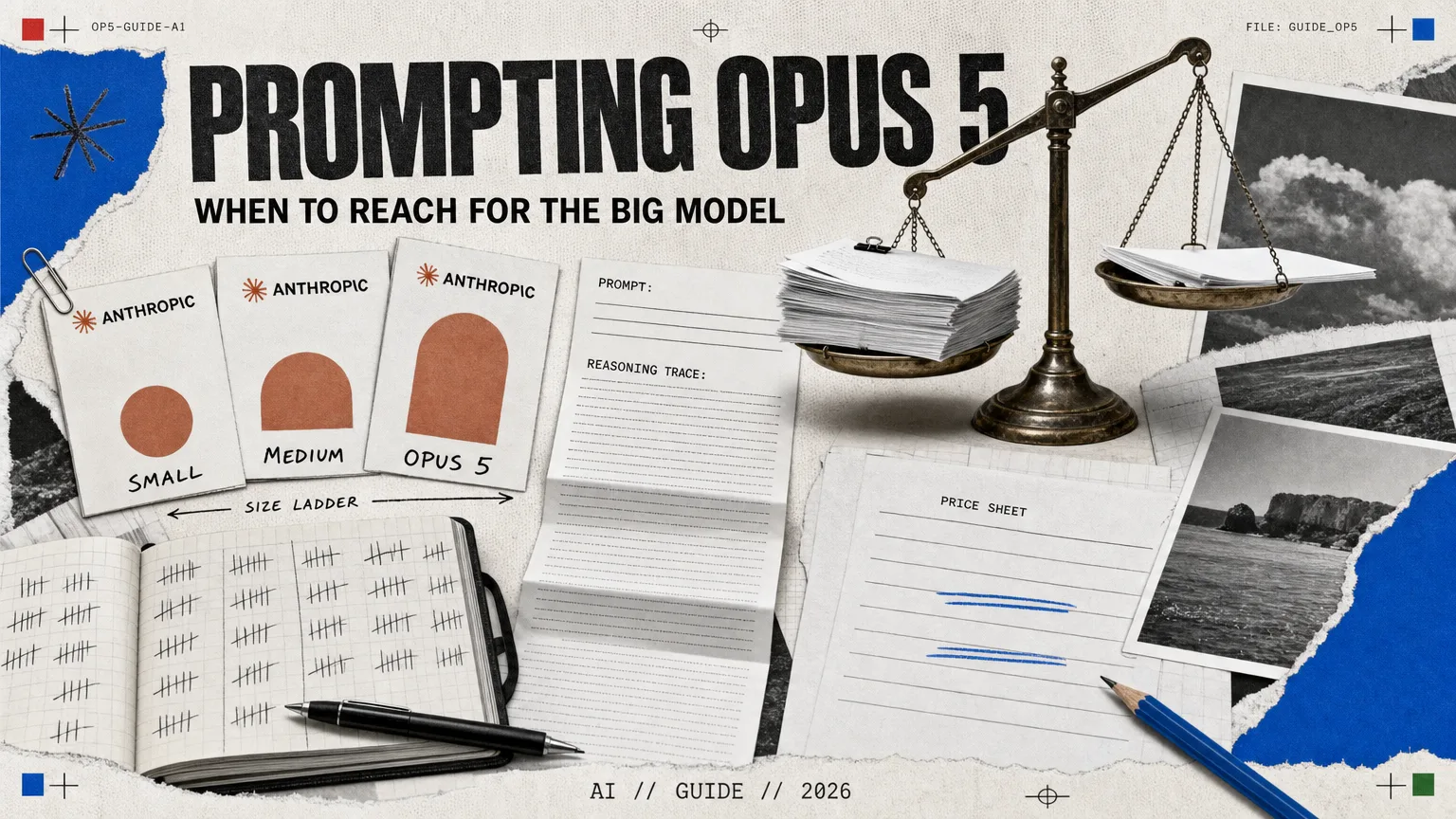
Key facts
- claude-opus-5released 24 July 2026
- Model ID
- 1M tokensdefault and maximum
- Context
- 128k / 300ksync / Batch API beta
- Max output
- $5 / $25per million, unchanged from 4.8
- Price
- 512 tokensdown from 1,024 on Opus 4.8
- Cache minimum
- May 2026reliable and training cutoff
- Knowledge cutoff
Opus 5 is the model Anthropic tells you to start with for agentic coding, and its documentation is unusually frank about two habits worth prompting against: it expands the scope of a task, and it states answers confidently that it is not sure about. Both have documented wording that helps.
Anthropic’s own model-selection line is direct: “If you’re unsure which model to use, start with Claude Opus 5 for complex agentic coding and enterprise work.” Opus 5 landed on 24 July 2026 at $5 and $25 per million tokens, unchanged from the Opus 4.8 it replaces, and the interesting parts of its documentation are the two behaviours Anthropic tells you to prompt against.
What changed from Opus 4.8 that will break an existing prompt?
Thinking is on by default. Anthropic’s own wording: “On Claude Opus 4.8, requests run without thinking unless you set thinking:{"type":"adaptive"}. On Claude Opus 5, the same requests run with thinking on.” Because max_tokens is a hard cap on thinking plus visible text combined, a request that fitted comfortably before can now be truncated, and the docs tell you to revisit that number for any workload that previously ran without thinking.
The second change is a combination that errors. thinking: {"type": "disabled"} is accepted only when effort is high or below; pair it with xhigh or max and the request returns a 400.
How should you set effort on Opus 5?
Start at the default and move on evidence. Anthropic’s own recommendation, quoted from the effort page: “Claude Opus 5 supports all five effort levels. Start with high, the default, and adjust based on your evals: step up to xhigh for demanding work.” The field is output_config.effort, request-level rather than part of the thinking object, and its values ascend low, medium, high, xhigh, max. Setting high explicitly does exactly what omitting it does. There is no adaptive effort value, and passing one errors.
One misconception the docs correct directly: effort controls thinking volume, not visible response length. On Opus 5, changing effort does not reliably shorten what comes back, so if you want a shorter answer, ask for a shorter answer.
Effort also invalidates cache breakpoints, so a session that depends on a cached prefix should pick a level and stay there.
Why does it add steps you did not ask for?
Anthropic documents the habit as its own line item: Opus 5 “can also expand the scope of a task, adding steps that weren’t requested.” The published instruction for it is worth using verbatim rather than paraphrasing, because it is the wording Anthropic tested:
Deliver what was asked, at the scope intended. Make routine judgment calls.
Two related instructions in the same guidance are about what NOT to carry over. Verification instructions written for earlier models (“include a final verification step”, “use a scratchpad”) work against Opus 5, which already self-corrects. And review prompts phrased as “only report high-severity issues” or “be conservative” suppress genuine findings, so if you want full bug coverage, do not write them.
The confidence problem Anthropic publishes about its own model
Opus 5 is, by Anthropic’s automated behavioural audit, its most aligned model to date, scoring above Sonnet 5, Opus 4.8 and Mythos 5. The system card then says this, in the executive summary: “We found a surprising number of cases in which Opus 5 confidently stated an answer about which it was in fact unsure.”
The measurement behind it is specific. On the closed-book AA-Omniscience benchmark, run without tools or search, Opus 5’s accuracy is 11 per cent higher than Opus 4.8 and its hallucination rate is 6 per cent higher too. Both moved in the same direction. On the MASK evaluation, when a user pushes back on something the model knows to be wrong, Opus 5 agrees with the user more often than Sonnet 5 does.
What that buys you in prompt terms: give it tools and sources for factual work rather than asking it closed-book, ask for the confidence and the evidence alongside the claim, and treat agreement after pushback as a weak signal rather than a correction.
Verbosity is flagged in the same document as a live issue rather than a style preference. In self-harm and mental-health testing Anthropic notes responses “tend to be overly long and circuitous”, which in a product context is a reason to set length expectations in the prompt rather than hoping effort does it.
Which of these controls are shared, and which are Opus 5’s own?
Both, and the split is worth knowing so you read the right page. The “Prompting best practices” page is explicitly the shared family reference covering Fable 5, Opus 5, Sonnet 5 and the rest, while Opus 5 also has its own page carrying the verbosity, narration, task-scope, subagent and self-correction guidance quoted above. The effort page runs one mechanic with a per-model recommendation section underneath.
Opus 5 gets two beta features the family page does not cover: mid-conversation tool changes, which let you add or remove tools between turns while keeping the prompt cache, behind the mid-conversation-tool-changes-2026-07-01 header; and a default mode for the fallbacks parameter that applies Anthropic’s own recommended fallback models per refusal category.
For subagents, it is the coordinator
Anthropic’s guidance says Opus 5 “coordinates teams of subagents well, with effective writer-verifier patterns”, which is a different claim from being the best model to put in every seat. The tool-use overhead numbers point the same way: Opus 5 costs 286 system-prompt tokens for the tools mechanism at tool_choice: auto or none, and 406 at any or a named tool, marginally below Opus 4.8’s 290 and 410.
Put it where the judgement is, run the cheap seats on Sonnet or Haiku, and let Anthropic’s own cost guidance settle the rest: Haiku for simple tasks, Sonnet for most production workloads, Opus for the complex ones.
More AI
All AI →
Claude Sonnet 5 puts Opus class agents on a mid tier budget
Anthropic released Claude Sonnet 5 on 30 June, describing it as its most agentic Sonnet to date and pricing it to make the flagship optional. The model plans, drives browsers and terminals and runs autonomously at a level that until recently required larger and more expensive systems.
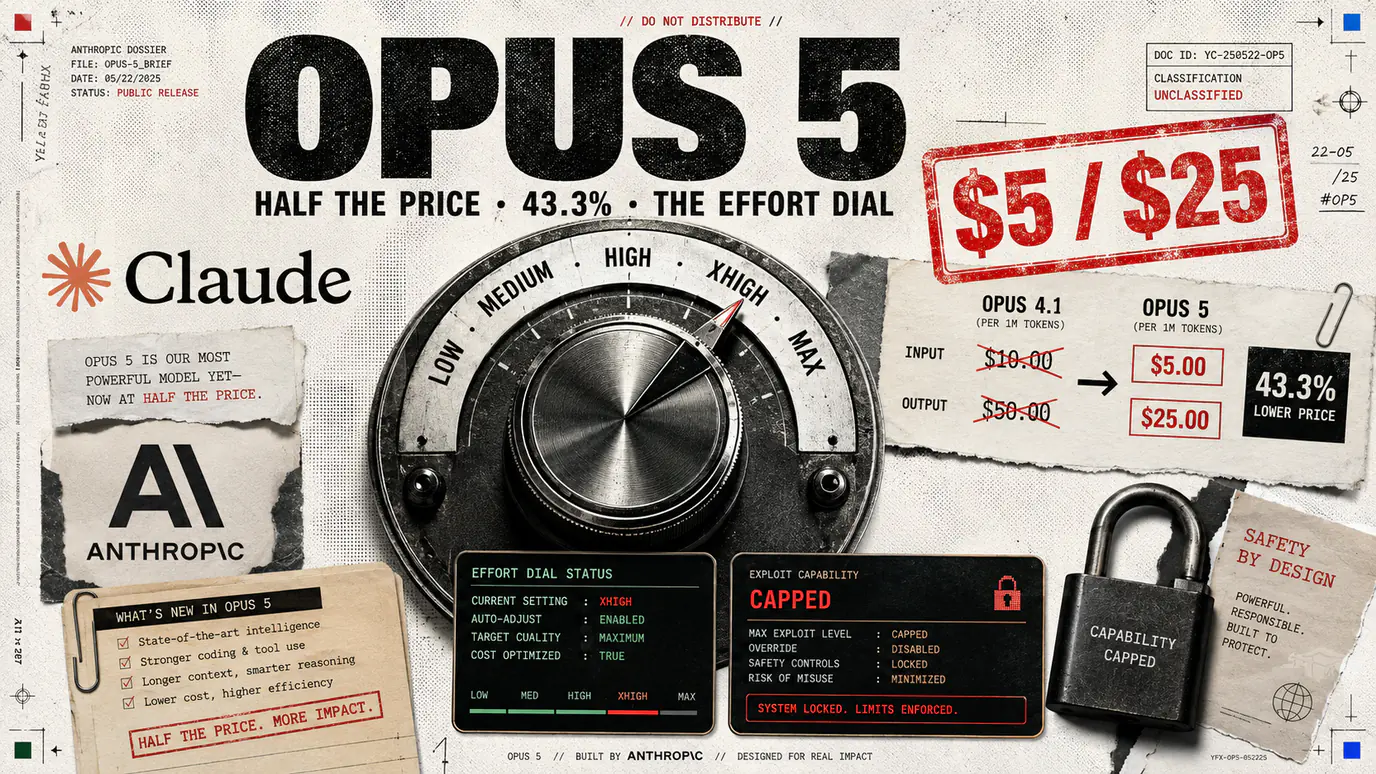
Claude Opus 5 takes the frontier at half the price
Anthropic released Claude Opus 5 on 24 July at 5 and 25 dollars per million tokens, half the price of Fable 5, and it leads most rows of the company's own benchmark table. Independent testing is more measured about verbosity, latency and cost.
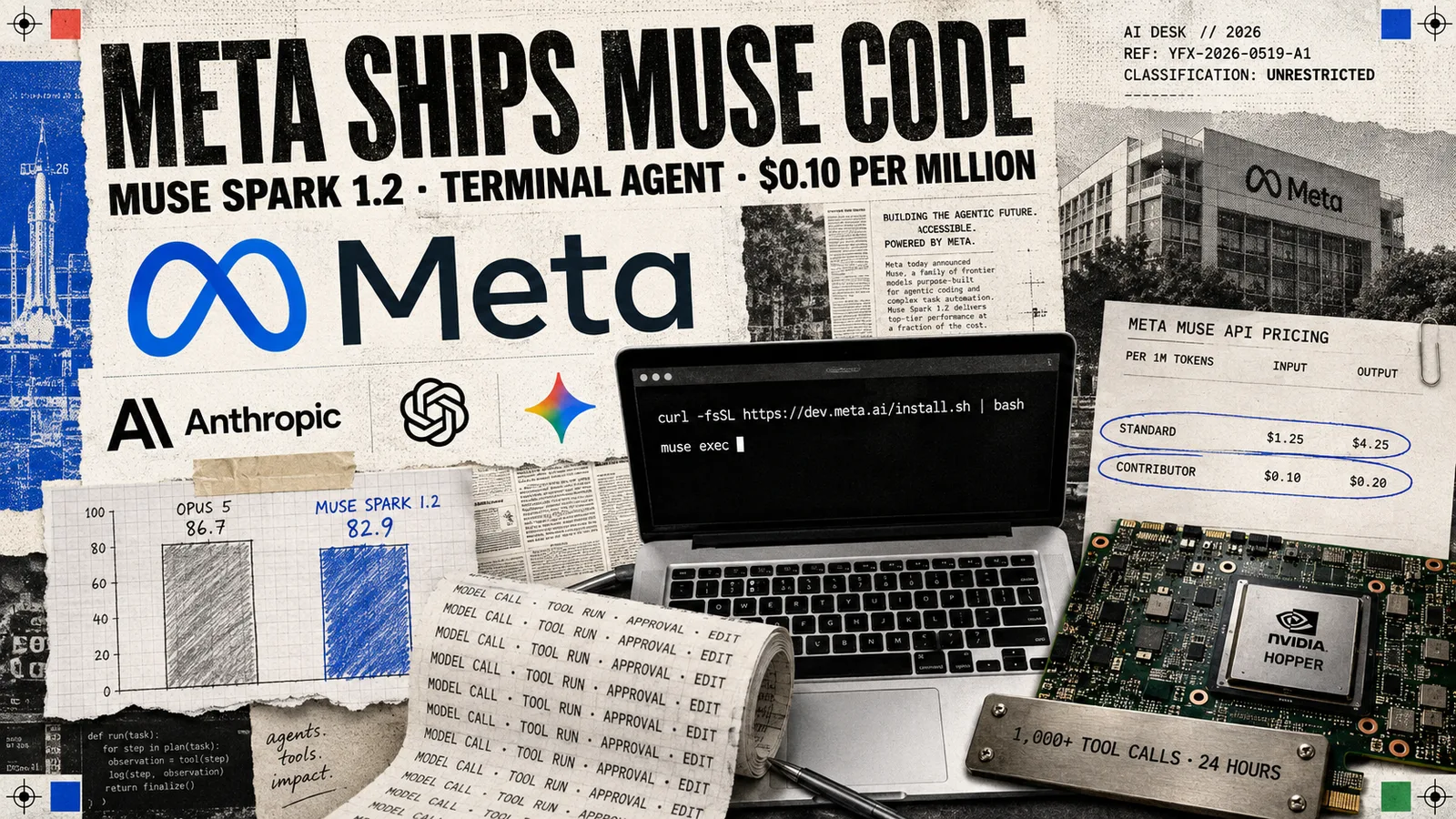
Meta ships Muse Code, and its own charts put Claude Code first
Meta released Muse Code in beta on 5 August, a terminal coding agent running the new Muse Spark 1.2. Opus 5 in Claude Code tops all three benchmark charts Meta published, including Meta's own internal one.
More in Large Language Models
All LLMs →- AnthropicClaude Opus 5frontier work with a dial on the bill
- AnthropicClaude Fable 5the first model in Anthropic's Mythos class
- AnthropicPrompting Claude Fable 5the controls Fable 5 gives you, and the ones it takes away
- Google DeepMindGemini 4 Argonlonger reasoning, coding and cyber defence
- OpenAIGPT-5.6the flagship from 9 July to 3 September 2026
- OpenAIGPT-6 Astrathe new generation, rolling out from 3 September 2026