Alice & Bob tests GPU decoding for quantum computers
Alice & Bob reports a synthetic-data GPU decoding test. Fujitsu's diamond-spin prototype and SEALSQ's satellite-security investment show other quantum developments.
Listen to this articleListen
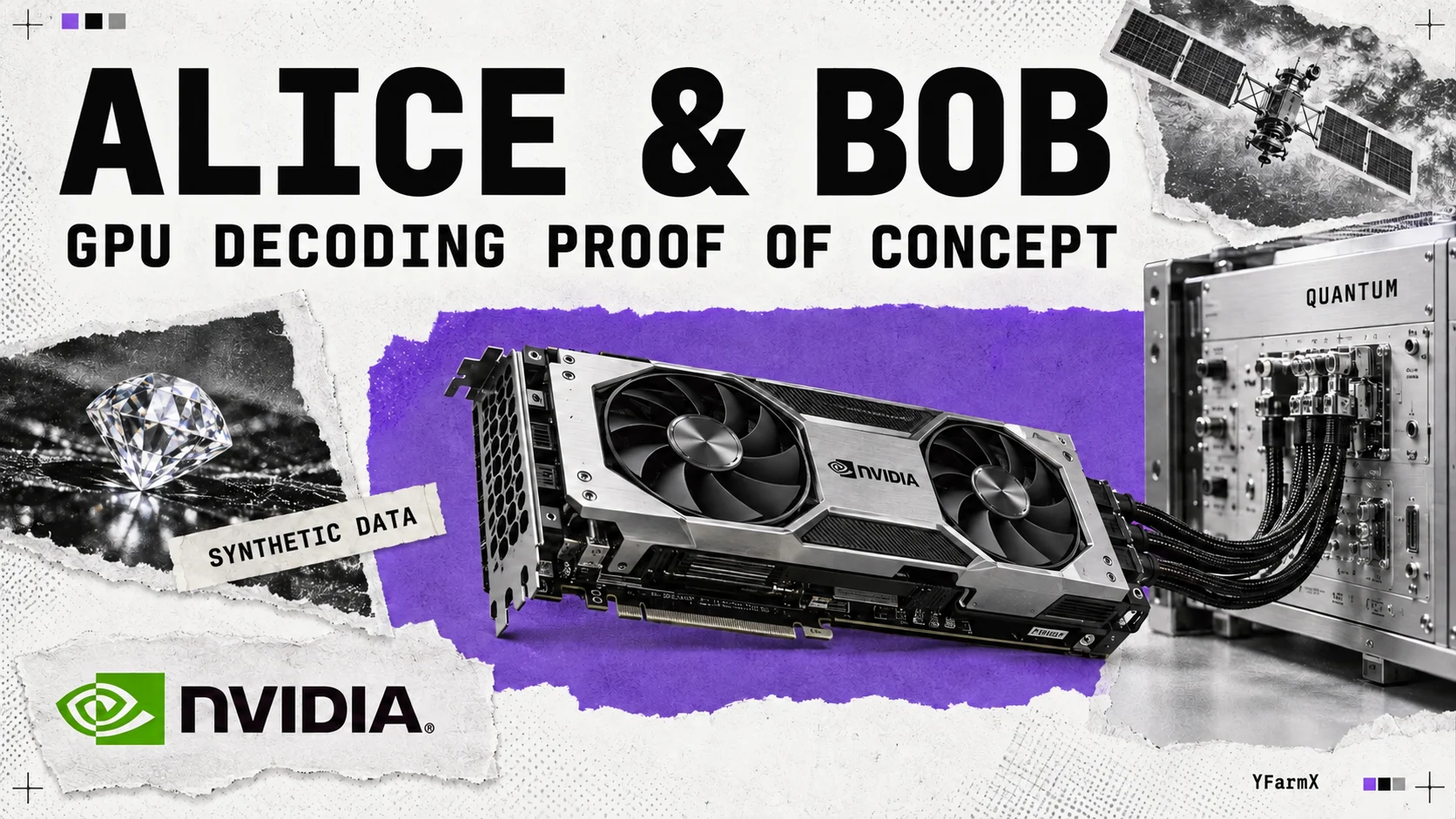
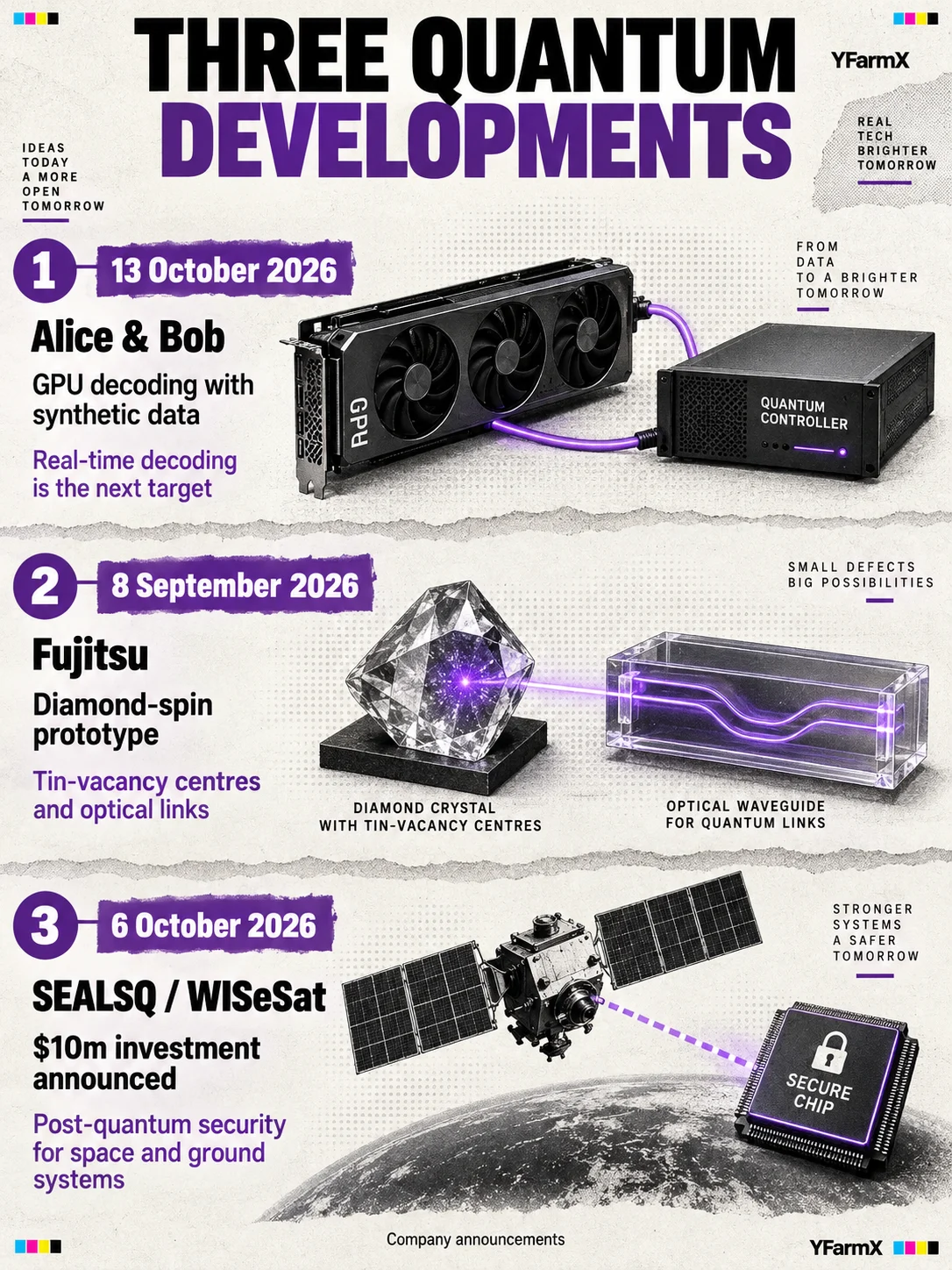
Alice & Bob has demonstrated GPU decoding of its LDPC-cat quantum error-correction codes using synthetic data. The company announced the proof of concept on 13 October, using NVIDIA’s NVQLink architecture to connect control electronics with accelerated computing.
The result concerns a demanding support task for quantum computers: working out the corrections required from repeated measurements. Other recent developments address different parts of the industry, including Fujitsu’s diamond-spin hardware and SEALSQ’s investment in satellite security.
Alice & Bob’s next target is real-time decoding
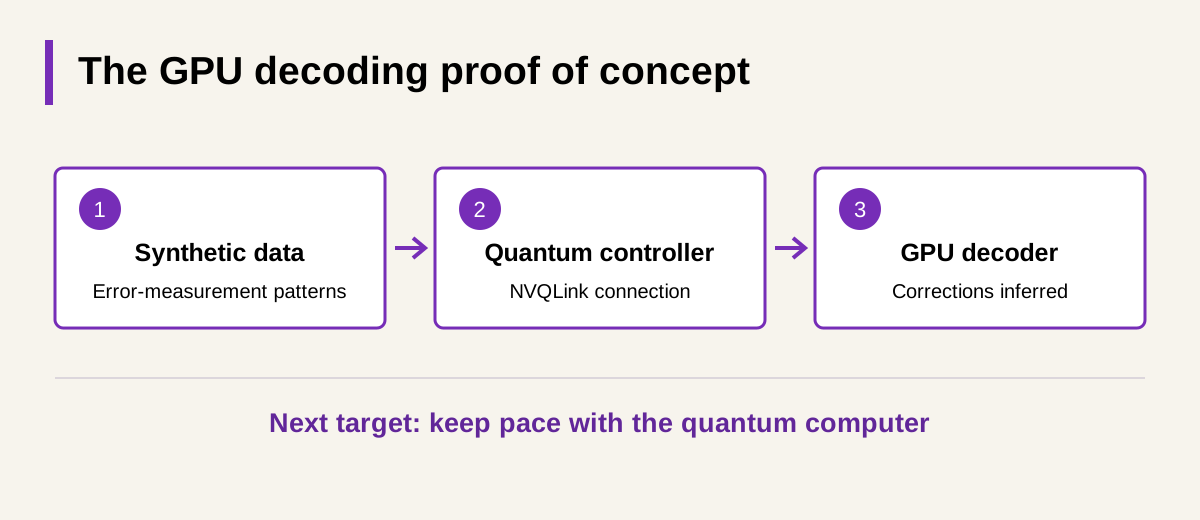
Alice & Bob tested whether its codes could be decoded on GPUs through a low-latency connection. The experiment used Quantum Machines’ OPX1000 controller and Open Acceleration Stack. It assessed the transfer of measurement data from control electronics to the GPU.
The company reports that decoding several error-measurement patterns, called syndromes, in parallel improved efficiency. Its next step is to optimise the data-processing chain until decoding can keep pace with the quantum computer.
That timing requirement defines the next milestone. The result announced on 13 October establishes a proof of concept with synthetic inputs; a working real-time decoder must deliver its answers quickly enough for the running machine.
GPUs provide computing power for quantum control
NVIDIA’s NVQLink connects quantum controllers with GPU servers for tasks such as calibration and error correction. The architecture brings a classical processor close enough to the control system to handle time-sensitive calculations.
A decoder interprets error-measurement patterns and identifies the corrections a quantum computation needs. Large systems generate more of this work, making the speed of the supporting computers and their connections part of the design problem.
NVQLink includes a GPU host, a quantum-system controller, a network and software interfaces for coordinating them. NVIDIA says the timing requirements vary across quantum hardware and control tasks. Its architecture supports several types of quantum processor.
Fujitsu’s prototype uses tin defects in diamond
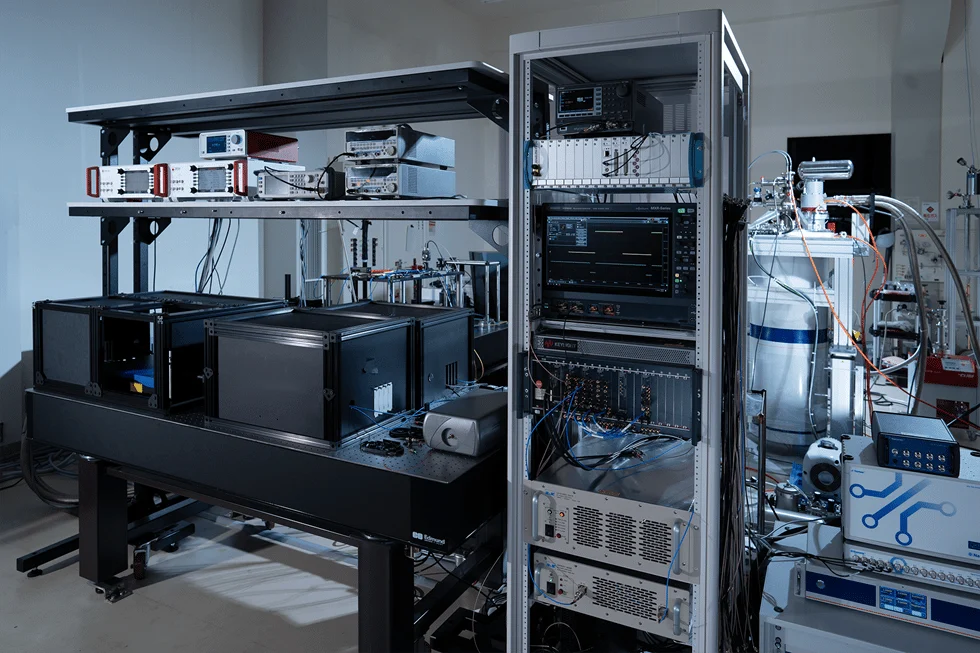
Fujitsu announced a diamond-spin quantum computer prototype on 8 September, developed through research with Delft University of Technology and QuTech. The prototype incorporates tin-vacancy centres, atomic-scale defects in diamond, into photonic integrated circuits.
Optical waveguides collect individual photons emitted during qubit readout. Fujitsu’s aim is to connect modules using light and increase the size of the system through that modular design.
Fujitsu reported operation at minus 271.6°C and access through its hybrid quantum computing platform in a test environment. The company plans a multi-module diamond-spin prototype by 2027, with further work on combining diamond-spin and superconducting technologies.
SEALSQ invested in satellite security
SEALSQ announced on 6 October that it had led a $10 million private investment in WISeSat.Space. The investment closed on 1 October and is intended to support next-generation satellites and post-quantum security across space and ground infrastructure. SEALSQ identifies it as a related-party transaction: both companies are subsidiaries of WISeQey.
Post-quantum cryptography uses algorithms designed to withstand attacks from future quantum computers. Here, the work concerns protecting communications and identities across connected infrastructure. SEALSQ says the funding will support integration of its security technologies with WISeSat’s satellite programme.