Chainlink data feeds go live on Stellar
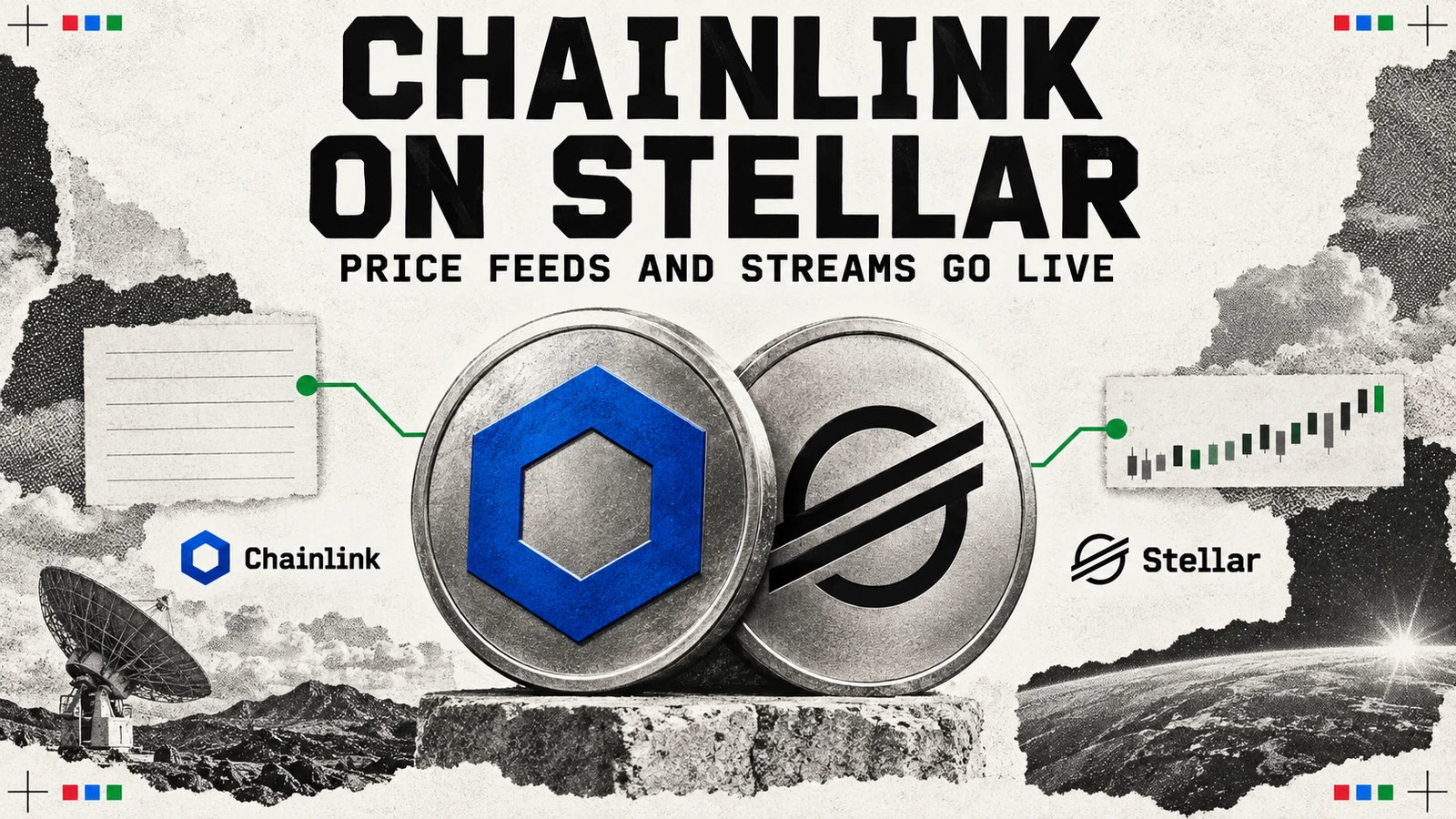
Chainlink Data Feeds and Data Streams are live on Stellar, giving developers market prices for lending, collateral and tokenised-asset applications.
Listen to this articleListen
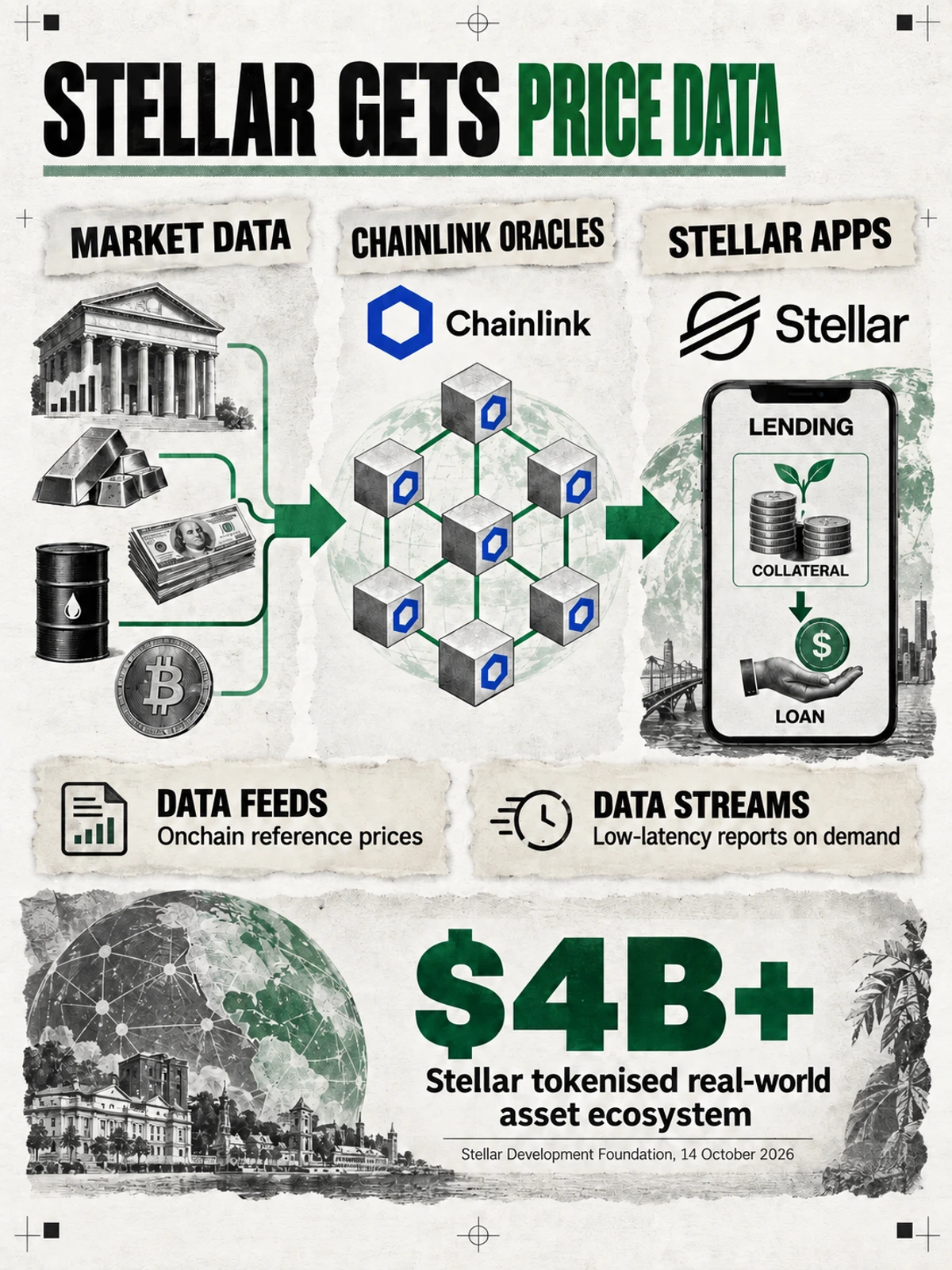
Chainlink’s Data Feeds and Data Streams are live on Stellar, giving developers a source of market prices for lending, trading and tokenised-asset applications. The Stellar Development Foundation confirmed the availability on 14 October 2026.
The foundation’s announcement puts Stellar’s tokenised real-world asset ecosystem at more than $4 billion. Reliable prices let applications calculate what those assets are worth when they are used as collateral or traded through smart contracts.
Developers get two ways to obtain market prices
Chainlink Data Feeds publishes reference data onchain, while Data Streams provides low-latency reports for applications that need fresher updates. Both connect financial applications with information originating outside the blockchain.
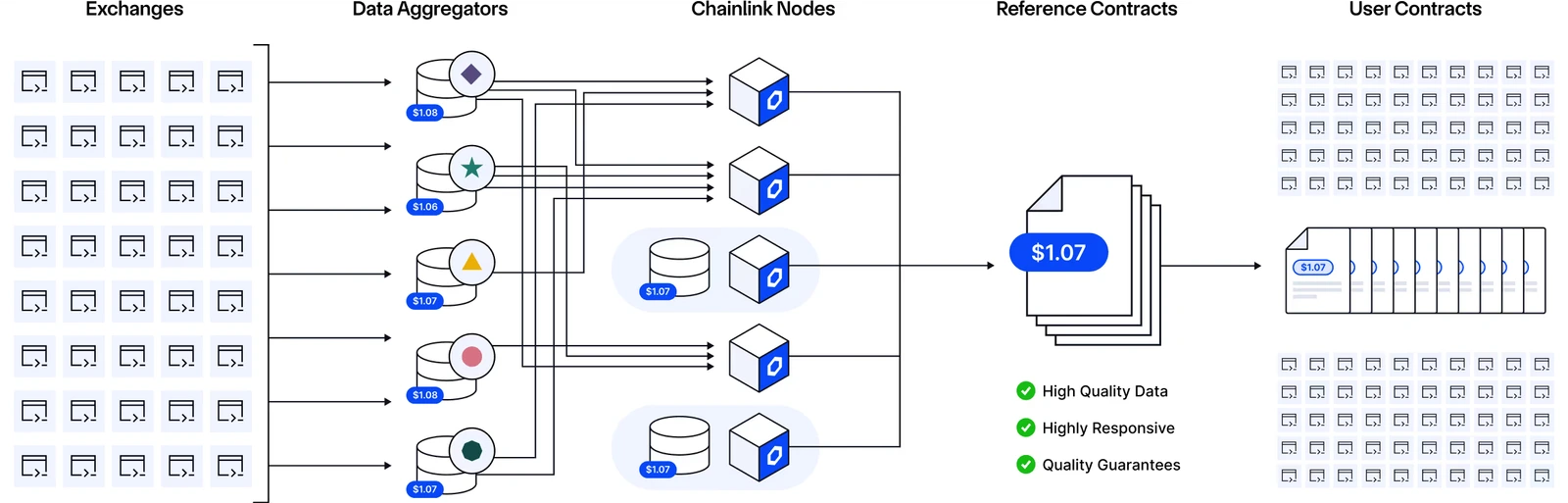
Chainlink’s Data Feeds architecture combines prices from multiple data providers and independent oracle nodes. Those nodes aggregate observations into a report that smart contracts can read. The process is designed to give applications a market reference assembled from several inputs.
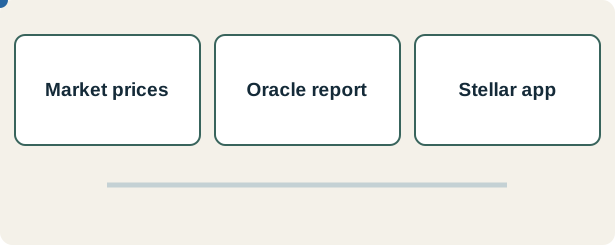
Data Streams uses on-demand delivery: an application retrieves a signed report and has it verified for use onchain. That approach is suited to trading systems where the price at execution can change rapidly.
Prices help lending applications manage collateral
A lending application needs a current valuation to decide how much a borrower can draw against an asset. When the collateral’s value falls, the same price input can help determine whether the loan needs attention or an automated liquidation.
The Stellar foundation lists collateral processing, loan-to-value calculations, liquidations and stablecoin reference rates among the launch uses. It also identifies prediction markets and perpetual futures as applications developers can build with the data.
For a tokenised fund share, holding the token and valuing it are separate operations. Ownership is recorded onchain; a lending contract also needs the relevant price before it can apply its borrowing rules. An oracle supplies that input to the contract.
Stellar feeds share a single access contract
Chainlink’s Stellar implementation serves its Data Feeds through one proxy contract. An application chooses the feed it wants by supplying a feed identifier, according to the developer documentation.
That contract can return the latest round, a historical round, the value and the observation’s timestamp. An application can therefore inspect both the number and when that observation was produced before using it in a financial calculation.
Chainlink’s release log dates the Data Feeds integration to 29 September 2026. The foundation’s October announcement brings the wider availability of Data Feeds and Data Streams together with their use across Stellar’s asset ecosystem.
Tokenised funds gain more ways to be used
The launch adds pricing infrastructure around assets already issued on Stellar. Its practical value depends on the financial applications that use those prices and the collateral rules they put around each asset.
A fund token can move between permitted holders. A lending market must also decide which tokens it accepts, how much can be borrowed against them and what happens when prices move. Chainlink supplies the market-data layer for those decisions; the application sets the financial rules.
That gives developers another component for turning tokenised holdings into working lending and trading markets on Stellar.
Sources
- Stellar Development Foundation: Chainlink services live on Stellarstellar.org
- Chainlink: using Data Feeds on Stellardocs.chain.link
- Chainlink: September Data Feeds integration releasedocs.chain.link
- Chainlink: Data Feeds architecturechain.link
- Chainlink: Data Streamschain.link