Quantum chip improved Schneider's energy forecasts by 20% in tests
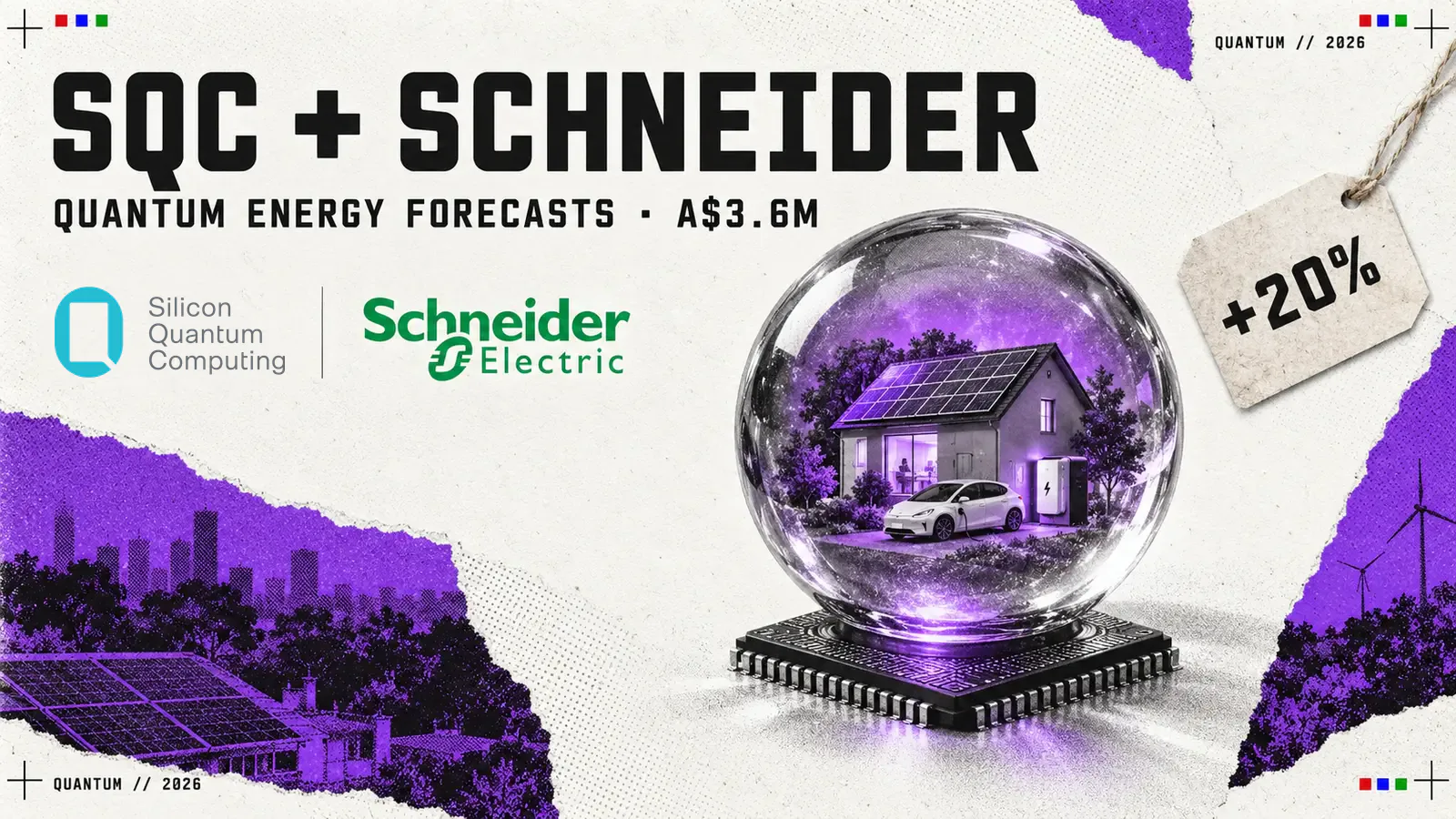
On 2 October 2026, Silicon Quantum Computing and Schneider Electric reported an average 20% improvement in the accuracy of next-day energy forecasts, with gains up to 41%, using SQC's Watermelon chip on 12 months of data. Australia has granted the pair A$3.6m (US$2.5m) for the next stage.
Listen to this articleListen
Silicon Quantum Computing (SQC) said on 2 October 2026 that its Watermelon quantum chip improved the accuracy of Schneider Electric’s next-day energy forecasts by an average of 20%, and by as much as 41%, across 12 months of data. SQC and Schneider Electric, working with UNSW Sydney, have won A$3.6 million (US$2.5 million) from the Australian government to take the work into hundreds of homes.
The accuracy figures are the companies’ own, from SQC’s announcement. Schneider Electric, an energy technology group with 160,000 employees, uses forecasts like these to balance rooftop solar, home batteries and electric vehicles on the grid, and Watermelon gives its forecasting models extra inputs generated by a quantum processor.
How much better were the forecasts?
Watermelon lifted forecasting accuracy by an average of 20% over a classical benchmark, with a best gain of 41%, when the two companies applied it to 12 months of next-day forecasting data, SQC said on 2 October 2026. The forecasts covered grid consumption, the electricity drawn from the network, during stage 1 of a project funded by the Australian government’s Critical Technologies Challenge Program.
| Stage 1 result, as SQC reported it | Figure |
|---|---|
| Average accuracy gain over the classical benchmark | 20% |
| Largest gain | 41% |
| Data the test ran on | 12 months of next-day forecasts |
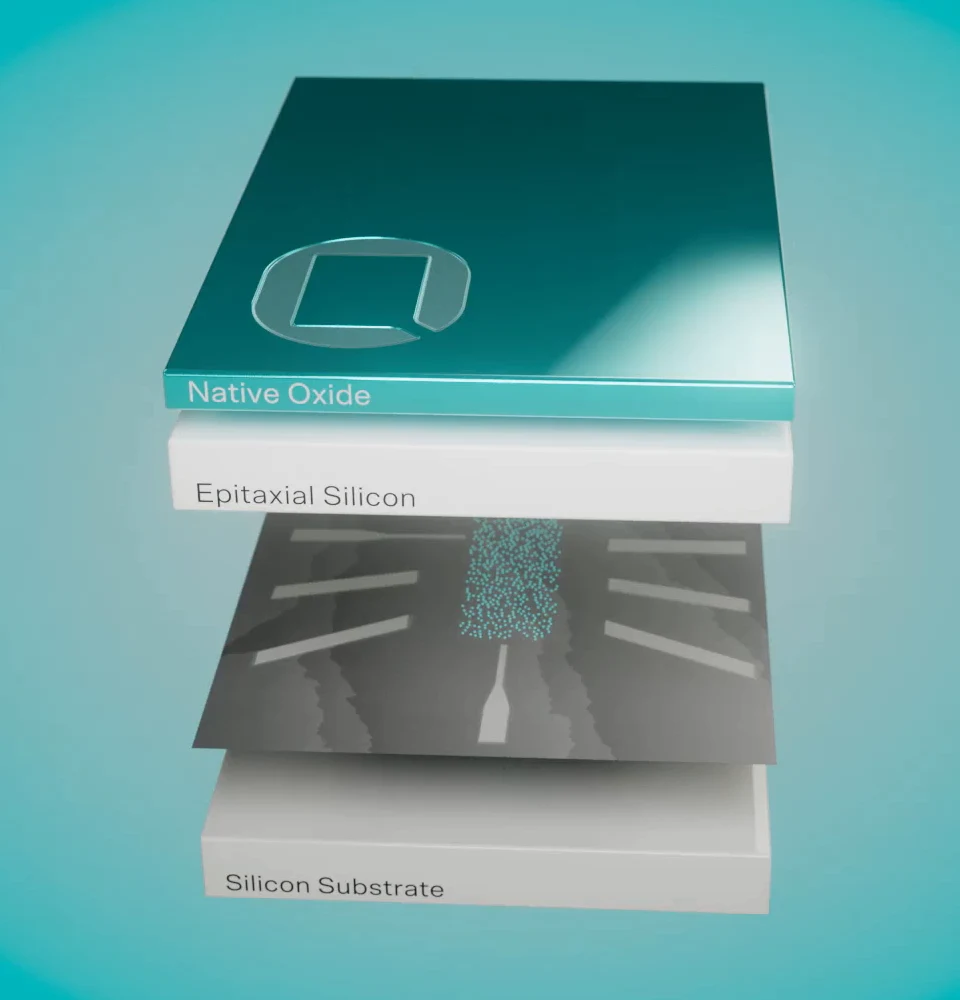
Watermelon works inside a classical forecasting model. The chip generates quantum features from the data, and the model uses them alongside its classical features, which SQC says gives “richer models with greater predictive abilities”.

Watermelon adds quantum features to a classical model
Watermelon is a quantum reservoir: SQC’s chip turns input data into quantum features, extra signals that a classical machine learning model learns from, according to SQC’s product page. SQC says the approach suits time series and sparse data. A quantum reservoir processes information through the natural dynamics of a quantum system, which gives it memory and non-linear behaviour suited to time series forecasting, Telstra and SQC wrote in a joint release in October 2025. Electricity demand is a time series, a run of readings taken one after another.
SQC was founded in 2017 and is led by Michelle Simmons, its founder and chief executive. Its processors use phosphorus atoms placed in pure silicon, according to its technology page, which puts the company among the builders of silicon qubits. The announcement calls Watermelon an “atomically engineered, quantum-enhanced AI chip”.
Watermelon has run a forecasting trial before. In a 12-month project with Telstra, the quantum reservoir forecast network metrics with accuracy on par with a deep learning model, and training and fine-tuning took days against weeks for the deep learning model, Telstra and SQC announced on 13 October 2025.
Why are homes getting harder to predict?
Rooftop solar, home batteries and electric vehicles have made household energy systems more changeable and harder to predict, SQC and Schneider Electric said on 2 October 2026. Schneider Electric uses forecasting and optimisation technology to balance these distributed energy resources, including forecasting when to switch to and from solar power.
Better forecasts can improve how those resources are managed, raise the use of renewable energy and help lower costs for consumers, the announcement says, and even modest gains in accuracy can deliver those benefits. “The energy system is becoming more dynamic with variables like rooftop solar, EVs, and home batteries creating new levels of complexity,” said Colette Munro, Pacific Zone President at Schneider Electric. She said the work with SQC showed advanced energy technology has the potential to manage that complexity better, “lowering costs for consumers and using energy more efficiently across the system.”
Who is paying for stage 2?
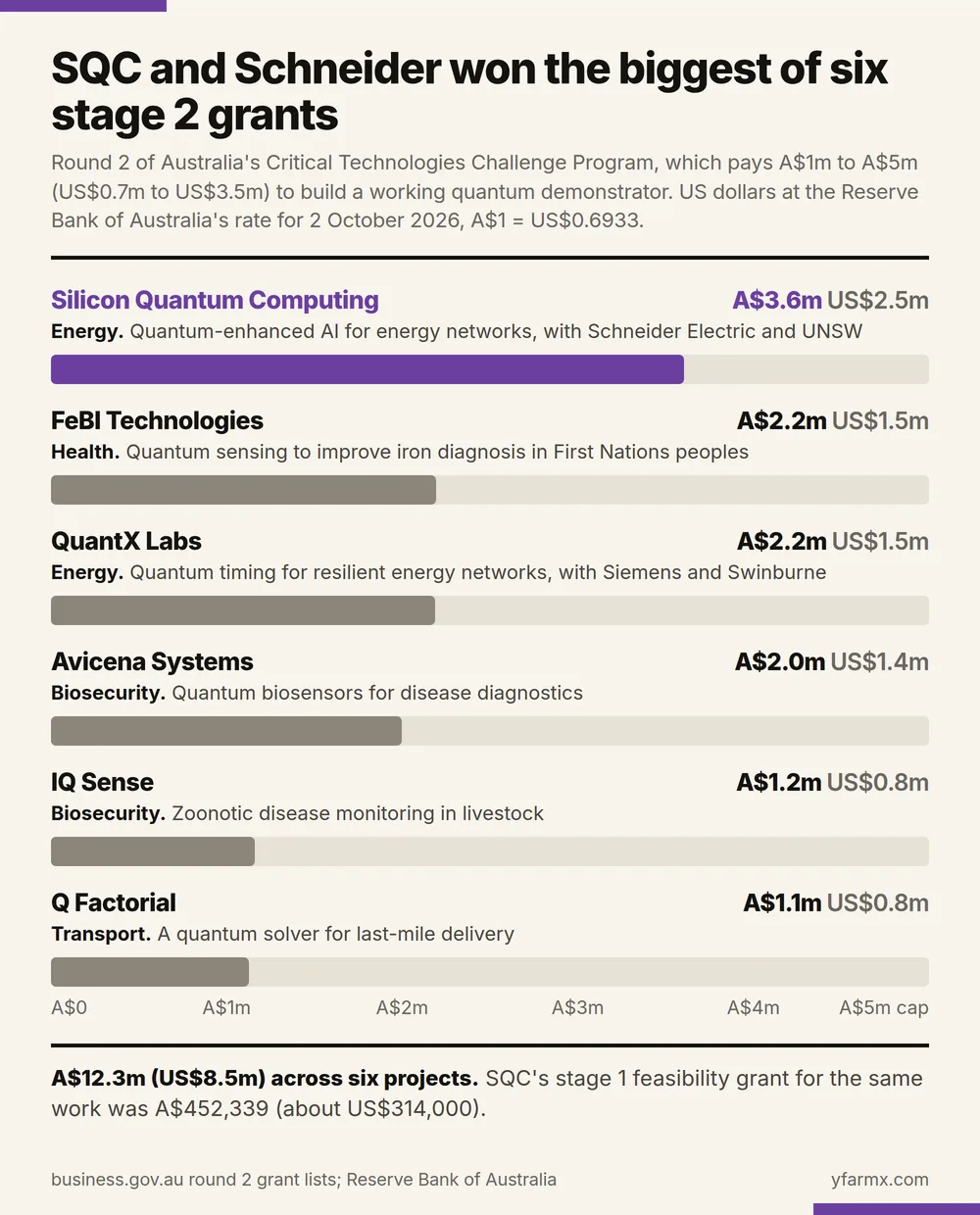
The Australian government is paying A$3.6 million (US$2.5 million) for stage 2 of SQC and Schneider Electric’s project, the largest of the six stage 2 grants in round 2 of its Critical Technologies Challenge Program, according to the government’s grant list. The list names Silicon Quantum Computing as the applicant, with UNSW and Schneider Electric’s Australian arm as partners, on a project for quantum-enhanced AI in energy networks.
The programme’s second round set four challenges for quantum technology: biosecurity, health for First Nations peoples, transport and logistics, and energy networks. Stage 1 paid A$100,000 to A$500,000 (about US$69,000 to US$347,000) to test whether an idea is feasible. Only teams that finish stage 1 are invited to apply for stage 2, which pays A$1 million to A$5 million (about US$0.7 million to US$3.5 million) to build working prototypes or demonstrations. Fourteen projects shared A$5.7 million (US$4.0 million) at stage 1. Six went on to stage 2, two of them in energy: SQC’s and a quantum timing project led by QuantX Labs with Siemens.
| Grant, round 2 | Australian dollars | US dollars |
|---|---|---|
| SQC stage 1, feasibility | A$452,339 | about US$314,000 |
| SQC stage 2, demonstrator | A$3.6m | US$2.5m |
| All six stage 2 grants | A$12.3m | US$8.5m |
The US dollar figures use the Reserve Bank of Australia’s daily exchange rate table, F11.1, which gives A$1 to US$0.6933 for 2 October 2026, a rate that matches the companies’ own conversion of the stage 2 grant.
Hundreds of homes come next
Stage 2 of SQC and Schneider Electric’s project expands the modelling to hundreds of homes across Australia and builds it directly into Schneider Electric’s AI workflows, the companies said on 2 October 2026. SQC calls the work “a clear pathway for today’s quantum computing systems to be used in production environments”.
“We have always believed that quantum processors would work alongside CPUs and GPUs to deliver real-world performance gains,” said Michelle Simmons, adding that the results showed how quantum-enhanced AI “can address practical challenges across the energy sector and time-series datasets more broadly”. IBM published a reference architecture on 12 March 2026 that shows how quantum processors can work alongside GPUs and CPUs.
Watermelon launched in 2025 and is sold through the cloud and as hardware, including turnkey installations in data centres. SQC says customers in telecommunications, banking and high-frequency trading already use it.
Questions people ask
- What is SQC's Watermelon?
- Watermelon is a quantum machine learning system from Silicon Quantum Computing, a Sydney company founded in 2017. Its atomically engineered silicon chip works as a quantum reservoir: it generates quantum features from input data, and a classical model uses them alongside its own features. SQC says the method suits time series and sparse data. Watermelon launched in 2025, is sold through the cloud and as hardware, and has customers in telecommunications, banking and high-frequency trading.
- How much funding did SQC and Schneider Electric win?
- Silicon Quantum Computing and Schneider Electric, working with UNSW Sydney, won A$3.6 million, about US$2.5 million, in stage 2 of round 2 of the Australian government's Critical Technologies Challenge Program, the companies said on 2 October 2026. It is the largest of the six stage 2 grants on the government's list, which total A$12.3 million (US$8.5 million at the Reserve Bank of Australia's rate for 2 October). The project's stage 1 feasibility grant was A$452,339, about US$314,000.
- How much did the quantum chip improve energy forecasts?
- Silicon Quantum Computing says its Watermelon chip improved the accuracy of Schneider Electric's next-day energy forecasts by an average of 20% against a classical benchmark, with gains of up to 41%, in a test on 12 months of next-day forecasting data. The forecasting models used the quantum features alongside the classical ones. The figures are the companies' own, published in SQC's announcement of 2 October 2026.
Sources
- SQC: SQC and Schneider Electric use hybrid quantum-classical models to improve energy forecasting, 2 October 2026sqc.com
- PR Newswire (Silicon Quantum Computing): SQC and Schneider Electric use hybrid quantum-classical models to improve energy forecasting, 2 October 2026prnewswire.co.uk
- Australian Government: Critical Technologies Challenge Program round 2, stage 2 demonstrator grant recipientsbusiness.gov.au
- Australian Government: Critical Technologies Challenge Program round 2, stage 1 feasibility grant recipientsbusiness.gov.au
- Australian Government: Critical Technologies Challenge Program round 2business.gov.au
- SQC: products, Watermelonsqc.com
- SQC: technology, the 14|15 platformsqc.com
- SQC: Telstra and SQC explore smarter network prediction, 13 October 2025sqc.com
- Reserve Bank of Australia: table F11.1, exchange rates, daily, A$1 = US$0.6933 on 2 October 2026rba.gov.au
- IBM: IBM releases a new blueprint for quantum-centric supercomputing, 12 March 2026newsroom.ibm.com