
Silicon spin qubits
the bet on existing chip factories
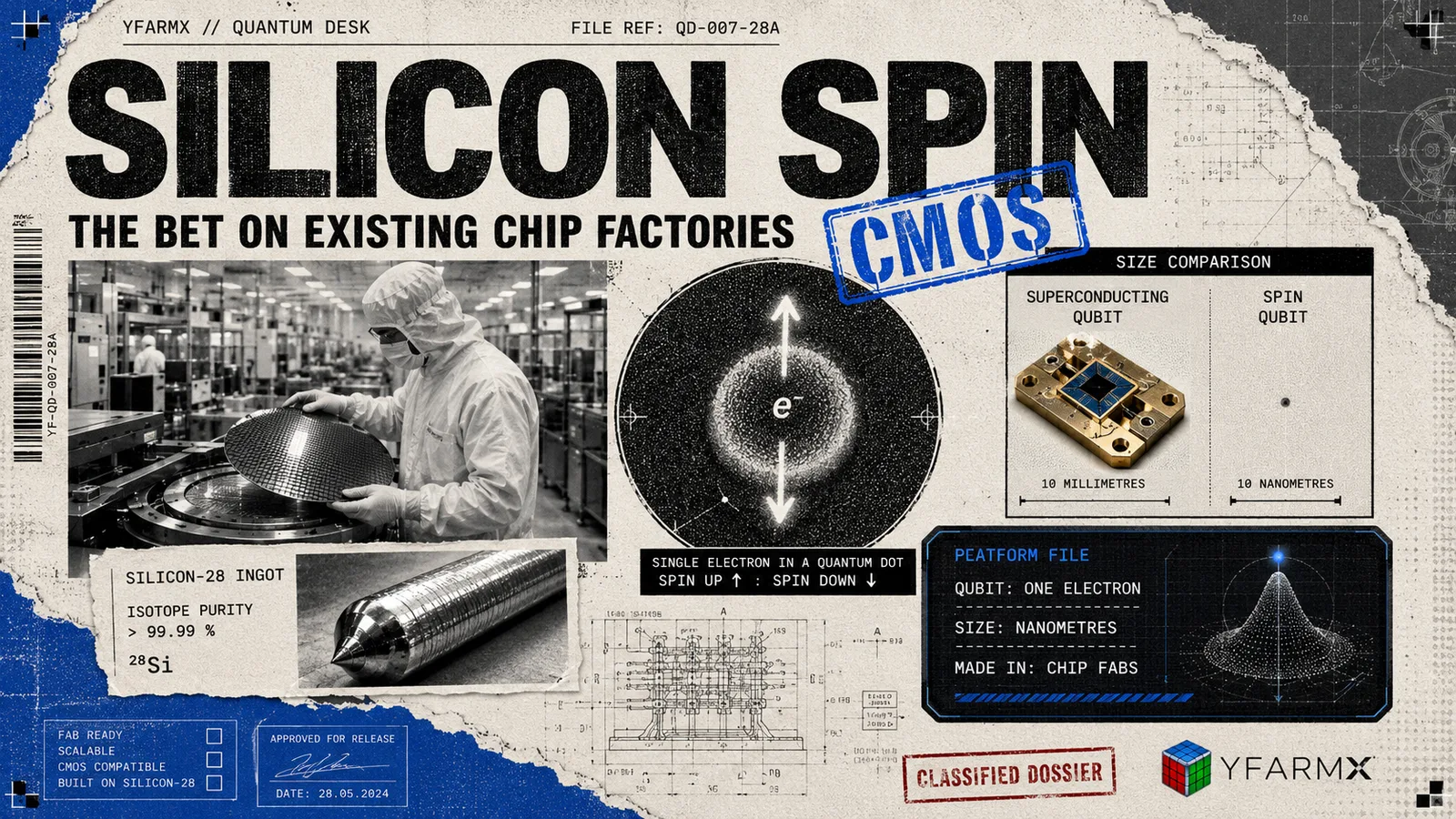
Key facts
- One electronits spin: up or down
- The qubit
- Nanometressmallest qubit type
- Size
- Chip fabsexisting CMOS lines
- Made in
- ~1 Kwarmer than superconducting
- Temperature
The smallest qubit anyone has built, and the only one that fits the machinery the world already owns. If quantum computers ever need millions of qubits, they may have to be made the way ordinary chips are.
Silicon spin qubits start from a commercial observation rather than a physics one. The world already knows how to print billions of transistors onto a chip with astonishing reliability and at low cost. If a qubit could be made to look like a transistor, the industry that built the smartphone could build the quantum computer.
How it works
The qubit is a single electron, trapped in a tiny well of silicon called a quantum dot, formed by voltages on electrodes laid down exactly as they are in a conventional chip. The information is stored in the electron’s spin, a quantum property with two values usually described as up and down. Those are the 0 and 1.
Control comes through microwave pulses and voltages on neighbouring gates. Two-qubit operations rely on placing dots close enough that neighbouring electrons feel each other, which makes connectivity local: a qubit interacts with the dots beside it, not with any qubit on the chip.
Why the approach appeals
Size is the headline. A spin qubit is measured in tens of nanometres, against the millimetre scale of a superconducting qubit. Millions of them would fit on a chip the size of a fingernail, where the same number of superconducting qubits would fill a room and defeat any plausible wiring scheme.
Manufacturing is the other half. These devices are made on the same complementary metal-oxide-semiconductor lines that produce ordinary processors, so decades of accumulated yield engineering apply. Silicon can also be purified to a single isotope, silicon-28, which has no nuclear spin to disturb the electron, and that gives unusually long coherence times for a solid-state qubit.
They also run at around one kelvin rather than fifteen millikelvin. That sounds like a detail; it is not. Cooling power at one kelvin is vastly cheaper, which leaves room to put control electronics next to the qubits rather than running thousands of wires down into the refrigerator.
The difficulty
Uniformity is the enemy. Every quantum dot must behave like every other, and small variations in the silicon or the electrode edges shift each qubit’s properties, so each needs individual calibration. That is manageable for tens of qubits and becomes the central obstacle at thousands. Qubit counts on this platform remain well behind superconducting and trapped-ion machines.
Where it stands
The approach draws serious industrial backing precisely because it aligns with existing manufacturing, and it has been gaining attention as the field’s focus shifts from demonstrating quantum behaviour to producing qubits in enormous numbers. IBM completed its acquisition of HRL Laboratories on 26 August 2026. The acquisition brings HRL’s silicon-spin engineering into a company already developing superconducting quantum computers.
More Quantum
All Quantum →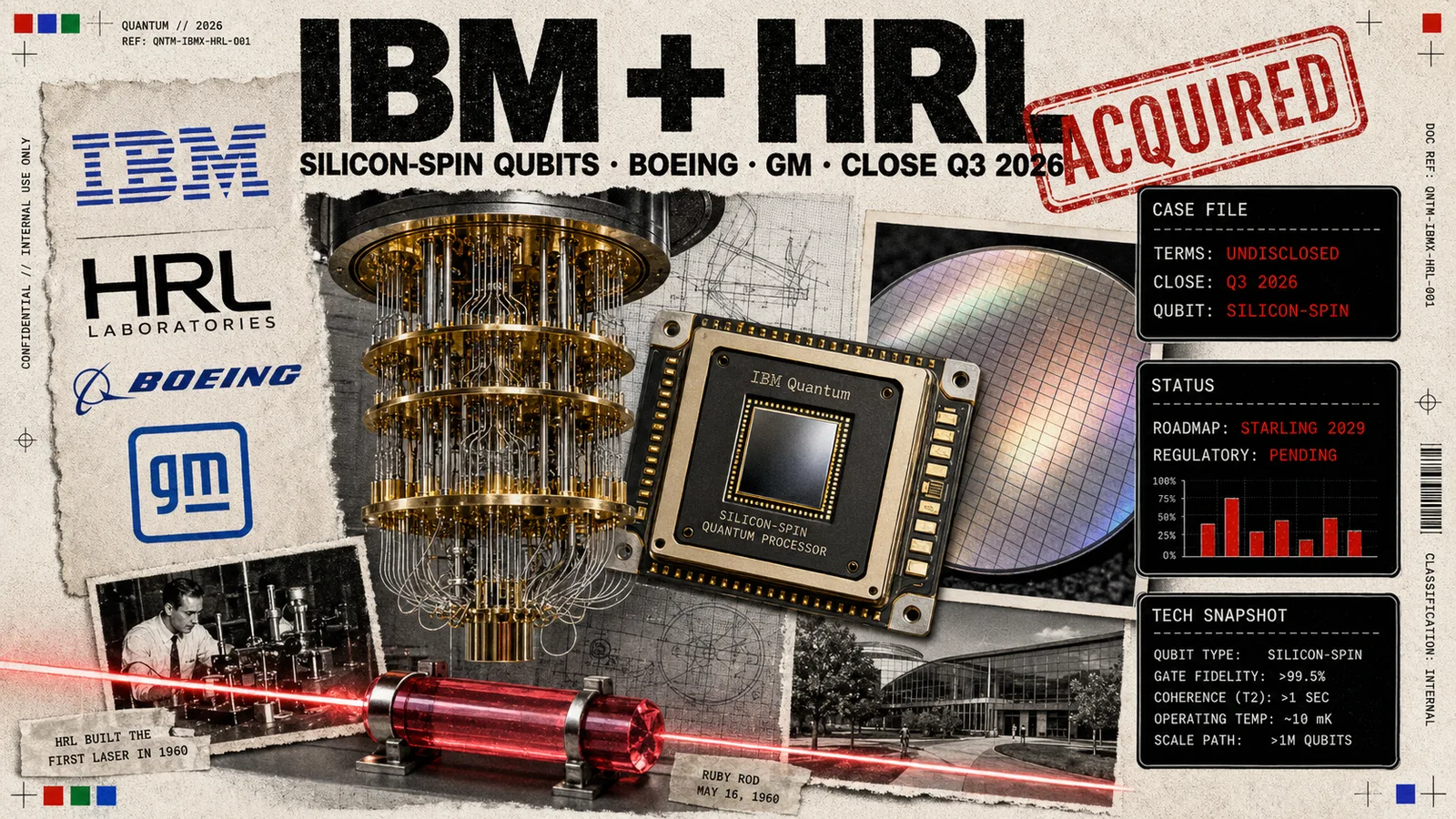
IBM just bought a second bet on quantum's future
IBM has agreed to buy HRL Laboratories, the Boeing- and GM-owned research lab, for its silicon-spin qubit expertise. It is a hedge: a second kind of qubit alongside the superconducting chips IBM has built its whole roadmap on.
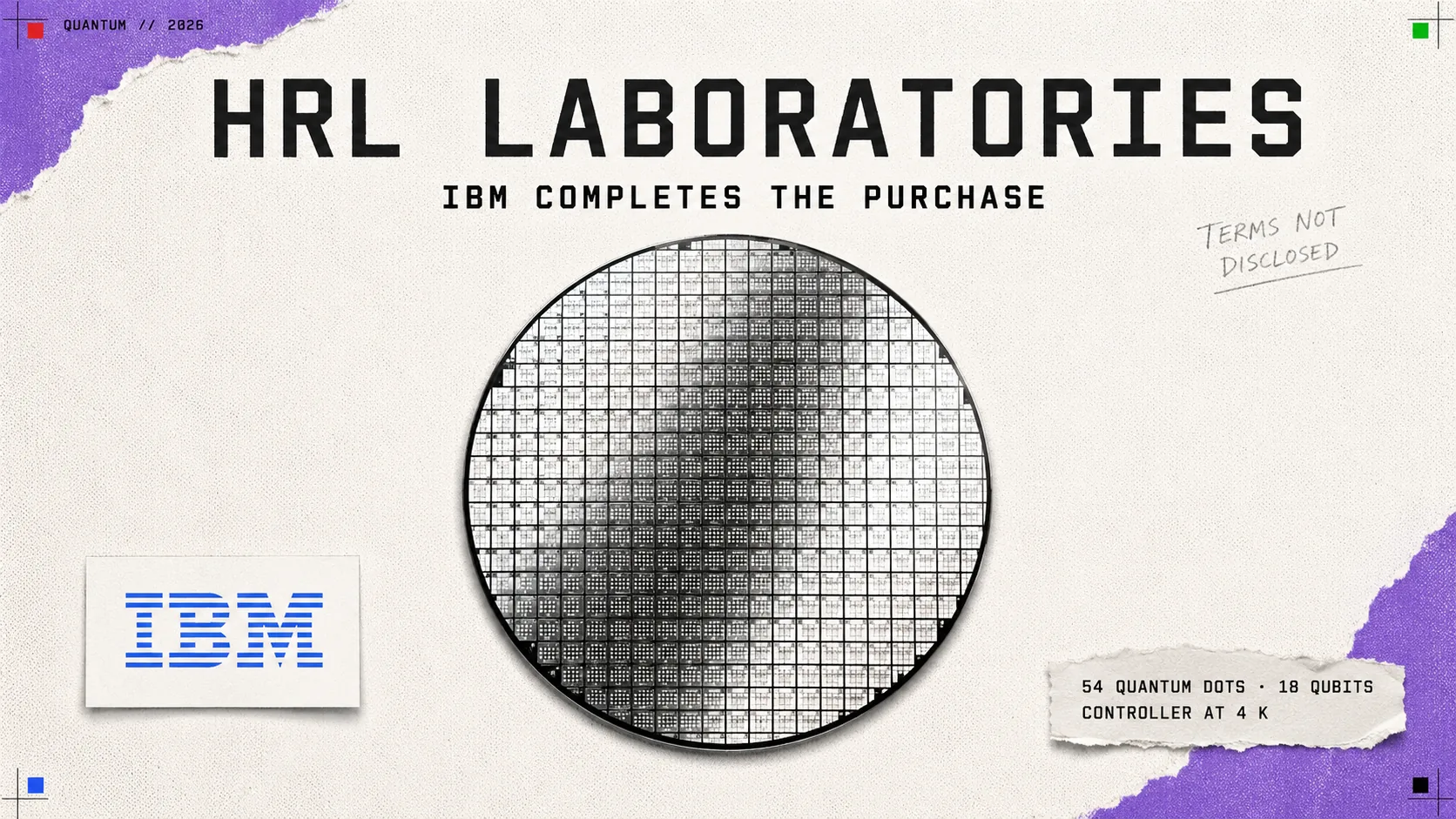
IBM has bought a second qubit technology and its published roadmap still does not mention it
IBM completed its purchase of HRL Laboratories on 26 August. The releases describe a whole second qubit modality. IBM's own quantum roadmap names spin qubits, silicon, HRL and Anderon zero times.