Durov promises a native Gram wallet in every Telegram app
Pavel Durov says a native non-custodial Gram wallet is coming to every Telegram app this summer. What is actually new, how it differs from the wallet already there, and the obstacles between the promise and a billion users.
Listen to this articleListen
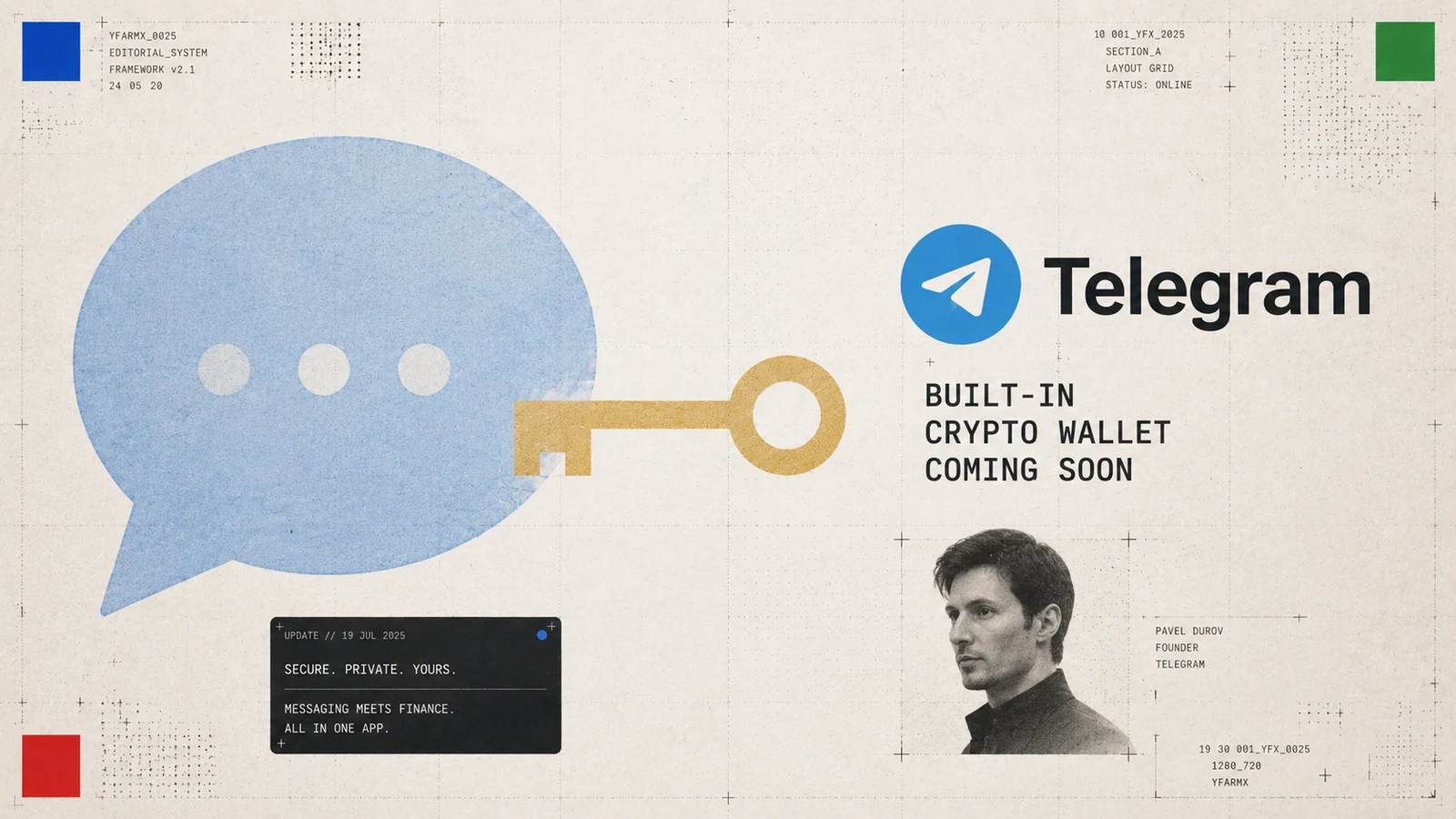
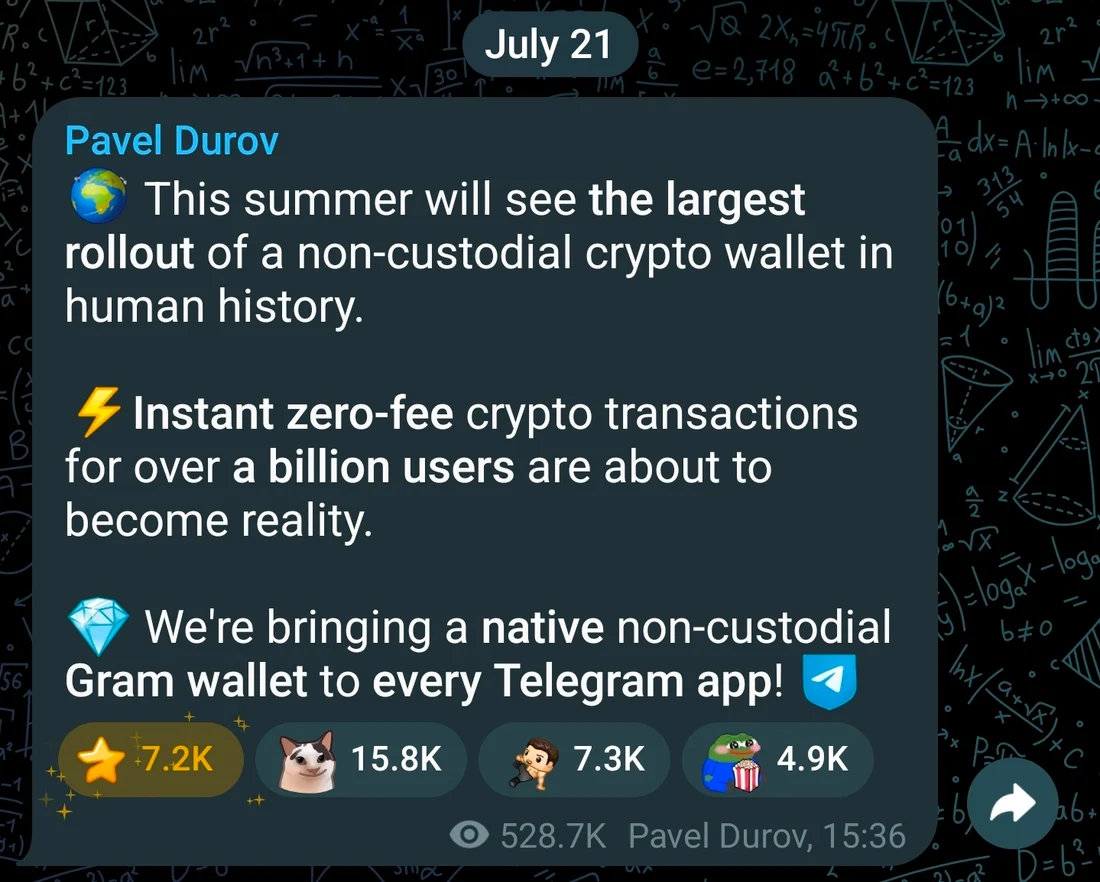
Pavel Durov announced on Tuesday that Telegram will build a native non-custodial Gram wallet into every Telegram app, describing it as the largest rollout of a self-custody crypto wallet in history and promising instant zero-fee transactions for over a billion users.
The post carried no launch date beyond this summer, no technical specification and no detail on regional availability. It is a statement of intent from a founder who has been publishing his roadmap in instalments.
What Telegram users already have
Telegram has had a wallet since 2023. Over 100 million users have activated it, and it reached US users in July 2025.
The important detail is authorship. That wallet is built and operated by The Open Platform, a separate company, and it works as a mini app inside Telegram. It runs in two modes: a custodial Crypto Wallet, where the operator holds the keys and transfers between Telegram contacts settle off chain for free, and a self-custodial mode, formerly branded TON Space and now called TON Wallet, where the app generates a 24-word seed phrase on your device.
So self-custody inside Telegram exists today. Zero-fee transfers between contacts exist today. What Durov is describing is Telegram building the thing itself, into the app binary, for everyone.
A mini app takes deliberate activation. Something shipped in the client is present the moment the app updates.
Step five of seven
Durov began publishing a seven-step plan on his channel in April under the name Make TON Great Again. Four steps have landed.
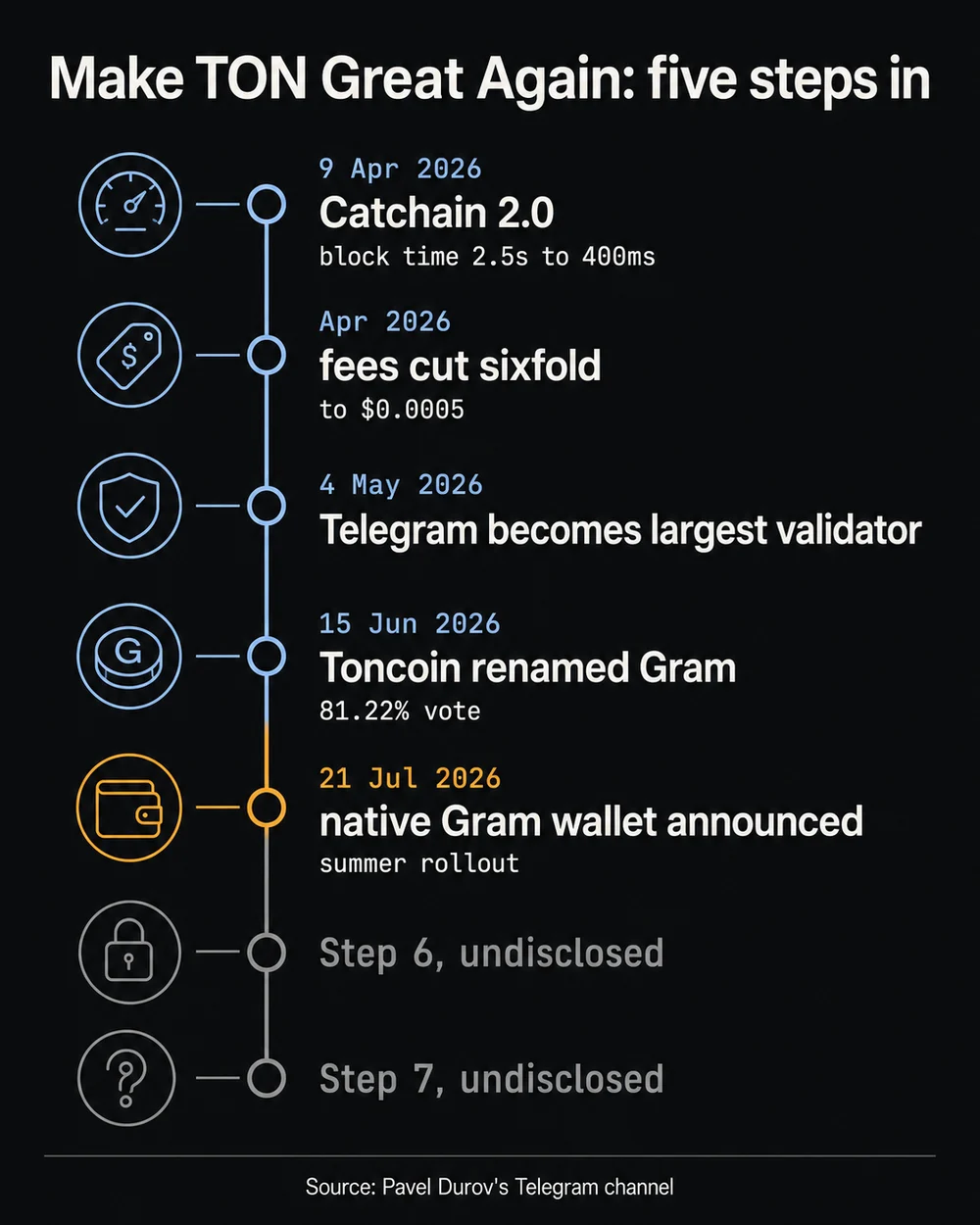
Catchain 2.0 arrived on 9 April 2026, cutting block production from roughly 2.5 seconds to about 400 milliseconds. A fee cut followed, taking transfers to around $0.0005. In May, Durov said Telegram would replace the TON Foundation as the network’s driving force and become its largest validator. On 15 June the token formerly called Toncoin officially became Gram, after a community vote passed with 81.22 per cent support, changing the name, ticker and logo while leaving balances and staking positions untouched.
Steps five, six and seven were undisclosed. Tuesday’s post is almost certainly step five.
The market pattern through all of this has been consistent: each announcement produces a spike, then a fade. Gram was back around $1.67 in mid-June after the rebrand rally.
The obstacles
Availability and adoption are separate things. Over 100 million people have already activated the existing wallet, which leaves roughly nine hundred million who have looked at the option and passed. Shipping a wallet to a billion phones changes the denominator. Whether it changes behaviour is the actual question.
App stores. Apple and Google set the terms for what ships inside apps on their platforms, including crypto functionality. A wallet built into the Telegram binary sits inside those rules more directly than a third-party mini app does. Durov has fought Apple publicly before.
Regulation. Non-custodial design is the point here. When the software holds no keys and takes no custody, it sits outside much of the licensing perimeter that catches custodial services, which is why the existing custodial features carry regional exclusions and the self-custodial ones carry fewer. That logic has limits, and jurisdictions are actively redrawing those lines. Durov also remains subject to French criminal proceedings.
Concentration. Telegram is now the largest validator on the network, the driving force behind its development, the owner of the client, and shortly the author of the wallet. Users get one company from key generation to block production. That is a strong product story and a fair question about a chain that spent six years describing itself as community run.
What to watch
Three signals. Whether Telegram publishes a specification and a date, since summer has about six weeks left. Whether the existing wallet operator stays in the picture or gets displaced. And once it ships, activation counts, which are measurable on chain and will settle the “billion users” framing quickly.