ChatGPT Work turns the chatbot into a deliverables engine
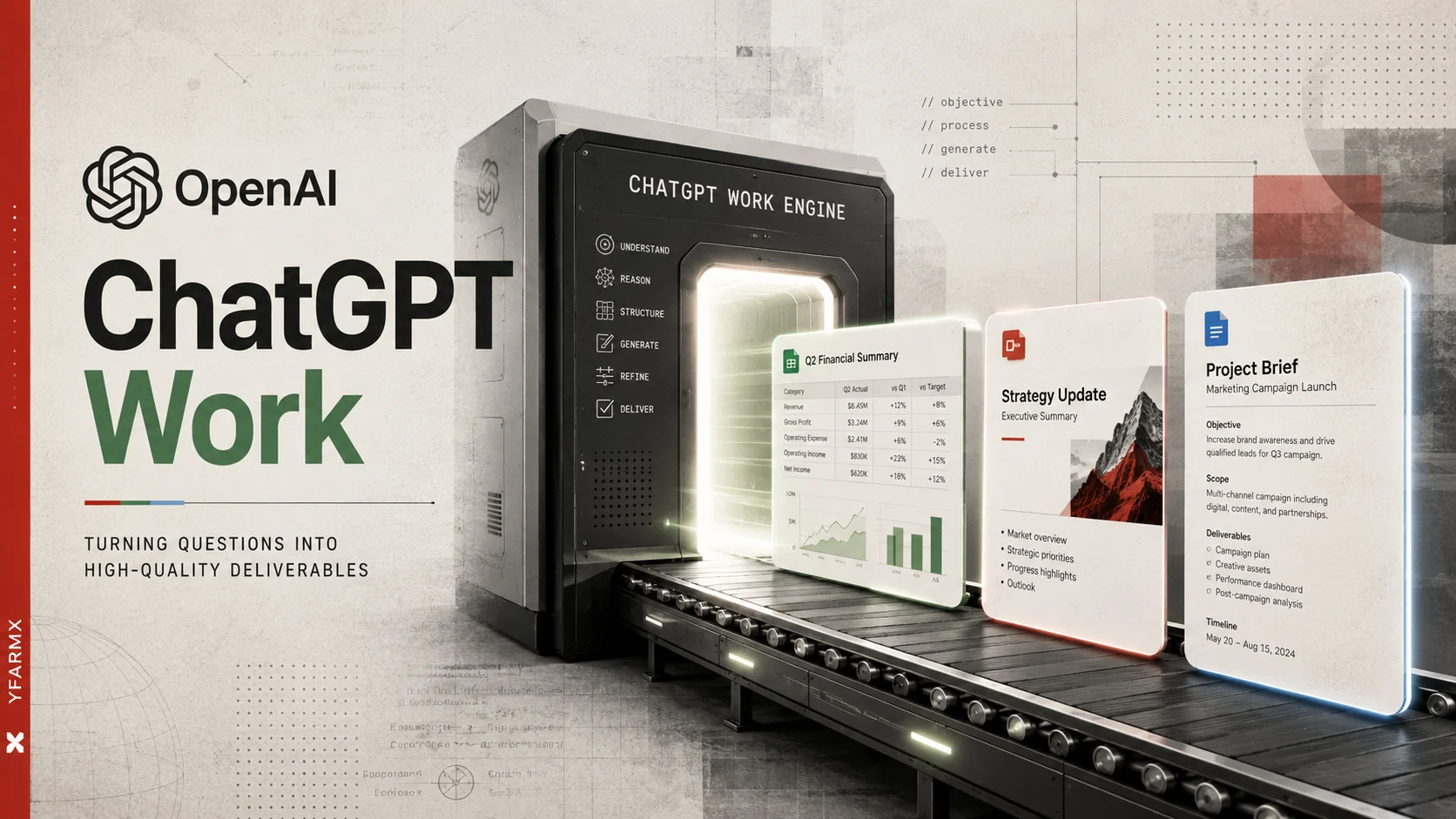
OpenAI launched ChatGPT Work on 9 July, an agent inside ChatGPT built to take a stated outcome, gather context across connected applications and files, break the job into steps and return finished material.
Listen to this articleListen
OpenAI launched ChatGPT Work on 9 July, an agent inside ChatGPT built to take a stated outcome, gather context across connected applications and files, break the job into steps and return finished material. The output is meant to be spreadsheets, slide decks, documents and small web applications, with the user following progress and approving consequential actions. ChatGPT Work is powered by GPT-5.6 and shipped on the same day that model reached general availability.
The framing is a deliberate shift in what the product is for. OpenAI has spent three years making models better at answering. The bet behind ChatGPT Work is that people will pay more for a system that completes whole jobs and stays with a project for hours. The company’s own guidance is notably cautious: it suggests the best way to learn the tool is to give it a task you already know well, which is a polite way of saying you will need something to check the output against.
The launch rearranged the desktop experience considerably. The Codex application merged in place into a single ChatGPT desktop app for macOS and Windows, with a switchable icon presenting Codex to developers and ChatGPT Work to everyone else. Computer use runs in a picture in picture window. Plugins are unified across ChatGPT and Codex, and the App Directory has been replaced by a Plugin Directory in which plugins bundle skills, applications and templates for particular workflows. A new Sites feature hosts what users build on a chatgpt.site subdomain, with Webflow underneath and private sites gated behind explicit publishing approval.
Rollout is staged across paid plans excluding Free and Go, in all supported regions. Pro, Pro Lite, Enterprise and Edu received access first, with Plus and Business following over subsequent days. Enterprise and Edu workspaces get a two week preview during which the feature is off by default, which is a sensible concession to administrators who would rather not discover an autonomous agent in their document store on a Monday morning.
One casualty is worth noting. OpenAI is deprecating Atlas, its browser, as browser based agent capability moves into ChatGPT and Codex. Atlas stops working on 9 August, and browser data including bookmarks, open tabs and history will not transfer automatically. Users can export cookies and passwords to the ChatGPT desktop application and bookmarks to Chrome. Group chats were also discontinued for new creation from 9 July, with existing ones becoming read only over time.
For anyone measuring brand visibility in AI systems, ChatGPT Work introduces a new surface that deserves attention. Its built in browser gathers information from websites to assemble deliverables, so the pages it chooses to read determine which companies and products appear in the finished report a client reads. Testing how the agent researches a given category is now a distinct exercise from testing how the chatbot answers questions about it.
The competitive position is crowded. Anthropic has been shipping Cowork for agentic knowledge work, with expansion to mobile and web, background tasks, scheduled work and shared projects. Google expanded Managed Agents in the Gemini API with background task support and remote MCP on the free tier two days earlier. Meta launched its first paid developer API on the same day as ChatGPT Work, with computer use across desktop, browser and mobile. Every major laboratory is now selling the same proposition, which is that the model should do the job and not describe it.
The honest assessment is that nobody yet knows whether this works at the scale being promised. Giving an agent access to a company’s applications and files for hours can return finished work or finished mistakes, and mistakes produced at volume are harder to catch than mistakes produced one at a time. Coding leaderboards will not settle the question. The first few weeks of people handing ChatGPT Work tasks they understand well enough to audit will settle it, and those results will arrive as anecdotes before they arrive as data.
Usage is metered, and OpenAI has asked customers to verify current availability and plan terms before committing team workflows. That is prudent advice in a month when subscription terms across the sector have changed several times.
Sources
- OpenAIhelp.openai.com
- OpenAIopenai.com
- OpenAI docsplatform.openai.com