Senate Republicans add crypto ethics rules before CLARITY vote
A 635-page CLARITY Act draft adds state enforcement of crypto ethics rules and a stablecoin deposit safeguard before the Senate's 15 September vote.
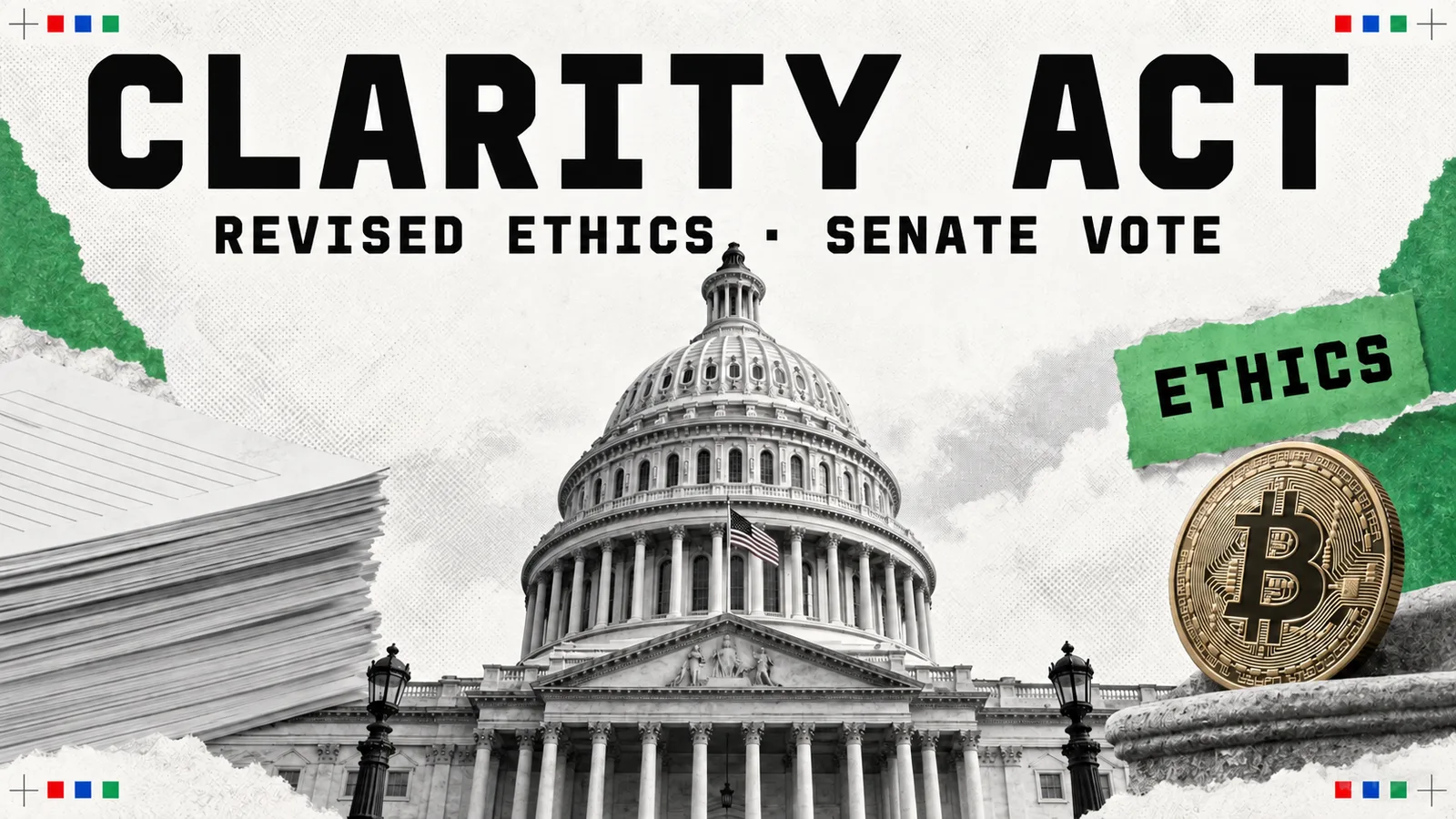
Senate Republicans have released a final negotiating draft of the CLARITY Act, adding a state enforcement route for crypto ethics restrictions ahead of a 15 September procedural vote. The 635-page proposal also revises developer protections and gives the Treasury secretary a temporary power to restrict payment-stablecoin rewards if community banks suffer substantial deposit flight.
Senators Cynthia Lummis, John Boozman and Tim Scott published the text on 14 September. Lummis said President Donald Trump had agreed to the ethics restrictions. The sponsors describe the package as the result of a year of negotiations and 126 substantive changes requested by Democrats.
What does Tuesday’s vote decide?
The Senate Democratic Caucus schedule sets the cloture vote on the motion to proceed to H.R. 3633 for 2:15pm Eastern time on 15 September, or 7:15pm in Britain.
Cloture limits debate on a pending question. For legislation, the Senate’s rule requires three-fifths of senators duly chosen and sworn, normally 60 votes. Here, that question is whether to move towards taking up the bill.
The sponsors say they would then offer their new text as a substitute amendment. Final passage and agreement between the House and Senate remain later steps in the legislative process.
The ethics rules reach business interests
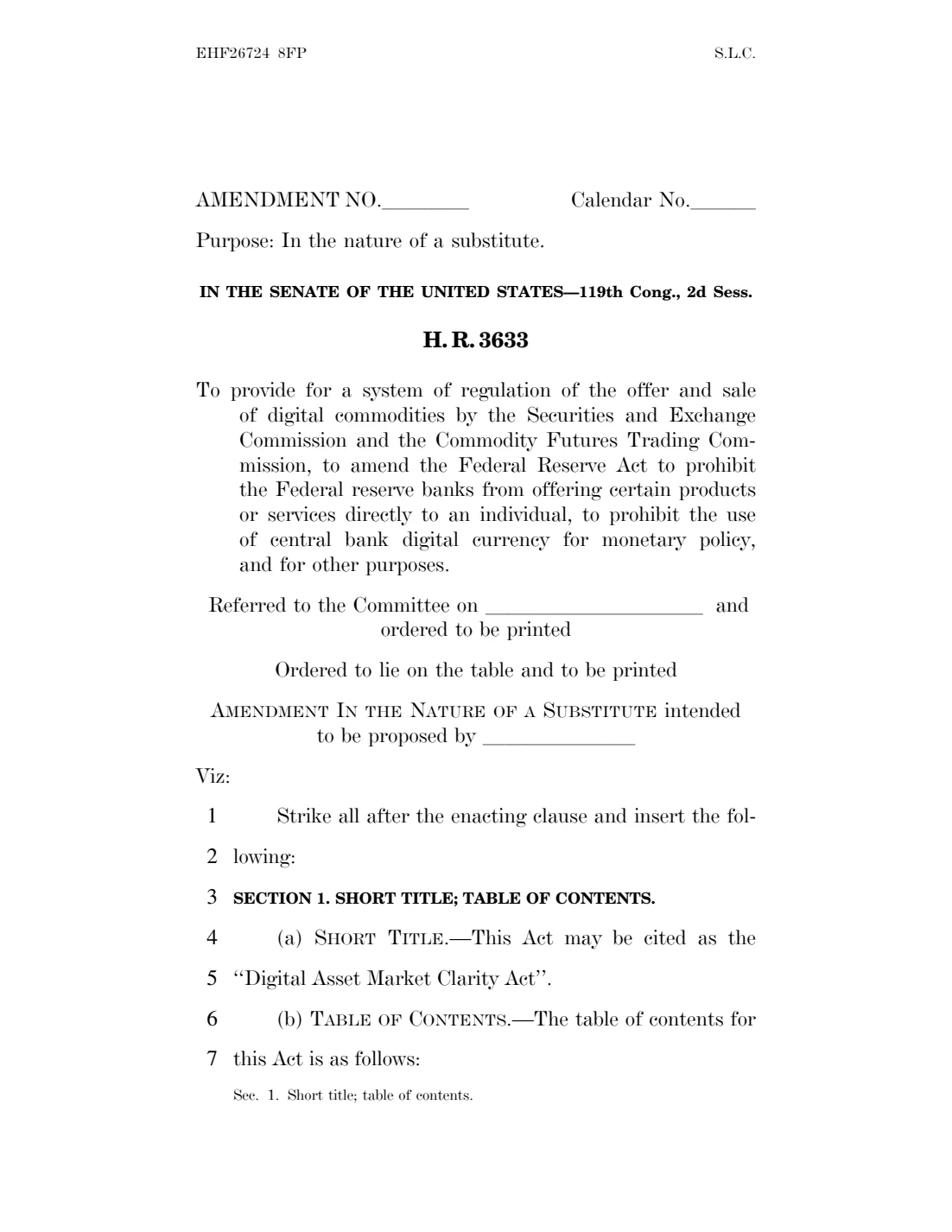
Division C of the draft would prohibit covered officials and spouses from issuing or sponsoring digital assets in exchange for payment. It also addresses equity interests in businesses whose largest revenue category came from digital-asset issuance or sponsorship in any of the preceding three calendar years, excluding tokenised traditional assets from that revenue test.
The definition of a significant financial interest starts at $15,000 of equity in a class, adjusted for inflation. Covered interests would have to be divested or placed in a qualified blind trust, with an exception for qualifying investment funds.
Knowingly and wilfully breaching the issuance or sponsorship ban would require the official to surrender profits and pay the greater of $500,000 or 20% of the consideration received. A separate penalty calculation applies to prohibited business interests.
States gain an enforcement route
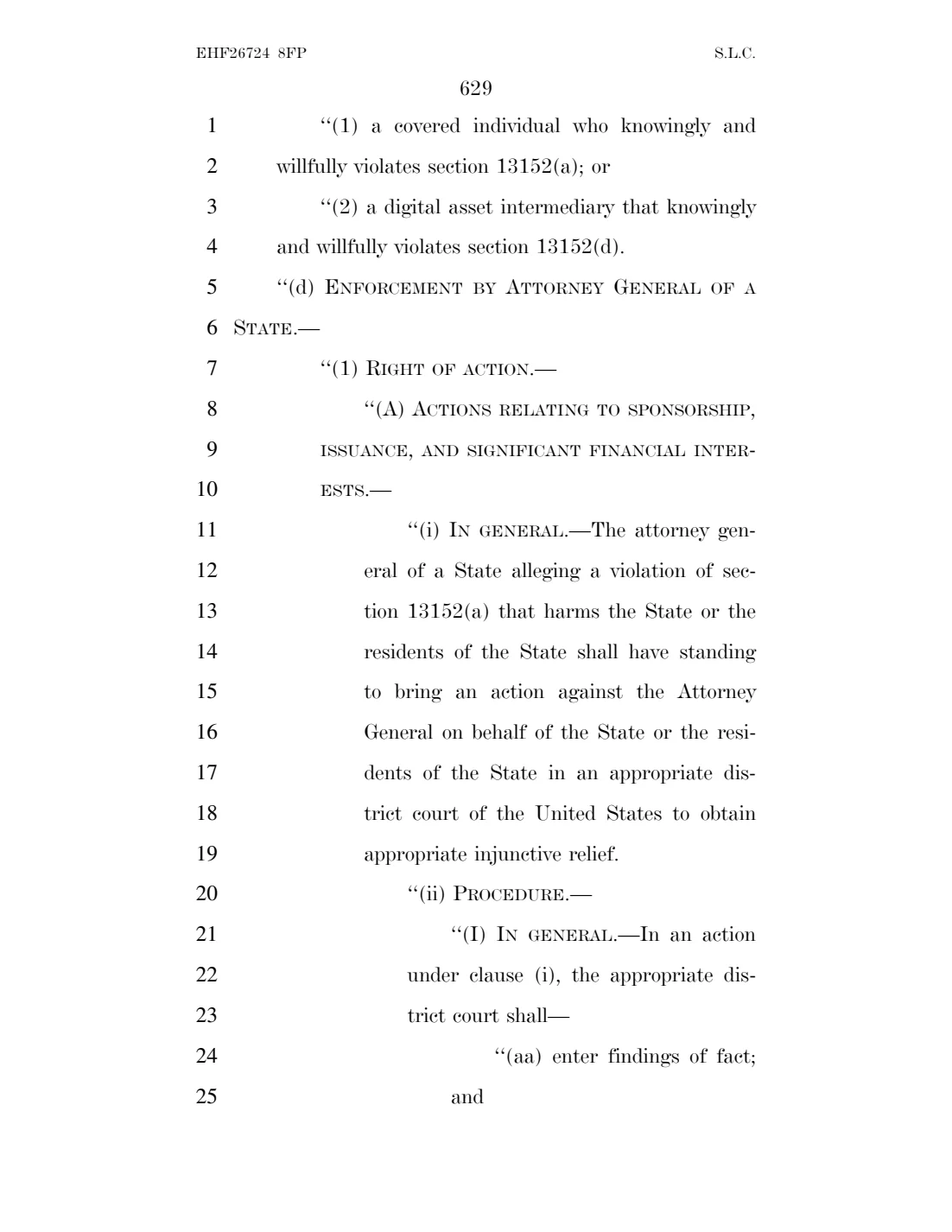
The revised text gives state attorneys general standing to seek injunctions when alleged violations harm their state or its residents. For alleged breaches by covered individuals, the action is brought against the federal attorney general. That procedure sends factual findings from the district court to the full federal appeals court for legal conclusions and judgment. A separate district-court route covers intermediaries that list assets in breach of the listing ban.
That structure puts an additional enforcement route into the legislation. The sponsors identify state involvement as a central part of the revised ethics agreement.
Stablecoin rewards get a deposit safeguard
The sponsors’ summary of changes describes a trigger tied to community-bank deposits. If the Treasury secretary makes a written finding of deposit flight on a substantial scale, Treasury must issue rules restricting rewards available to holders of payment stablecoins. That authority expires 18 months after enactment.
For stablecoins, the proposal connects the debate over rewards to the funding base of smaller banks. It makes a Treasury finding the trigger for intervention.
The package also extends the Blockchain Regulatory Certainty Act’s protections to miners and validators, preserves a civil safe harbour for developers, and revises safeguards governing affiliate trading and conflicts of interest at digital-commodity intermediaries.
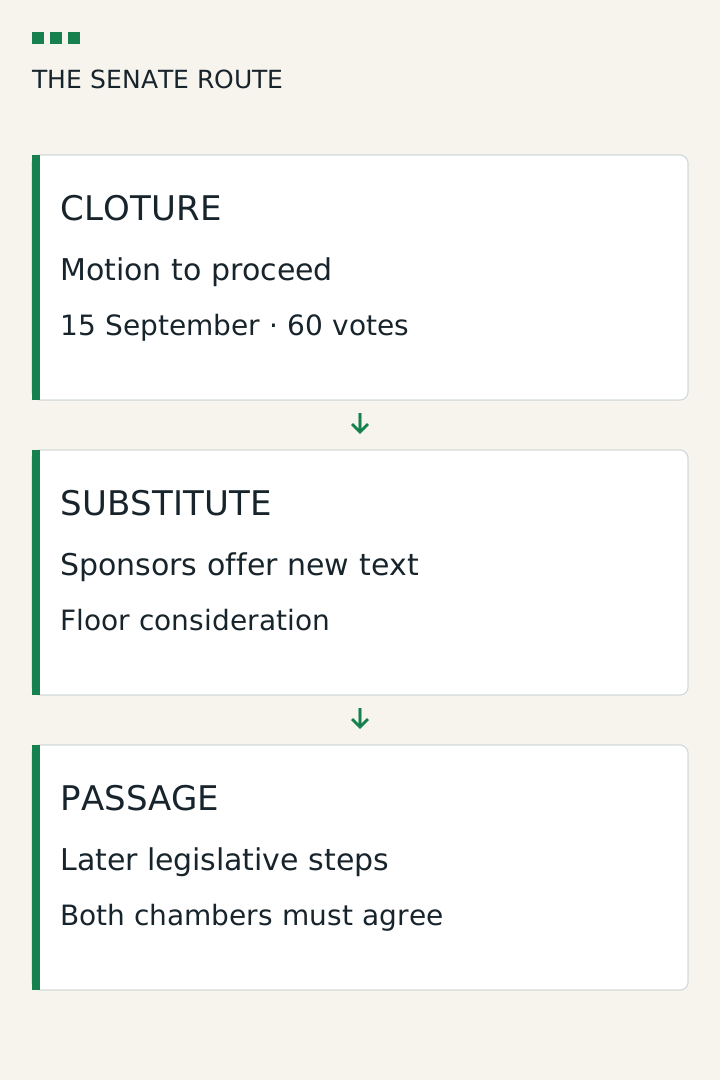
The immediate test is Tuesday’s 60-vote threshold. Clearing it would give the Senate a route to debate the revised market rules and the ethics bargain together.
Sources
- Lummis: final CLARITY Act text and releaselummis.senate.gov
- Senate draft EHF26724, 635 pageslummis.senate.gov
- Senate sponsors: changes in the final textlummis.senate.gov
- Senate Democratic Caucus: September floor scheduledemocrats.senate.gov
- US Senate: cloture rulessenate.gov