
Solana and XRP ETFs
how they list without individual approval
Key facts
- 17 Sep 2025generic listing standards
- Approved
- 6 monthson a regulated market
- Futures test
- ~$1.24bneight funds, 18 Sep 2026
- Spot Solana
- ~$1.62bnsix funds, 18 Sep 2026
- Spot XRP
- 28 Oct 2025Bitwise BSOL, with staking
- First out
The SEC stopped approving crypto ETFs one at a time on 17 September 2025. Exchanges now list any commodity trust meeting generic criteria, and the Solana and XRP funds walked straight through: a late-October wave of Solana products with staking built in, an XRP wave in November, and around $2.9bn across the spot products a year on.
Spot Bitcoin ETFs needed a decade of rejections, a court defeat for the SEC and a one-by-one approval process. Spot Solana and XRP ETFs needed none of that, because by the time they arrived the process itself had been replaced. On 17 September 2025 the SEC approved generic listing standards for commodity-based trust shares on Nasdaq, Cboe BZX and NYSE Arca, and any product meeting the criteria now lists without its own Commission approval order. The Solana and XRP funds were the first big beneficiaries. Figures below are as of 18 September 2026.
The rule that opened the door
The change is procedural, which is exactly why it is powerful. Under the approved exchange rules, a commodity trust that meets the generic criteria lists under rule 19b-4(e), “without first submitting a proposed rule change with the Commission”, in the order’s words. The gate the SEC used to keep, a bespoke rule filing and approval for every product, exists now only for products that fail the criteria.
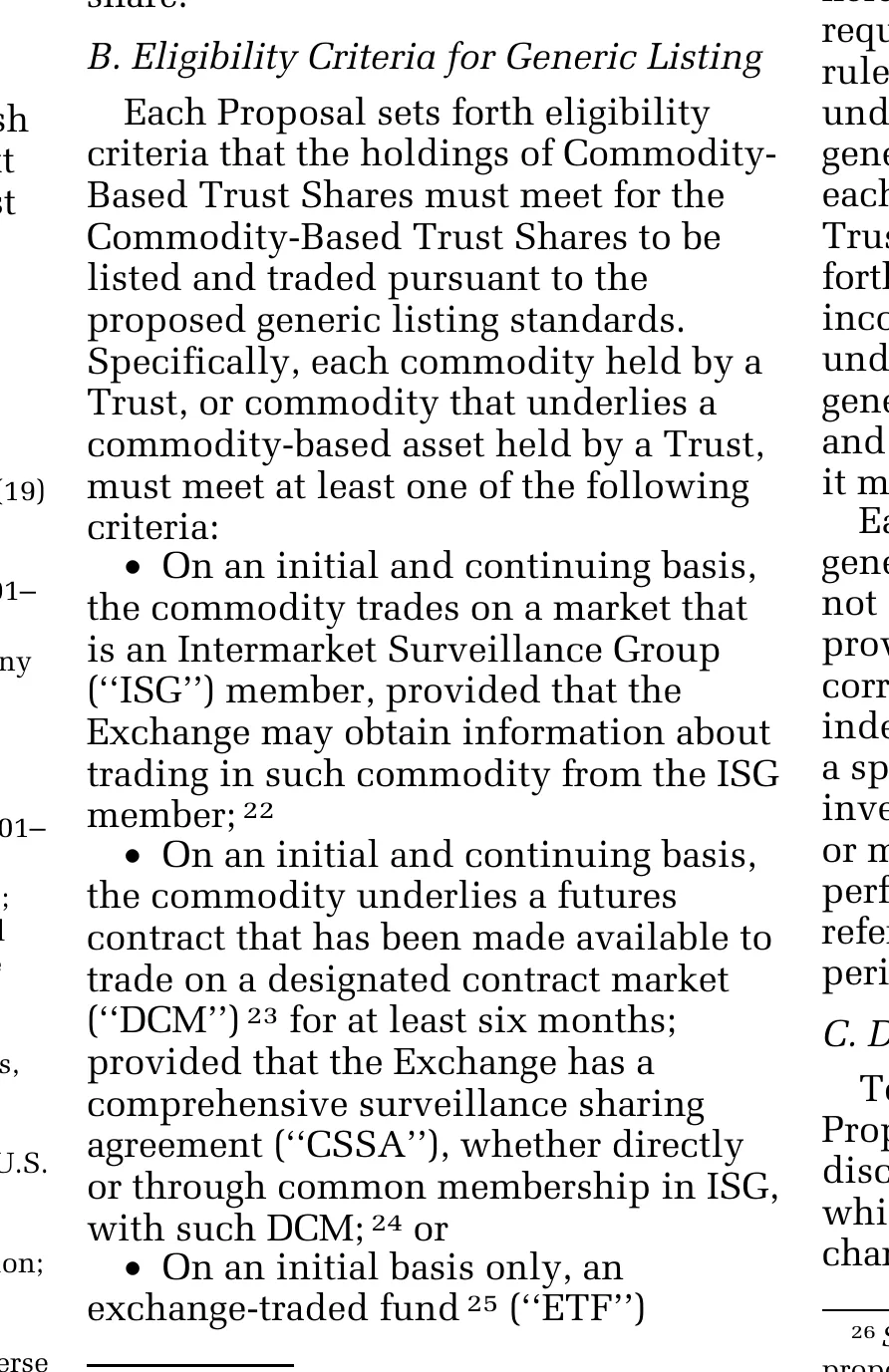
A commodity qualifies by meeting one of three tests:
| Route | The test |
|---|---|
| Surveillance | The commodity trades on a market in the Intermarket Surveillance Group |
| Futures | Its futures have traded on a regulated US contract market for at least six months, with surveillance sharing |
| Look-through | An existing exchange-traded fund gives at least 40% exposure to it |
The futures route is the one Solana and XRP walked through: both underlie CME futures contracts, which is also the fact the regulators later leaned on when they named both as digital commodities. One step survives per fund: a registration statement must still go effective with the SEC, so issuers file and answer comments on an S-1 as ever. What disappeared is the per-product exchange-rule approval that used to take months and could always come back “no”.
The first wave, fund by fund
One nuance keeps trackers honest: two legal routes produced “Solana ETFs” and “XRP ETFs”, and they are different animals. REX-Osprey used the older 1940 Act fund structure, holding crypto through a subsidiary, which is how its SSK Solana staking fund traded first of all on 2 July 2025, and how its XRPR listed on Cboe on 18 September 2025, billed in its own release as among “the first U.S.-listed exchange-traded funds to provide investors with spot exposure” to XRP. The commodity-trust products under the new generic standards, direct spot holdings in a grantor trust, arrived from late October:
| Fund | Issuer | Listed |
|---|---|---|
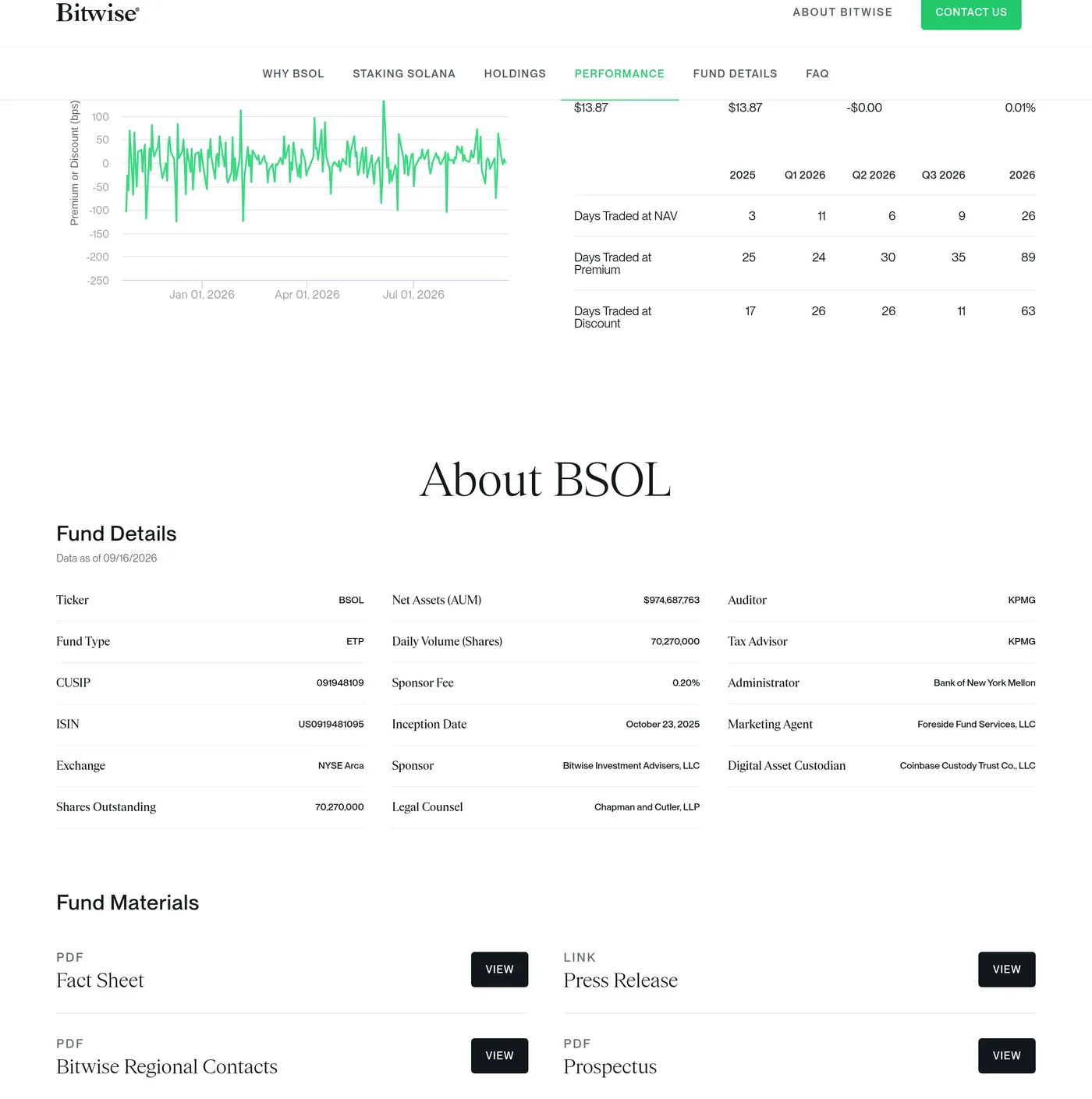
| BSOL, Solana staking | Bitwise | 28 Oct 2025 |
| GSOL, Solana staking | Grayscale | 29 Oct 2025 |
| VSOL, SOEZ, TSOL, FSOL | VanEck, Franklin, 21Shares, Fidelity | Nov-Dec 2025 |
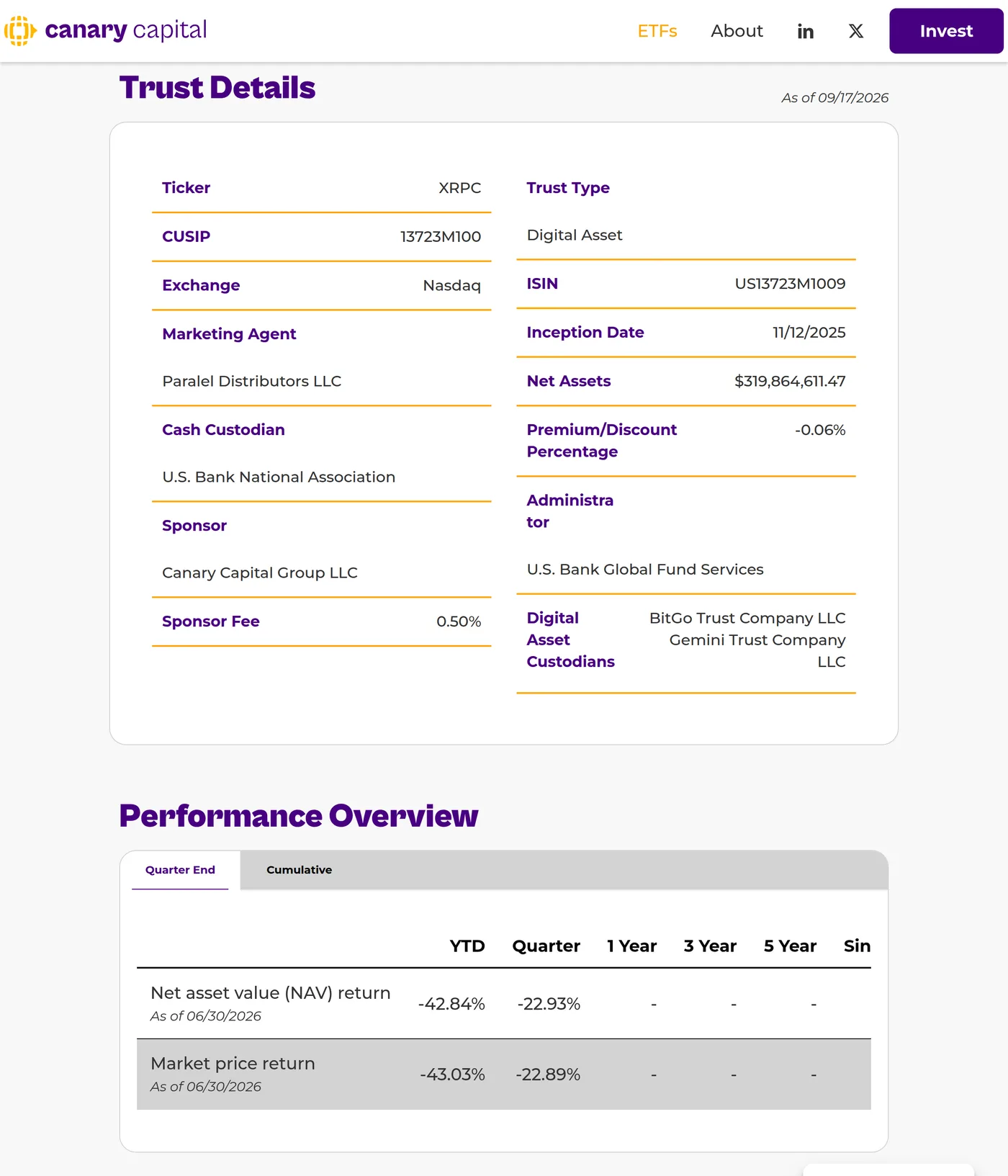
| XRPC | Canary | Nov 2025, Nasdaq |
| XRP | Bitwise | 20 Nov 2025, NYSE |
| GXRP | Grayscale | 24 Nov 2025, NYSE Arca |
Bitwise’s BSOL launch release states the claim precisely: “the first ETP in the U.S. to have 100% direct exposure to SOL”, at a 0.20% fee. The wave kept rolling past the two headline assets: 21Shares listed a Dogecoin fund in January 2026 and Canary a Sui fund in February 2026, each through the same generic gate, along with Litecoin and HBAR products. That is the real story of the standards: the list of spot crypto ETFs now grows without news, because listing stopped being a decision.
Staking came built in
The Solana products arrived with a feature the Bitcoin funds never had. BSOL “aims to stake 100% of the Fund’s SOL holdings”; Grayscale’s GSOL passes 77% of staking rewards to investors on a net basis. The legal cover arrived in stages: the SEC’s July 2025 order permitting in-kind creations and redemptions for crypto ETPs, and then the March 2026 digital commodity release, whose staking analysis concludes that protocol staking as described involves no securities offering. In-kind mechanics have been added fund by fund through 2026 in the issuers’ own filings, so the plumbing of these products now matches the commodity funds they were modelled on.
A year in, the funds hold about $2.9bn
A year on, the spot products hold about $2.9bn between the two assets, on data-provider figures dated 18 September 2026. On the Solana side, roughly $1.24bn across eight funds, with Bitwise’s BSOL dominant, $942m on the provider’s count and $974,687,763 on Bitwise’s own page dated 16 September 2026, and Grayscale’s GSOL next at $157m. On the XRP side, roughly $1.62bn across six funds, spread flatter: Bitwise’s XRP at $538m, Franklin’s XRPZ at $407m, Canary’s XRPC at $363m on the provider’s count and $319,864,611 on Canary’s own page dated 17 September 2026. Those figures are dated observations from the data provider Stock Analysis and the issuers’ own pages rather than regulator totals, and they move daily; the shape they show is stable, a Solana market led by one staking fund and an XRP market split across several.
Why “is XRP a security” stopped blocking this
The listing standards answered, in practice, a question the agencies only formalised later. By admitting any commodity whose futures trade on a regulated US market, the SEC’s own rule treated SOL and XRP as commodities in September 2025; the joint SEC-CFTC interpretive release of 17 March 2026 then said so in words, naming both in its list of example digital commodities. The Ripple litigation had closed the month before the standards arrived, with the cross-appeals dismissed and the final judgment standing. A reader wanting that full story should take it in order: what a digital commodity is, then the CLARITY Act, which would write the same classification into statute and stalled in the Senate on 15 September 2026.
What to watch from here
The generic standards turned listing from an event into a filing, so the things worth watching are no longer approvals. Watch the flows, which decide whether the November tail of funds survives its fee waivers; watch the staking yields, which are the Solana products’ actual selling point against holding the token; and watch the S-1 queue, because the next asset with six months of CME futures behind it lists the same way, with nobody’s permission required.
More Crypto
All Crypto →
SEC ETF Decisions Delayed Again
SEC ETF decisions delayed to October, affecting Truth Social, Solana, and XRP crypto ETFs.
Altcoin ETF wave hits: Solana, XRP, SEI and even MOG
A month after the SEC streamlined spot-crypto ETF listings, the U.S. market is seeing a genuine altcoin rush.
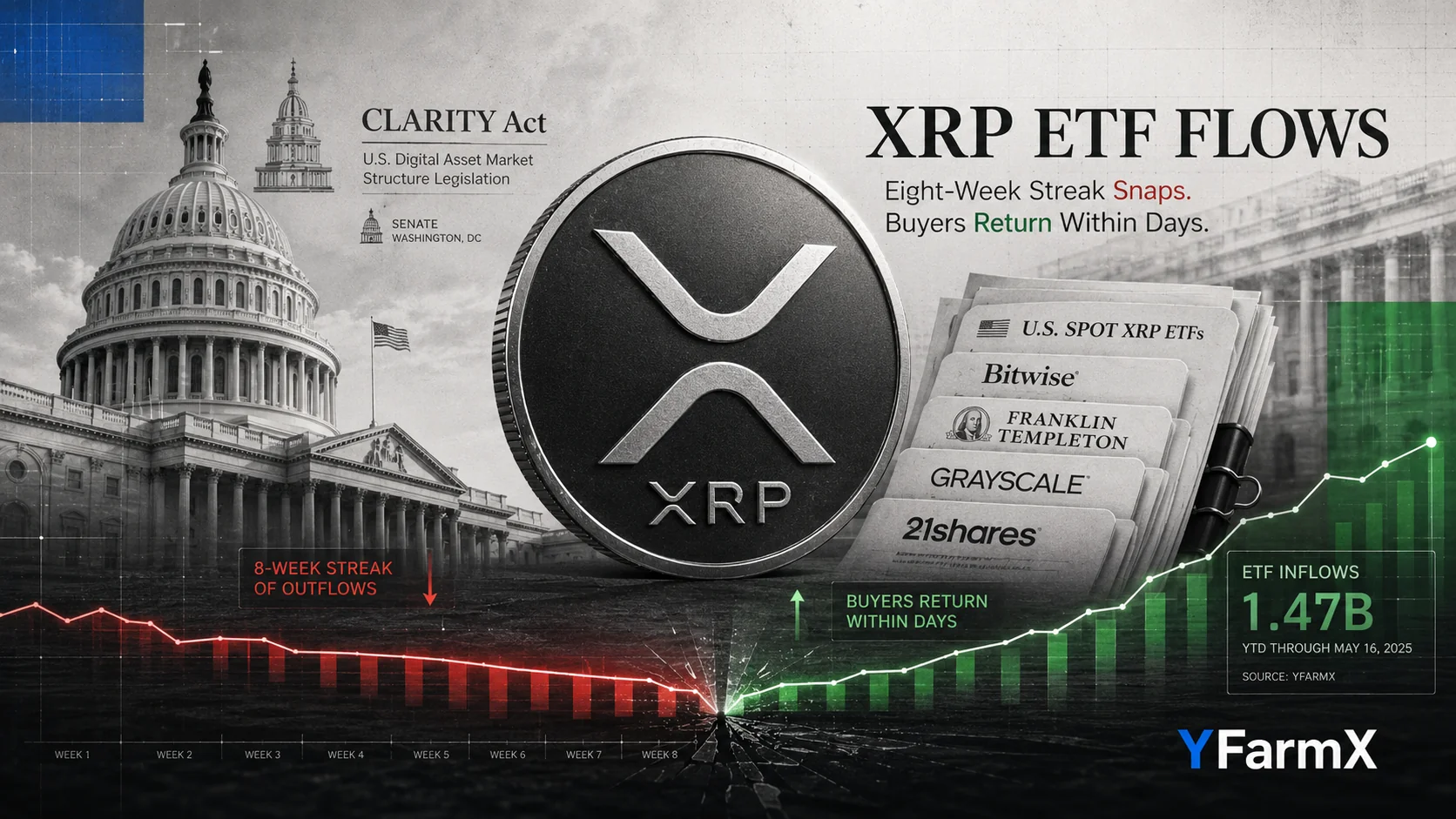
XRP ETF flows: an eight-week streak snaps, then buyers return within days
Watching XRP ETF flows this month has been an education in how quickly a narrative can wobble and re-form.
Related pages
All Investing & Markets →- Spot Bitcoin ETFsFund shares, bitcoin holdings and dated investment flows
- What is a digital commodity?the joint release that named sixteen tokens
- The CLARITY Actthe bill the whole market is waiting on
- Tokenised real-world assetsConventional assets represented by blockchain tokens
- Bitcoin treasury companiesStrategy, Metaplanet and the reflexivity problem
- Crypto security in 2026thefts, permissions and custody