
Bitcoin Cash
the fork that kept the cash ambition
Key facts
- #22by market value
- Rank
- Layer 1Bitcoin fork, payments
- Type
- 2017fork of Bitcoin
- Launched
- 21m capsame as Bitcoin
- Supply
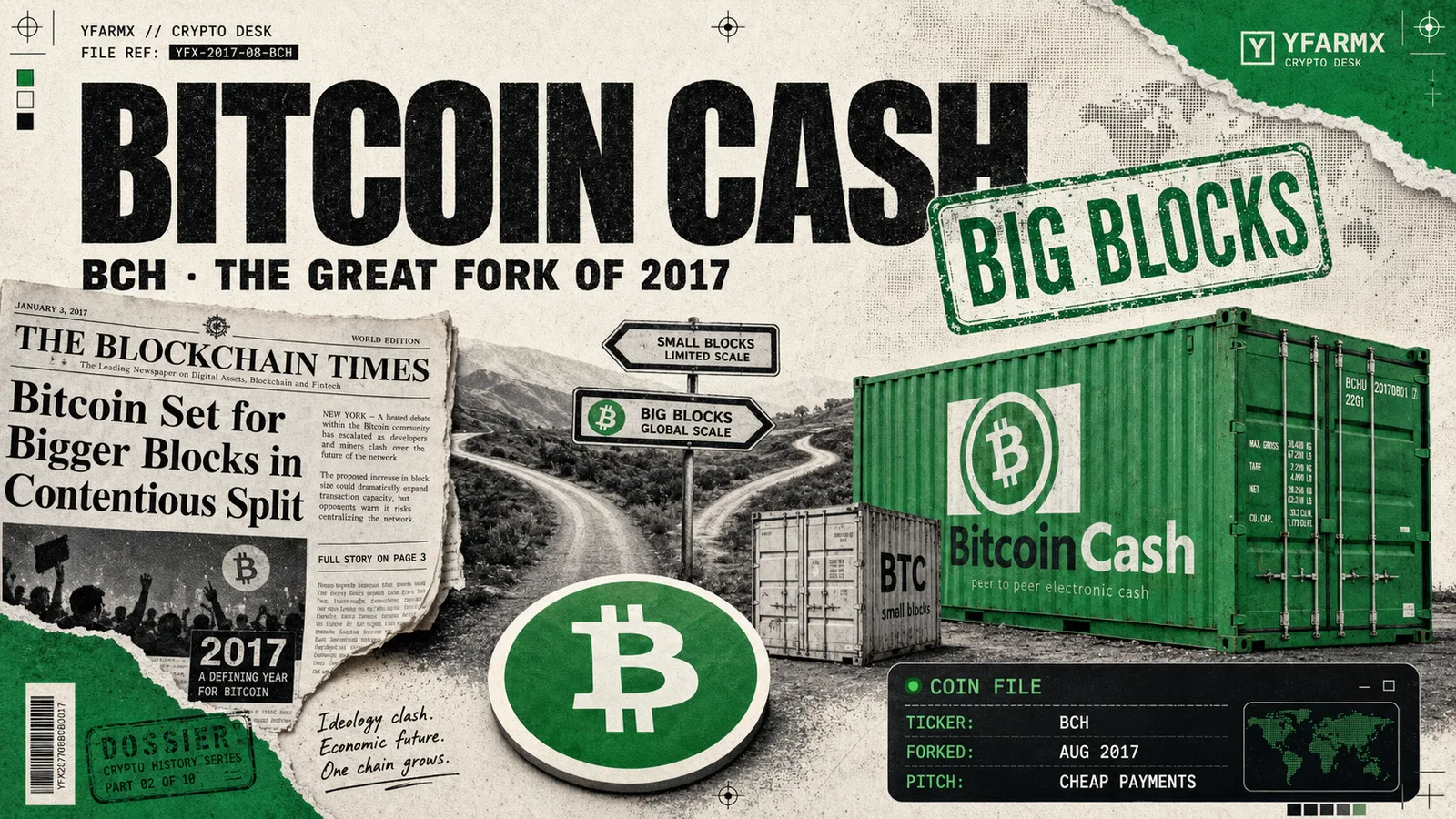
Bitcoin Cash (BCH) split from Bitcoin in 2017 over block size, betting on bigger blocks and cheap everyday payments with the same 21 million cap.
What it is
Bitcoin Cash is what happened when the Bitcoin community’s argument about its own future could no longer be contained. On 1 August 2017 the network split in two over a single question: should Bitcoin’s blocks stay small, keeping the network easy to run but pushing fees up, or grow larger so it could serve as everyday electronic cash? Bitcoin Cash took the second path. The memorable fact: everyone holding bitcoin at the moment of the split automatically received an equal amount of BCH, making it one of the largest free distributions of an asset in financial history.
How it works
Bitcoin Cash keeps almost all of Bitcoin’s machinery. It uses the same proof-of-work mining, in which computers compete to solve puzzles and the winner adds the next block of transactions, the same 21 million coin cap, and the same halvings, scheduled events that cut the rate of new coin creation in half roughly every four years, most recently in April 2024. The difference is capacity. Bitcoin Cash raised its block size limit to 32 megabytes against Bitcoin’s original one, so it can process many more transactions per block and fees stay at fractions of a penny. It also runs its own difficulty adjustment to keep blocks arriving steadily despite sharing mining hardware with Bitcoin, and the 2023 CashTokens upgrade added support for tokens and more capable contracts.
The story so far
The 2017 split concluded years of increasingly bitter debate known as the block size wars. The habit proved catching: Bitcoin Cash itself split in November 2018, when the Bitcoin SV faction departed, and again in November 2020, producing eCash. Through all of it the project has kept shipping scheduled upgrades and holding to its founding reading of the Bitcoin whitepaper, which it hosts on its own site, that the system was meant to be peer-to-peer electronic cash. The uncomfortable counterweight is the market’s verdict: BCH has traded at a small fraction of Bitcoin’s value for its entire existence, and merchant adoption, while real, has stayed modest.
Where it stands
On 13 October 2026 at 01:46 UTC, BCH traded at $265.18, with a market value of about $5.33 billion and a rank of 22 among the assets tracked by CoinGecko. What to watch next: whether payment usage grows in markets where card fees bite hardest, how the mining economics evolve as block rewards keep halving, and whether CashTokens attracts developers. Bitcoin Cash remains the most durable expression of the losing side of Bitcoin’s greatest argument, and as of September 2026 it is still here, still cheap to use, and still making its original case.
More Crypto
All Crypto →
Ex-Twitter Jack Dorsey’s Block Brags 10 Million Cash App Bitcoin Account Purchases
As of the first quarter of 2022, Block, previously known as Square, generated $1.73 billion through its Cash App bitcoin sales.
Block Unveils Square Bitcoin
Square Bitcoin debuts as Block’s first fully integrated bitcoin payments and wallet solution for local businesses.
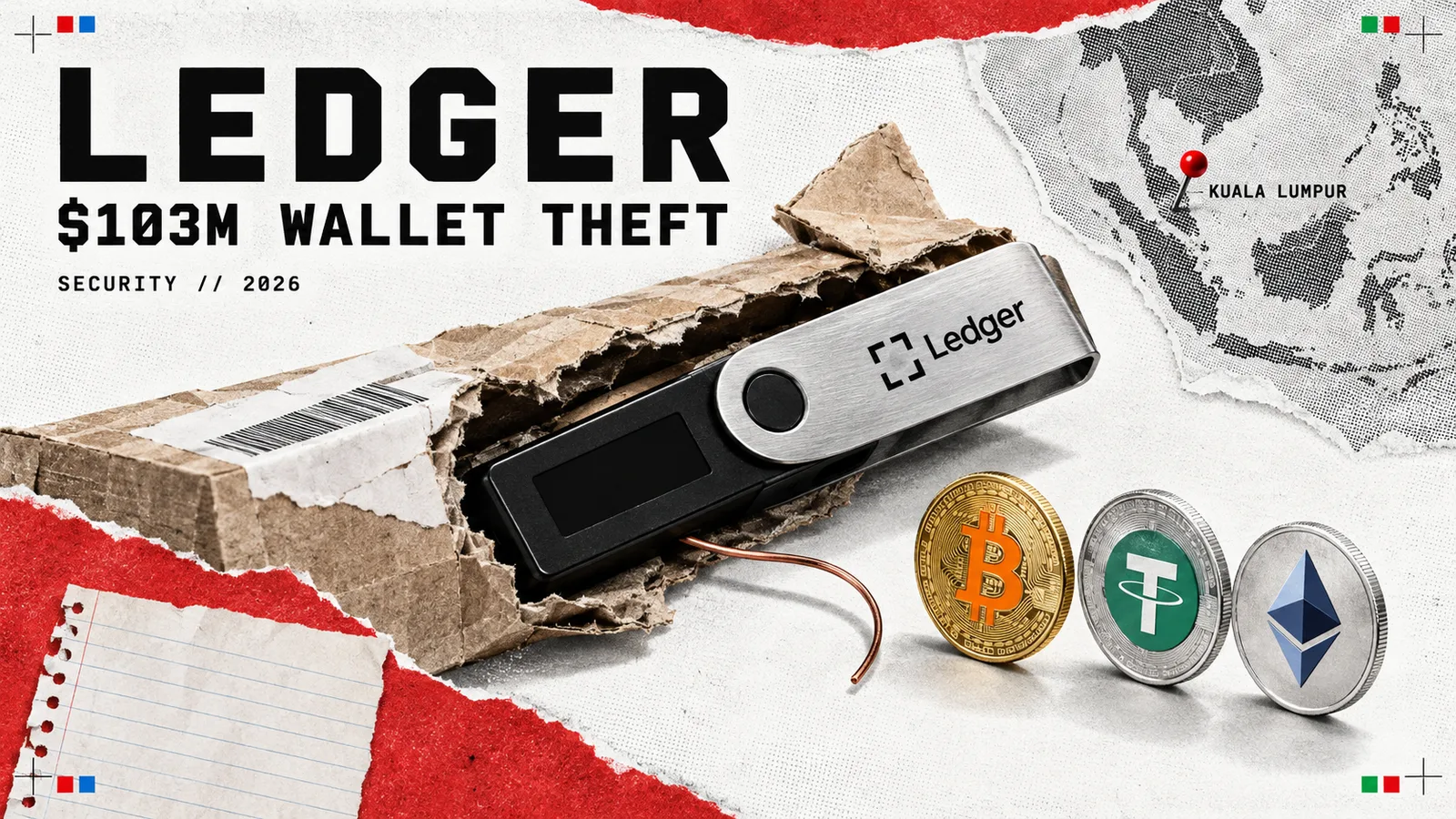
Ledger asks reseller to pause sales after $103m wallet theft
A thief holding the victims' keys took $103.4m from 530 addresses on seven chains, most of it on 9 October 2026. Ledger has paused its reseller CryptoBilis. The thief is still moving the money through THORChain, Tornado Cash and Zcash, and the trace continues.