
Digital Asset
Canton
the privacy-enabled chain built for institutions
Key facts
- #24by market value
- Rank
- Layer 1privacy-enabled, institutional
- Type
- 2024Digital Asset
- Launched
- Uncappedburn-mint equilibrium
- Supply
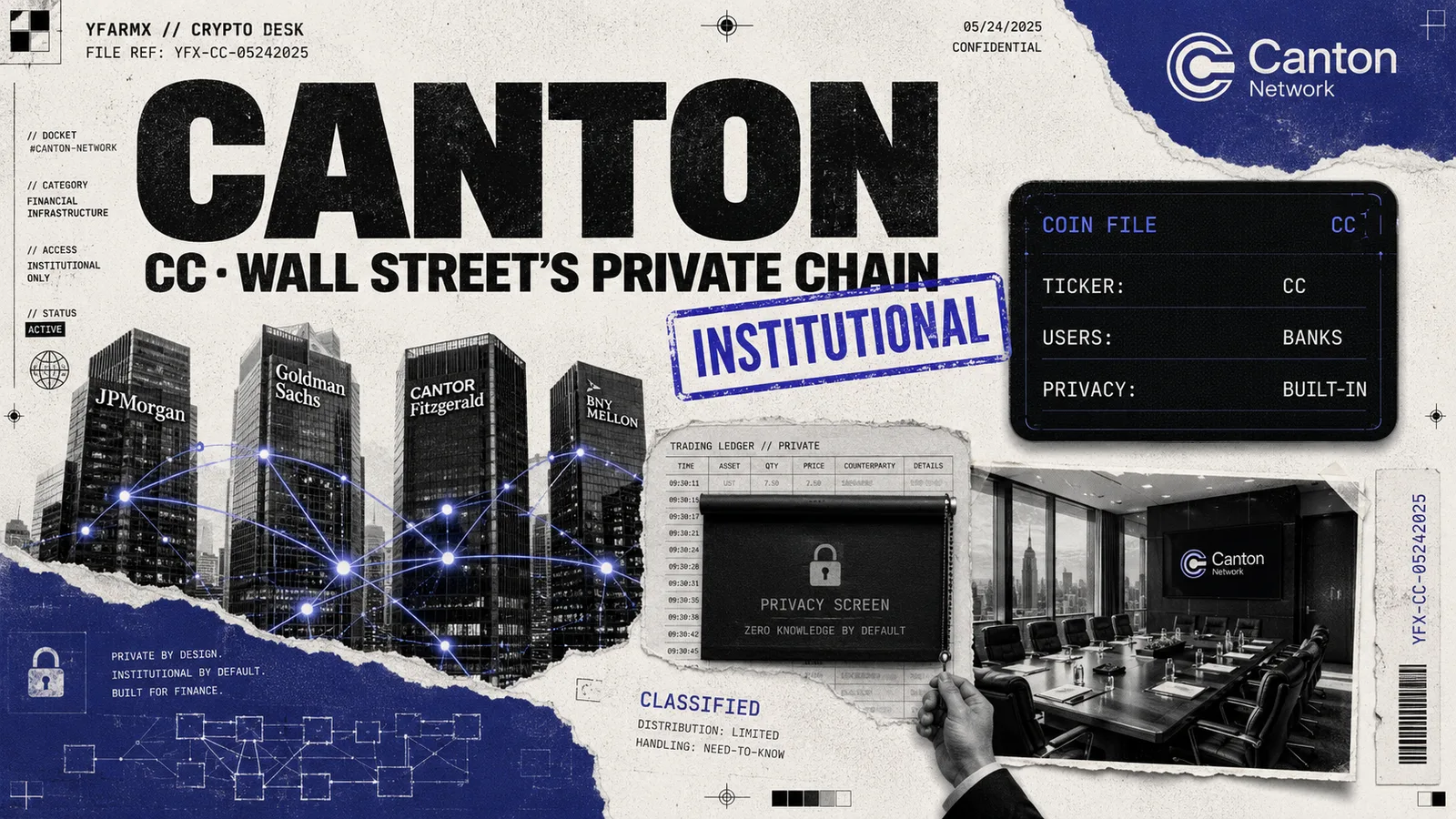
Canton Coin (CC) powers the Canton Network, a privacy-enabled blockchain for financial institutions built on Digital Asset's technology.
What it is
Canton is a blockchain built for banks and market institutions rather than retail traders. It describes itself as the first privacy-enabled open blockchain network: public enough that anyone can build on it, private enough that a bank’s trades are not visible to the world. The network grew out of Digital Asset, the New York fintech founded in 2014 that created the Daml smart-contract language, and its mainnet went live in 2024. The memorable fact, from the Canton Coin whitepaper: there was no pre-mine, no pre-sale and no allocation to founders or venture funds. Every coin in existence was earned by doing work for the network.
How it works
Most public blockchains publish every transaction for anyone to read. Canton takes the opposite approach: applications keep their own ledgers, only the parties to a transaction can see it, and a shared piece of infrastructure called the Global Synchronizer keeps everything consistent across applications. Canton Coin (CC) is the network’s payment and fee instrument. Fees paid in CC are burned, meaning permanently destroyed, while new coins are minted as rewards to those who add utility: the super validators who run the synchroniser, ordinary validators, and the builders of applications. Supply is uncapped but follows a pre-defined issuance curve, a model the project calls burn-mint equilibrium, so coin creation tracks network activity rather than a marketing schedule.
The story so far
Digital Asset spent years supplying smart-contract technology to institutions before proposing, in 2023, a shared network to connect those systems. The Global Synchronizer mainnet went live in 2024 with rewards initially weighted towards infrastructure operators, shifting over time towards applications and users. The roster of participants is the project’s calling card: according to the Canton Network’s own site, DTCC has worked on tokenising US Treasury securities, HSBC completed a tokenised-deposit pilot, and S&P has worked on a tokenised Treasury index. In 2025 Digital Asset raised $135 million to accelerate the network’s growth, and the coin became widely tradable, carrying an institutional experiment into public markets.
Where it stands
On 13 October 2026 at 01:46 UTC, CC traded at $0.1208, with a market value of about $4.81 billion and a rank of 24 among the assets tracked by CoinGecko. What to watch next: whether the marquee pilots convert into daily settlement volume, how the reward split keeps shifting towards applications through 2029, and whether privacy-preserving design becomes the template regulators prefer for tokenised finance. Canton’s wager is that the biggest blockchain prize is not retail speculation but the plumbing of the existing financial system, and as of September 2026 that wager is still being tested.