
iFinex
LEO Token
the buy-back-and-burn exchange token
Key facts
- #18by market value
- Rank
- Exchange tokenBitfinex utility token
- Type
- 2019by iFinex
- Launched
- 1bn initialshrinks with burns
- Supply
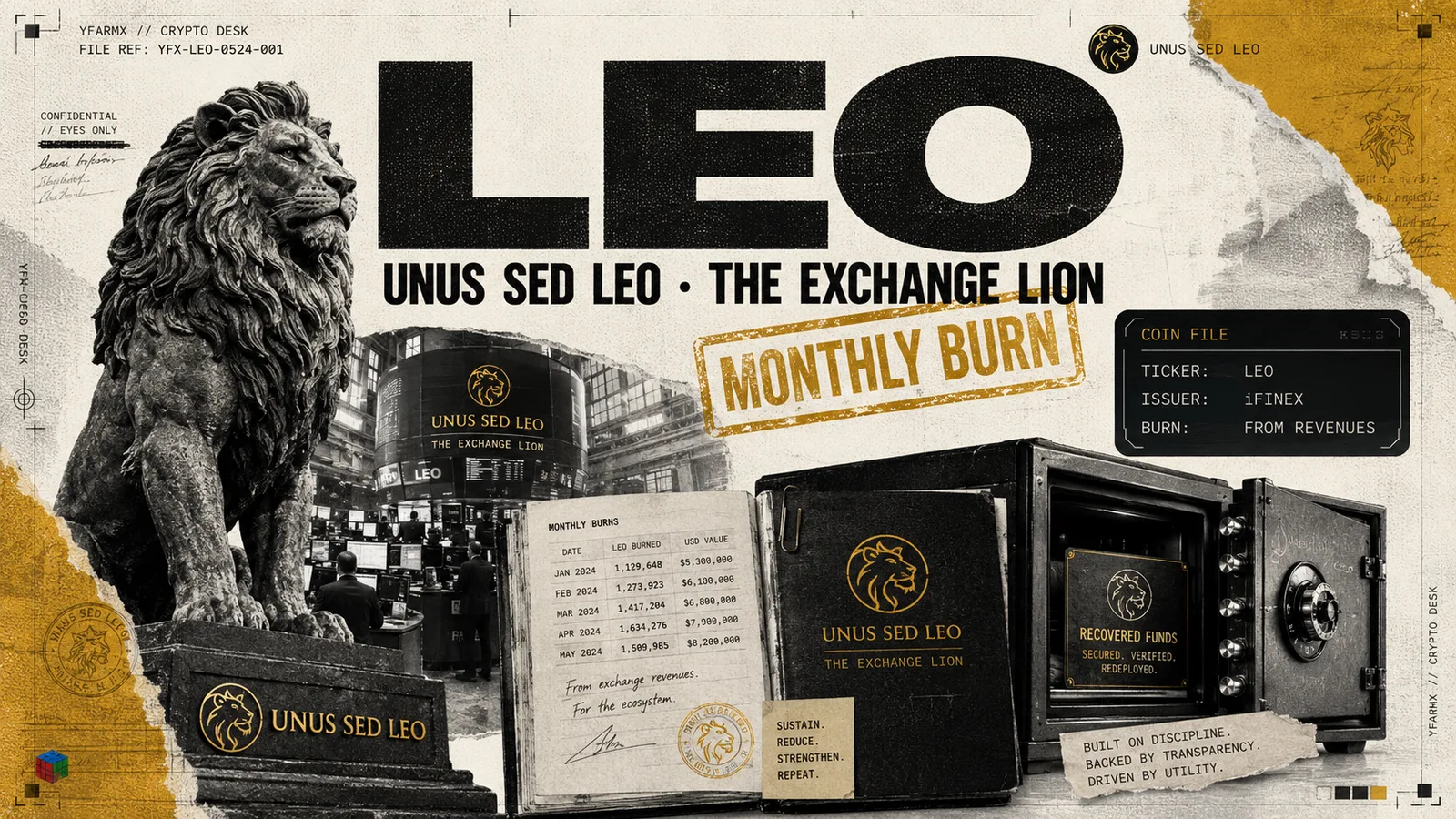
UNUS SED LEO is the exchange token of iFinex, Bitfinex's parent, created in 2019 and bought back and burned monthly from company revenues. It had about $8.19 billion in market value, rank 18, on 13 October 2026.
What it is
UNUS SED LEO, traded as LEO, is the exchange token of iFinex, the parent company of Bitfinex and a sister company of the Tether stablecoin issuer. It was created in May 2019 in a moment of crisis: $850 million of funds held for the group by a payment processor, Crypto Capital, had been frozen by authorities in several countries, and iFinex raised $1 billion in a private token sale to plug the gap. The name comes from Aesop’s fables, “one, but a lion”. One memorable fact: LEO is designed to disappear, since its issuer is committed to buying back and destroying every token in existence.
How it works
LEO’s day-to-day utility is a discount: holders pay reduced trading and other fees on Bitfinex, scaled by how much LEO they hold. The economic engine is the burn. The whitepaper commits iFinex to spend an amount equal to at least 27% of its consolidated gross revenues, every month, buying LEO on the market and destroying it, until no tokens remain. It adds a contingency that ties the token to the group’s misfortunes: at least 95% of net funds recovered from Crypto Capital, and at least 80% of net funds recovered from the 2016 Bitfinex hack, must also go to buy-backs within 18 months of recovery. The token exists on both Ethereum and EOS.
The story so far
The 2016 hack shadows the whole story. Around 120,000 bitcoin were stolen from Bitfinex, and in 2022 the US Department of Justice seized roughly 94,000 of them, its largest financial seizure at the time, arresting the couple later convicted of laundering the coins. Proceedings over returning assets to Bitfinex have continued since, and the whitepaper’s 80% clause means any large return would oblige historic amounts of LEO buying. The Crypto Capital affair itself fed into a 2021 settlement with the New York Attorney General, in which Bitfinex and Tether paid $18.5 million without admitting wrongdoing and stopped serving New York customers.
Where it stands
On 13 October 2026 at 01:46 UTC, LEO traded at $8.9, with a market value of about $8.19 billion and a rank of 18 among the assets tracked by CoinGecko. What to watch is unusually specific: the fate of the recovered hack bitcoin, since a court-ordered return to Bitfinex would trigger the whitepaper’s buy-back commitments at a scale the token has never seen. Until then, LEO trades as a claim on one private company’s revenues, steadier than most of crypto, and wholly dependent on trust in iFinex.