
What is a qubit?
the unit that makes quantum computing different
Key facts
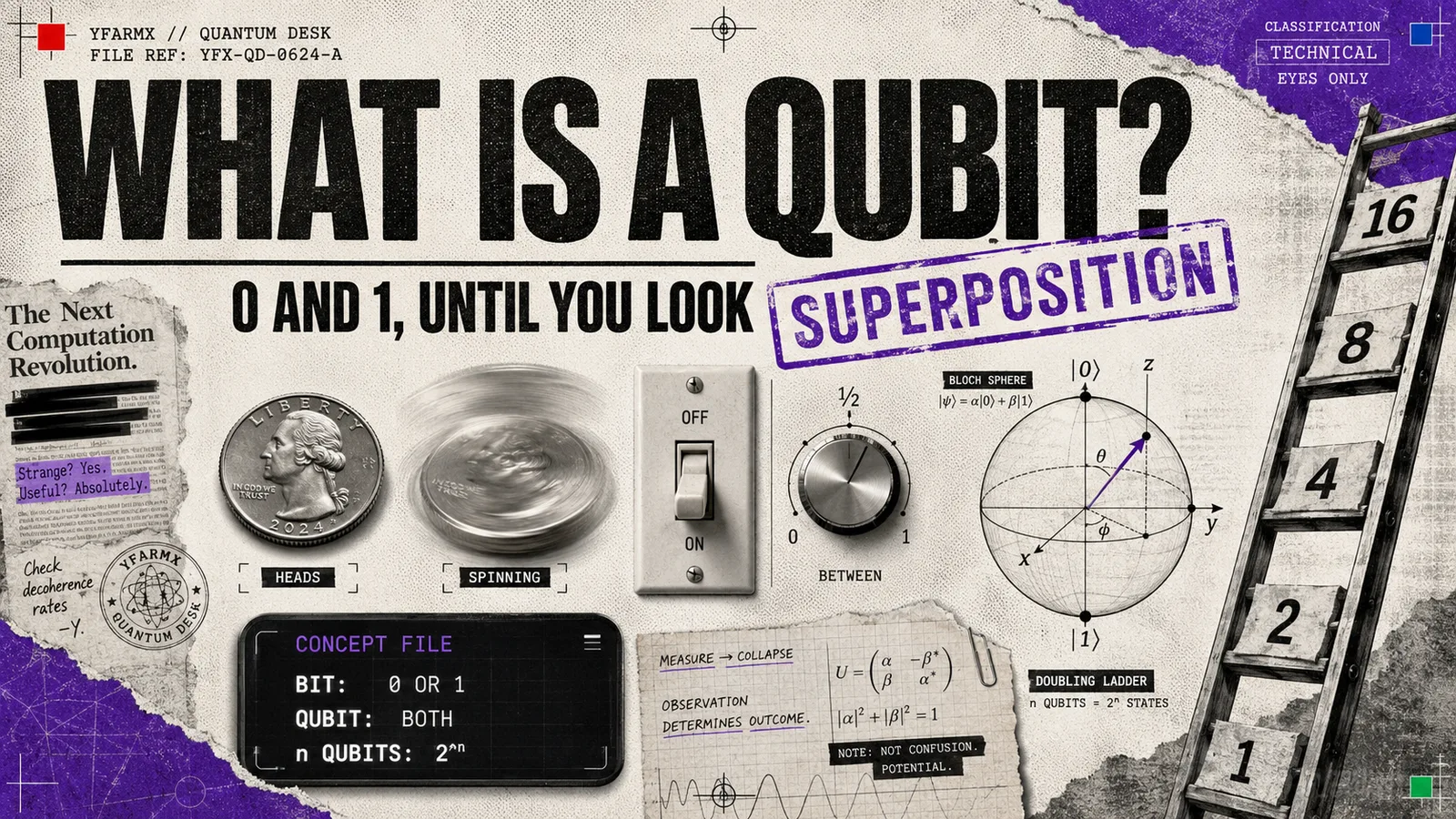
- 0 or 1one value at a time
- Classical bit
- Bothuntil measured
- Qubit
- 2ⁿamplitudes at once
- n qubits hold
- You get 1single classical answer
- Read it and
A normal bit is a coin lying flat: heads or tails. A qubit is that coin spinning. While it spins it is genuinely both, and it only becomes one answer when you slam your hand down and look.
Everything a normal computer does rests on the bit: a switch that is either off or on, written 0 or 1. Every photograph, message and video game on your phone is ultimately billions of those switches. A quantum computer replaces the bit with the qubit, and the difference between them is where all the strangeness, and all the potential, comes from.
What makes it different
A classical bit is definitely one thing. A qubit, while it is being computed with, holds a blend of 0 and 1 at the same time, a condition called superposition. The blend is described by two numbers, called amplitudes, that say how much of each state is present. This is not the qubit being secretly one value that we happen not to know: the blend is physically real, and the two parts can interfere with each other the way ripples on water do, reinforcing in some places and cancelling in others.
The cancellation is the useful part. A quantum algorithm is essentially a way of arranging the interference so that wrong answers cancel out and the right one is left standing.
Why it scales so steeply
One qubit carries two amplitudes. Two qubits carry four, three carry eight, and the pattern continues: n qubits carry 2ⁿ amplitudes at once. At 300 qubits, that count exceeds the number of atoms in the observable universe. Storing a general state vector therefore becomes extremely expensive as the qubit count grows. Structured circuits can be much easier: stabilizer simulations can handle thousands of qubits.
The catch
You cannot read all of it. Measuring a qubit forces it to settle on a single answer, 0 or 1, with a probability set by the amplitudes, and the rest of the information is gone. A quantum computer therefore does not hand you 2ⁿ answers; it gives you one, and the whole art is designing the computation so the answer you get is the one you wanted.
There is a second catch. Qubits are exquisitely fragile. A stray vibration, a photon of heat or a fluctuating magnetic field disturbs the delicate blend, an effect called decoherence, and the calculation degrades into error. Superconducting qubits need shielding and temperatures near absolute zero; some photonic computers operate at room temperature. Error correction addresses the loss of quantum information across different hardware approaches.
What a qubit is made of
A qubit is a role, not a material: anything with two quantum states can play it. Superconducting circuits, individual trapped ions, neutral atoms held in laser tweezers, particles of light and electron spins in silicon are all in serious use, and each trades speed against stability differently.
More Quantum
All Quantum →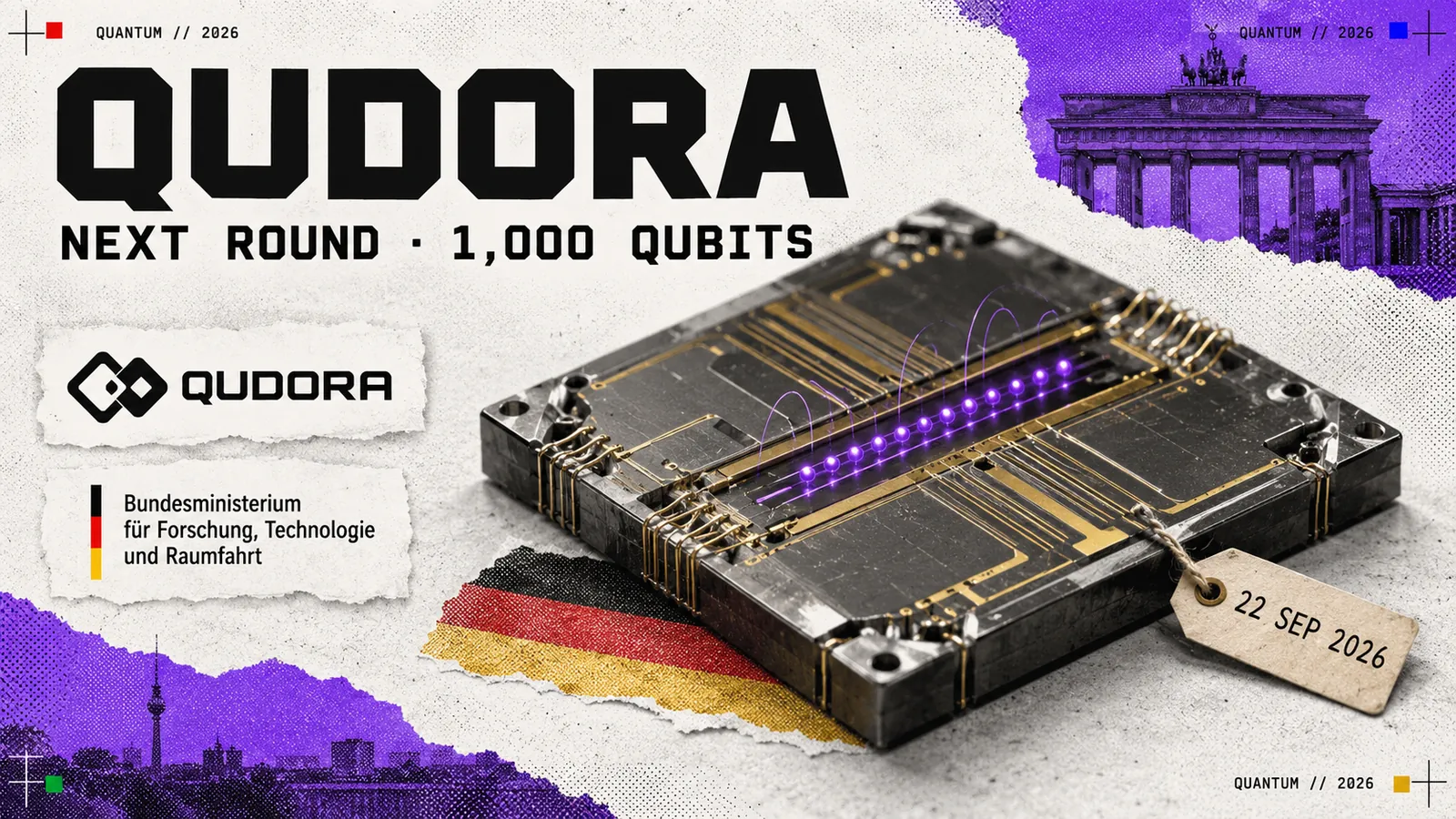
Germany's race for a 1,000-qubit quantum computer: QUDORA's team advances
Germany's research ministry has put a seven-member consortium led by the start-up QUDORA through to the next round of its contest to build a trapped-ion quantum computer with at least 1,000 physical and 50 logical qubits. The NFQC-1k project totals about €122m ($139.8m) over up to five years.
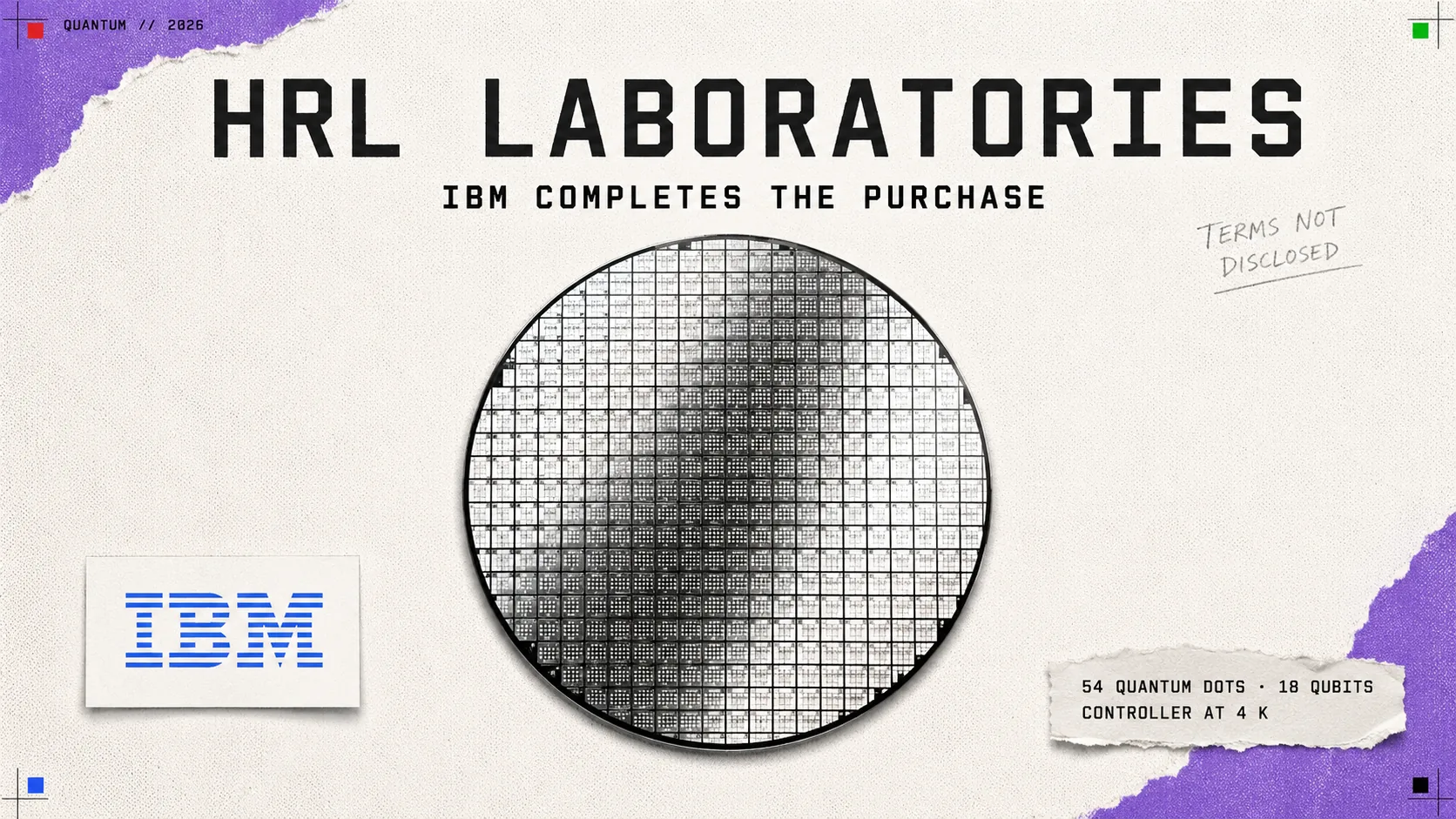
IBM has bought a second qubit technology and its published roadmap still does not mention it
IBM completed its purchase of HRL Laboratories on 26 August. The releases describe a whole second qubit modality. IBM's own quantum roadmap names spin qubits, silicon, HRL and Anderon zero times.