UK Parliament opens inquiry into banks blocking crypto firms
A cross-party group of MPs and peers has launched a six-week inquiry into UK banks refusing accounts to crypto firms and blocking crypto payments, ten weeks before the FCA authorisation gateway opens.

Listen to this articleListen
A cross-party group of MPs and peers has opened an inquiry into whether British banks are shutting crypto businesses out of the banking system.
The Crypto and Digital Assets All-Party Parliamentary Group announced the inquiry on Tuesday. It is co-chaired by Lord Vaizey of Didcot, a former government minister for the digital economy, and the Labour MP Gurinder Singh Josan CBE. The group has opened a call for written evidence that closes on 31 August 2026, from banks, payment companies, fintech firms and crypto businesses, and will then publish a report setting out findings and recommendations for the government.
Two questions sit at the centre of it. The first is access to accounts: reports that crypto firms have been refused business banking or had existing accounts closed, along with similar difficulties for the professional services around them, including insurers. The second is payment restrictions, where several major UK banks block transfers to certain crypto platforms or cap the amounts customers can send.
Lord Vaizey said the group has heard consistent reports over a number of years from crypto and digital asset businesses about difficulties accessing bank accounts and banking services. The group says it wants to establish how the restrictions are applied, whether they are proportionate to the risks banks are managing, and what effect they have on consumers, businesses, competition and innovation. Evidence is being sought from the banking and payments industry as well, so the inquiry can examine how financial institutions assess digital asset risk in the first place.
What debanking means
Debanking describes a bank refusing service to a customer, closing an account, or restricting what a customer can do with their money. Banks are required by law to manage financial crime risk, and crypto has long been treated as a higher-risk category. The argument is about whether that response has hardened into a blanket policy applied across an entire sector.
The evidence already on the table
The group begins with a substantial body of industry data behind it.
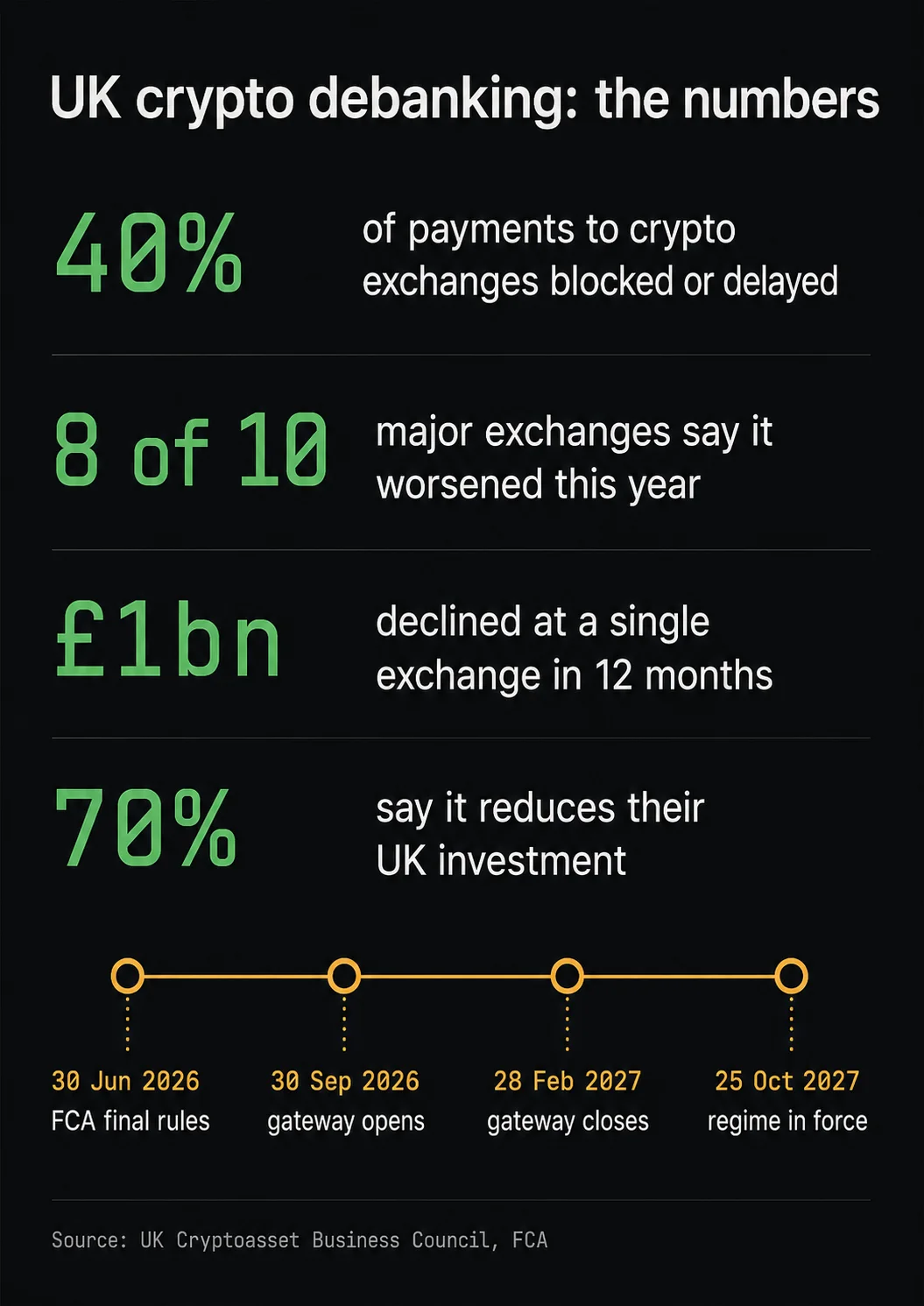
In January 2026, the UK Cryptoasset Business Council published Locked Out: Debanking the UK’s Digital Asset Economy, based on a survey of the ten largest crypto exchanges operating in Britain, including Coinbase, Kraken, OKX, Gemini and Bitpanda. It estimated that around 40 per cent of transactions destined for crypto exchanges are blocked or delayed by banks. Eight of the ten exchanges reported that the problem had grown worse over the previous year, and none reported any improvement. One exchange counted close to £1 billion in declined transactions across twelve months. Seventy per cent said bank restrictions were reducing their willingness to invest, scale and hire in the UK.
Earlier surveys pointed the same way. A 2025 study by the Startup Coalition, the UK Cryptoasset Business Council and Global Digital Finance found that half of the UK fintech and crypto firms surveyed had been rejected when trying to open a bank account.
The council has argued that blanket restrictions sit awkwardly alongside existing law, citing Regulation 105 of the Payment Services Regulations 2017, which requires payment restrictions to be assessed case by case, the FCA’s Consumer Duty, which requires firms to avoid foreseeable harm to customers, and the Competition Act 1998.
Why the timing carries weight
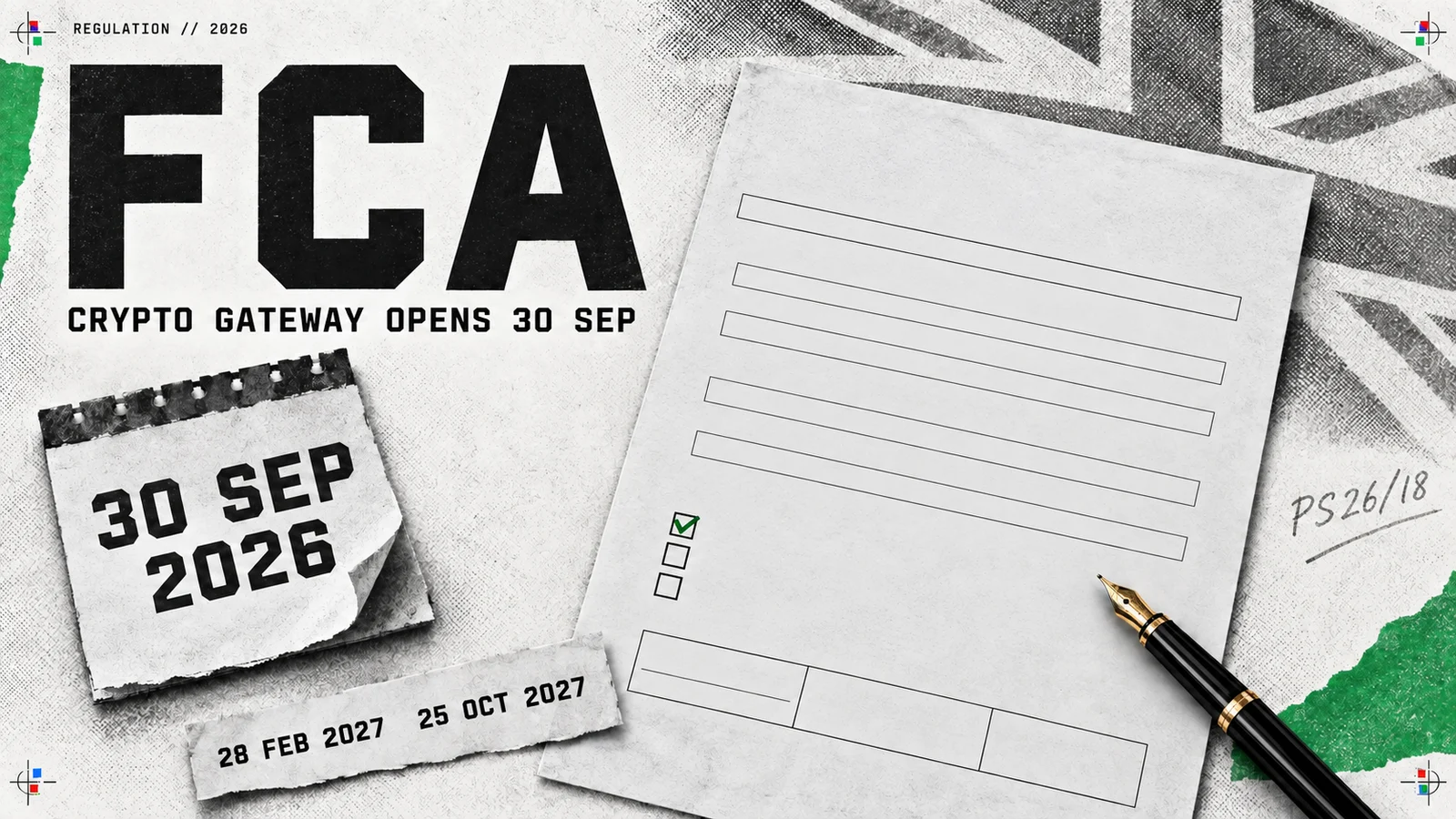
The inquiry lands in the middle of the UK’s crypto regulation timetable. The FCA published its final rules on 30 June 2026. The authorisation gateway opens on 30 September 2026 and closes on 28 February 2027, with the mandatory regime taking effect on 25 October 2027. Trading platforms, custodians, intermediaries, stablecoin issuers and firms arranging staking will all need FCA authorisation to serve UK customers.
That produces an awkward position for the sector. Firms have roughly ten weeks to prepare authorisation applications that will decide whether they can operate in Britain at all, while a good number of them struggle to hold a business bank account. Industry evidence indicates the restrictions have been applied even to firms already registered with the FCA under money laundering rules.
What the inquiry can and cannot do
An all-party parliamentary group is an informal cross-party group of parliamentarians. It holds no statutory powers, it cannot compel a bank to give evidence, and its recommendations carry no legal force. Its influence comes from publicity and from the willingness of ministers and regulators to engage with it. CryptoUK, the industry trade body, provides the group’s secretariat.
The first thing to watch is whether the banks submit evidence at all. The FCA has examined debanking before, in a 2023 report that found the most commonly reported reasons for accounts being declined, suspended or terminated were financial crime suspicion and due diligence concerns. A parliamentary report landing close to the authorisation deadline would put the question in front of ministers at a moment when the government has staked a public claim on Britain becoming a serious home for digital assets.
Sources
- FCA: A new regime for cryptoasset regulationfca.org.uk
- FCA: How the cryptoasset gateway will operatefca.org.uk
- UK Cryptoasset Business Council: Locked Out, Debanking the UK's Digital Asset Economy (January 2026)static1.squarespace.com
- CryptoUK: secretariat to the Crypto and Digital Assets APPGcryptouk.io