
Ava Labs
Avalanche
the layer 1 built from many chains
Key facts
- #28by market value
- Rank
- Layer 1multi-chain by design
- Type
- 2020by Ava Labs
- Launched
- 720mfees are burned
- Supply
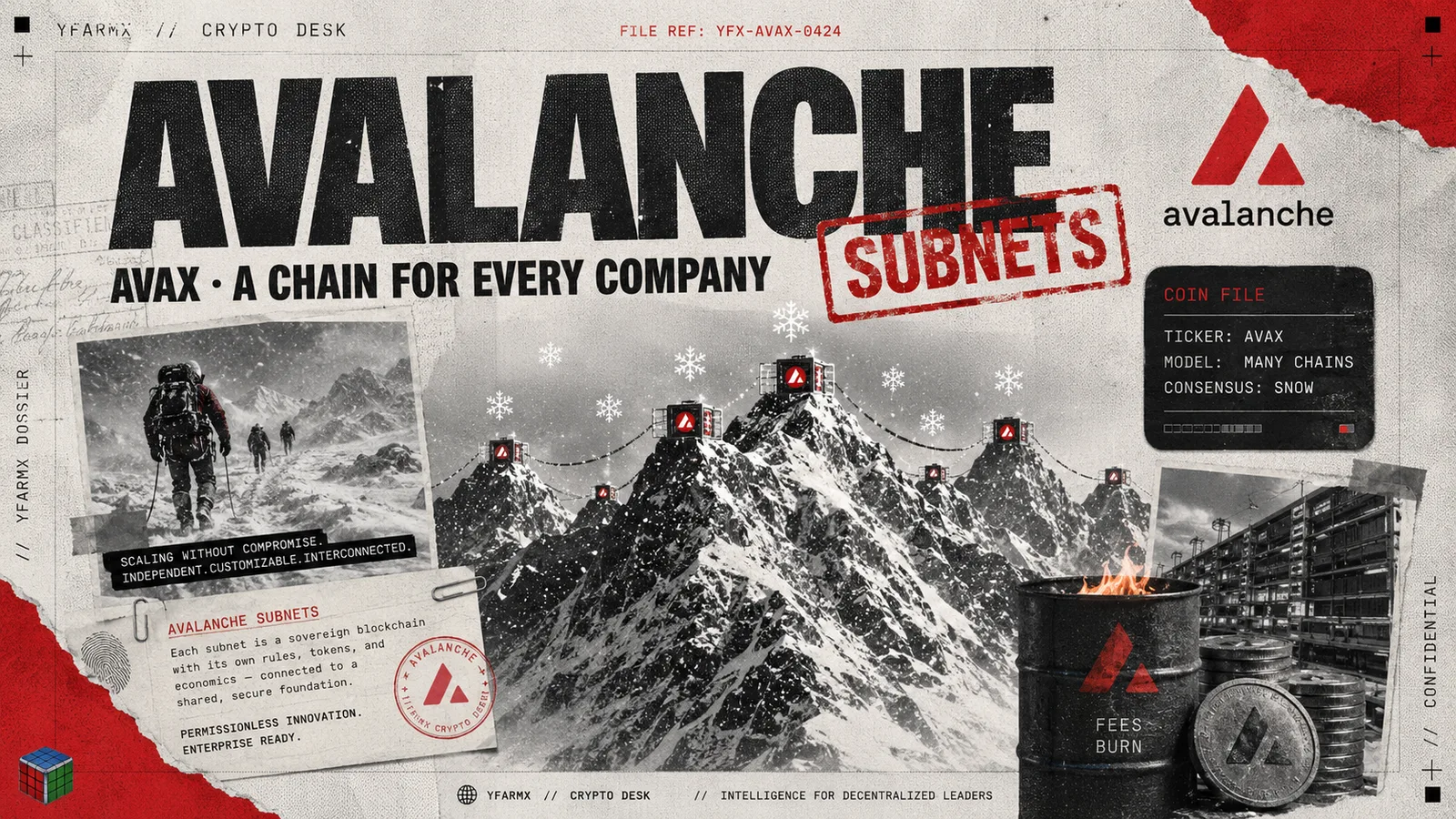
Avalanche is a layer 1 network from Ava Labs with three built-in chains and custom Avalanche L1s, a 720 million AVAX cap and fee burning.
What it is
Avalanche is a layer 1 network, a base blockchain that settles its own transactions, created by Ava Labs and launched on 21 September 2020. Its intellectual roots are academic: co-founder Emin Gün Sirer was a Cornell University computer science professor known for distributed systems research, and the Avalanche consensus family began as a research paper before it became a product. The memorable design choice is that Avalanche is not one chain but a platform for many, with three built-in chains at its core and a framework for launching custom ones around them.
How it works
Avalanche consensus works by repeated sampling: each validator asks small random groups of other validators which transactions they prefer, and repeats until the network converges on an answer, which happens in seconds. The platform splits duties across three chains. The C-Chain runs Ethereum-style smart contracts, the P-Chain coordinates validators and staking, and the X-Chain handles asset transfers. Beyond those, teams can launch their own chains, originally called subnets and renamed Avalanche L1s after the Avalanche9000 upgrade in December 2024, each with its own rules and validators. AVAX is the staking and gas asset, its supply is capped at 720 million, and transaction fees are burned, permanently removing coins from circulation.
The story so far
Avalanche rose quickly in the 2021 cycle, when AVAX traded above $140 and its DeFi ecosystem swelled, then fell back hard with the wider market. The project’s response was to lean into its multi-chain design. Gaming studios, financial institutions and enterprises launched dedicated Avalanche chains rather than sharing a congested public one, and Ava Labs pursued partnerships with mainstream firms, including work with Amazon Web Services to make node deployment easier. Tokenised funds have also arrived on the network: BlackRock’s BUIDL fund is available on Avalanche among other chains, a small but telling endorsement of its institutional plumbing.
Where it stands
On 13 October 2026 at 01:46 UTC, AVAX traded at $10.15, with a market value of about $4.50 billion and a rank of 28 among the assets tracked by CoinGecko. Worth watching from here: the number and quality of active Avalanche L1s, whether fee burning keeps pace with new issuance from staking rewards, and how the tokenisation trend develops on the network. Our crypto explainers hub sets Avalanche alongside its layer 1 rivals in the crypto section.
More Crypto
All Crypto →
Toyota Avalanche Partnership: Vehicles as Digital Assets
Toyota Avalanche partnership transforms vehicles into digital assets, revolutionising vehicle finance through blockchain.
Avalanche Blockchain Faces Halt Amid Durango Upgrade Rollout
Avalanche’s primary blockchain, known for its speed and efficiency in handling transactions, experienced a significant halt in block production early Friday morning.

zkSync and Avalanche Discord Breaches Underscore Urgent Need for Enhanced Security
Both zkSync and Avalanche found their official Discord servers compromised today.