
Sky
USDS
the decentralised dollar, upgraded
Key facts
- #13by market value
- Rank
- Stablecoincollateral-backed, on-chain
- Type
- 2024by Sky
- Launched
- Uncappedgrows with collateral
- Supply
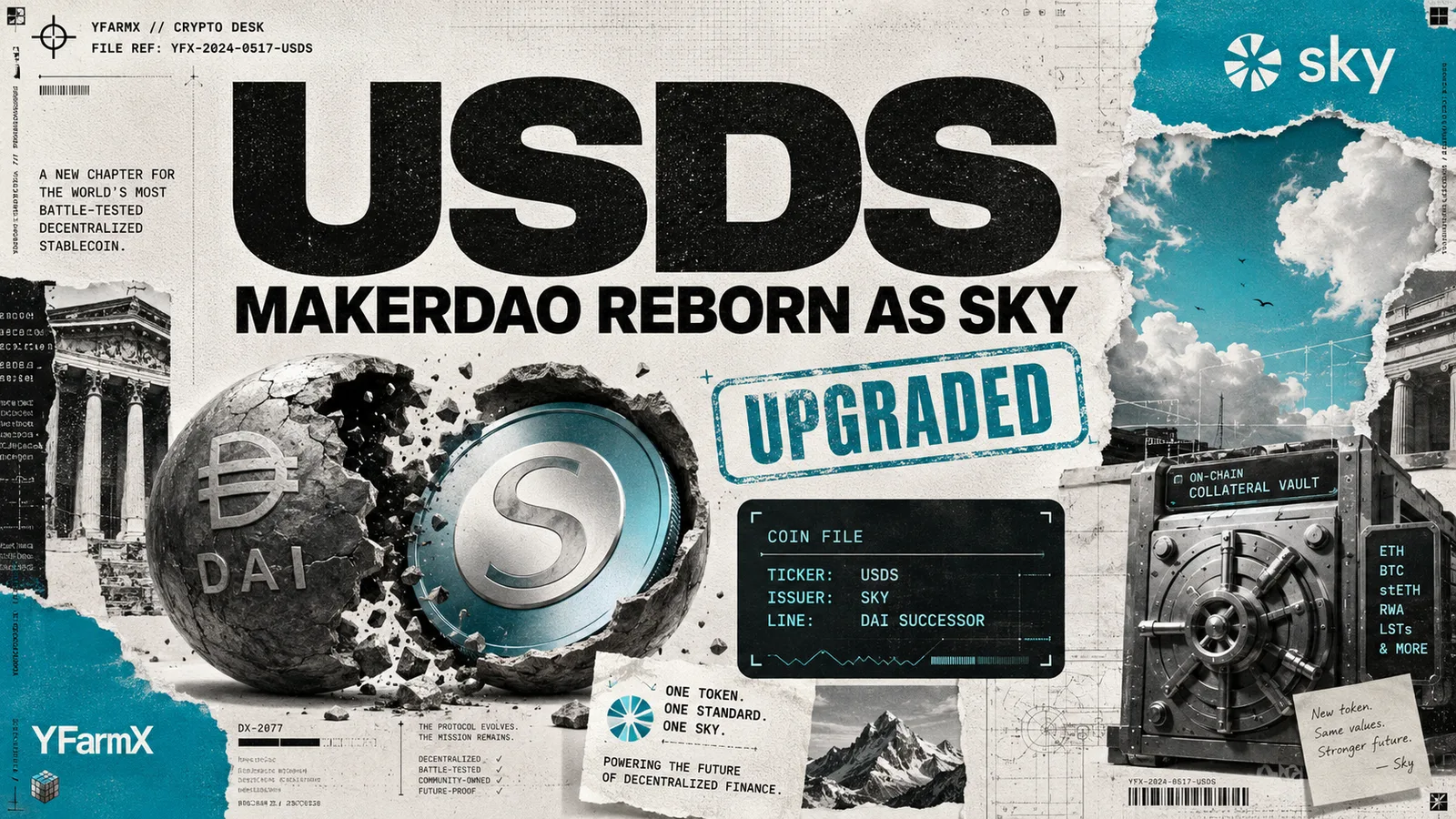
USDS is the stablecoin of Sky, the protocol formerly known as MakerDAO, and the upgraded successor to DAI. It had about $10.34 billion in market value, rank 13, on 13 October 2026.
What it is
USDS is the dollar stablecoin of Sky, the protocol previously known as MakerDAO, the oldest of DeFi’s lending systems. MakerDAO, started by Rune Christensen in 2014, created DAI in 2017, the first widely used stablecoin governed by code and a token-holder vote rather than a company. In 2024 the project rebranded as Sky and introduced USDS as DAI’s upgraded successor, convertible with DAI one to one in either direction. One memorable fact: USDS is a stablecoin with no chief executive; every significant change is voted through by holders of the SKY governance token, into which the protocol’s original MKR token converts.
How it works
Unlike Tether or USDC, USDS is not minted against dollars in a bank account. It is created when borrowers lock collateral into the protocol’s vaults, cryptocurrency alongside a growing book of tokenised real-world assets such as short-dated US government debt, and it is destroyed when those loans are repaid. Overcollateralisation, the requirement that more value is locked than borrowed, is what protects the peg. Holders can deposit USDS to earn the Sky Savings Rate, paid from protocol revenue. Governance token holders vote on the collateral list, fees and rates, with operations delegated to sub-units the project calls Stars, of which the lending platform Spark is the best known.
The story so far
MakerDAO survived the crashes that ended most of its contemporaries: the “Black Thursday” collapse of March 2020, when plunging prices forced emergency auctions and left bad debt to be covered, and the 2023 banking wobble, when the USDC in its reserves briefly lost its peg and dragged DAI with it. The lesson its community drew was diversification into real-world assets, which now generate a large share of its income. The 2024 rebrand to Sky, part of Christensen’s sweeping “Endgame” restructuring, divided the community, and DAI deliberately continues to exist alongside its successor rather than being switched off.
Where it stands
On 13 October 2026 at 01:46 UTC, USDS traded at $1, with a market value of about $10.34 billion and a rank of 13 among the assets tracked by CoinGecko. What to watch: how much of the remaining DAI supply migrates across, whether savings-rate income keeps pace as interest rates move, and how US stablecoin law, written mainly with company issuers in mind, comes to treat a stablecoin governed by a decentralised vote. USDS is the current form of DeFi’s longest-running experiment, a dollar that answers to its holders instead of a boardroom, and its second decade will test whether that model can keep scaling.
More Crypto
All Crypto →
USDS and USDe Add $5B to Stablecoin Market
Stablecoin market adds $5B as USDS and USDe grow amid federal oversight changes, challenging stablecoin dominance.
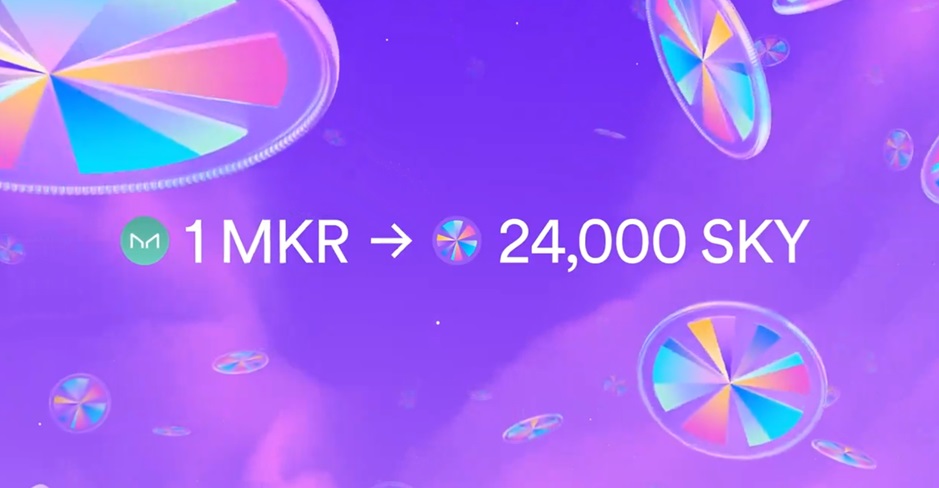
MakerDAO Rebrands as Sky Ahead of USDS Stablecoin Launch
MakerDAO, the pioneering decentralised finance (DeFi) platform, is undergoing a rebranding to Sky, introducing a new stablecoin, USDS, and a governance token, SKY.